Question: HW 4 BUS 190 Fall 2021 in-class sections You will work out problems 1-4 either in Word, or on paper and submitted as a Word
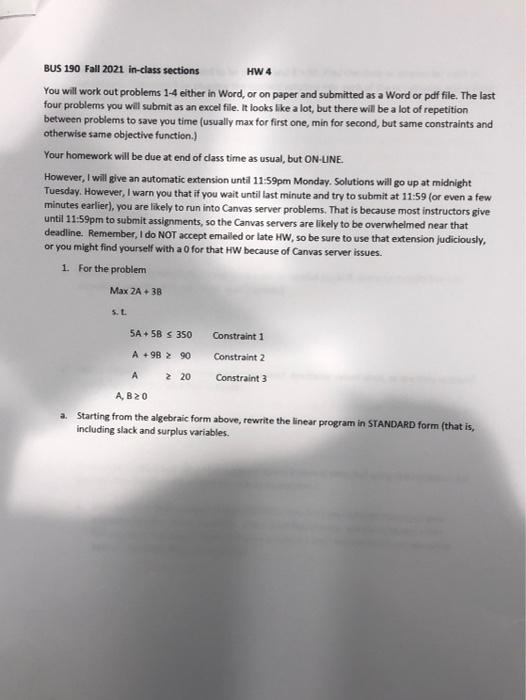
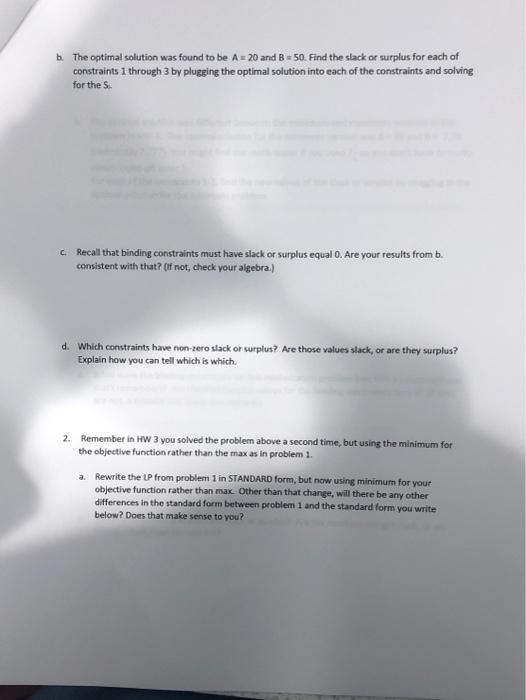
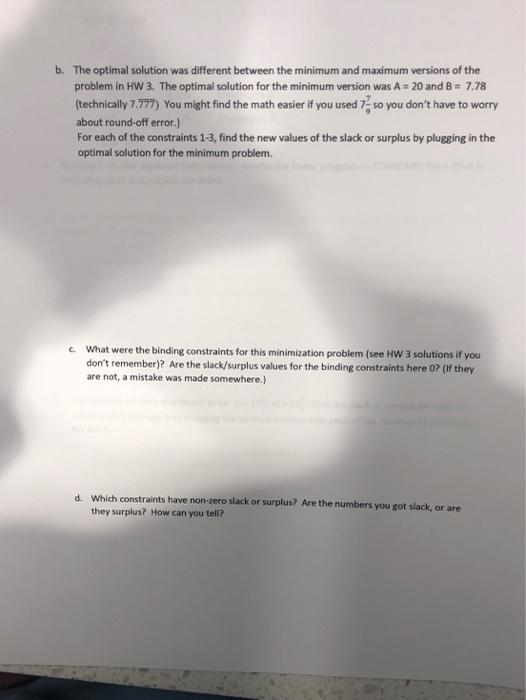
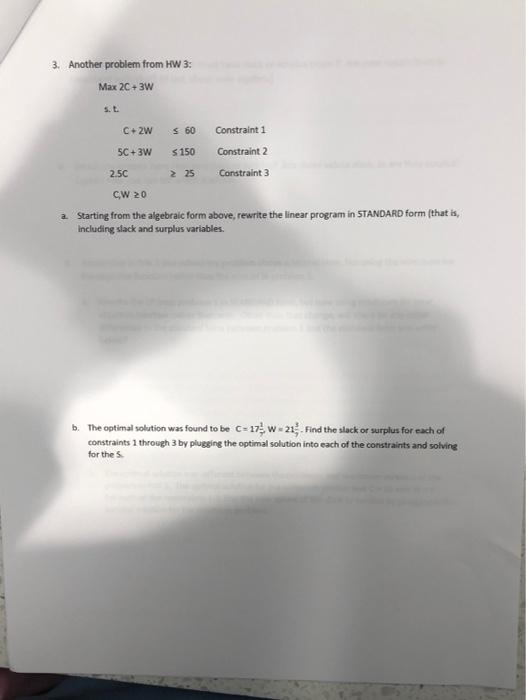
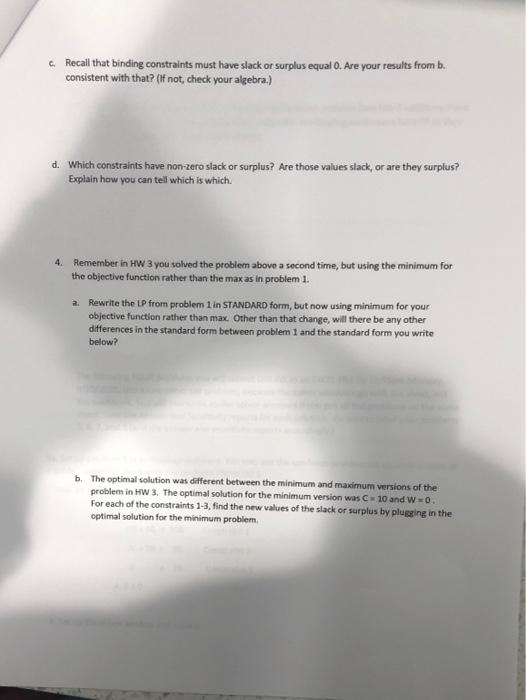
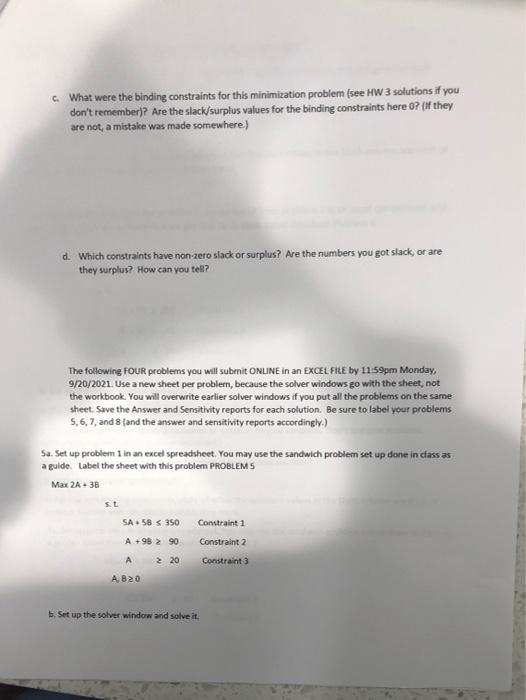
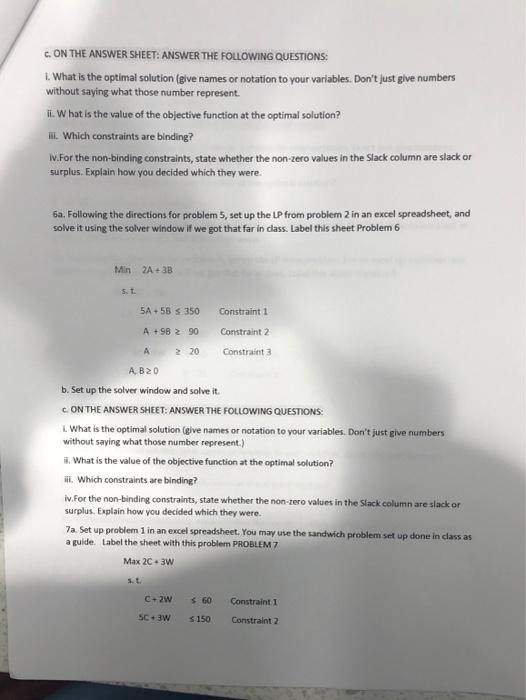
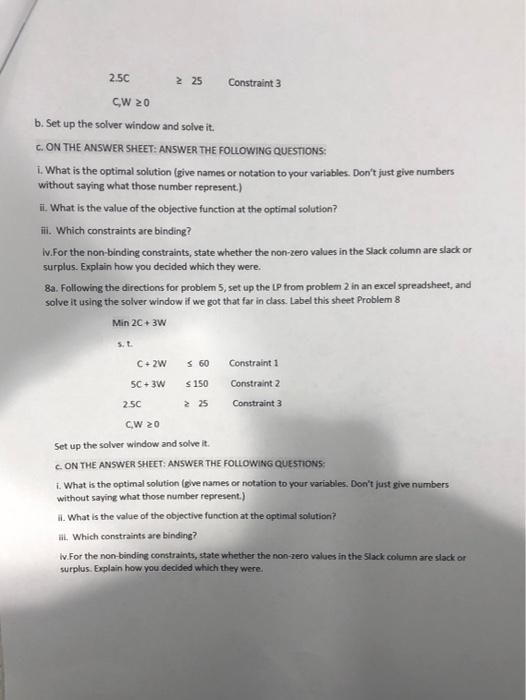
HW 4 BUS 190 Fall 2021 in-class sections You will work out problems 1-4 either in Word, or on paper and submitted as a Word or pdf file. The last four problems you will submit as an excel file. It looks like a lot, but there will be a lot of repetition between problems to save you time (usually max for first one, min for second, but same constraints and otherwise same objective function.) Your homework will be due at end of class time as usual, but ON-LINE However, I will give an automatic extension until 11:59pm Monday. Solutions will go up at midnight Tuesday. However, I warn you that if you wait until last minute and try to submit at 11:59 (or even a few minutes earlier), you are likely to run into Canvas server problems. That is because most instructors give until 11:59pm to submit assignments, so the Canvas servers are likely to be overwhelmed near that deadline. Remember, I do NOT accept emailed or late HW, so be sure to use that extension judiciously. or you might find yourself with a 0 for that HW because of Canvas server issues. 1. For the problem Max 2A + 3B 5.L. 5A 5B S 350 A +98 290 Constraint 1 Constraint 2 A 220 Constraint 3 A, B20 Starting from the algebraic form above, rewrite the linear program in STANDARD form (that is, including slack and surplus variables. b. The optimal solution was found to be A = 20 and B = 50. Find the slack or surplus for each of constraints 1 through 3 by plugging the optimal solution into each of the constraints and solving for the Recall that binding constraints must have slack or surplus equal O. Are your results from b. consistent with that? Of not, check your algebra.) d. Which constraints have non-zero slack or surplus? Are those values slack, or are they surplus? Explain how you can tell which is which 2. Remember in HW 3 you solved the problem above a second time, but using the minimum for the objective function rather than the max as in problem 1. a Rewrite the IP from problem 1 in STANDARD form, but now using minimum for your objective function rather than max. Other than that change, will there be any other differences in the standard form between problem 1 and the standard form you write below? Does that make sense to you? b. The optimal solution was different between the minimum and maximum versions of the problem in HW 3. The optimal solution for the minimum version was A = 20 and B = 7.78 (technically 7.777) You might find the math easier if you used 7. so you don't have to worry about round-off error.) For each of the constraints 1-3, find the new values of the lack or surplus by plugging in the optimal solution for the minimum problem. What were the binding constraints for this minimization problem (sve HW 3 solutions if you don't remember)? Are the slack/surplus values for the binding constraints here 0? (if they are not, a mistake was made somewhere.) d. Which constraints have non-zero slack or surplus? Are the numbers you got slack, or are they surplus? How can you tell? 3. Another problem from HW 3: Max 2C+3W C+2w S60 Constraint 1 5C+3W $ 150 2.5C Constraint 2 25 Constraint 3 CW 20 a Starting from the algebraic form above, rewrite the linear program in STANDARD form (that is, Including slack and surplus variables. b. The optimal solution was found to be C-17., W-21. Find the slack or surplus for each of constraints 1 through 3 by pluging the optimal solution into each of the constraints and solving for the s Recall that binding constraints must have slack or surplus equal O. Are your results from b. consistent with that? (If not, check your algebra.) d. Which constraints have non-zero slack or surplus? Are those values slack, or are they surplus? Explain how you can tell which is which 4. Remember in HW 3 you solved the problem above a second time, but using the minimum for the objective function rather than the max as in problem 1. 2. Rewrite the LP from problem in STANDARD form, but now using minimum for your objective function rather than max Other than that change, will there be any other differences in the standard form between problem 1 and the standard form you write below? b. The optimal solution was different between the minimum and maximum versions of the problem in HW 3. The optimal solution for the minimum version was c10 and W0. For each of the constraints 1-3, find the new values of the slack or surplus by plugging in the optimal solution for the minimum problem What were the binding constraints for this minimization problem (see HW 3 solutions if you don't remember? Are the slack/surplus values for the binding constraints here OP (if they are not, a mistake was made somewhere) d. Which constraints have non-zero slack or surplus? Are the numbers you got slack, or are they surplus? How can you tell? The following FOUR problems you will submit ONLINE in an EXCEL FILE by 11:59pm Monday, 9/20/2021. Use a new sheet per problern, because the solver windows go with the sheet, not the workbook. You will overwrite earlier solver windows if you put all the problems on the same sheet. Save the Answer and Sensitivity reports for each solution. Be sure to label your problems 5,6,7, and 8 (and the answer and sensitivity reports accordingly.) Sa. Set up problem I in an excel spreadsheet. You may use the sandwich problem set up done in class as a guide. Label the sheet with this problem PROBLEMS Max 2A. 38 SL SA. 58 S 350 A +98 290 A 220 Constraint 1 Constraint 2 Constraint a AB20 b. Set up the solver window and solve it. C. ON THE ANSWER SHEET: ANSWER THE FOLLOWING QUESTIONS: 1. What is the optimal solution (glve names or notation to your variables. Don't just give numbers without saying what those number represent. it. What is the value of the objective function at the optimal solution? II. Which constraints are binding? 1.For the non-binding constraints, state whether the non-zero values in the Slack column are slack or surplus. Explain how you decided which they were. 6a. Following the directions for problem 5, set up the LP from problem 2 in an excel spreadsheet, and solve it using the solver window if we got that far in class. Label this sheet Problem 6 Min 2A +3B 5.1. 5A58 5350 A +98 90 Constraint 1 Constraint 2 Constraints A 2 20 AB20 b. Set up the solver window and solve it. C. ON THE ANSWER SHEET: ANSWER THE FOLLOWING QUESTIONS: L What is the optimal solution (give names or notation to your variables. Don't just give numbers without saying what those number represent.) 1. What is the value of the objective function at the optimal solution? H. Which constraints are binding? iv. For the non-binding constraints, state whether the non-zero values in the Stack column are slack or surplus. Explain how you decided which they were. 7a. Set up problem in an excel spreadsheet. You may use the sandwich problem set up done in class as a guide label the sheet with this problem PROBLEM 7 Max 2C 3W C+2w $60 Constraint 1 SC + 3W $ 150 Constraint 2 2.5C 2 25 Constraint 3 CW 20 b. Set up the solver window and solve it. C. ON THE ANSWER SHEET: ANSWER THE FOLLOWING QUESTIONS: I. What is the optimal solution (give names or notation to your variables. Don't just give numbers without saying what those number represent.) 1. What is the value of the objective function at the optimal solution? ii. Which constraints are binding? W.For the non-binding constraints, state whether the non-zero values in the Slack column are slack or surplus. Explain how you decided which they were. 8a. Following the directions for problem 5, set up the LP from problem 2 in an excel spreadsheet, and solve it using the solver window if we got that far in class. Label this sheet Problem 8 Min 2C+3W C+2W 560 Constraint 1 5C+3W s 150 Constraint 2 2.50 225 Constraint 3 CW 20 Set up the solver window and solve it. C. ON THE ANSWER SHEET: ANSWER THE FOLLOWING QUESTIONS: 1. What is the optimal solution (ove names or notation to your variables. Don't just give numbers without saying what those number represent.) 1. What is the value of the objective function at the optimal solution? 1. Which constraints are binding? lv.For the non-binding constraints, state whether the non-zero values in the Slack column are slack or surplus. Explain how you decided which they were









 Study Help