







Question: hw2.Activity-Based Life-Cycle Costing Kagle design engineers are in the process of developing a new green product, one that will significantly reduce impact on the environment
hw2.Activity-Based Life-Cycle Costing
Kagle design engineers are in the process of developing a new green product, one that will significantly reduce impact on the environment and yet still provide the desired customer functionality. Currently, two designs are being considered. The manager of Kagle has told the engineers that the cost for the new product cannot exceed $650 per unit (target cost). In the past, the Cost Accounting Department has given estimated costs using a unit-based system. At the request of the Engineering Department, Cost Accounting is providing both unit- and activity-based accounting information (made possible by a recent pilot study producing the activity-based data).
Unit-based system: Variable conversion activity rate: $100 per direct labor hour Material usage rate: $25 per part ABC system: Labor usage: $25 per direct labor hour Material usage (direct materials): $30 per part Machining: $80 per machine hour Purchasing activity: $150 per purchase order Setup activity: $3,000 per setup hour Warranty activity: $650 per returned unit (usually requires extensive rework) Customer repair cost: $25 per repair hour (average)
| Activity and Resource Information (annual estimates) | ||||
| Design A | Design B | |||
| Units produced | 20,000 | 20,000 | ||
| Direct material usage | 340,000 | parts | 315,000 | parts |
| Labor usage | 50,000 | hours | 120,000 | hours |
| Machine hours | 50,000 | 60,000 | ||
| Purchase orders | 2,500 | 2,000 | ||
| Setup hours | 650 | 250 | ||
| Returned units | 1,300 | 350 | ||
| Repair time (customer) | 2,100 | 550 | ||
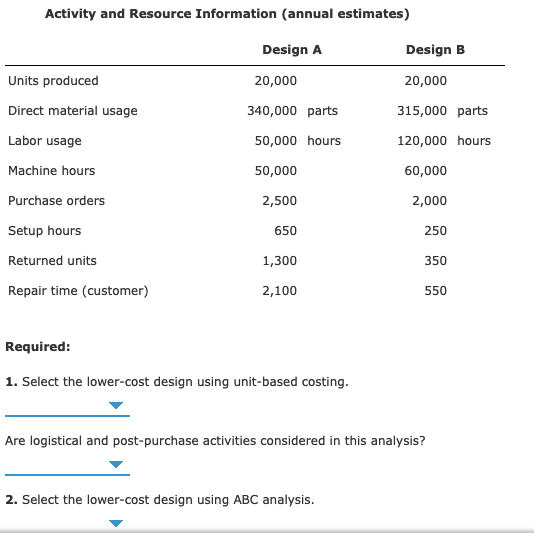
Required:
1. Select the lower-cost design using unit-based costing. (design a or b?)
Are logistical and post-purchase activities considered in this analysis? (yes or no?)
2. Select the lower-cost design using ABC analysis. (design a or b?)
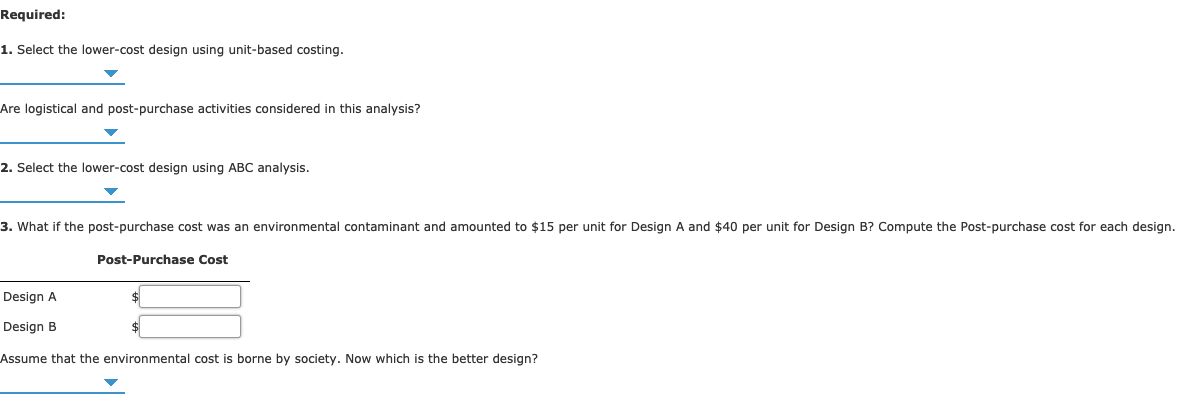
3. What if the post-purchase cost was an environmental contaminant and amounted to $15 per unit for Design A and $40 per unit for Design B? Compute the Post-purchase cost for each design.
| Post-Purchase Cost | ||
| Design A | $ | |
| Design B | $ | |
Assume that the environmental cost is borne by society. Now which is the better design? (design a or b?) 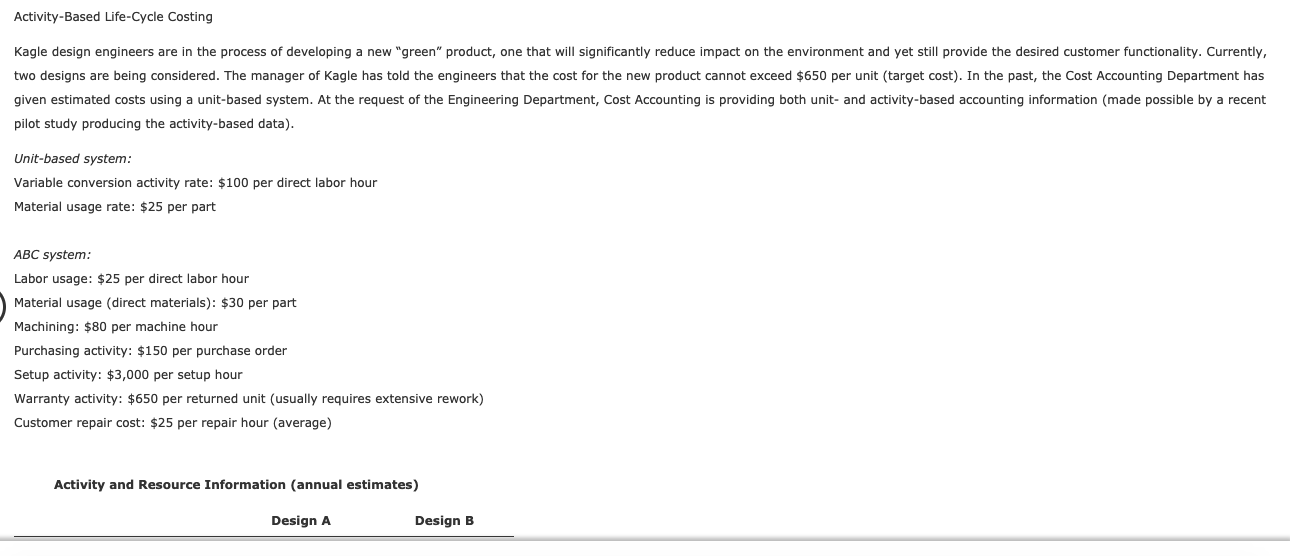
Activity-Based Life-Cycle Costing Kagle design engineers are in the process of developing a new "green" product, one that will significantly reduce impact on the environment and yet still provide the desired customer functionality. Currently, two designs are being considered. The manager of Kagle has told the engineers that the cost for the new product cannot exceed $650 per unit (target cost). In the past, the Cost Accounting Department has given estimated costs using a unit-based system. At the request of the Engineering Department, Cost Accounting is providing both unit- and activity-based accounting information (made possible by a recent pilot study producing the activity-based data). Unit-based system: Variable conversion activity rate: $100 per direct labor hour Material usage rate: $25 per part ABC system: Labor usage: $25 per direct labor hour Material usage (direct materials): $30 per part Machining: $80 per machine hour Purchasing activity: $150 per purchase order Setup activity: $3,000 per setup hour Warranty activity: $650 per returned unit (usually requires extensive rework) Customer repair cost: $25 per repair hour (average) Activity and Resource Information (annual estimates) Design A Design B Activity and Resource Information (annual estimates) Design A Design B Units produced 20,000 20,000 Direct material usage 340,000 parts 315,000 parts Labor usage 50,000 hours 120,000 hours Machine hours 50,000 60,000 Purchase orders 2,500 2,000 Setup hours 650 250 Returned units 1,300 350 Repair time (customer) 2,100 550 Required: 1. Select the lower-cost design using unit-based costing. Are logistical and post-purchase activities considered in this analysis? 2. Select the lower-cost design using ABC analysis. Required: 1. Select the lower-cost design using unit-based costing. Are logistical and post-purchase activities considered in this analysis? 2. Select the lower-cost design using ABC analysis. 3. What if the post-purchase cost was an environmental contaminant and amounted to $15 per unit for Design A and $40 per unit for Design B? Compute the Post-purchase cost for each design. Post-Purchase Cost Design A Design B Assume that the environmental cost is borne by society. Now which is the better design
Step by Step Solution
There are 3 Steps involved in it

Get step-by-step solutions from verified subject matter experts
 Study Help