







Question: Hypothesis tests for T-test and ANOVA 30 points Hypothesis Testing Independent Samples T test Recent research has demonstrated that music-based physical training for older adults
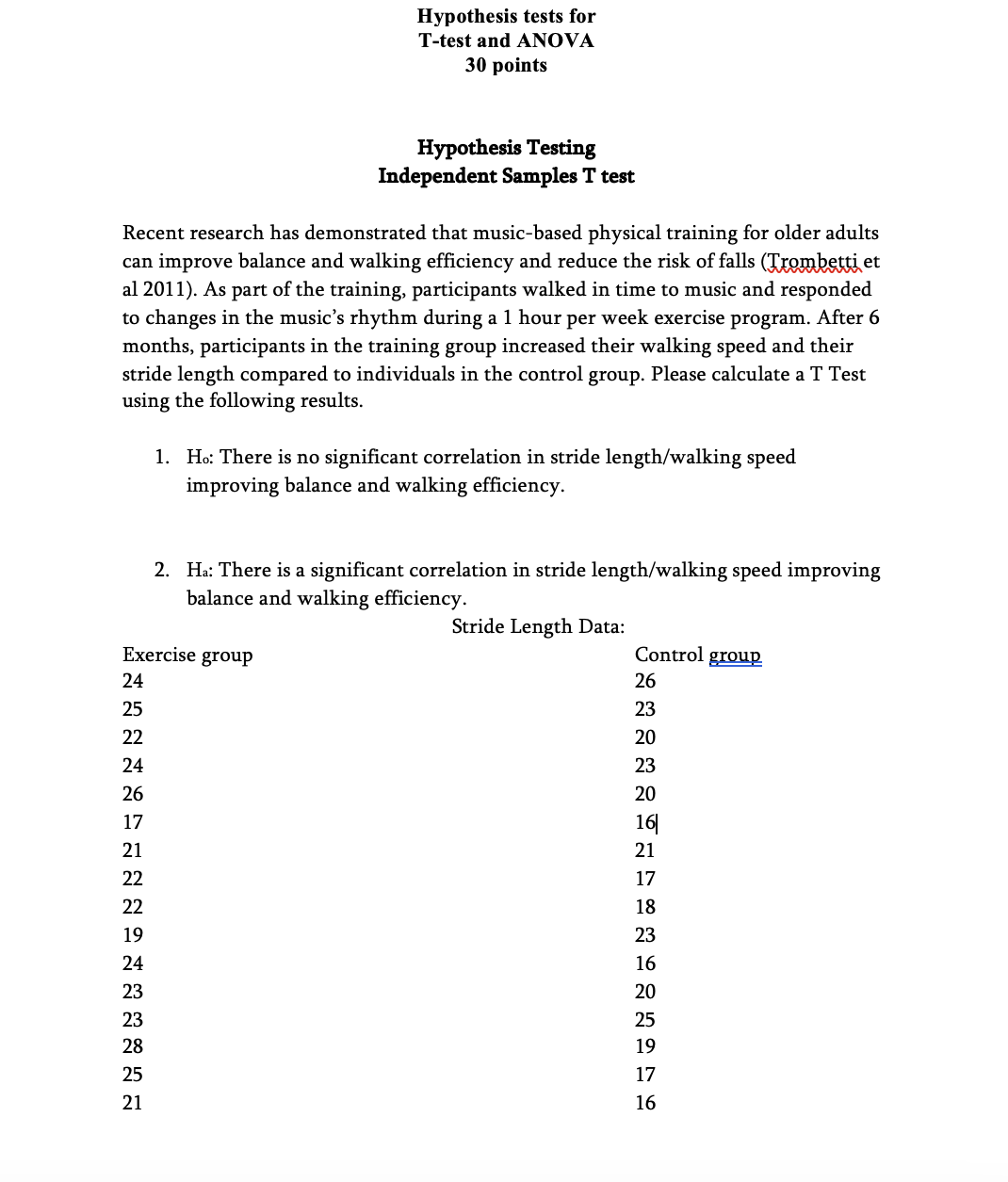
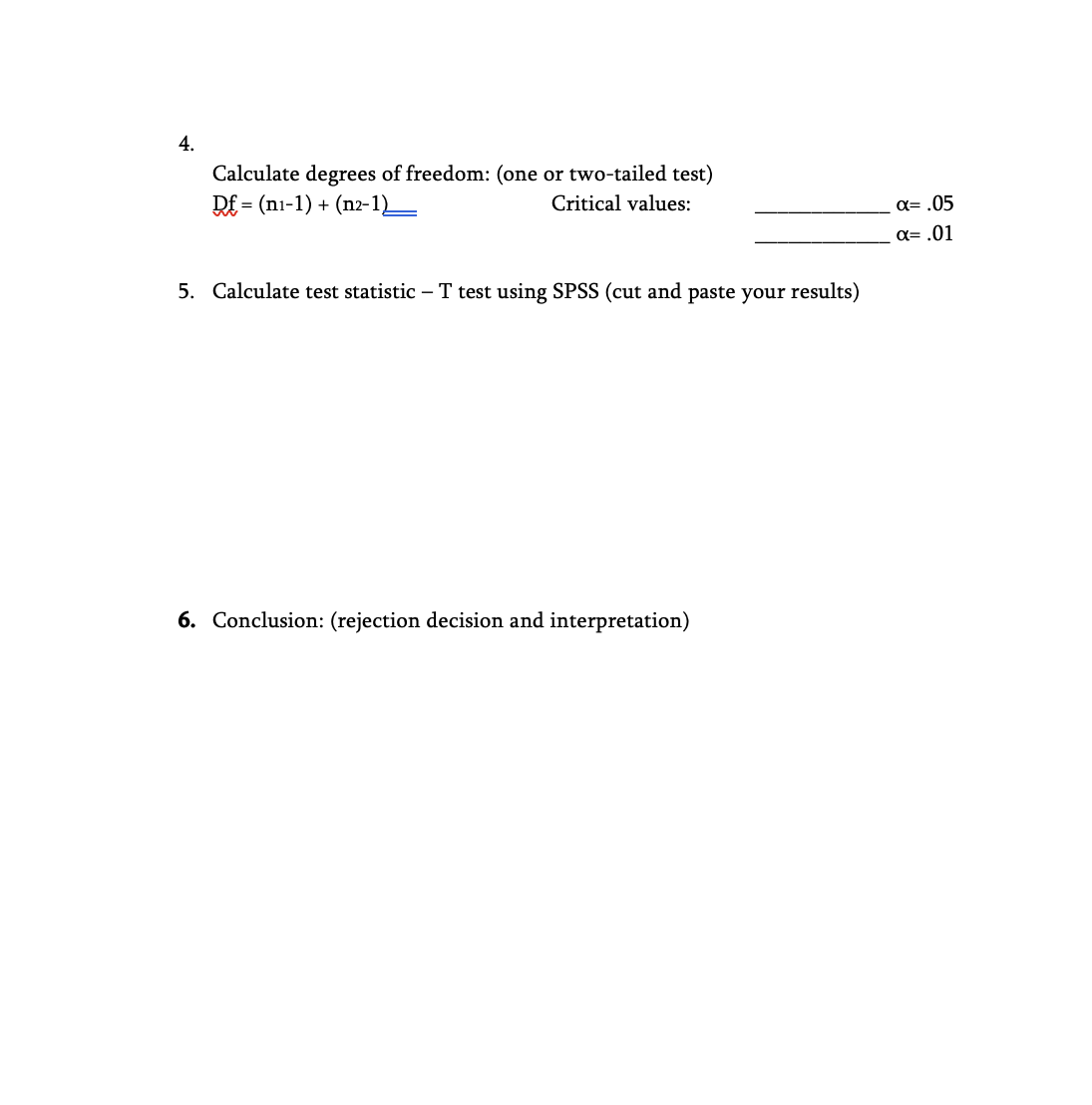
Hypothesis tests for T-test and ANOVA 30 points Hypothesis Testing Independent Samples T test Recent research has demonstrated that music-based physical training for older adults can improve balance and walking efficiency and reduce the risk of falls (Trombetti et al 2011). As part of the training, participants walked in time to music and responded to changes in the music's rhythm during a 1 hour per week exercise program. After 6 months, participants in the training group increased their walking speed and their stride length compared to individuals in the control group. Please calculate a T Test using the following results. 1. Ho: There is no significant correlation in stride length/walking speed improving balance and walking efficiency. 2. Ha: There is a significant correlation in stride length/walking speed improving balance and walking efficiency. Stride Length Data: Exercise group Control group 24 26 25 23 22 20 24 23 26 20 17 14 21 21 22 17 22 18 19 23 24 16 23 20 23 25 28 19 25 17 21 16 4. Calculate degrees of freedom: (one or two-tailed test) Rf = (ni-1) + (n2-1)_ Critical values: a= .05 a=.01 5. Calculate test statistic - T test using SPSS (cut and paste your results) 6. Conclusion: (rejection decision and interpretation)
Step by Step Solution
There are 3 Steps involved in it

Get step-by-step solutions from verified subject matter experts
 Study Help