







Question: I am having such a hard time with this question, that it is hard to figure out the steps My Notes Ask Your Tea -/22
I am having such a hard time with this question, that it is hard to figure out the steps
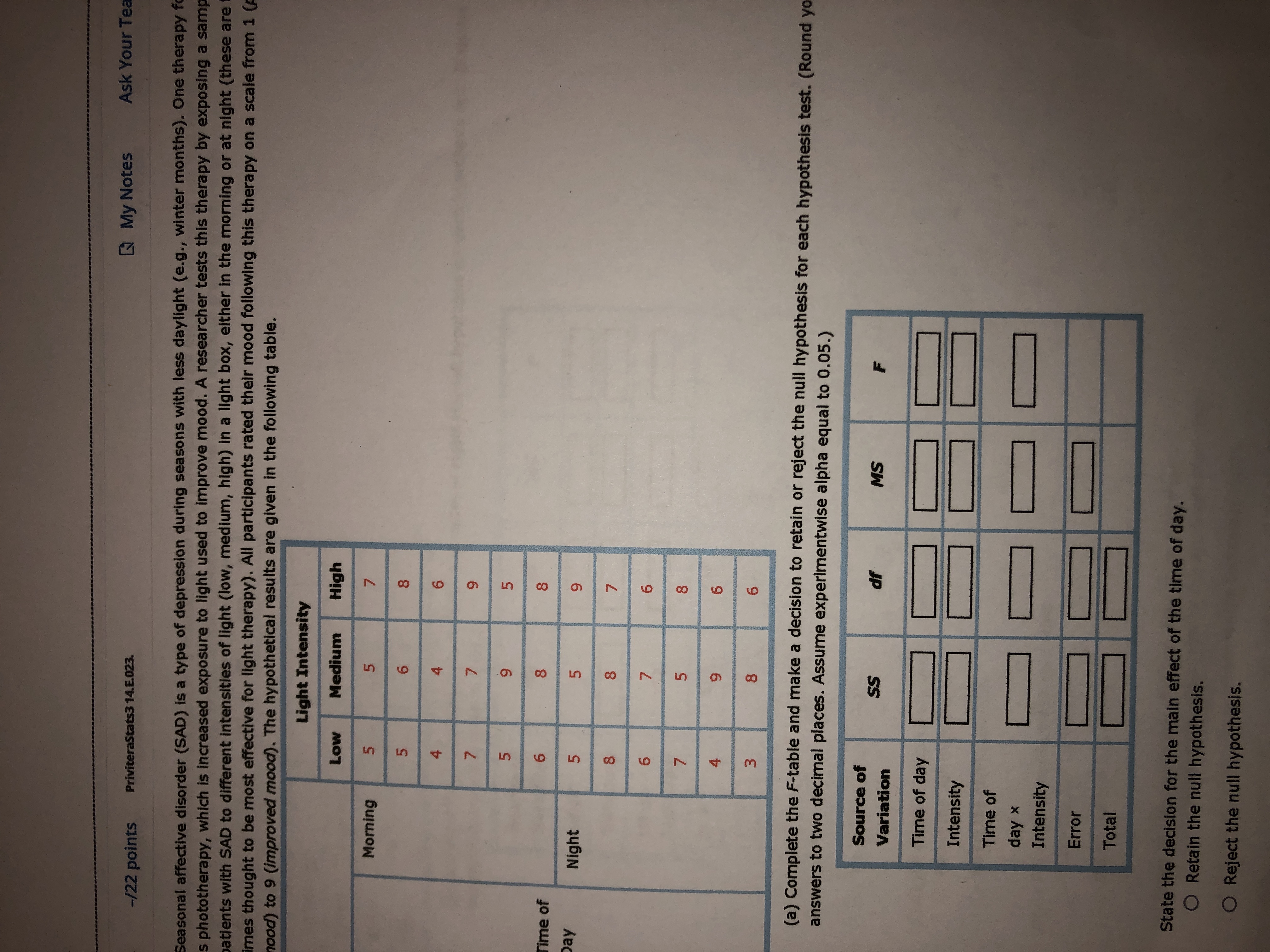
My Notes Ask Your Tea -/22 points PriviteraStats3 14.E.023. Seasonal affective disorder (SAD) is a type of depression during seasons with less daylight (e.g., winter months). One therapy s phototherapy, which is increased exposure to light used to improve mood. A researcher tests this therapy by exposing a samp atients with SAD to different intensities of light (low, medium, high) in a light box, either in the morning or at night (these are imes thought to be most effective for light therapy). All participants rated their mood following this therapy on a scale from 1 ( hood) to 9 (improved mood). The hypothetical results are given in the following table. Light Intensity Low Medium High Morning 5 7 5 6 8 4 4 6 7 9 9 5 Time of 6 8 8 Day Night 5 9 8 8 6 7 6 7 5 8 9 6 8 6 (a) Complete the F-table and make a decision to retain or reject the null hypothesis for each hypothesis test. (Round y answers to two decimal places. Assume experimentwise alpha equal to 0.05.) Source of Variation SS df MS Time of day Intensity Time of day x Intensity Error Total State the decision for the main effect of the time of day. O Retain the null hypothesis. O Reject the null hypothesis
Step by Step Solution
There are 3 Steps involved in it

Get step-by-step solutions from verified subject matter experts
 Study Help