







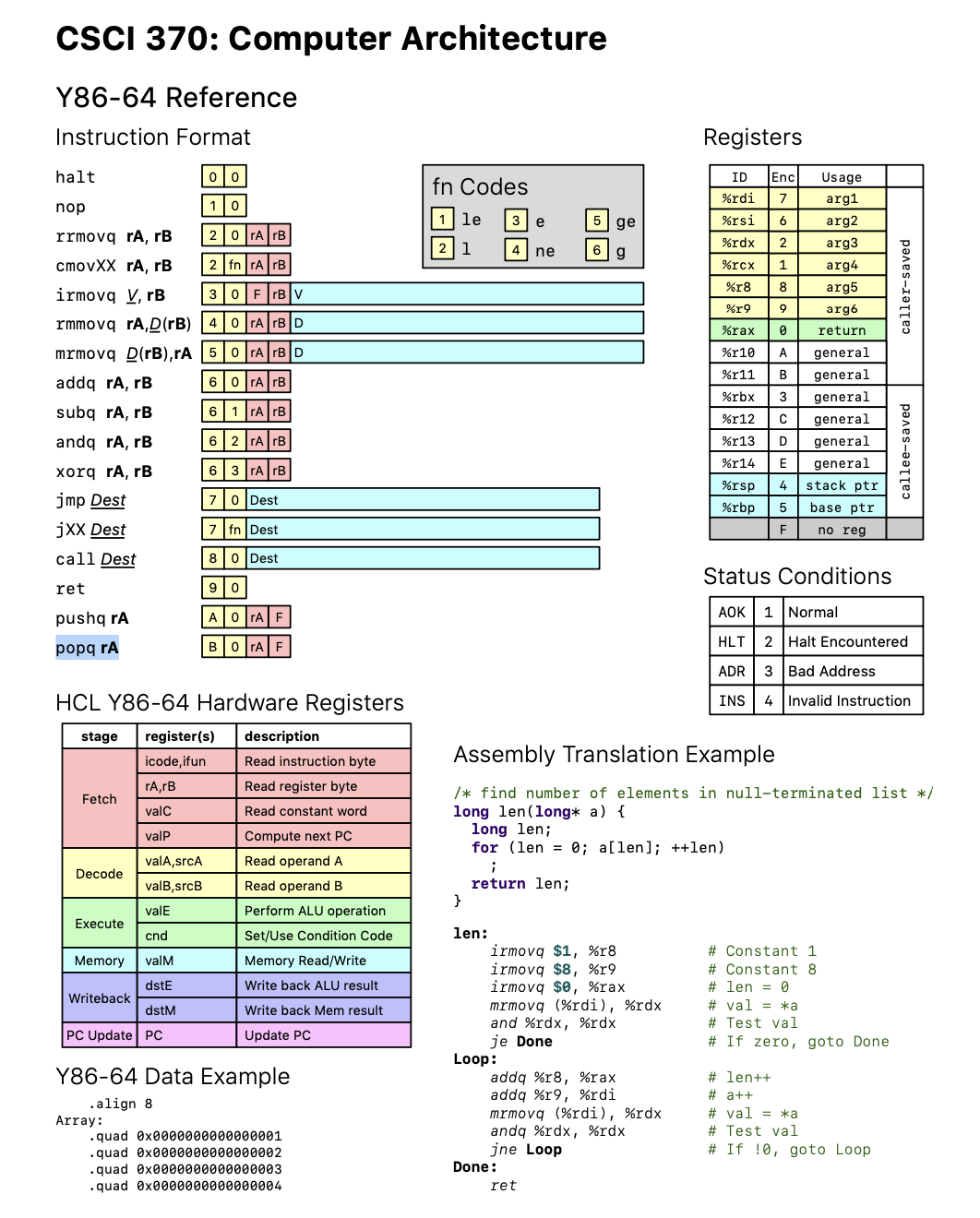
Question: I am trying to convert C code to a working translation of Y 8 6 - 6 4 assembly . Pay close to attention what
I am trying to convert C code to a working translation of Yassembly Pay close to attention what is and is not allowed in Yno $ symbol Here is the code in C:
Function to perform linear search
Returns the index of the element if found, otherwise
Counts the number of comparisons made during the search
int linearSearchint arrint size, int value, int comparisonCount
comparisonCount ; Initialize comparison count
for int i ; i size; i
comparisonCount; Increment comparison count
if arrivalue
return i; Element found
return ; Element not found
This Implements linear search to find an integer in an array, tracking the number of comparisons made. This routine will help explore control flow and basic data handling in assembly.
For the linear search assembly program, it should be designed to handle parameters pushed onto the stack in reverse order. Begin with the array arrat the top of the stack, followed by size, then value, and finally, comparisonCount at the bottom.
The assembly routine will then retrieve these parameters from the stack, perform the linear search operation to find the value within arrand keep track of the number of comparisons made during the search in comparisonCount. The search should iterate through each element of arrcomparing it to value.
If value is found, the index at which value is found should be stored in rax for return, and comparisonCount should reflect the total comparisons made. If value is not found, rax should be set to indicating failure to locate value, with comparisonCount still updated to reflect the number of comparisons made.
Step by Step Solution
There are 3 Steps involved in it
1 Expert Approved Answer
Step: 1 Unlock

Question Has Been Solved by an Expert!
Get step-by-step solutions from verified subject matter experts
Step: 2 Unlock
Step: 3 Unlock
 Study Help