







Question: I do not know what values the U, N, T, or Triangle shape represent in the equation. Exercise in calculating the costs and benefits of
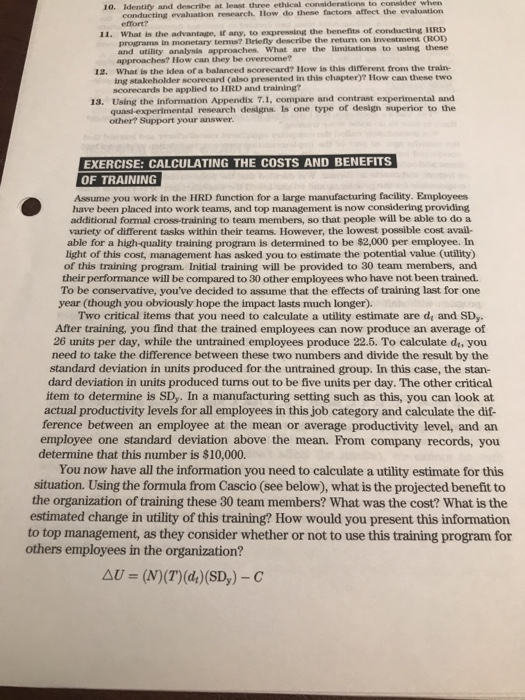
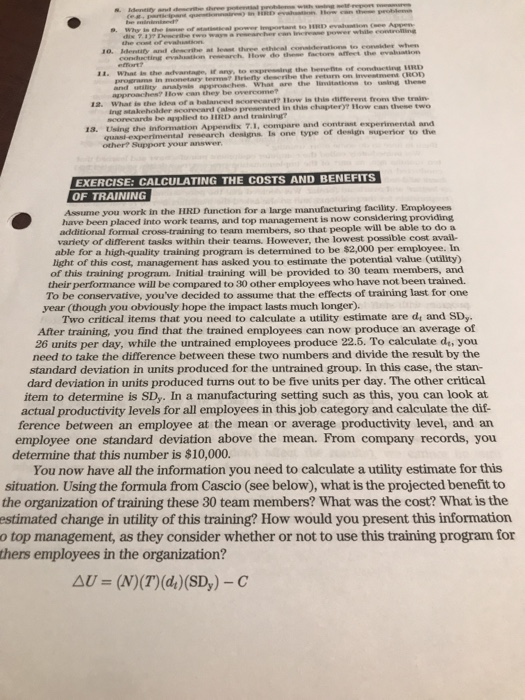
10. Identity and describe at least three ethical considerations to consider when conducting evaluation research. How do these factors affect the evaluation effort? 11. What is the advantage, if any, to expressing the benefits of conducting HRD programs in monetary terms? Briefly describe the return on investment (ROI) and utility analysis approaches. What are the limitations to using these approaches? How can they be overcome? 12. What is the idea of a balanced Scorecard? How is this different from the train- ing stakeholder scorecard (also presented in this chapter)? How can these two scorecards be applied to HRD and training? 13. Using the information Appendix 7.1, compare and contrast experimental and quasi-experimental research designs. Is one type of design superior to the other? Support your answer. EXERCISE: CALCULATING THE COSTS AND BENEFITS OF TRAINING Assume you work in the HRD function for a large manufacturing facility. Employees have been placed into work teams, and top management is now considering providing additional formal cross training to team members, so that people will be able to do a variety of different tasks within their teams. However, the lowest possible cost avail able for a high-quality training program is determined to be $2,000 per employee. In light of this cost, management has asked you to estimate the potential value (utility) of this training program Initial training will be provided to 30 team members, and their performance will be compared to 30 other employees who have not been trained. To be conservative, you've decided to assume that the effects of training last for one year (though you obviously hope the impact lasts much longer). Two critical items that you need to calculate a utility estimate are de and SDy. After training, you find that the trained employees can now produce an average of 26 units per day, while the untrained employees produce 22.5. To calculate de, you need to take the difference between these two numbers and divide the result by the standard deviation in units produced for the untrained group. In this case, the stan- dard deviation in units produced turns out to be five units per day. The other critical item to determine is SDy. In a manufacturing setting such as this, you can look at actual productivity levels for all employees in this job category and calculate the dif- ference between an employee at the mean or average productivity level, and an employee one standard deviation above the mean. From company records, you determine that this number is $10,000. You now have all the information you need to calculate a utility estimate for this situation. Using the formula from Cascio (see below), what is the projected benefit to the organization of training these 30 team members? What was the cost? What is the estimated change in utility of this training? How would you present this information to top management, as they consider whether or not to use this training program for others employees in the organization? AU = (N)(T)(d,)(SD))-C When the power to the the more 10. Betty and describe all three healers de whe continue reachHow do the factors affect the eventim 11. What is the advantages to the ten of con RD programs in my be refly describe the return om vem (RON) and witty analysis approaches. What are the limitation to these approaches? How can they become 1a. What is the idea of a balanced scorecard? How is the different from the trai Ingakeholder scorecard (also presented in this chaptery How can these two scorecards bepplied to HRD and training 18. Using the information Appendix 7.1, compare and contrast experimental and quas experimental research dess is one type of design superior to the other Support your answer EXERCISE: CALCULATING THE COSTS AND BENEFITS OF TRAINING Assume you work in the HRD function for a large manufacturing facility. Employees have been placed into work teams, and top management is now considering providing additional formal cross-training to team members, so that people will be able to do a variety of different tasks within their teams. However, the lowest possible cost avail- able for a high-quality training program is determined to be $2,000 per employee. In Right of this cost, management has asked you to estimate the potential value (utility) of this training program. Initial training will be provided to 30 team members, and their performance will be compared to 30 other employees who have not been trained. To be conservative, you've decided to assume that the effects of training last for one year (though you obviously hope the impact lasts much longer). Two critical items that you need to calculate a utility estimate are di and SDy. After training, you find that the trained employees can now produce an average of 26 units per day, while the untrained employees produce 22.5. To calculate de, you need to take the difference between these two numbers and divide the result by the standard deviation in units produced for the untrained group. In this case, the stan- dard deviation in units produced turns out to be five units per day. The other critical item to determine is SDy. In a manufacturing setting such as this, you can look at actual productivity levels for all employees in this job category and calculate the dif- ference between an employee at the mean or average productivity level, and an employee one standard deviation above the mean. From company records, you determine that this number is $10,000. You now have all the information you need to calculate a utility estimate for this situation. Using the formula from Cascio (see below), what is the projected benefit to the organization of training these 30 team members? What was the cost? What is the mestimated change in utility of this training? How would you present this information o top management, as they consider whether or not to use this training program for thers employees in the organization? AU = (N)(T)(d)(SDy) - C
Step by Step Solution
There are 3 Steps involved in it

Get step-by-step solutions from verified subject matter experts
 Study Help