







Question: I got part g wrong. please show me how to get just part g right using excel . thanks. j. What is the IRR for
I got part g wrong. please show me how to get just part g right using excel. thanks.

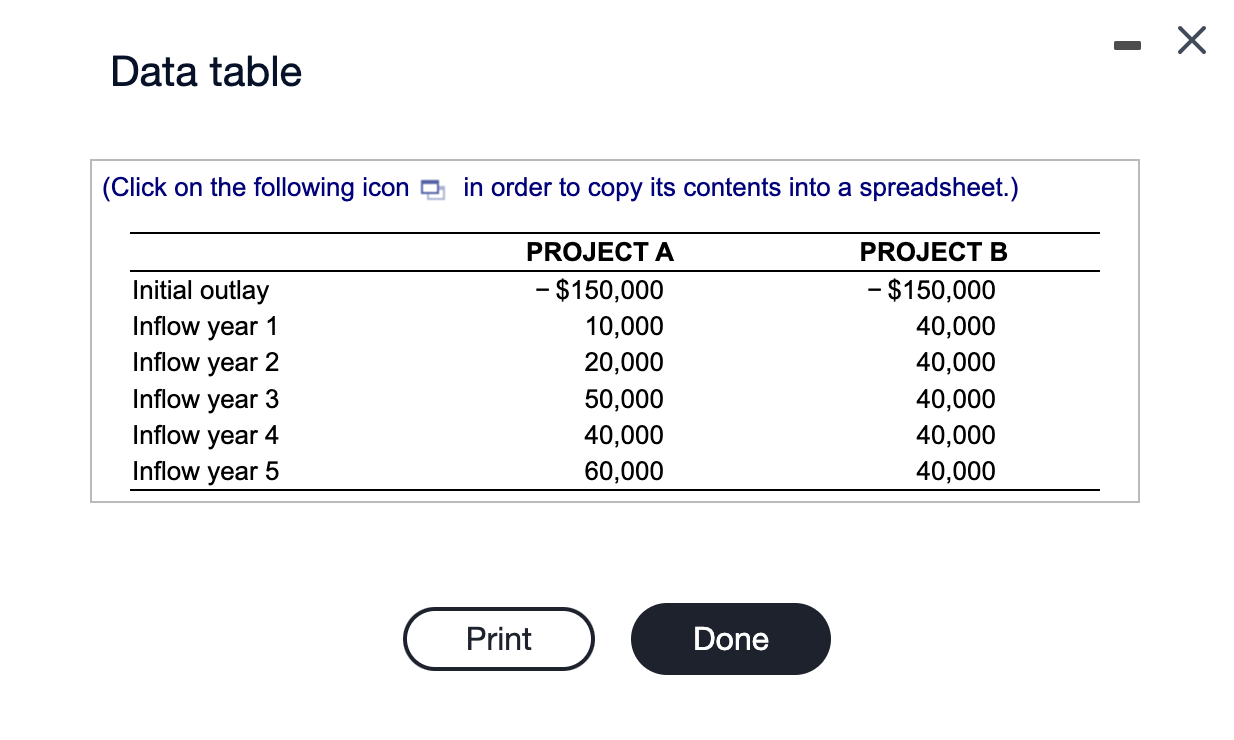
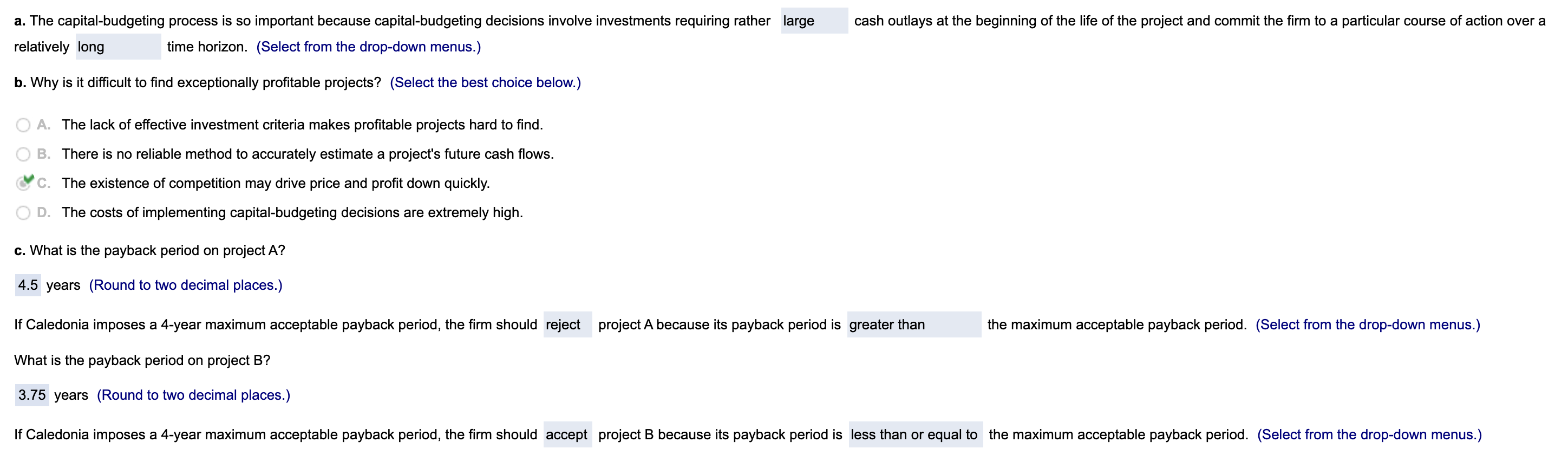
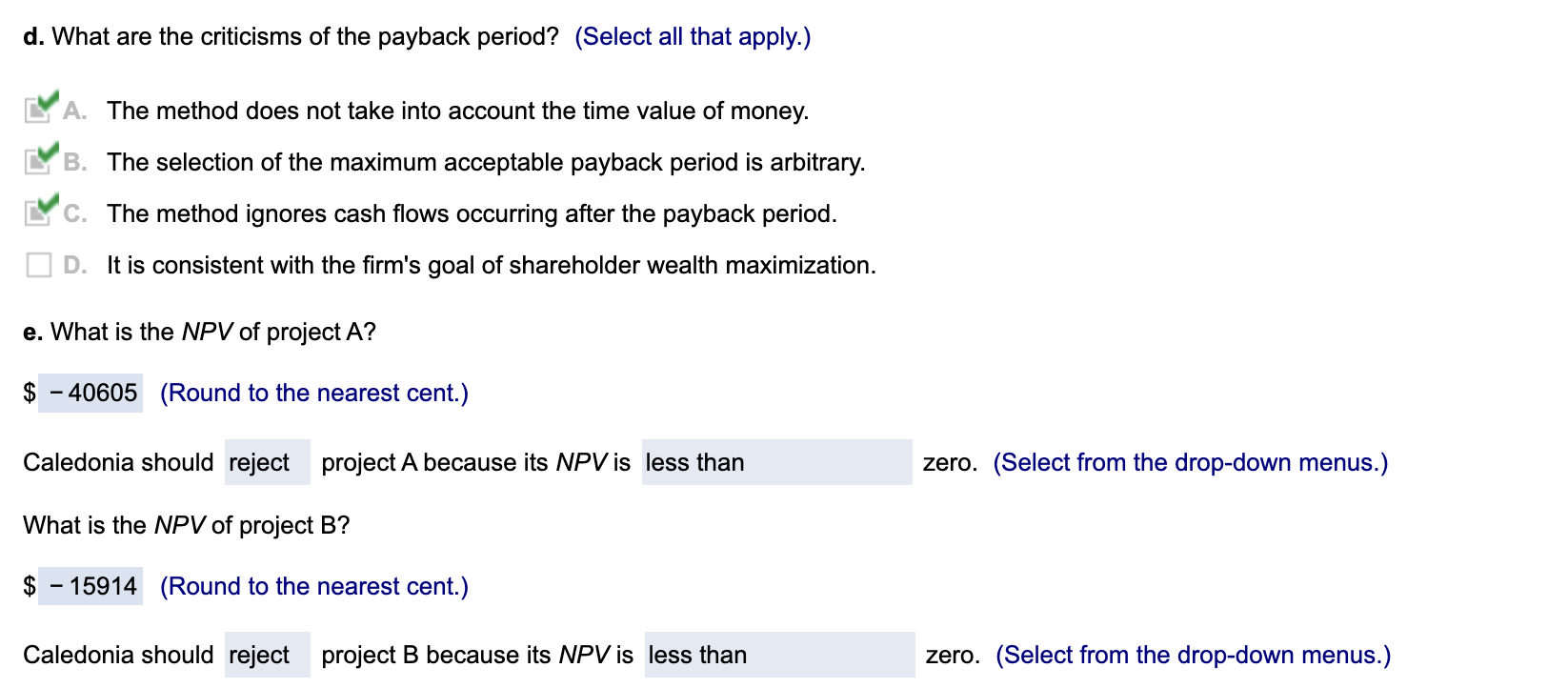
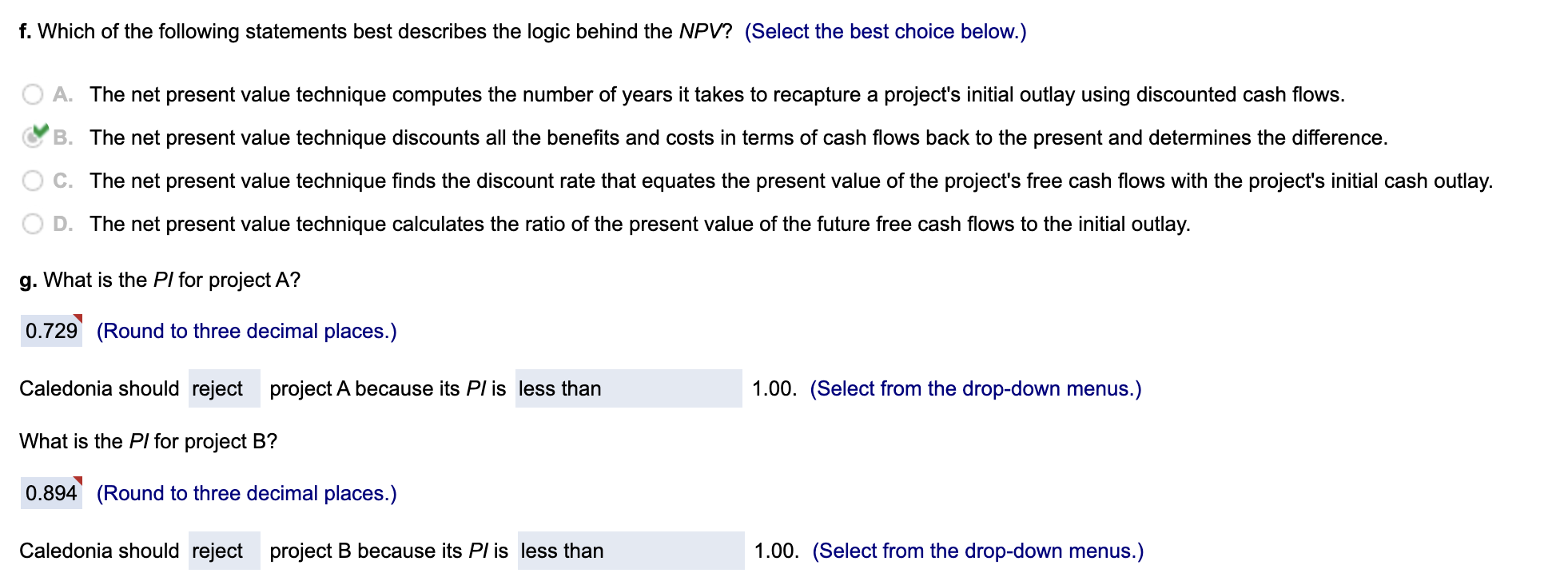
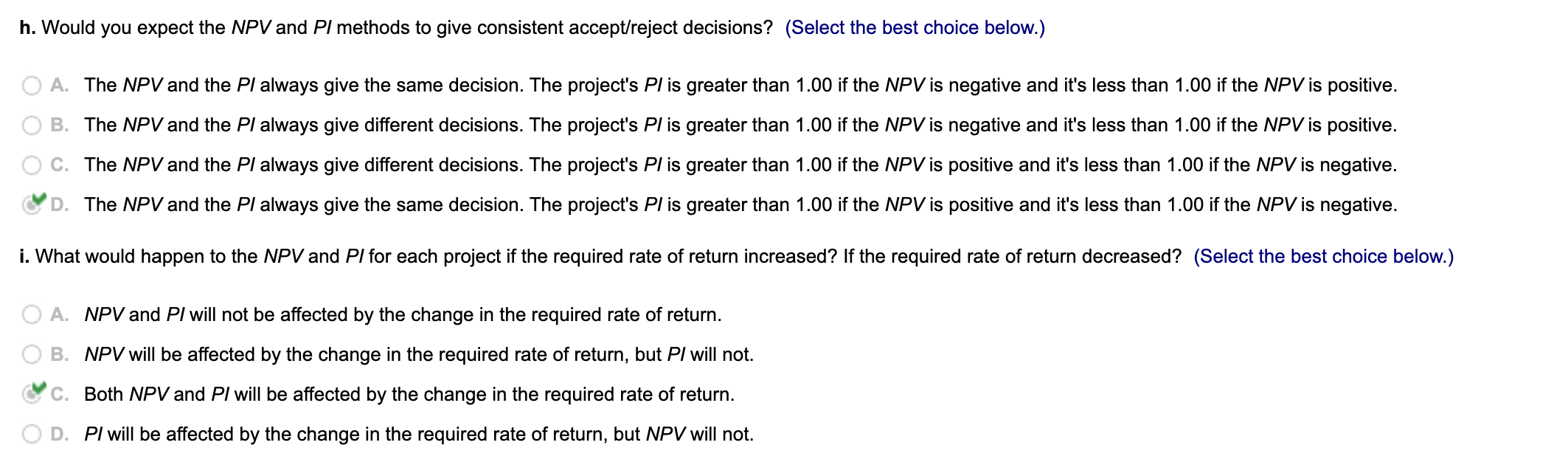
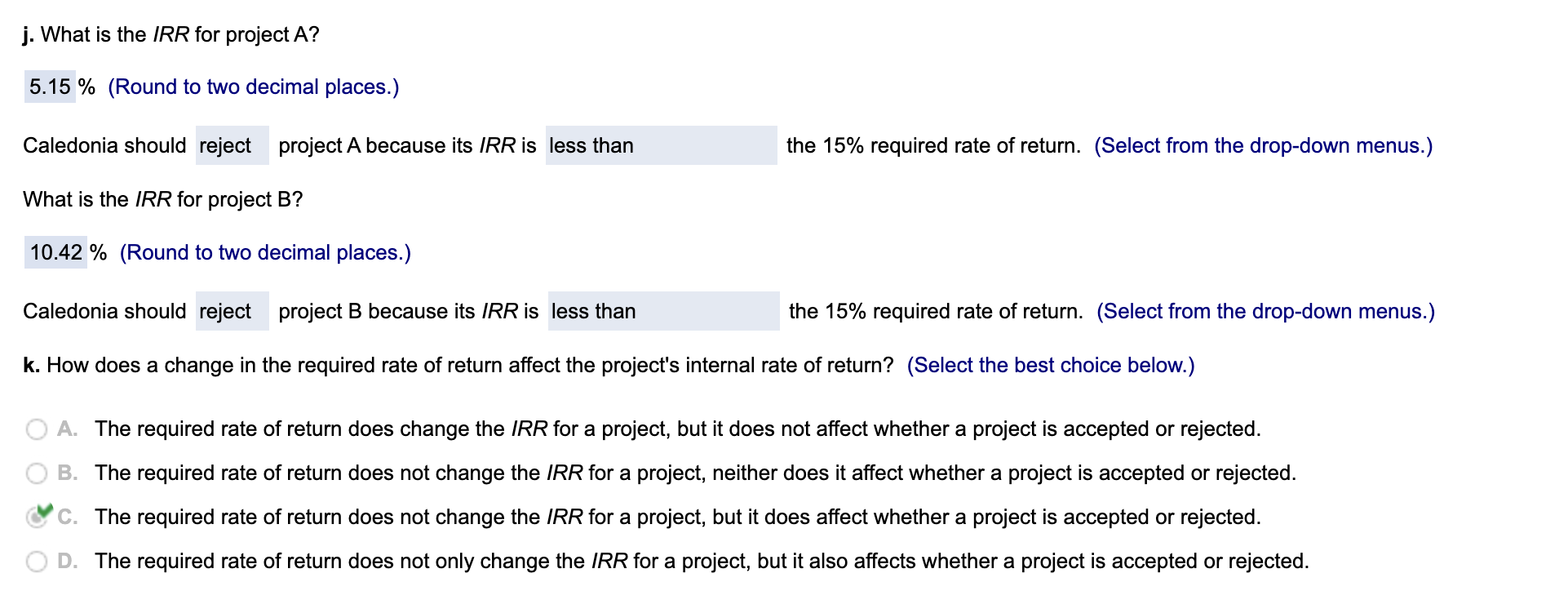

j. What is the IRR for project A ? \% (Round to two decimal places.) Caledonia should project A because its IRR is the 15% required rate of return. (Select from the drop-down menus.) What is the IRR for project B ? \% (Round to two decimal places.) Caledonia should project B because its IRR is the 15% required rate of return. (Select from the drop-down menus.) k. How does a change in the required rate of return affect the project's internal rate of return? (Select the best choice below.) A. The required rate of return does change the IRR for a project, but it does not affect whether a project is accepted or rejected. B. The required rate of return does not change the IRR for a project, neither does it affect whether a project is accepted or rejected. C. The required rate of return does not change the IRR for a project, but it does affect whether a project is accepted or rejected. D. The required rate of return does not only change the IRR for a project, but it also affects whether a project is accepted or rejected. f. Which of the following statements best describes the logic behind the NPV? (Select the best choice below.) A. The net present value technique computes the number of years it takes to recapture a project's initial outlay using discounted cash flows. 'B. The net present value technique discounts all the benefits and costs in terms of cash flows back to the present and determines the difference. C. The net present value technique finds the discount rate that equates the present value of the project's free cash flows with the project's initial cash outlay. D. The net present value technique calculates the ratio of the present value of the future free cash flows to the initial outlay. g. What is the PI for project A ? (Round to three decimal places.) Caledonia should project A because its PI is What is the PI for project B ? (Round to three decimal places.) 1.00. (Select from the drop-down menus.) project B because its Pl is 1.00. (Select from the drop-down menus.) I. What reinvestment rate assumptions are implicitly made by the NPV and IRR methods? Which one is better? (Select the best choice below.) A. The NPV assumes that all cash flows over the life of the project are reinvested at the required rate of return and, thus, is preferred. B. The IRR assumes that all cash flows over the life of the project are reinvested at the required rate of return and, thus, is preferred. C. The IRR assumes that all cash flows over the life of the project are reinvested over the remainder of the project's life at the internal rate of return and, thus, is preferred. D. The NPV assumes that all cash flows over the life of the project are reinvested over the remainder of the project's life at the internal rate of return and, thus, is preferred. a. The capital-budgeting process is so important because capital-budgeting decisions involve investments requiring rather relatively b. Why is it difficult to find exceptionally profitable projects? (Select the best choice below.) A. The lack of effective investment criteria makes profitable projects hard to find. B. There is no reliable method to accurately estimate a project's future cash flows. C. The existence of competition may drive price and profit down quickly. D. The costs of implementing capital-budgeting decisions are extremely high. c. What is the payback period on project A ? years (Round to two decimal places.) If Caledonia imposes a 4-year maximum acceptable payback period, the firm should What is the payback period on project B ? years (Round to two decimal places.) cash outlays at the beginning of the life of the project and commit the firm to a particular course of action over a project A because its payback period is the maximum acceptable payback period. (Select from the drop-down menus.) If Caledonia imposes a 4-year maximum acceptable payback period, the firm should accept project B because its payback period is the maximum acceptable payback period. (Select from the drop-down menus.) d. What are the criticisms of the payback period? (Select all that apply.) A. The method does not take into account the time value of money. B. The selection of the maximum acceptable payback period is arbitrary. 'C. The method ignores cash flows occurring after the payback period. D. It is consistent with the firm's goal of shareholder wealth maximization. e. What is the NPV of project A ? $ (Round to the nearest cent.) Caledonia should project A because its NPV is zero. (Select from the drop-down menus.) What is the NPV of project B ? $ (Round to the nearest cent.) Caledonia should project B because its NPV is zero. (Select from the drop-down menus.) the capital-budgeting analysis department or are provided with remedial training. The memorandum you received outlining your assignment follows: To: New Financial Analysts From: Mr. V. Morrison, CEO, Caledonia Products Re: Capital-Budgeting Analysis return on both projects has been established at 15 percent. The expected free cash flows from each project are shown in the popup window: In evaluating these projects, please respond to the following questions: Data table (Click on the following icon in order to copy its contents into a spreadsheet.) h. Would you expect the NPV and PI methods to give consistent accept/reject decisions? (Select the best choice below.) A. The NPV and the PI always give the same decision. The project's Pl is greater than 1.00 if the NPV is negative and it's less than 1.00 if the NPV is positive. B. The NPV and the PI always give different decisions. The project's PI is greater than 1.00 if the NPV is negative and it's less than 1.00 if the NPV is positive. C. The NPV and the PI always give different decisions. The project's PI is greater than 1.00 if the NPV is positive and it's less than 1.00 if the NPV is negative. D. The NPV and the PI always give the same decision. The project's PI is greater than 1.00 if the NPV is positive and it's less than 1.00 if the NPV is negative. i. What would happen to the NPV and PI for each project if the required rate of return increased? If the required rate of return decreased? (Select the best choice below.) A. NPV and PI will not be affected by the change in the required rate of return. B. NPV will be affected by the change in the required rate of return, but PI will not. C. Both NPV and PI will be affected by the change in the required rate of return. D. PI will be affected by the change in the required rate of return, but NPV will not
Step by Step Solution
There are 3 Steps involved in it

Get step-by-step solutions from verified subject matter experts
 Study Help