



Question: I have to fill the above table using below emotions states and the example is provided in the table as well Hi guys the I
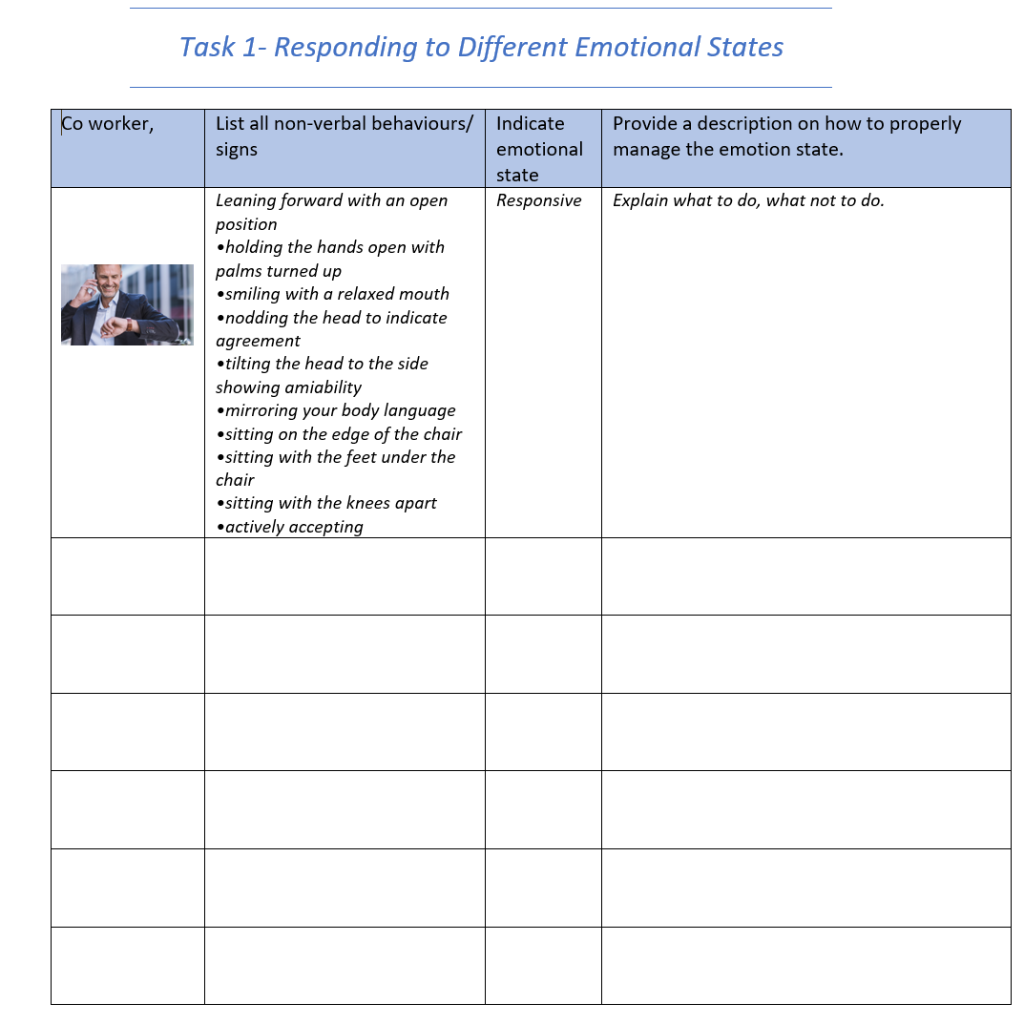
I have to fill the above table using below emotions states and the example is provided in the table as well
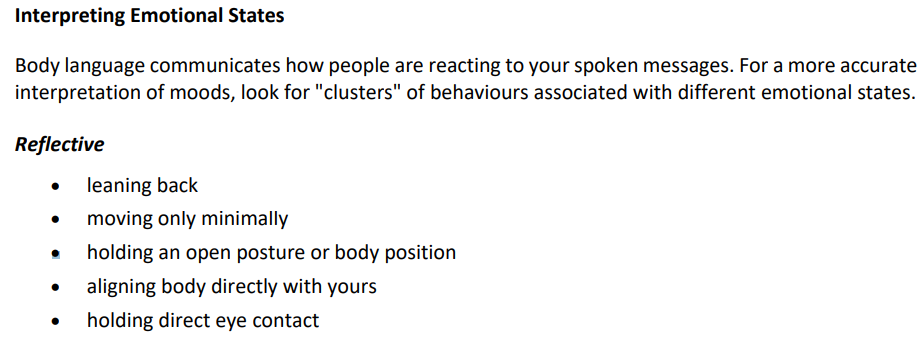
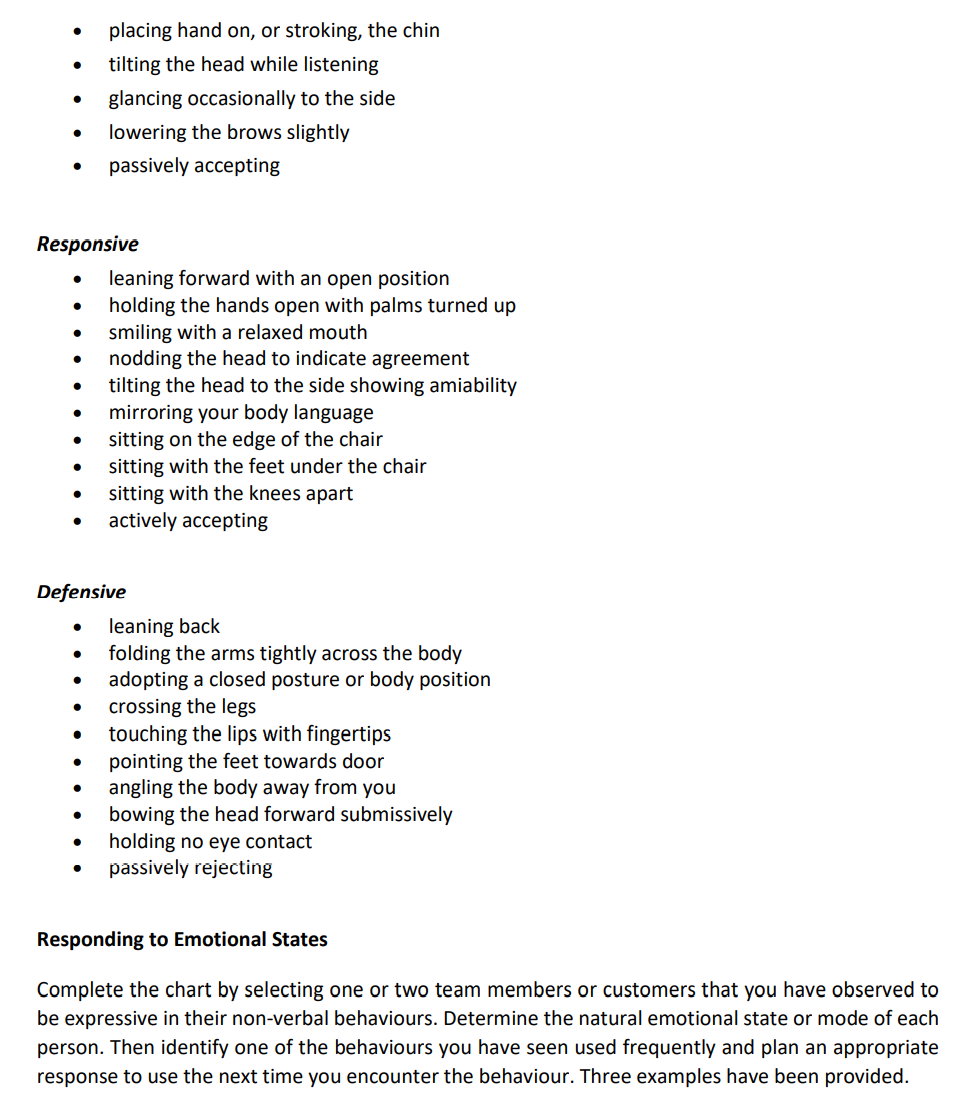
Hi guys the I have to fill up above table using above different emotions states. The subject is develop and use emotional intelligence.
Thank you guys for your help
Task 1- Responding to Different Emotional States Co worker, List all non-verbal behaviours/ signs Provide a description on how to properly manage the emotion state. Indicate emotional state Responsive Explain what to do, what not to do. Leaning forward with an open position holding the hands open with palms turned up smiling with a relaxed mouth nodding the head to indicate agreement .tilting the head to the side showing amiability .mirroring your body language sitting on the edge of the chair sitting with the feet under the chair sitting with the knees apart actively accepting Interpreting Emotional States Body language communicates how people are reacting to your spoken messages. For a more accurate interpretation of moods, look for "clusters" of behaviours associated with different emotional states. Reflective leaning back moving only minimally holding an open posture or body position aligning body directly with yours holding direct eye contact . . placing hand on, or stroking, the chin tilting the head while listening glancing occasionally to the side lowering the brows slightly passively accepting . . . Responsive leaning forward with an open position holding the hands open with palms turned up smiling with a relaxed mouth nodding the head to indicate agreement tilting the head to the side showing amiability mirroring your body language sitting on the edge of the chair sitting with the feet under the chair sitting with the knees apart actively accepting . . . Defensive leaning back folding the arms tightly across the body adopting a closed posture or body position crossing the legs touching the lips with fingertips pointing the feet towards door angling the body away from you bowing the head forward submissively holding no eye contact passively rejecting . . . . Responding to Emotional States Complete the chart by selecting one or two team members or customers that you have observed to be expressive in their non-verbal behaviours. Determine the natural emotional state or mode of each person. Then identify one of the behaviours you have seen used frequently and plan an appropriate response to use the next time you encounter the behaviour. Three examples have been provided. Task 1- Responding to Different Emotional States Co worker, List all non-verbal behaviours/ signs Provide a description on how to properly manage the emotion state. Indicate emotional state Responsive Explain what to do, what not to do. Leaning forward with an open position holding the hands open with palms turned up smiling with a relaxed mouth nodding the head to indicate agreement .tilting the head to the side showing amiability .mirroring your body language sitting on the edge of the chair sitting with the feet under the chair sitting with the knees apart actively accepting Interpreting Emotional States Body language communicates how people are reacting to your spoken messages. For a more accurate interpretation of moods, look for "clusters" of behaviours associated with different emotional states. Reflective leaning back moving only minimally holding an open posture or body position aligning body directly with yours holding direct eye contact . . placing hand on, or stroking, the chin tilting the head while listening glancing occasionally to the side lowering the brows slightly passively accepting . . . Responsive leaning forward with an open position holding the hands open with palms turned up smiling with a relaxed mouth nodding the head to indicate agreement tilting the head to the side showing amiability mirroring your body language sitting on the edge of the chair sitting with the feet under the chair sitting with the knees apart actively accepting . . . Defensive leaning back folding the arms tightly across the body adopting a closed posture or body position crossing the legs touching the lips with fingertips pointing the feet towards door angling the body away from you bowing the head forward submissively holding no eye contact passively rejecting . . . . Responding to Emotional States Complete the chart by selecting one or two team members or customers that you have observed to be expressive in their non-verbal behaviours. Determine the natural emotional state or mode of each person. Then identify one of the behaviours you have seen used frequently and plan an appropriate response to use the next time you encounter the behaviour. Three examples have been provided
Step by Step Solution
There are 3 Steps involved in it
1 Expert Approved Answer
Step: 1 Unlock

Question Has Been Solved by an Expert!
Get step-by-step solutions from verified subject matter experts
Step: 2 Unlock
Step: 3 Unlock