







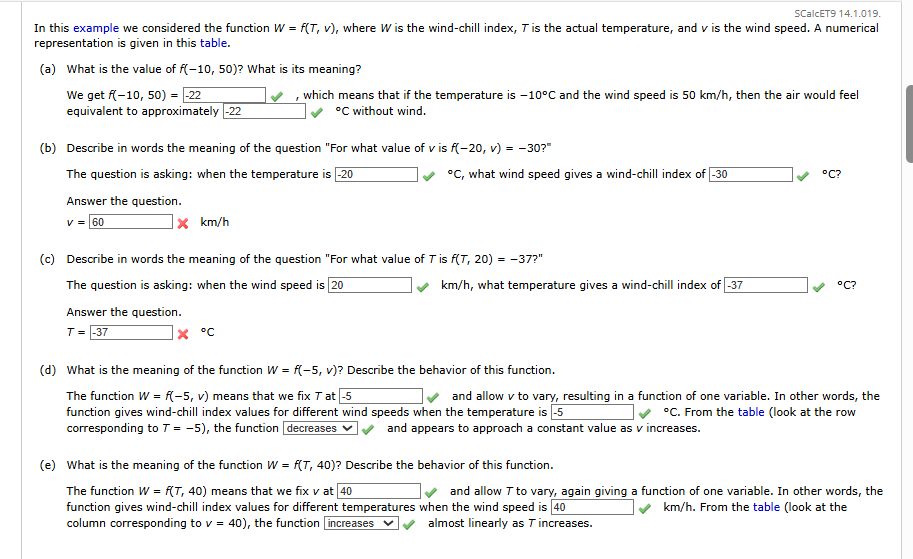
Question: I n this example w e considered the function W = f ( T , v ) , where W i s the wind -
this example considered the function where the windchill index, the actual temperature, and the wind speed. A numerical
representation given this table.
What the value What its meaning?
get
which means that the temperature and the wind speed without wind.
Describe words the meaning the question "For what value what wind speed gives a windchill index
Answer the question.
Describe words the meaning the question "For what value
The question asking: when the wind speed
what temperature gives a windchill index
Answer the question.
What the meaning the function Describe the behavior this function.
The function means that fix
and allow vary, resulting a function one variable. other words, the
function gives windchill index values for different wind speeds when the temperature
and appears approach a constant value increases.
What the meaning the function Describe the behavior this function.
The function means that fix
and allow vary, again giving a function one variable. other words, the
function gives windchill index values for different temperatures when the wind speed
increases.
Step by Step Solution
There are 3 Steps involved in it
1 Expert Approved Answer
Step: 1 Unlock

Question Has Been Solved by an Expert!
Get step-by-step solutions from verified subject matter experts
Step: 2 Unlock
Step: 3 Unlock
 Study Help