







Question: I need help ASAP and also explain your work. Thanks. QUESTION 1 XYZ Company's stock has a beta (b) of 1.28, the risk-free rate (TRF)
 I need help ASAP and also explain your work. Thanks.
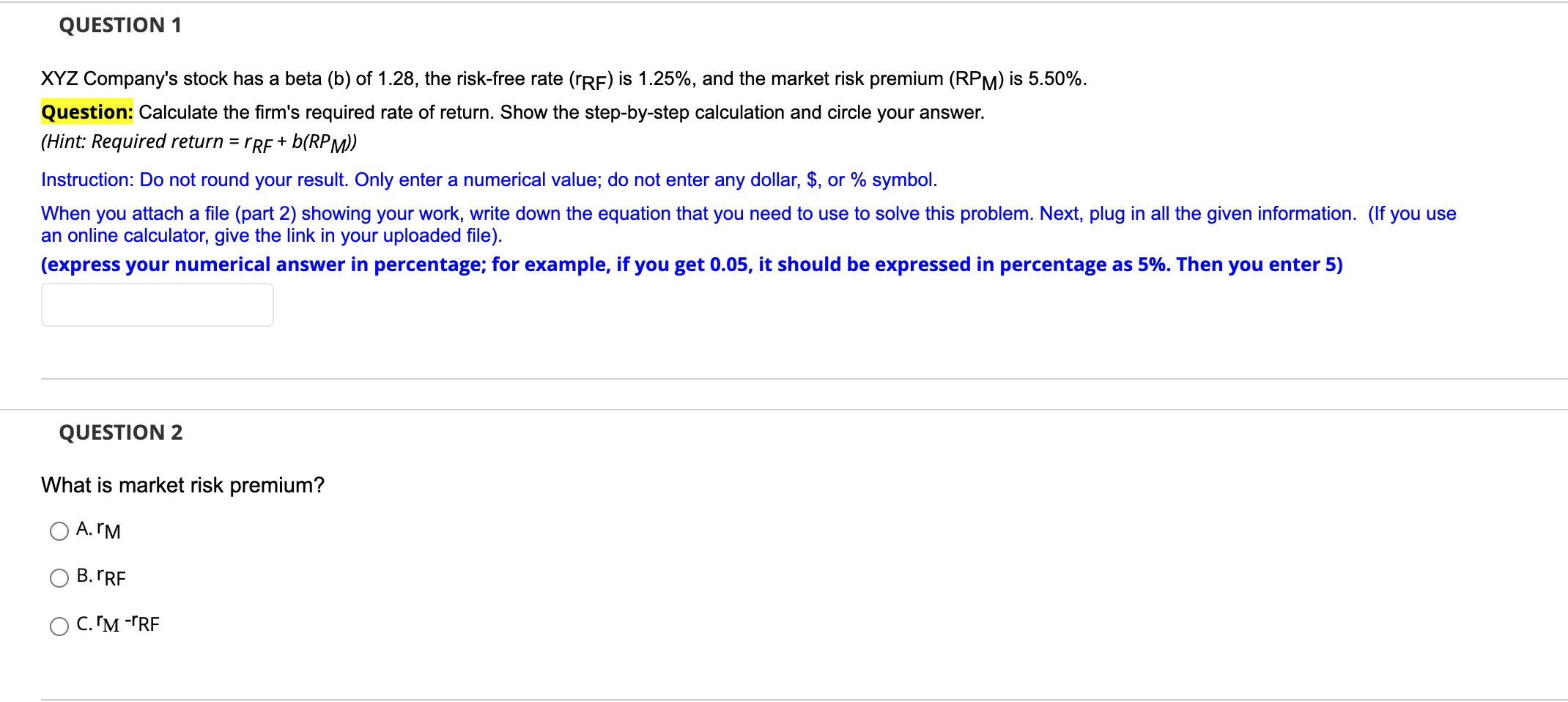
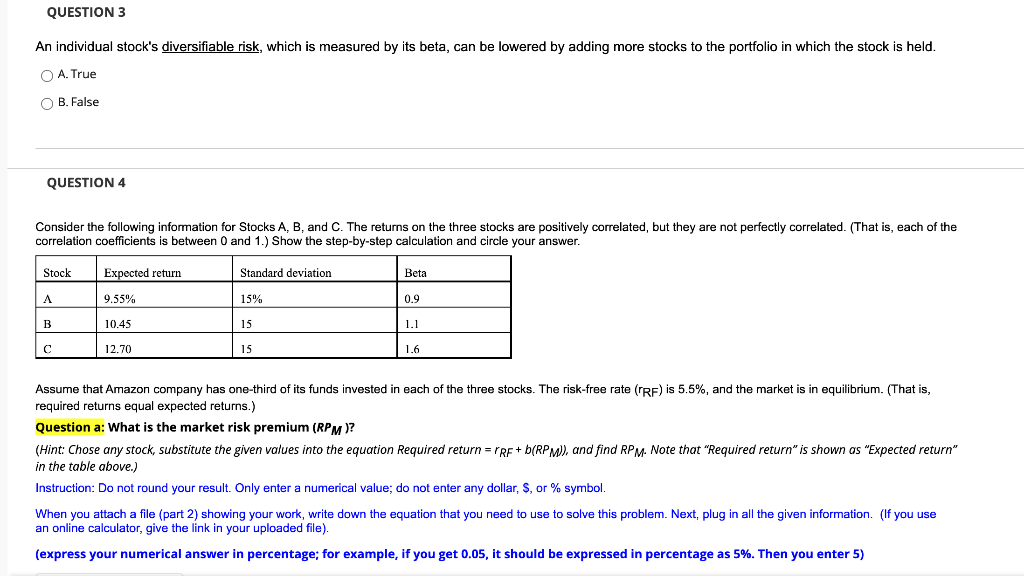
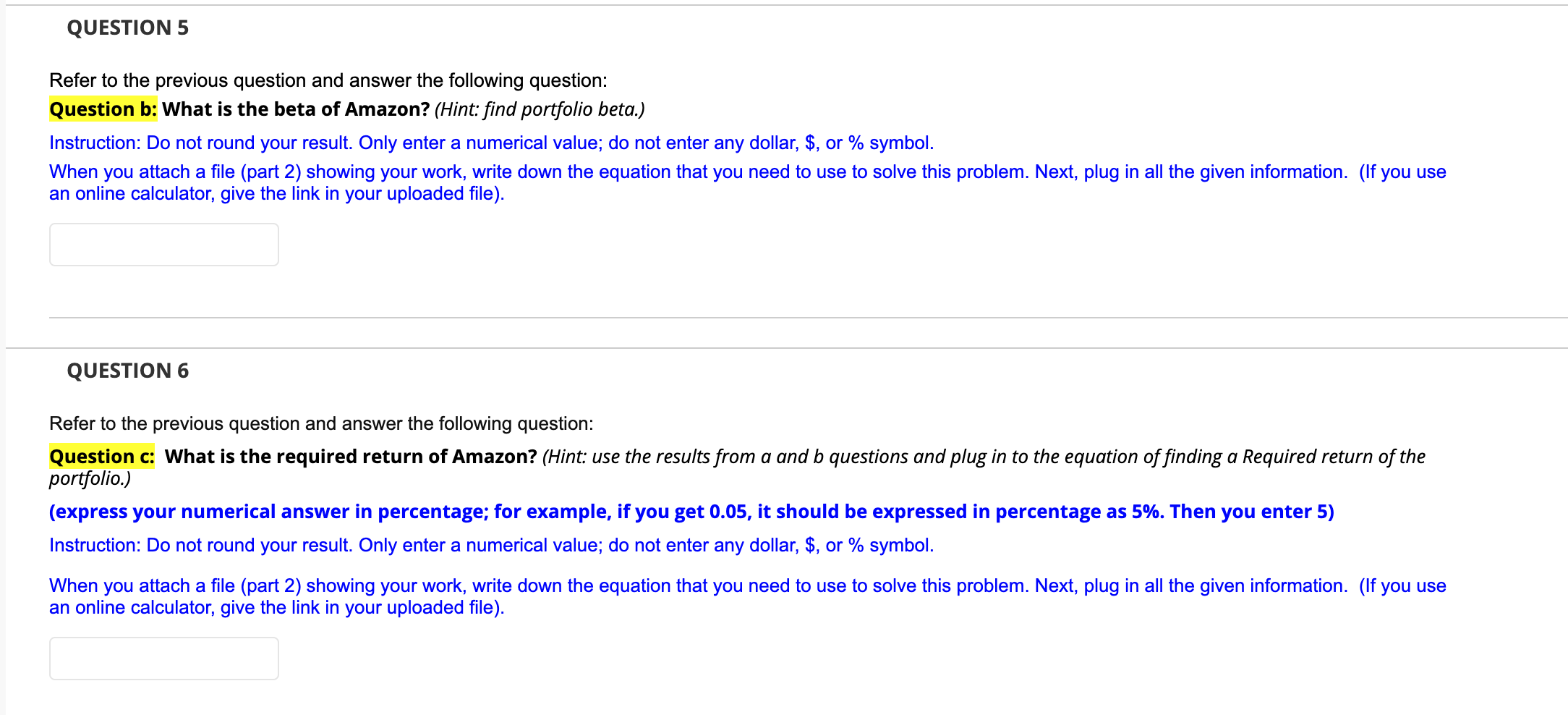
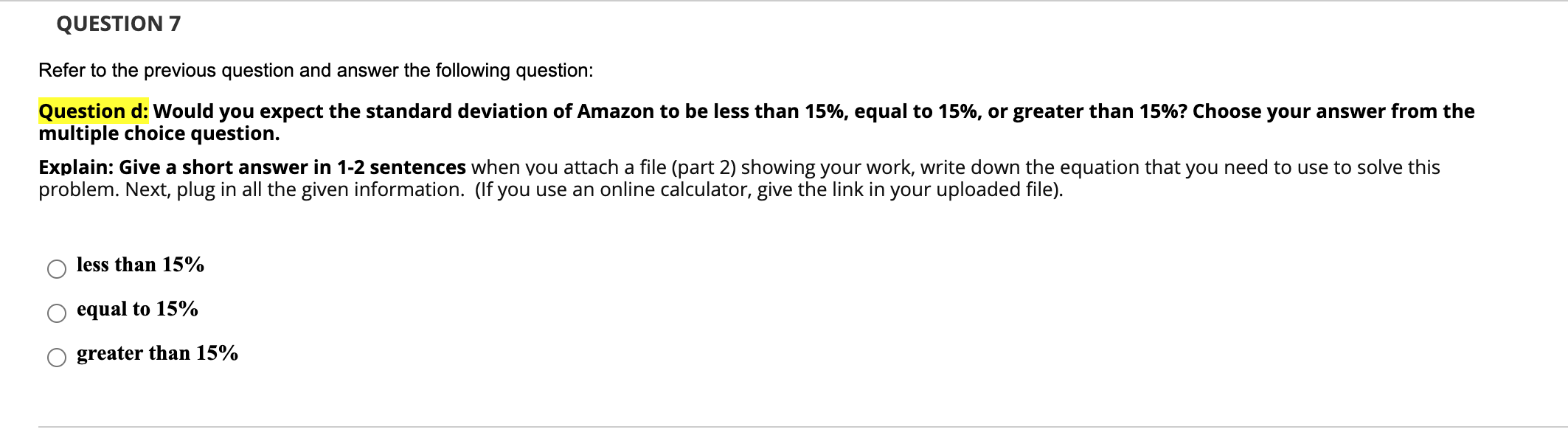
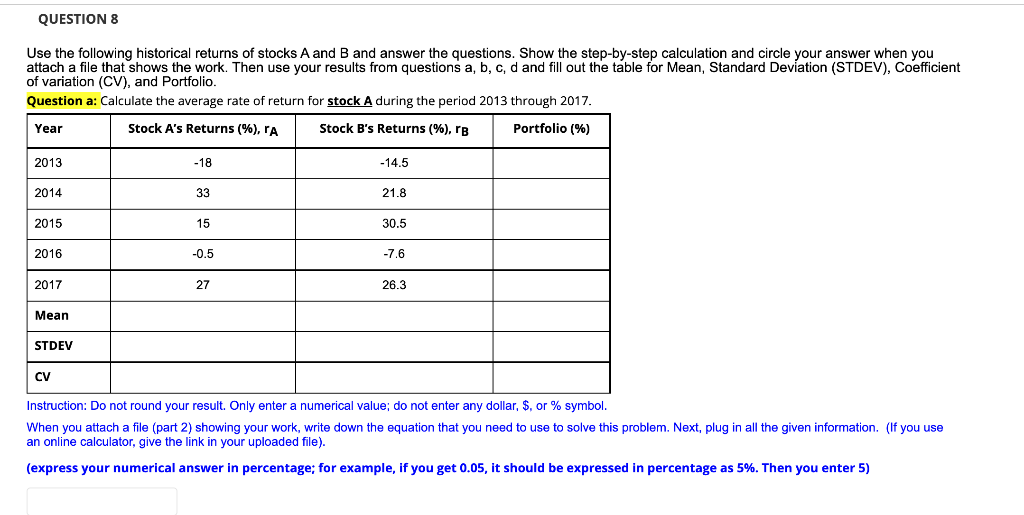
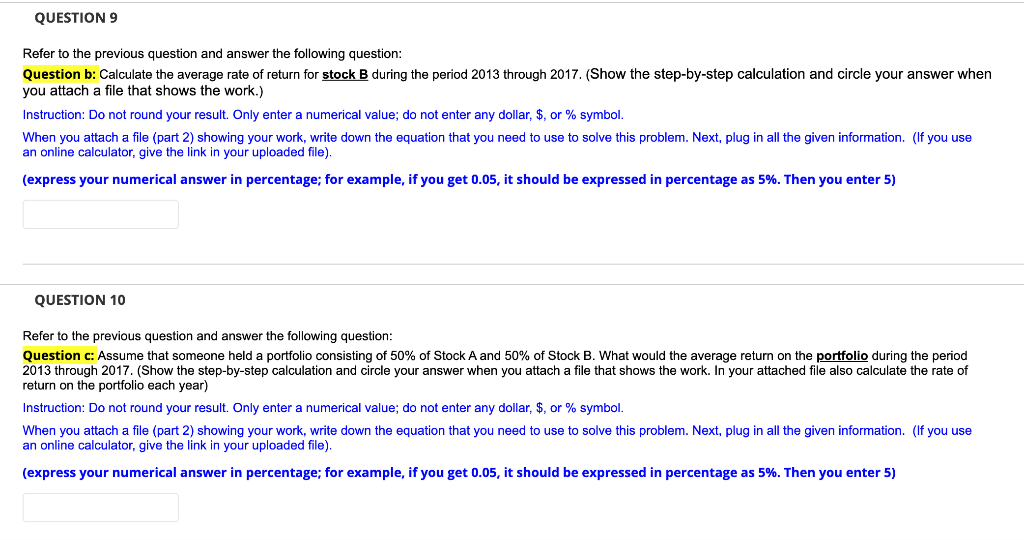
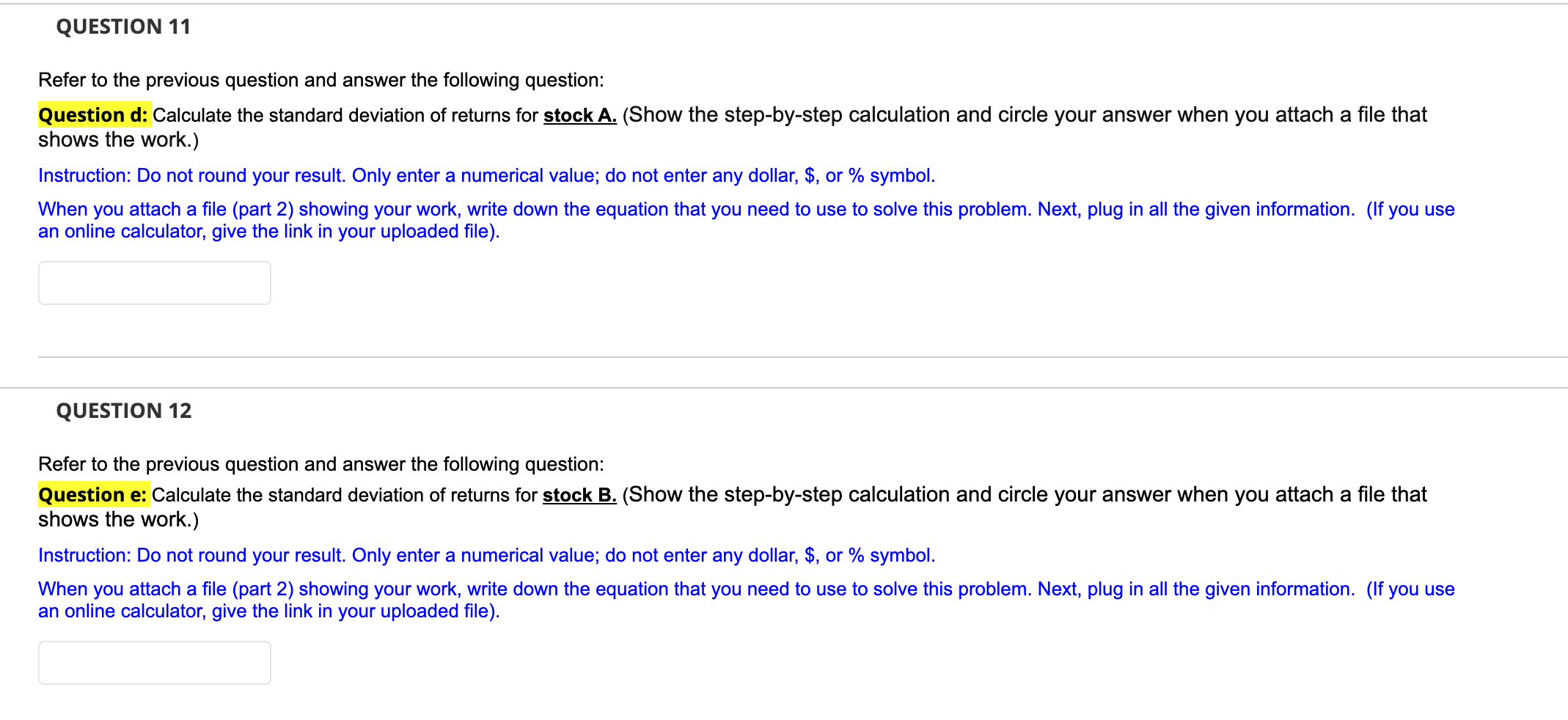
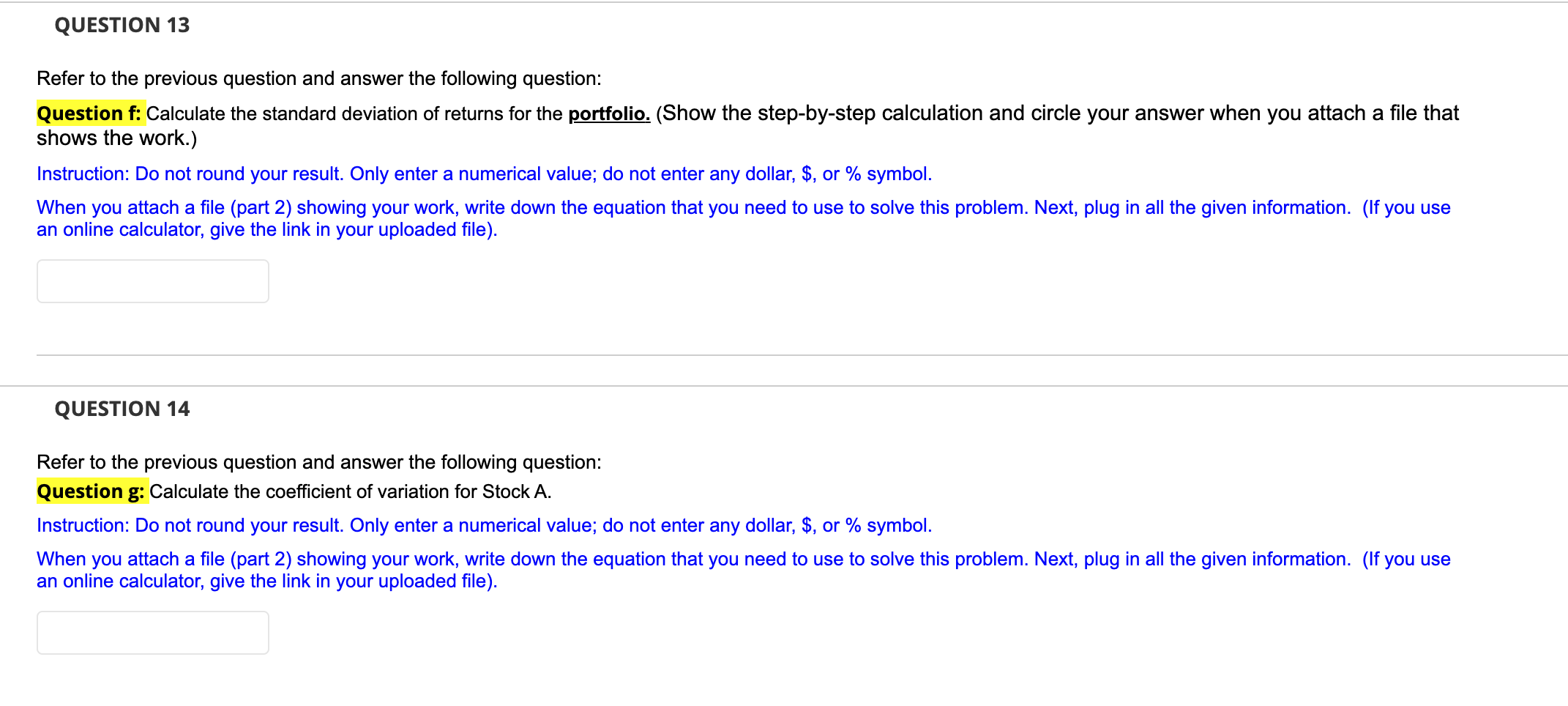
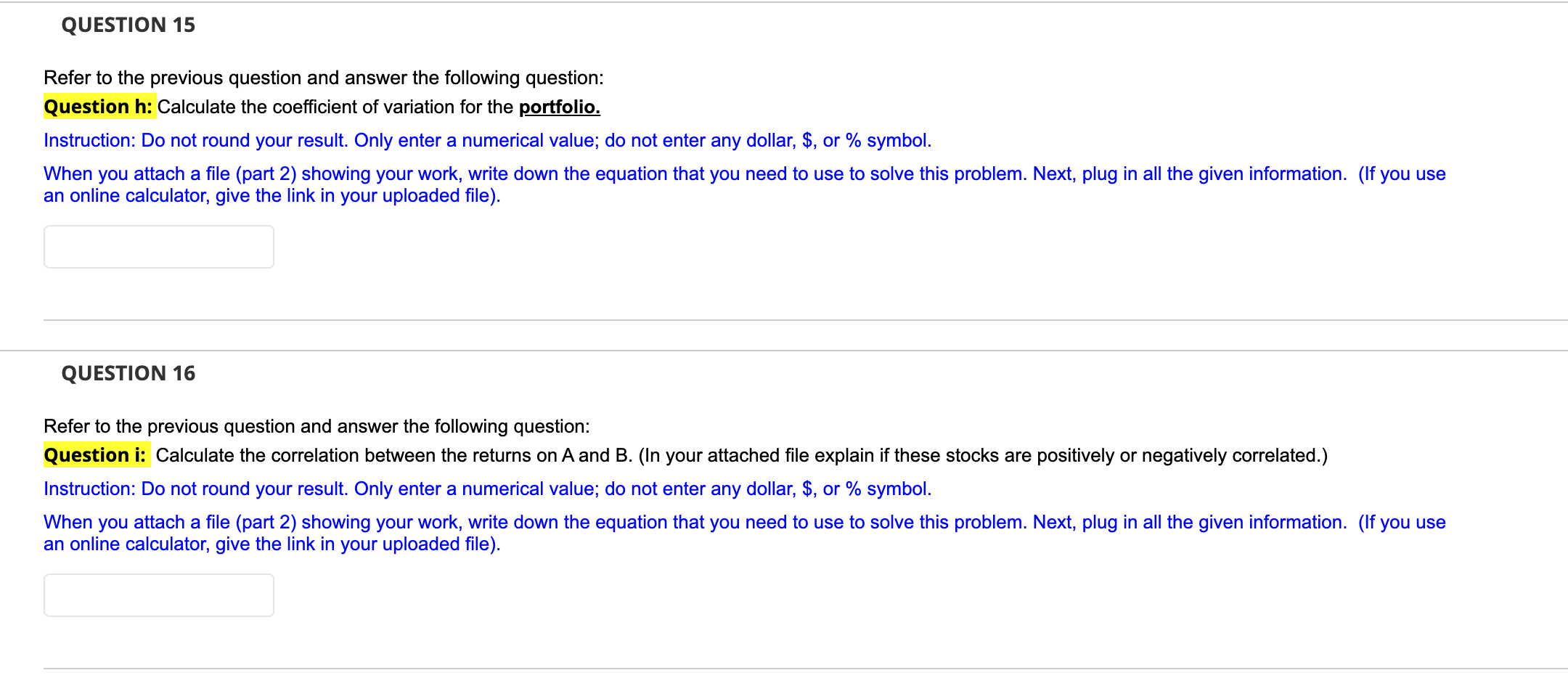
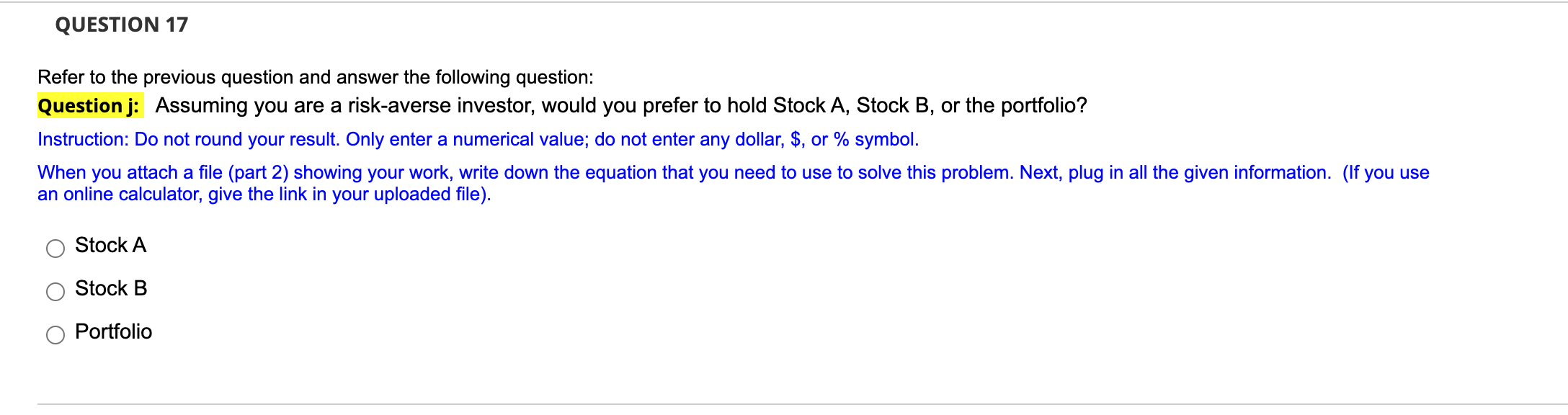
QUESTION 1 XYZ Company's stock has a beta (b) of 1.28, the risk-free rate (TRF) is 1.25%, and the market risk premium (RPM) is 5.50%. Question: Calculate the firm's required rate of return. Show the step-by-step calculation and circle your answer. (Hint: Required return =rRF+ b(RPM)) Instruction: Do not round your result. Only enter a numerical value; do not enter any dollar, $, or % symbol. When you attach a file (part 2) showing your work, write down the equation that you need to use to solve this problem. Next, plug in all the given information. (If you use an online calculator, give the link in your uploaded file). (express your numerical answer in percentage; for example, if you get 0.05, it should be expressed in percentage as 5%. Then you enter 5) QUESTION 2 What is market risk premium? A. IM B.TRF C.'M PRE QUESTION 3 An individual stock's diversifiable risk, which is measured by its beta, can be lowered by adding more stocks to the portfolio in which the stock is held. O A. True B. False QUESTION 4 Consider the following information for Stocks A, B, and C. The returns on the three stocks are positively correlated, but they are not perfectly correlated. (That is, each of the correlation coefficients is between 0 and 1.) Show the step-by-step calculation and circle your answer. Stock Expected return Standard deviation Beta 9.55% 15% 0.9 B 10.45 15 1.1 12.70 15 1.6 Assume that Amazon company has one-third of its funds invested in each of the three stocks. The risk-free rate (TRF) is 5.5%, and the market is in equilibrium. (That is, required returns equal expected returns.) Question a: What is the market risk premium (RPM)? (Hint: Chose any stock, substitute the given values into the equation Required return =TRF+ b(RPM), and find RPM. Note that "Required return" is shown as "Expected return" in the table above.) Instruction: Do not round your result. Only enter a numerical value; do not enter any dollar, S, or % symbol. When you attach a file (part 2) showing your work, write down the equation that you need to use to solve this problem. Next, plug in all the given information. (If you use an online calculator, give the link in your uploaded file). (express your numerical answer in percentage; for example, if you get 0.05, it should be expressed in percentage as 5%. Then you enter 5) QUESTION 5 Refer to the previous question and answer the following question: Question b: What is the beta of Amazon? (Hint: find portfolio beta.) Instruction: Do not round your result. Only enter a numerical value; do not enter any dollar, $, or % symbol. When you attach a file (part 2) showing your work, write down the equation that you need to use to solve this problem. Next, plug in all the given information. (If you use an online calculator, give the link in your uploaded file). QUESTION 6 Refer to the previous question and answer the following question: Question c: What is the required return of Amazon? (Hint: use the results from a and b questions and plug in to the equation of finding a Required return of the portfolio.) (express your numerical answer in percentage; for example, if you get 0.05, it should be expressed in percentage as 5%. Then you enter 5) Instruction: Do not round your result. Only enter a numerical value; do not enter any dollar, $, or % symbol. When you attach a file (part 2) showing your work, write down the equation that you need to use to solve this problem. Next, plug in all the given information. (If you use an online calculator, give the link in your uploaded file). QUESTION 7 Refer to the previous question and answer the following question: Question d: Would you expect the standard deviation of Amazon to be less than 15%, equal to 15%, or greater than 15%? Choose your answer from the multiple choice question. Explain: Give a short answer in 1-2 sentences when you attach a file (part 2) showing your work, write down the equation that you need to use to solve this problem. Next, plug in all the given information. (If you use an online calculator, give the link in your uploaded file). less than 15% equal to 15% greater than 15% QUESTION 8 Use the following historical returns of stocks and B and answer the questions. Show the step-by-step calculation and circle your answer when you attach a file that shows the work. Then use your results from questions a, b, c, d and fill out the table for Mean, Standard Deviation (STDEV), Coefficient of variation (CV), and Portfolio. Question a: Calculate the average rate of return for stock A during the period 2013 through 2017. Year Stock A's Returns (%), PA Stock B's Returns (%), rb Portfolio (%) 2013 -18 - 14.5 2014 33 21.8 2015 15 30.5 2016 -0.5 -7.6 2017 27 26.3 Mean STDEV CV Instruction: Do not round your result. Only enter a numerical value; do not enter any dollar, $. or % symbol. When you attach a file (part 2) showing your work, write down the equation that you need to use to solve this problem. Next, plug in all the given information. (If you use an online calculator, give the link in your uploaded file). (express your numerical answer in percentage; for example, if you get 0.05, it should be expressed in percentage as 5%. Then you enter 5) QUESTION 9 Refer to the previous question and answer the following question: Question b: Calculate the average rate of return for stock B during the period 2013 through 2017. (Show the step-by-step calculation and circle your answer when you attach a file that shows the work.) Instruction: Do not round your result. Only enter a numerical value; do not enter any dollar, $, or % symbol. When you attach a file (part 2) showing your work, write down the equation that you need to use to solve this problem. Next, plug in all the given information. (If you use an online calculator, give the link in your uploaded file). (express your numerical answer in percentage; for example, if you get 0.05, it should be expressed in percentage as 5%. Then you enter 5) QUESTION 10 Refer to the previous question and answer the following question: Question : Assume that someone held a portfolio consisting of 50% of Stock A and 50% of Stock B. What would the average return on the portfolio during the period 2013 through 2017. (Show the step-by-step calculation and circle your answer when you attach a file that shows the work. In your attached file also calculate the rate of return on the portfolio each year) Instruction: Do not round your result. Only enter a numerical value; do not enter any dollar, $, or % symbol. When you attach a file (part 2) showing your work, write down the equation that you need to use to solve this problem. Next, plug in all the given information. (If you use an online calculator, give the link in your uploaded file). (express your numerical answer in percentage; for example, if you get 0.05, it should be expressed in percentage as 5%. Then you enter 5) QUESTION 11 Refer to the previous question and answer the following question: Question d: Calculate the standard deviation of returns for stock A. (Show the step-by-step calculation and circle your answer when you attach a file that shows the work.) Instruction: Do not round your result. Only enter a numerical value; do not enter any dollar, $, or % symbol. When you attach a file (part 2) showing your work, write down the equation that you need to use to solve this problem. Next, plug in all the given information. (If you use an online calculator, give the link in your uploaded file). QUESTION 12 Refer to the previous question and answer the following question: Question e: Calculate the standard deviation of returns for stock B. (Show the step-by-step calculation and circle your answer when you attach a file that shows the work.) Instruction: Do not round your result. Only enter a numerical value; do not enter any dollar, $, or % symbol. When you attach a file (part 2) showing your work, write down the equation that you need to use to solve this problem. Next, plug in all the given information. (If you use an online calculator, give the link in your uploaded file). QUESTION 13 Refer to the previous question and answer the following question: Question f: Calculate the standard deviation of returns for the portfolio. (Show the step-by-step calculation and circle your answer when you attach a file that shows the work.) Instruction: Do not round your result. Only enter a numerical value; do not enter any dollar, $, or % symbol. When you attach a file (part 2) showing your work, write down the equation that you need to use to solve this problem. Next, plug in all the given information. (If you use an online calculator, give the link in your uploaded file). QUESTION 14 Refer to the previous question and answer the following question: Question g: Calculate the coefficient of variation for Stock A. Instruction: Do not round your result. Only enter a numerical value; do not enter any dollar, $, or % symbol. When you attach a file (part 2) showing your work, write down the equation that you need to use to solve this problem. Next, plug in all the given information. (If you use an online calculator, give the link in your uploaded file). QUESTION 15 Refer to the previous question and answer the following question: Question h: Calculate the coefficient of variation for the portfolio. Instruction: Do not round your result. Only enter a numerical value; do not enter any dollar, $, or % symbol. When you attach a file (part 2) showing your work, write down the equation that you need to use to solve this problem. Next, plug in all the given information. (If you use an online calculator, give the link in your uploaded file). QUESTION 16 Refer to the previous question and answer the following question: Question i: Calculate the correlation between the returns on A and B. (In your attached file explain if these stocks are positively or negatively correlated.) Instruction: Do not round your result. Only enter a numerical value; do not enter any dollar, $, or % symbol. When you attach a file (part 2) showing your work, write down the equation that you need to use to solve this problem. Next, plug in all the given information. (If you use an online calculator, give the link in your uploaded file). QUESTION 17 Refer to the previous question and answer the following question: Question j: Assuming you are a risk-averse investor, would you prefer to hold Stock A, Stock B, or the portfolio? Instruction: Do not round your result. Only enter a numerical value; do not enter any dollar, $, or % symbol. When you attach a file (part 2) showing your work, write down the equation that you need to use to solve this problem. Next, plug in all the given information. (If you use an online calculator, give the link in your uploaded file). Stock A Stock B O Portfolio
Step by Step Solution
There are 3 Steps involved in it

Get step-by-step solutions from verified subject matter experts
 Study Help