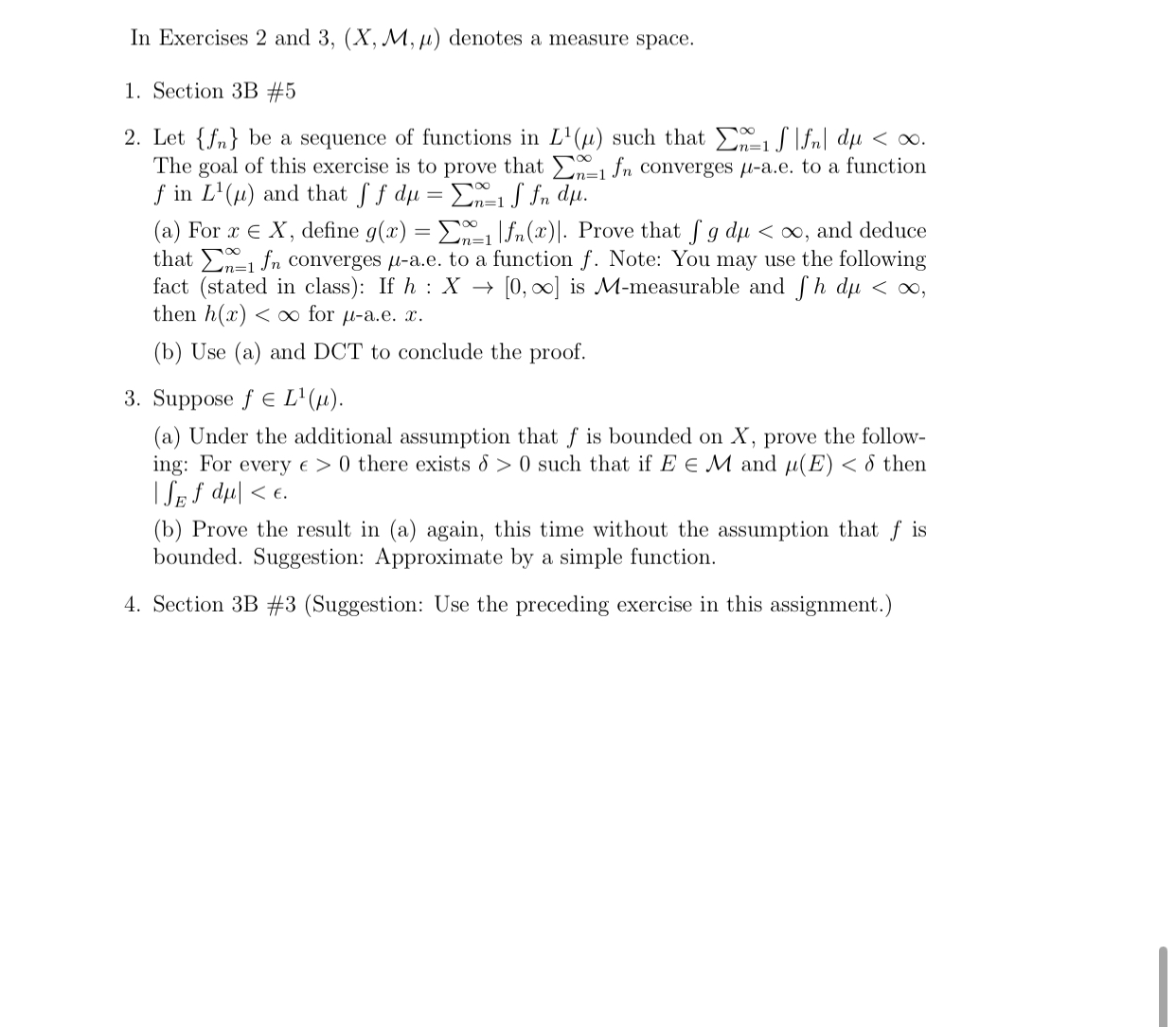
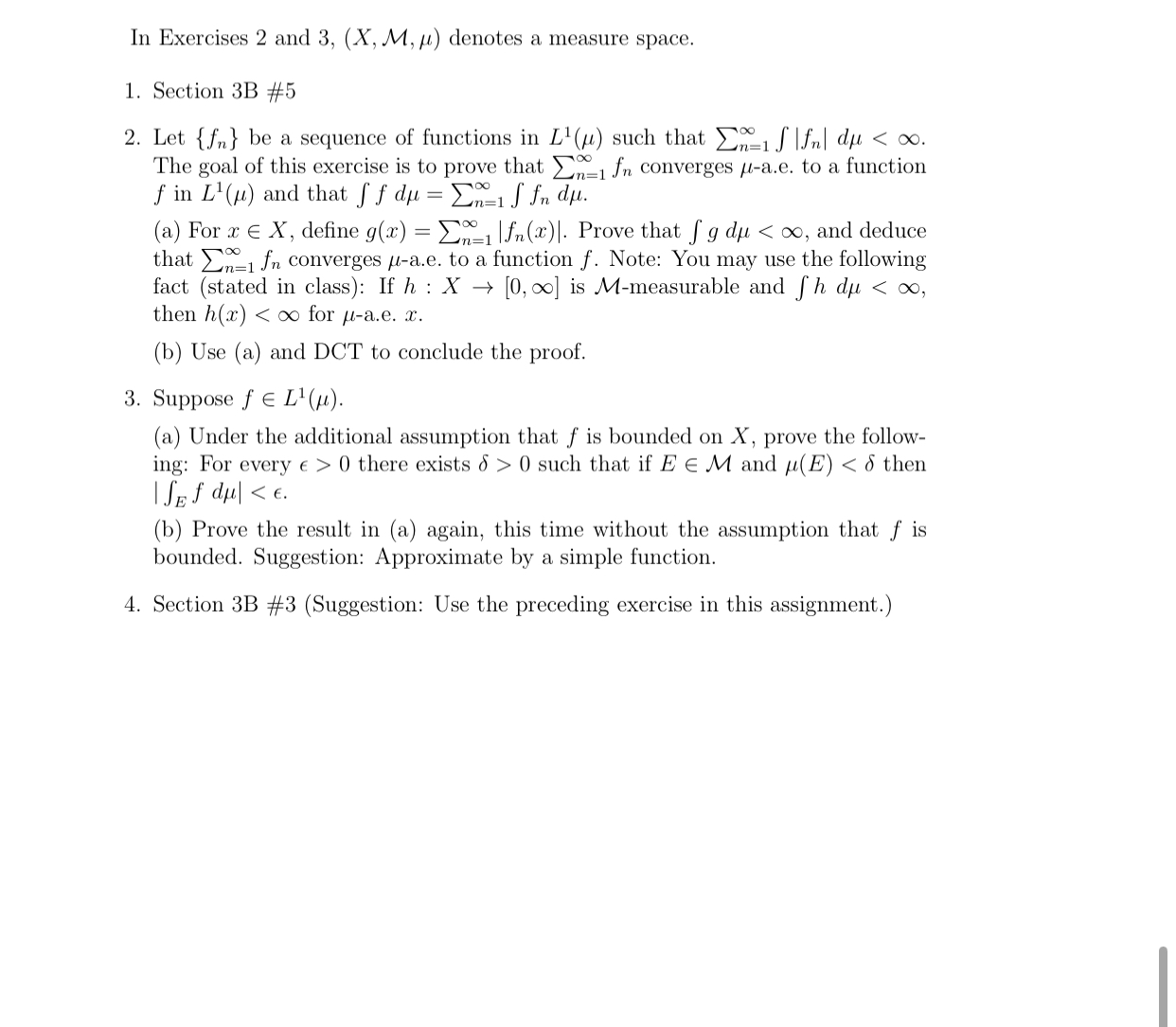
Question: I need help with Exercise #3 pleas use the attached materials only to solve the problem. thank you Section 3B Limits of Integrals & Integrals
I need help with Exercise #3
pleas use the attached materials only to solve the problem. thank you
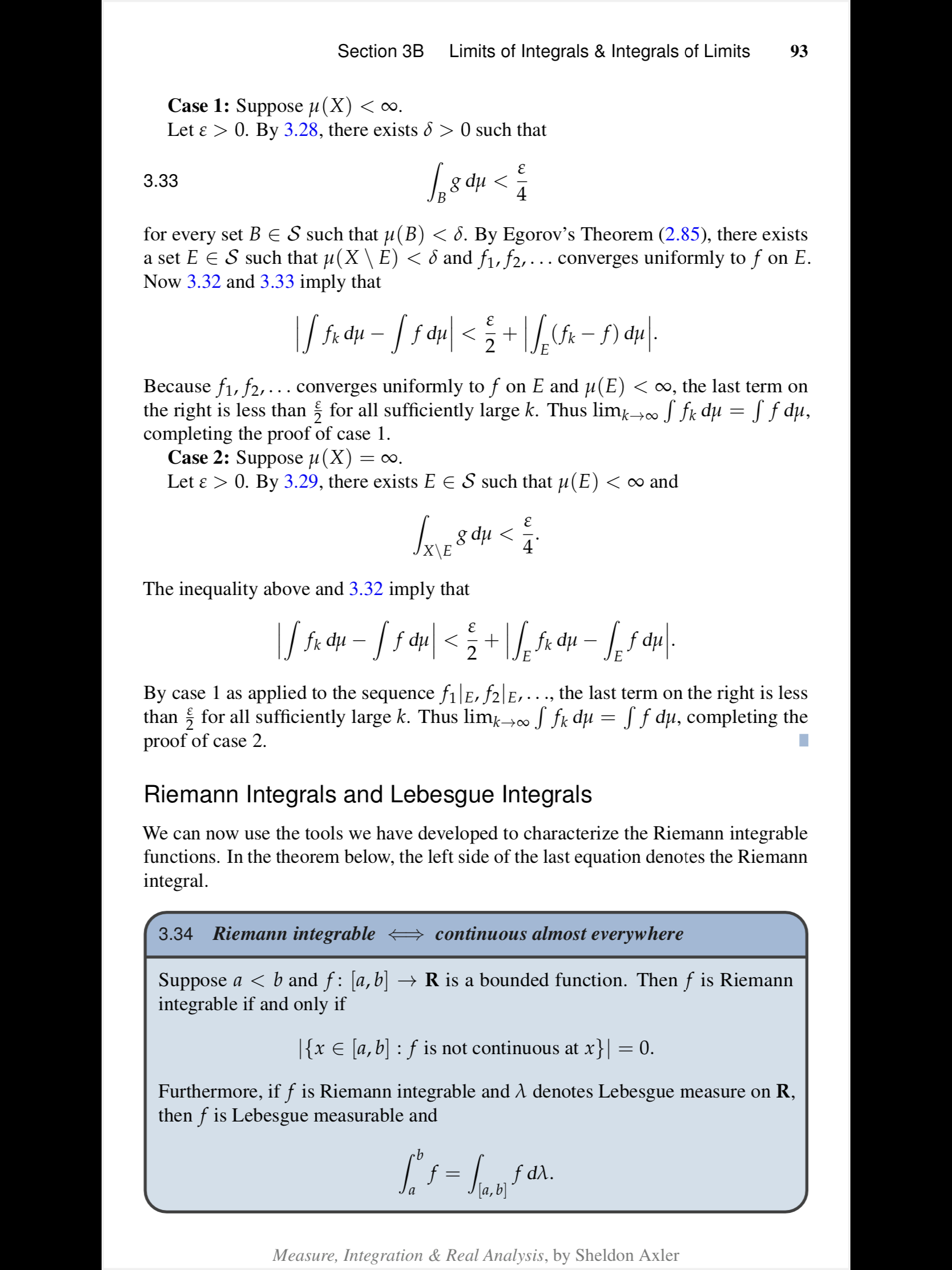
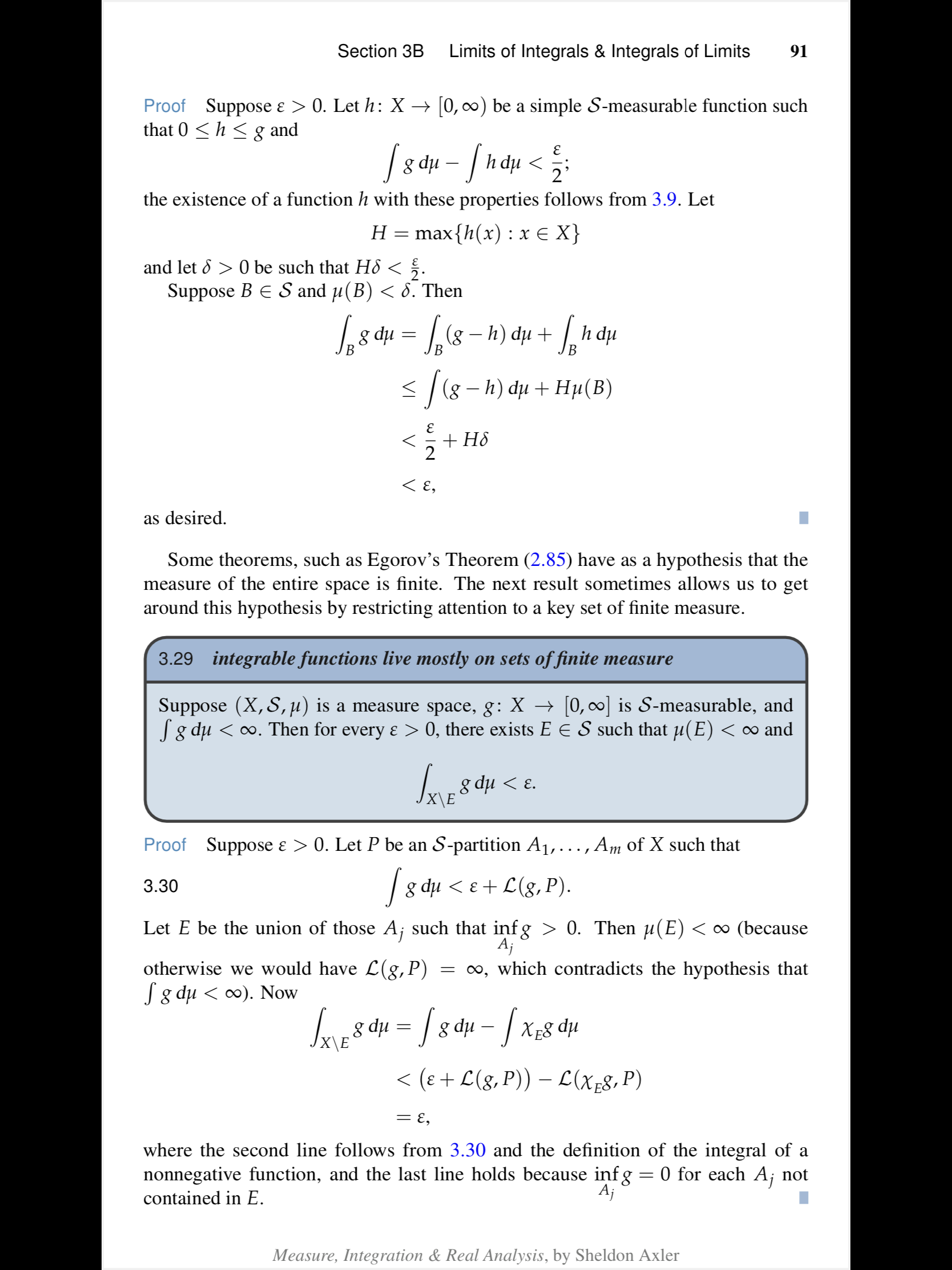
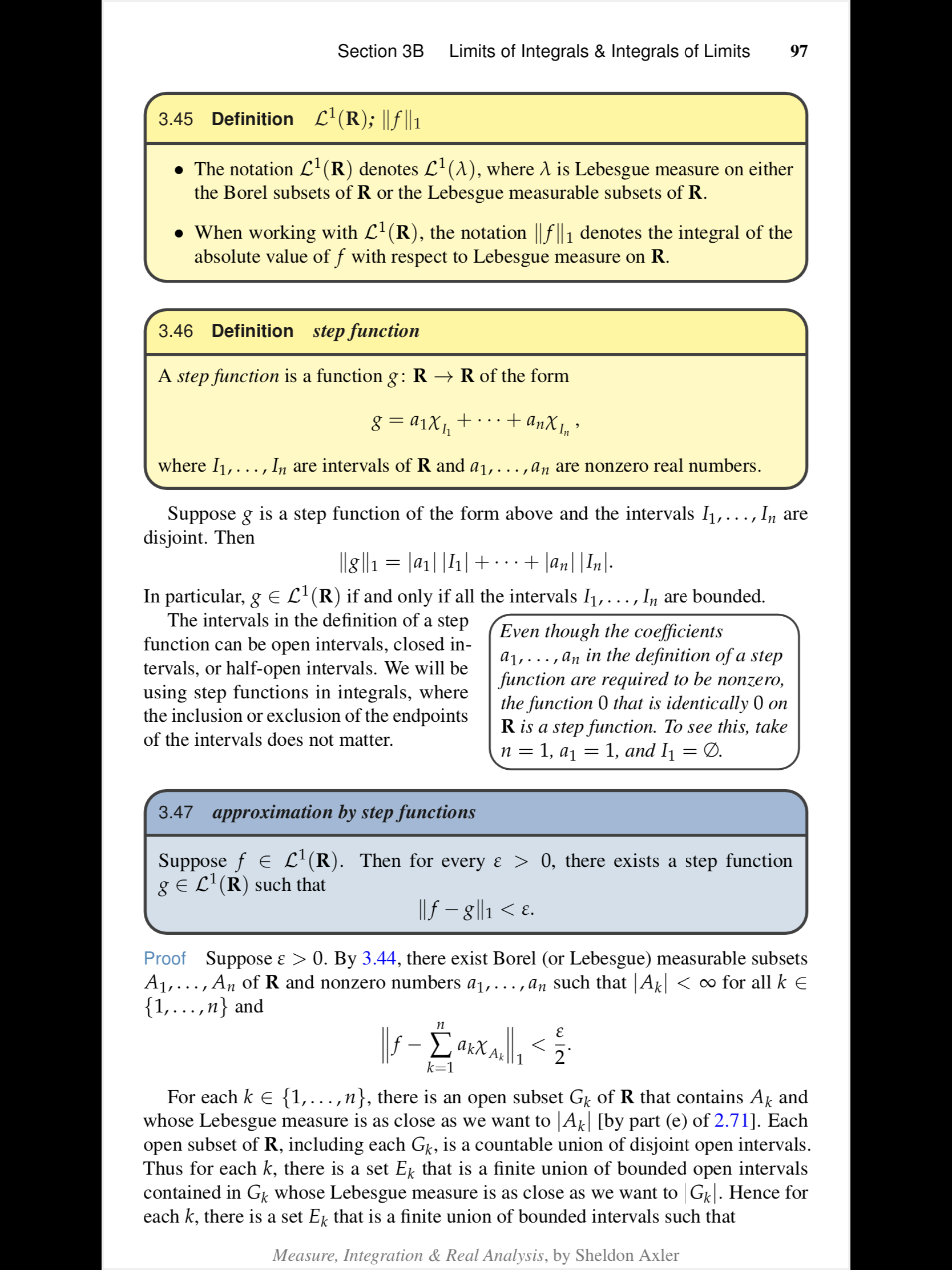
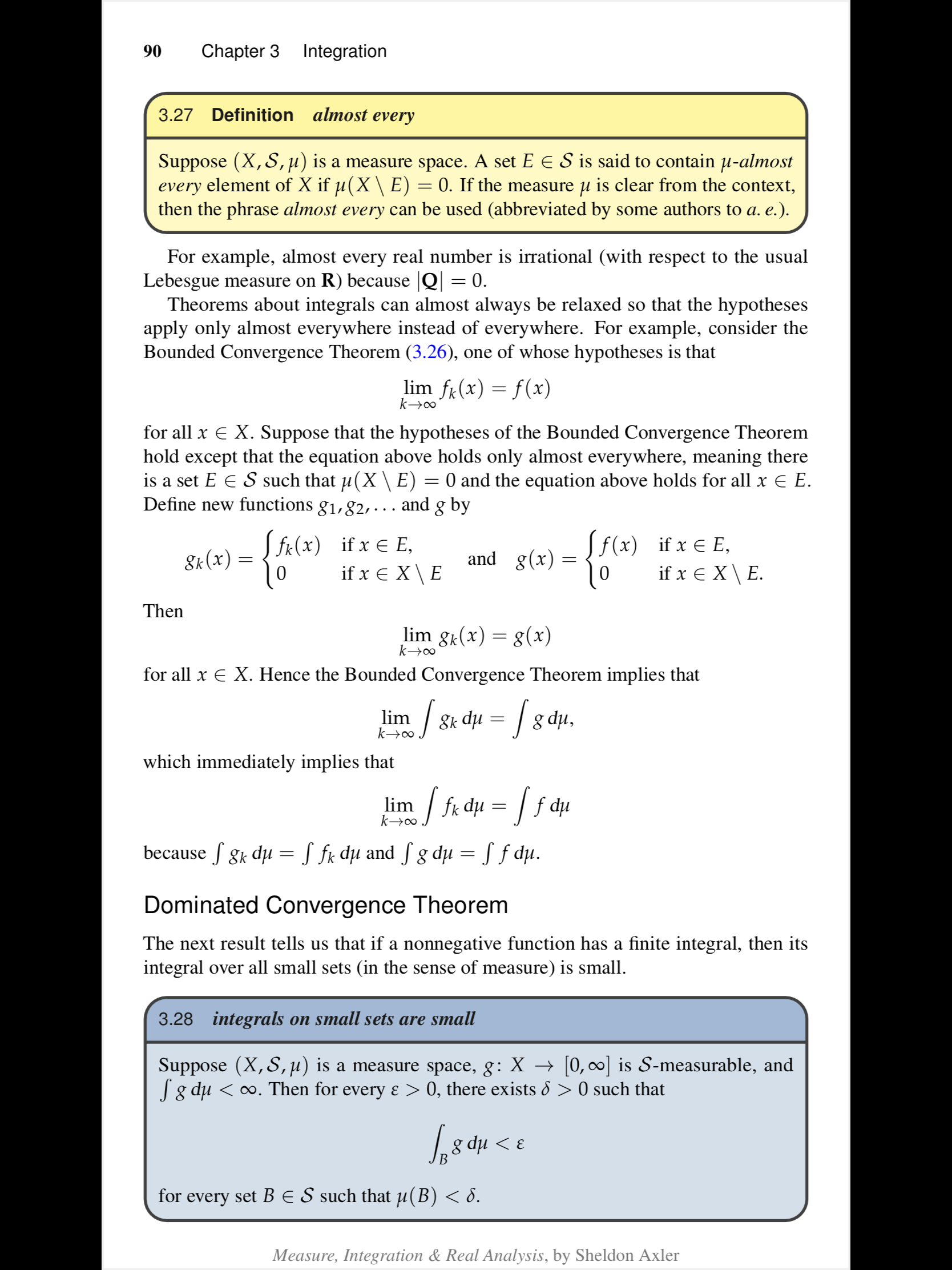
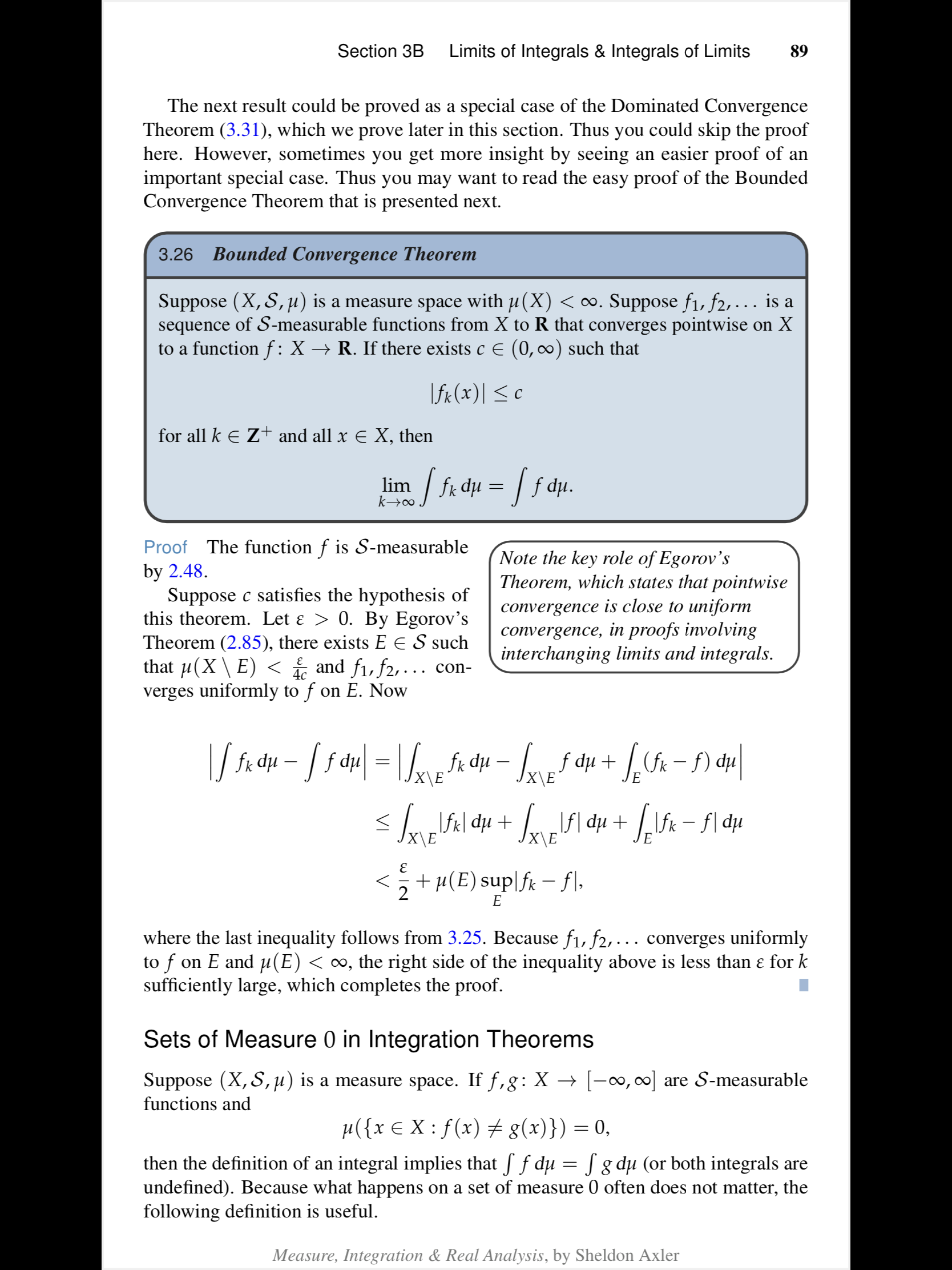
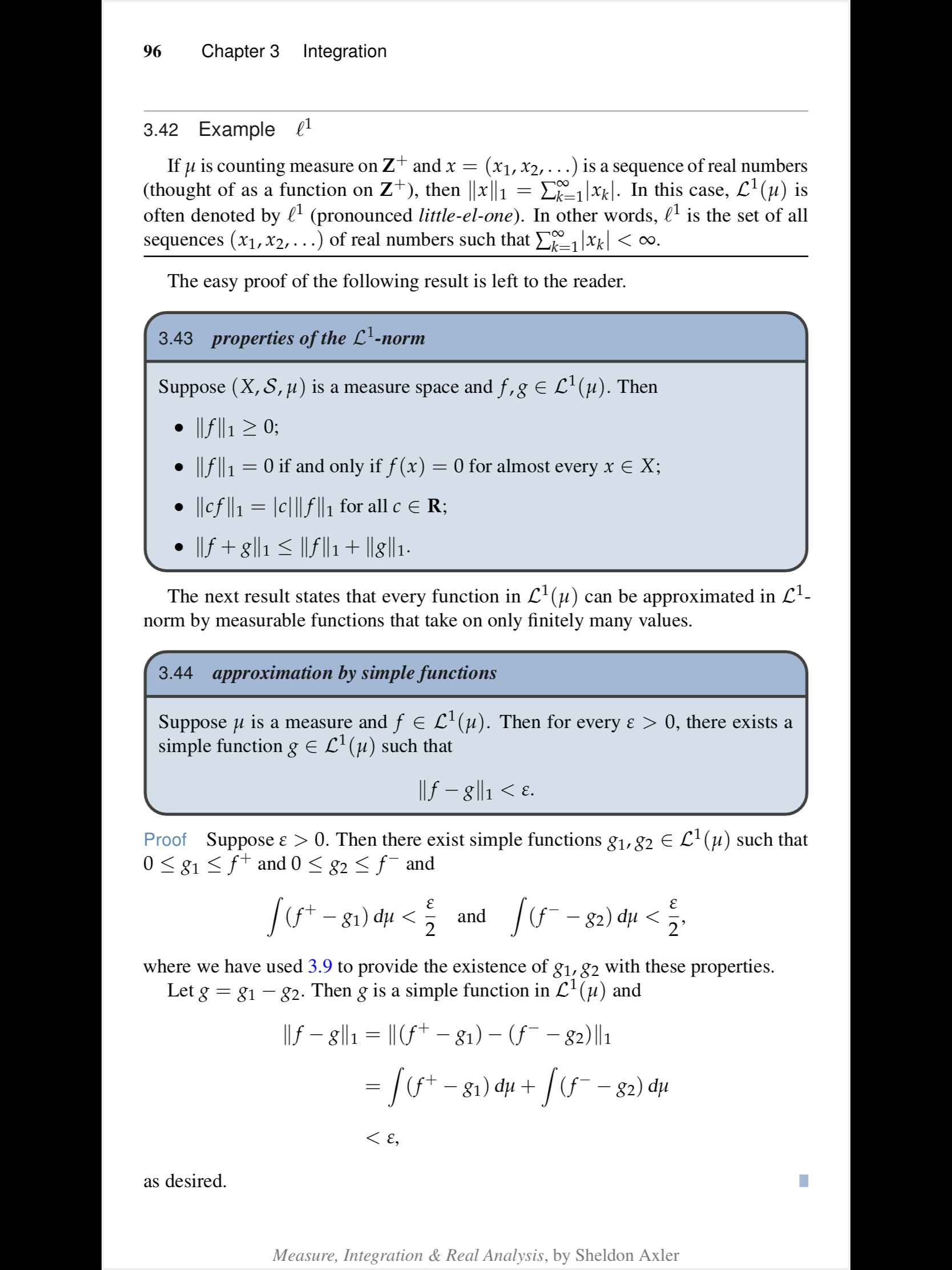
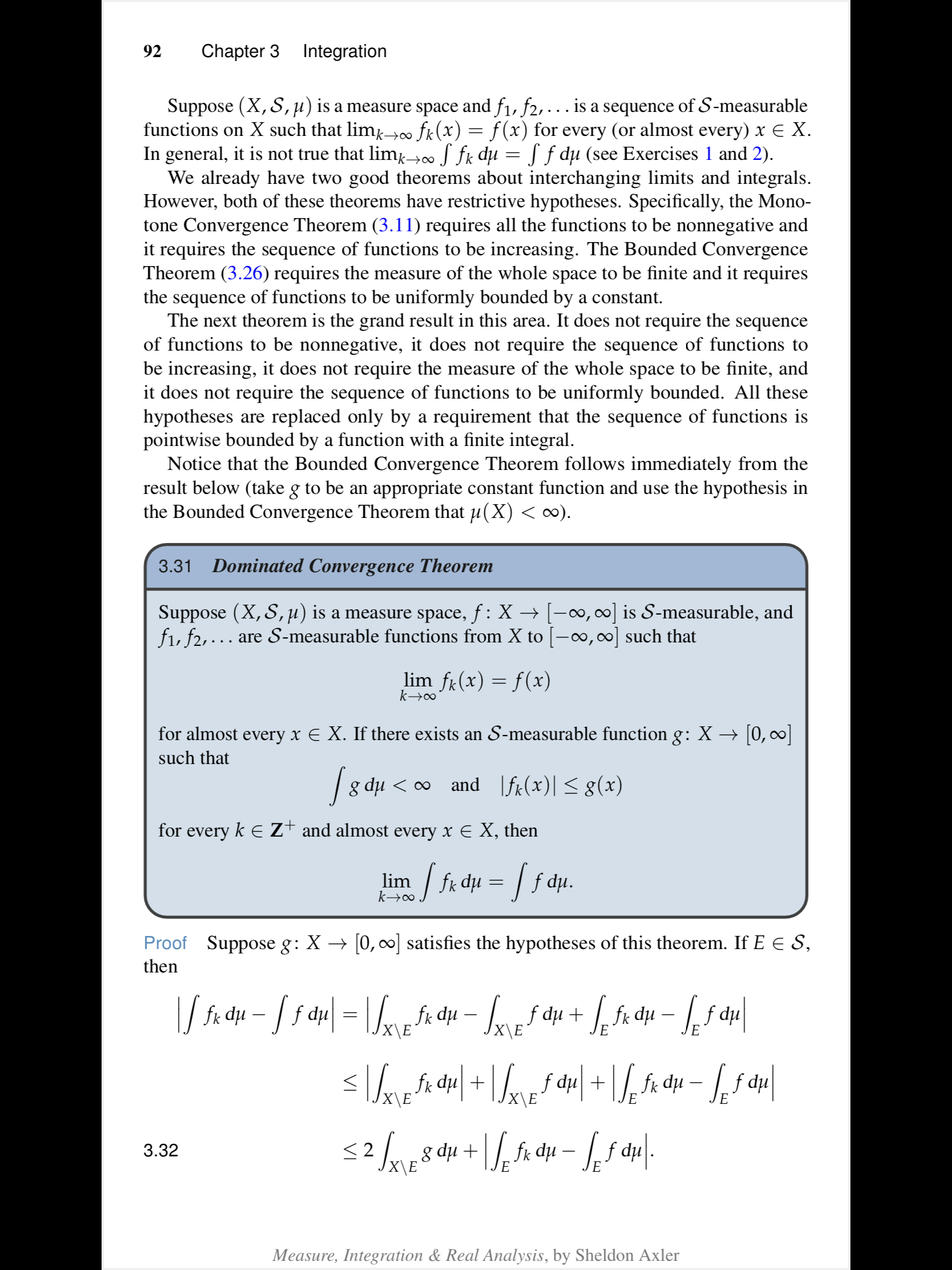
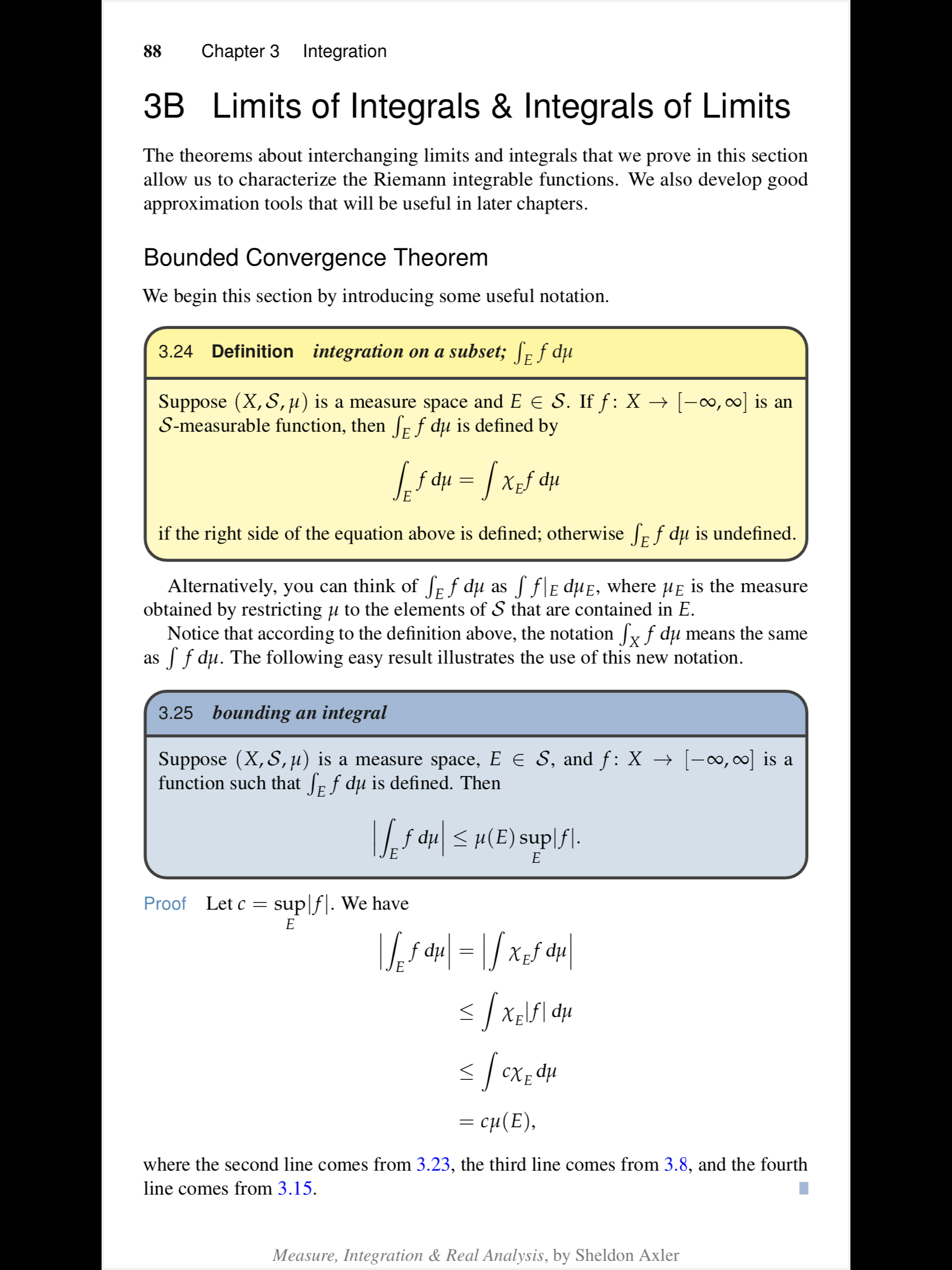
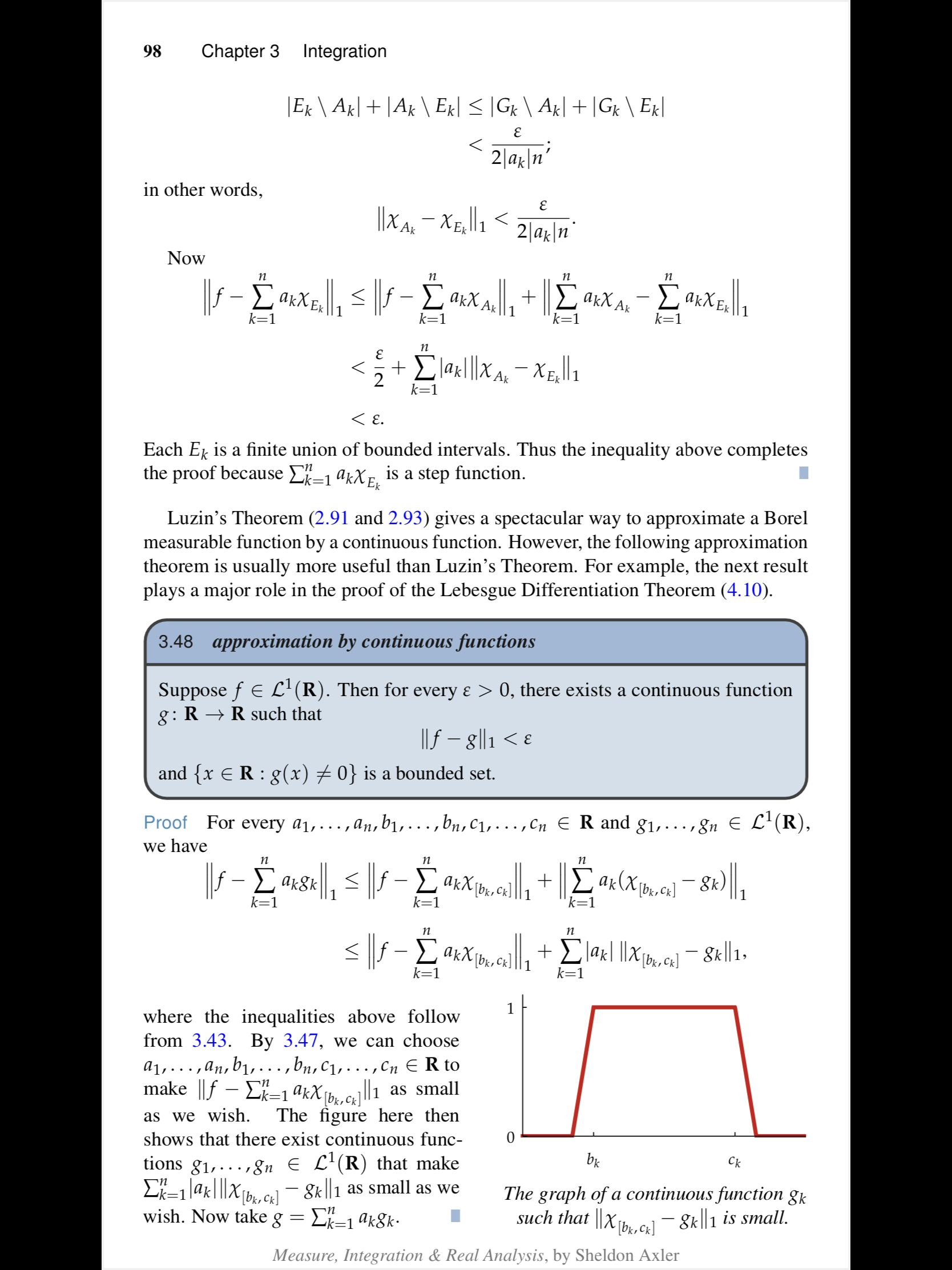
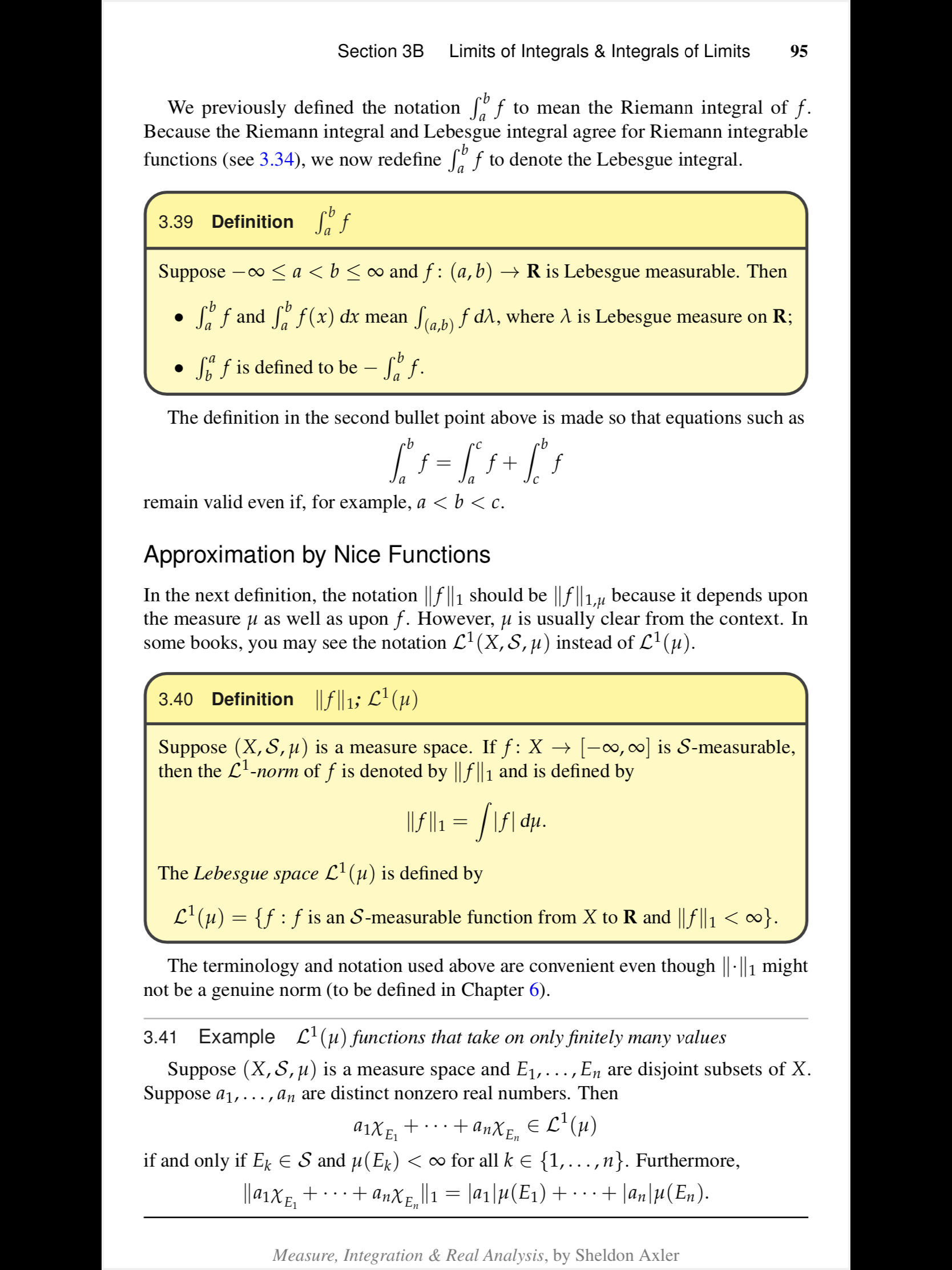
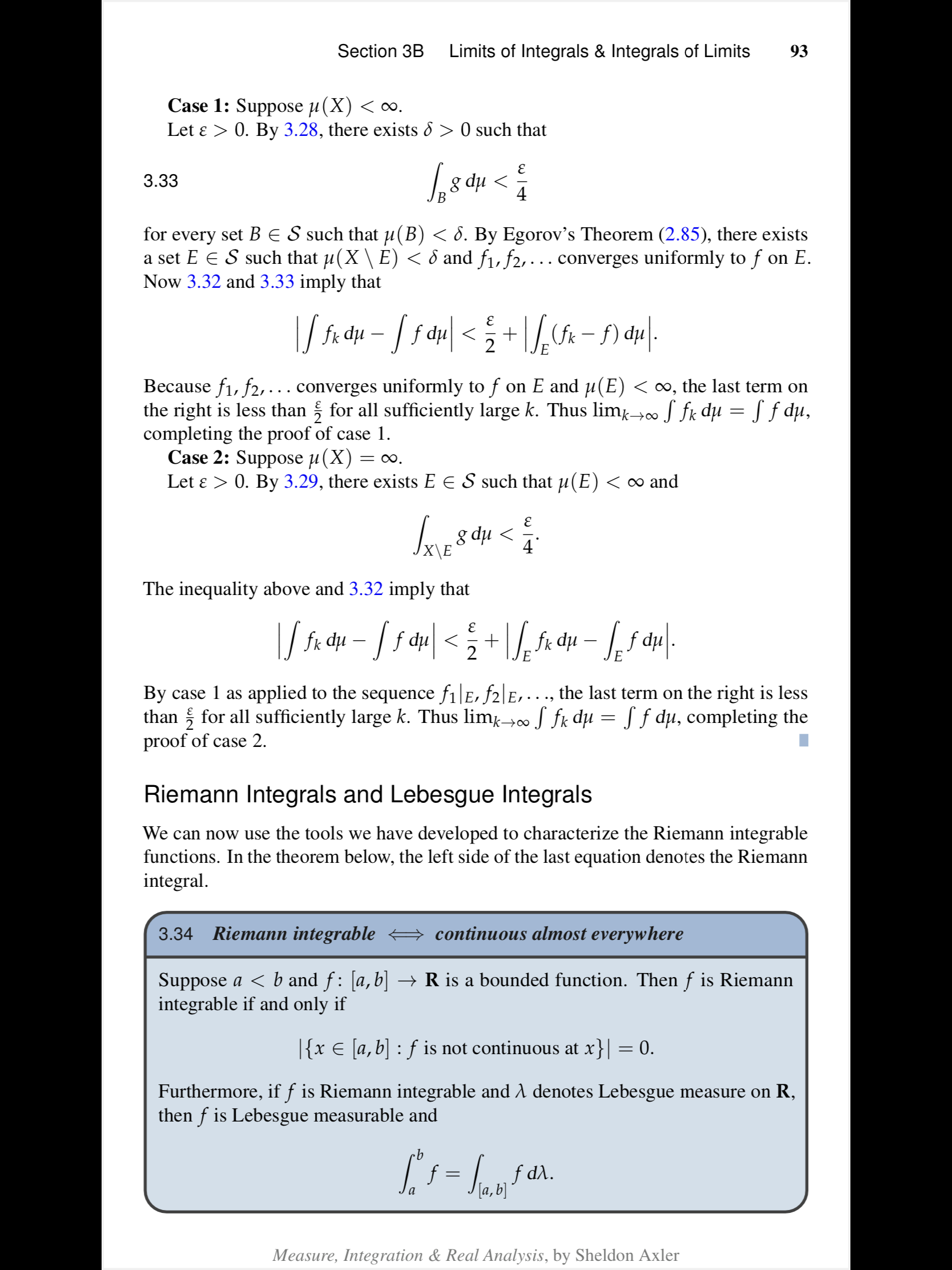
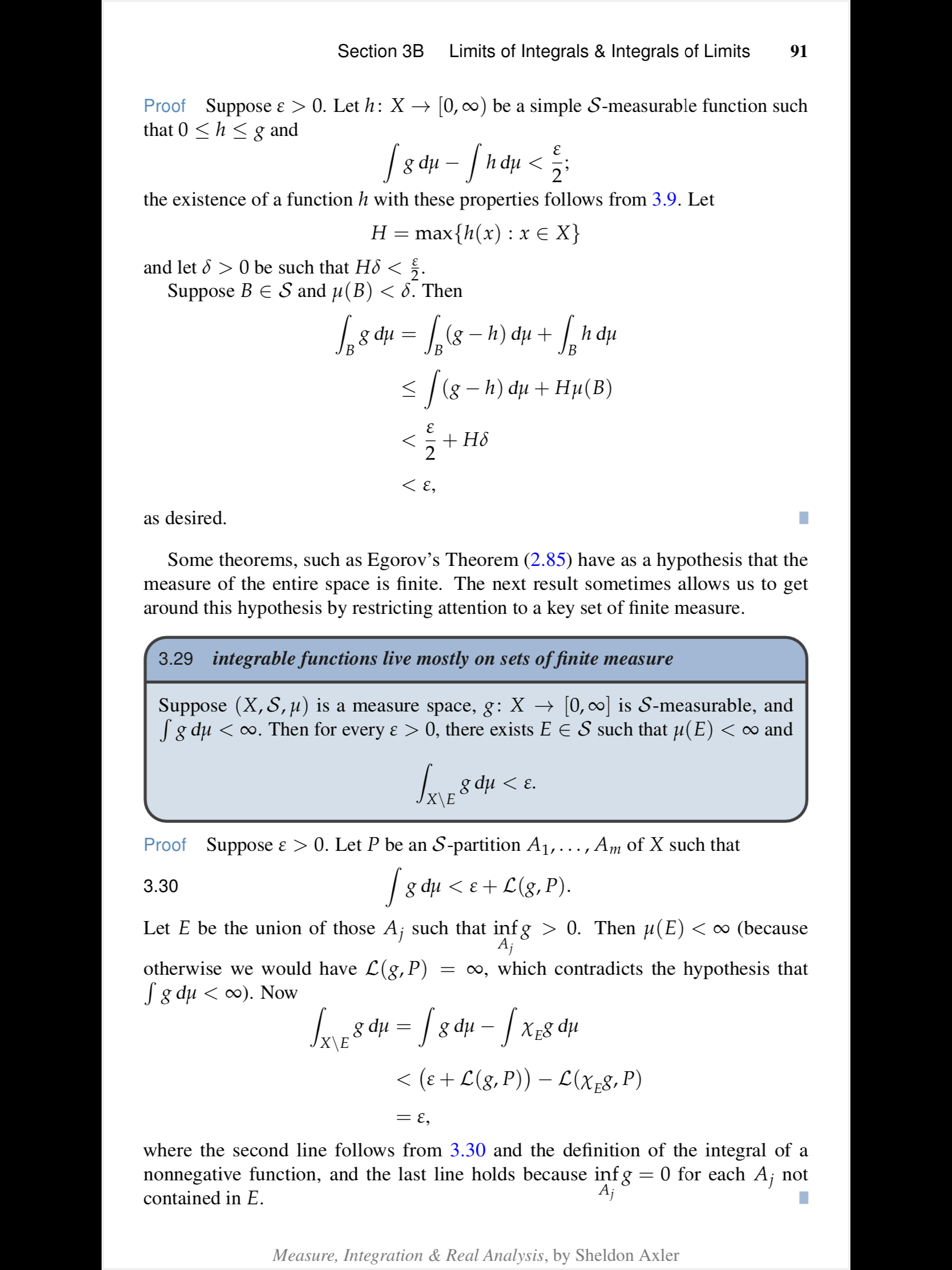
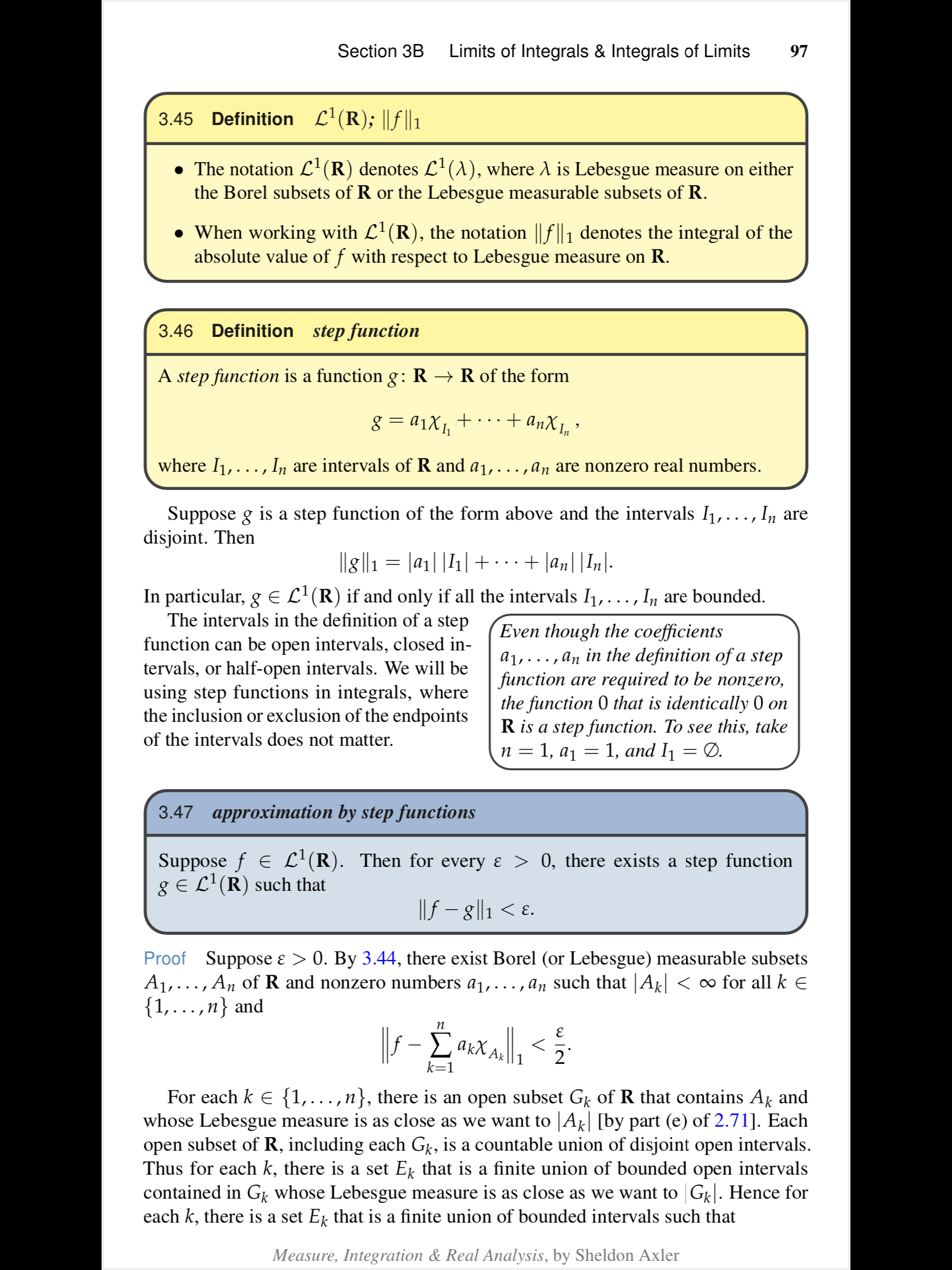
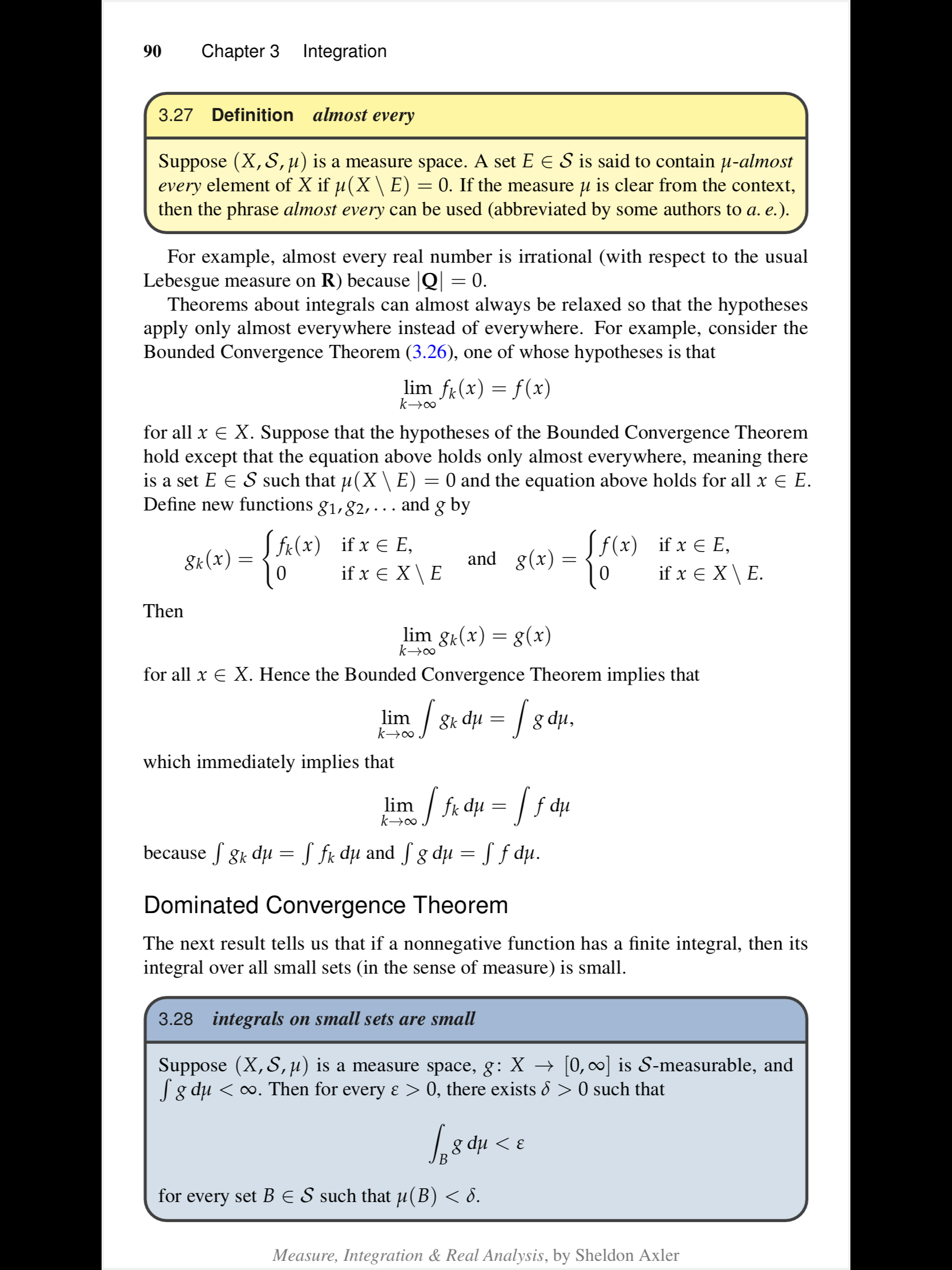
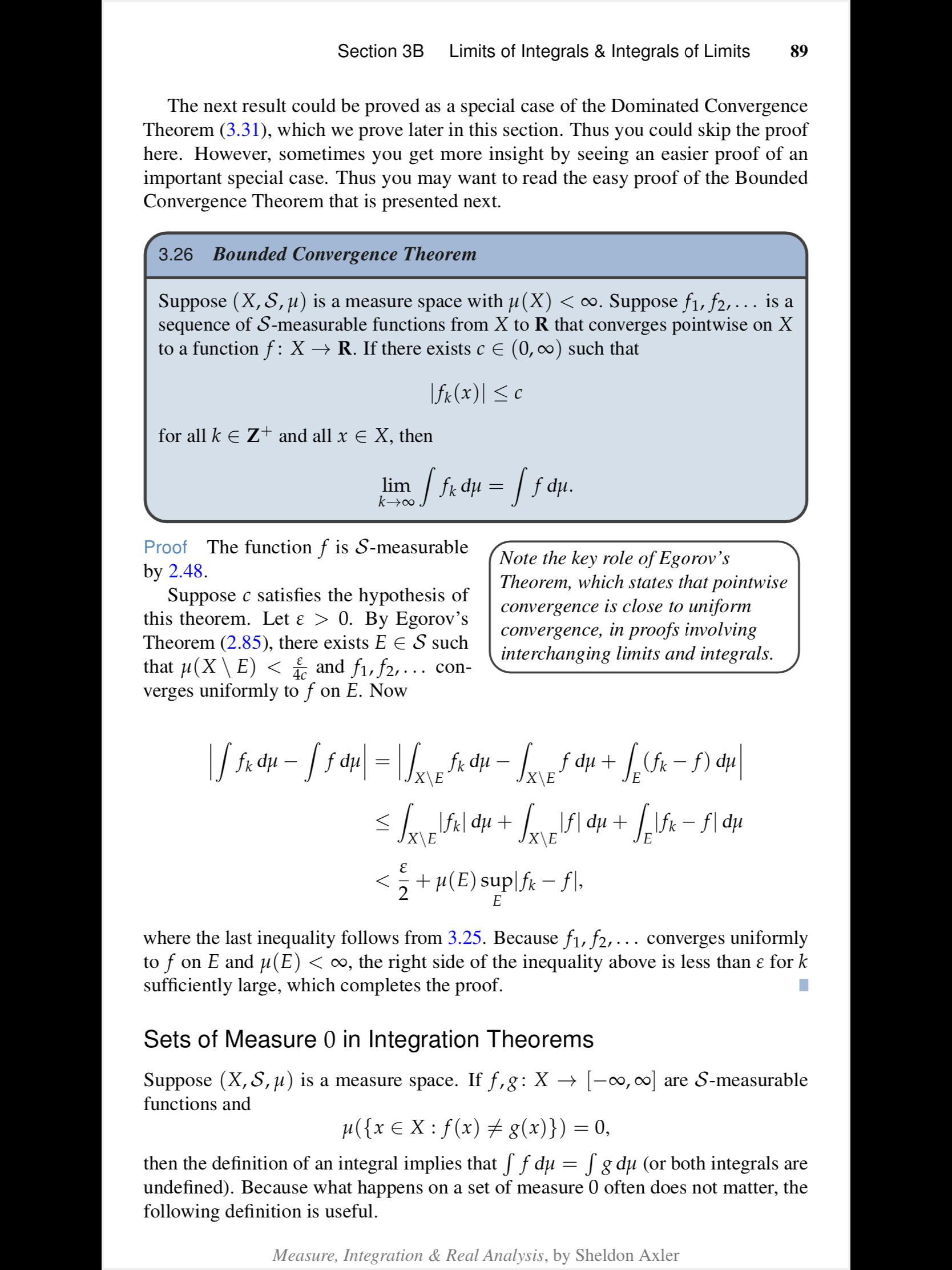
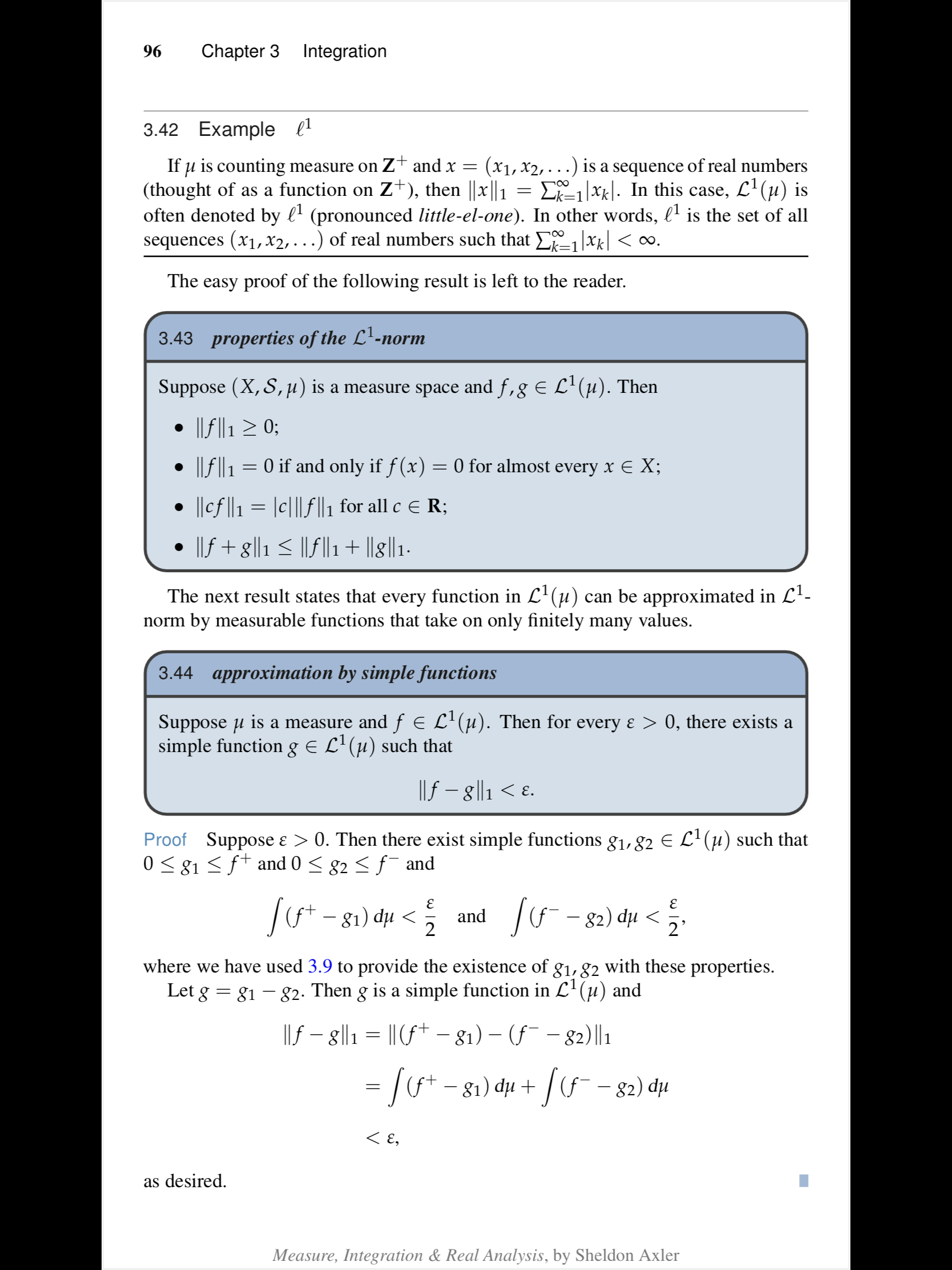
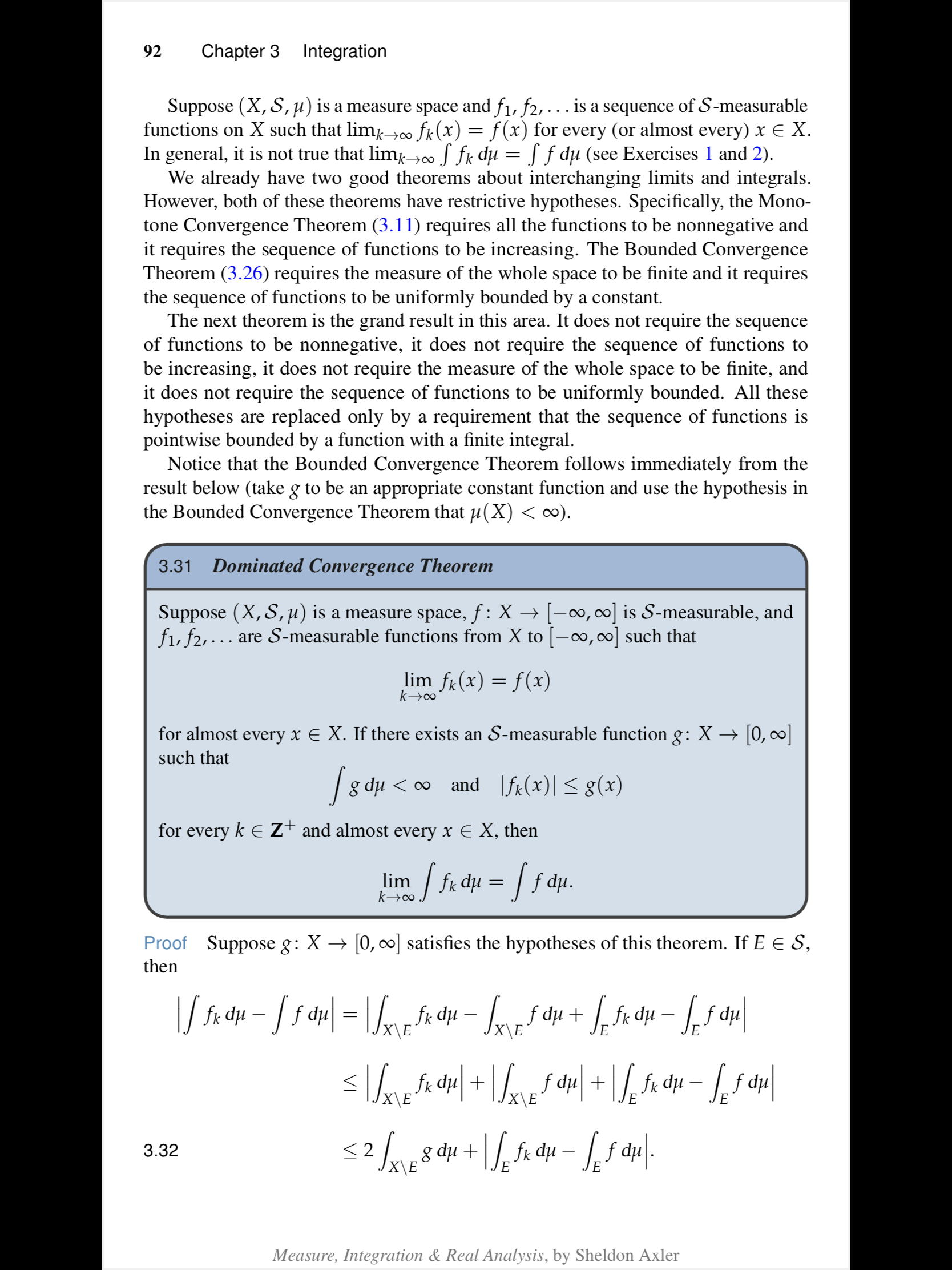
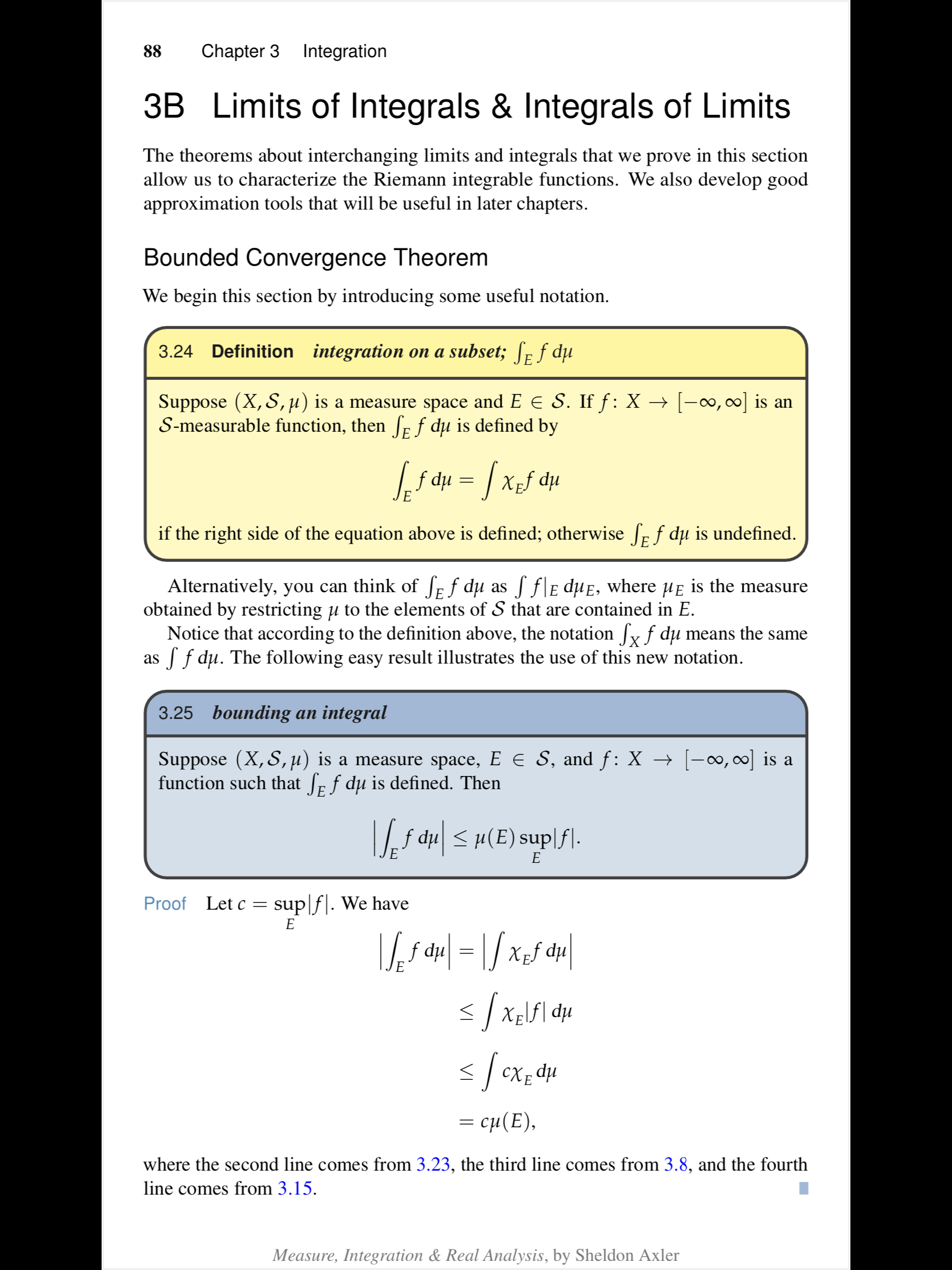
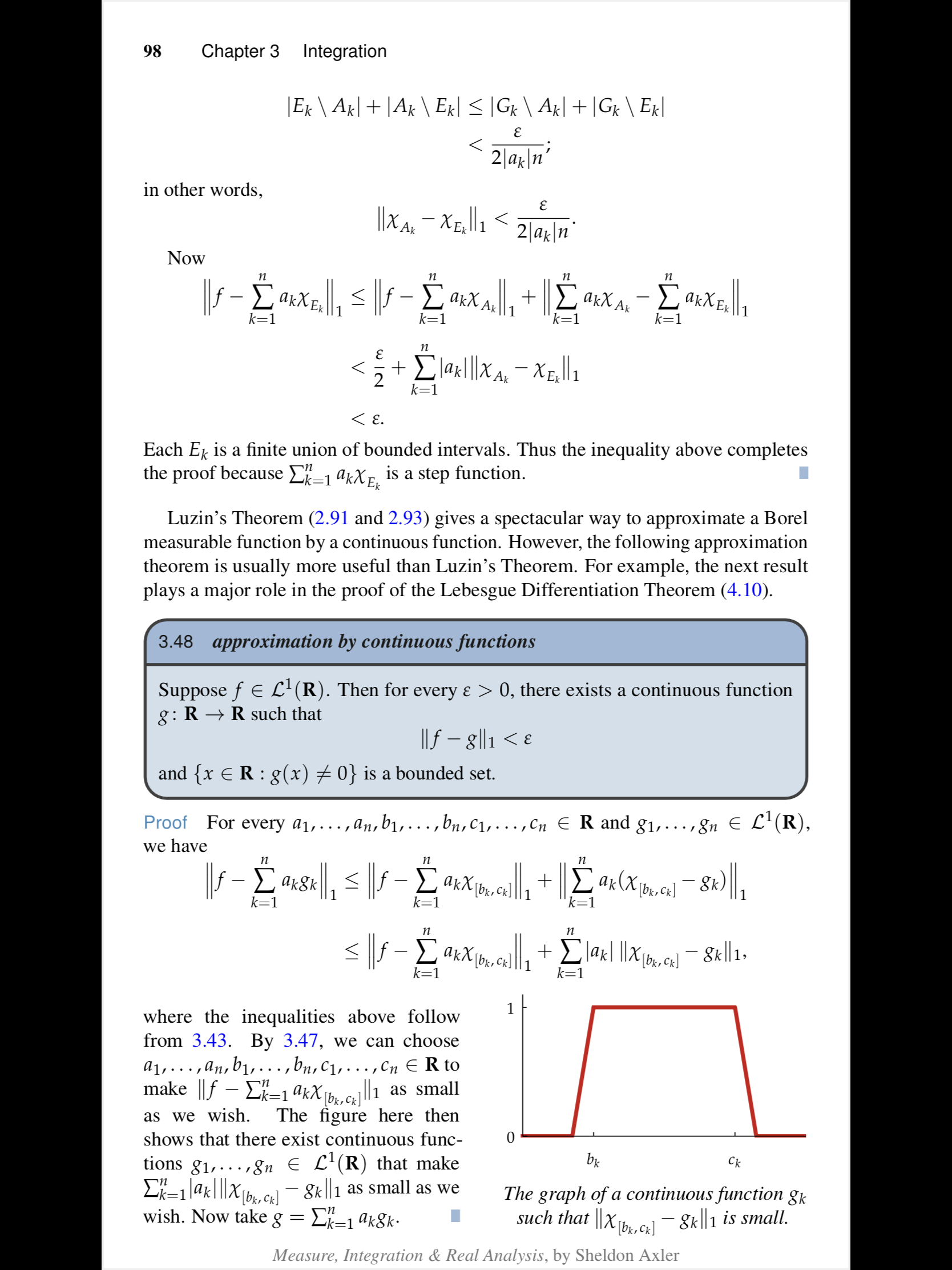
Section 3B Limits of Integrals & Integrals of Limits 93 Case 1: Suppose y (X) 0. By 3.28, there exists 8 > 0 such that 3.33 for every set B E S such that y (B) 0. By 3.29, there exists E E S such that M(E) J fk du = ff du, completing the proof of case 2. Riemann Integrals and Lebesque Integrals We can now use the tools we have developed to characterize the Riemann integrable functions. In the theorem below, the left side of the last equation denotes the Riemann integral. 3.34 Riemann integrable continuous almost everywhere Suppose a 0. Let h: X - [0, co) be a simple S-measurable function such that 0 > 0 be such that HS 0, there exists E E S such that M( E) 0. Let P be an S-partition A1, ..., Am of X such that 3.30 / 8 du 0. Then y(E) 0, there exists a step function g E L'(R) such that llf - 81/1 0. By 3.44, there exist Borel (or Lebesgue) measurable subsets A1, . .., An of R and nonzero numbers a1, . .., an such that |Ak) 0, there exists > > 0 such that J.8due for every set B E S such that M(B) 0. By Egorov's convergence is close to uniform Theorem (2.85), there exists E E S such convergence, in proofs involving that M(X \\ E) [-co, co] are S-measurable functions and ux EX : f(x) + 8(x)})= 0, then the definition of an integral implies that J f du = f g du (or both integrals are undefined). Because what happens on a set of measure 0 often does not matter, the following definition is useful. Measure, Integration & Real Analysis, by Sheldon Axler96 Chapter 3 Integration 3.42 Example el If u is counting measure on Z and x = (x1, X2, . ..) is a sequence of real numbers (thought of as a function on Z), then Ixl|1 = Ek=1/xk|. In this case, (y) is often denoted by & (pronounced little-el-one). In other words, & is the set of all sequences (X1, X2, . ..) of real numbers such that EX-1xk| 0, there exists a simple function g E LI(u) such that Ilf - 81/1 0. Then there exist simple functions g1, 82 E LI (y) such that 0 and J (- - 82 ) du -5 where we have used 3.9 to provide the existence of 81, 82 with these properties. Let g = 81 - 82. Then g is a simple function in C (u) and If - 81/1 = 11(ft -81)-(f- -82)1/1 - J ( ft - 81 ) dut / ( f - - 82 ) du KE, as desired. Measure, Integration & Real Analysis, by Sheldon Axler92 Chapter 3 Integration Suppose (X, S, u) is a measure space and f1, f2, . . . is a sequence of S-measurable functions on X such that limk-> fk(x) = f(x) for every (or almost every) x E X. In general, it is not true that limk >c J fx du = J f du (see Exercises 1 and 2). We already have two good theorems about interchanging limits and integrals. However, both of these theorems have restrictive hypotheses. Specifically, the Mono- tone Convergence Theorem (3.11) requires all the functions to be nonnegative and it requires the sequence of functions to be increasing. The Bounded Convergence Theorem (3.26) requires the measure of the whole space to be finite and it requires the sequence of functions to be uniformly bounded by a constant. The next theorem is the grand result in this area. It does not require the sequence of functions to be nonnegative, it does not require the sequence of functions to be increasing, it does not require the measure of the whole space to be finite, and it does not require the sequence of functions to be uniformly bounded. All these hypotheses are replaced only by a requirement that the sequence of functions is pointwise bounded by a function with a finite integral. Notice that the Bounded Convergence Theorem follows immediately from the result below (take g to be an appropriate constant function and use the hypothesis in the Bounded Convergence Theorem that u (X) [0, co] such that / 8 du [0,00] is Mmeasurable and fh do 0 there exists (5 > U such that if E E M and lt.'.(E) 0, there exists a continuous function g: R -+ R such that llf - 81/1
Step by Step Solution
There are 3 Steps involved in it
1 Expert Approved Answer
Step: 1 Unlock
Question Has Been Solved by an Expert!
Get step-by-step solutions from verified subject matter experts
Step: 2 Unlock
Step: 3 Unlock
Students Have Also Explored These Related Mathematics Questions!








![E) [-co, co] are S-measurable functions and ux EX : f(x) +](https://s3.amazonaws.com/si.experts.images/answers/2024/06/66682f166214d_83066682f1647ce5.jpg)

 Study Help