Question: I need help with Google Slides or PowerPoint for a Biology final project the 3 pictures are the rough document for the project and the
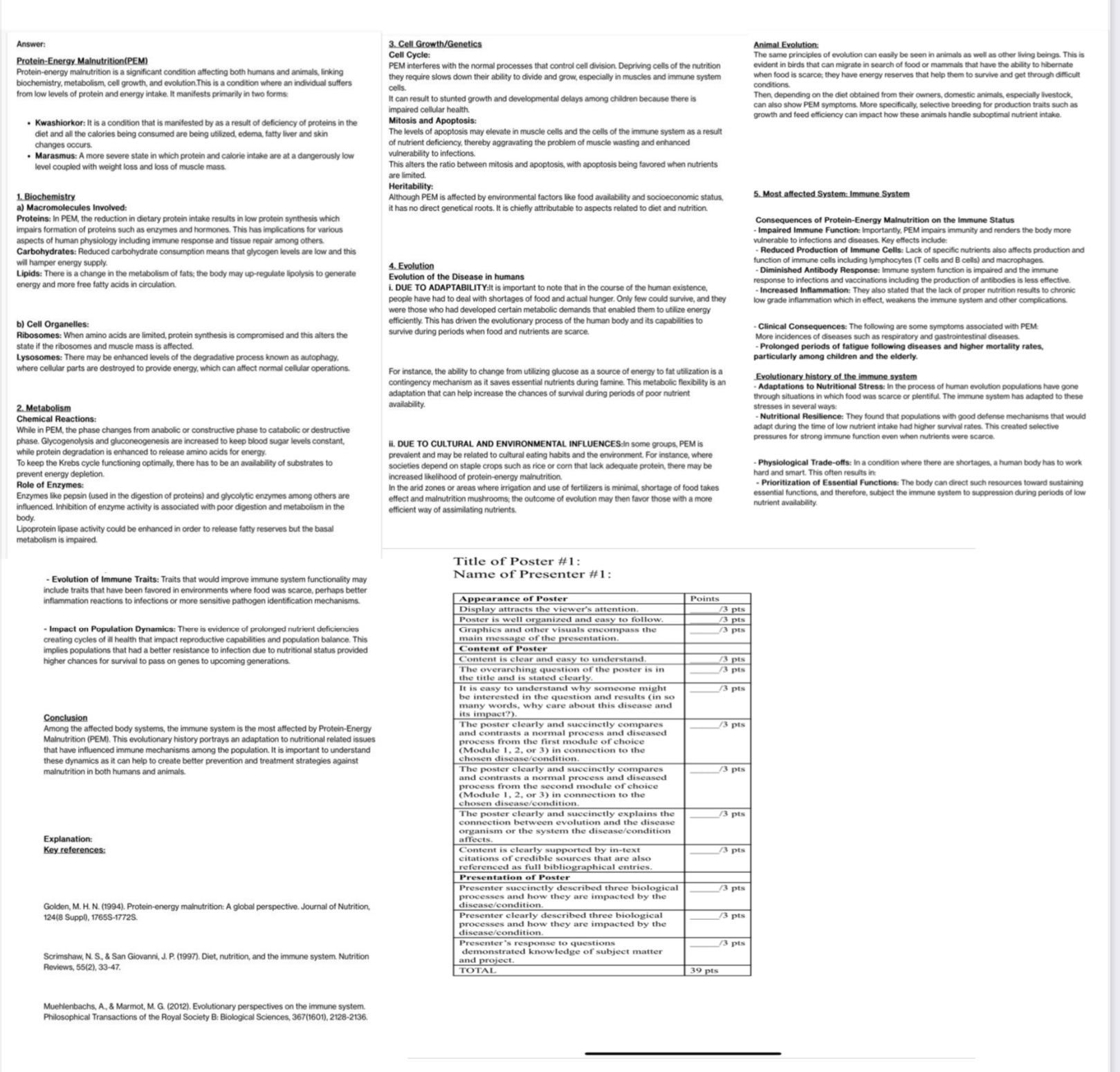
I need help with Google Slides or PowerPoint for a Biology final project the 3 pictures are the rough document for the project and the critique sheet is about the goals to accomplish with the PowerPoint or Google Slides I also have to make a post but based on the presentation I can probably have an idea of what to do for the poster.
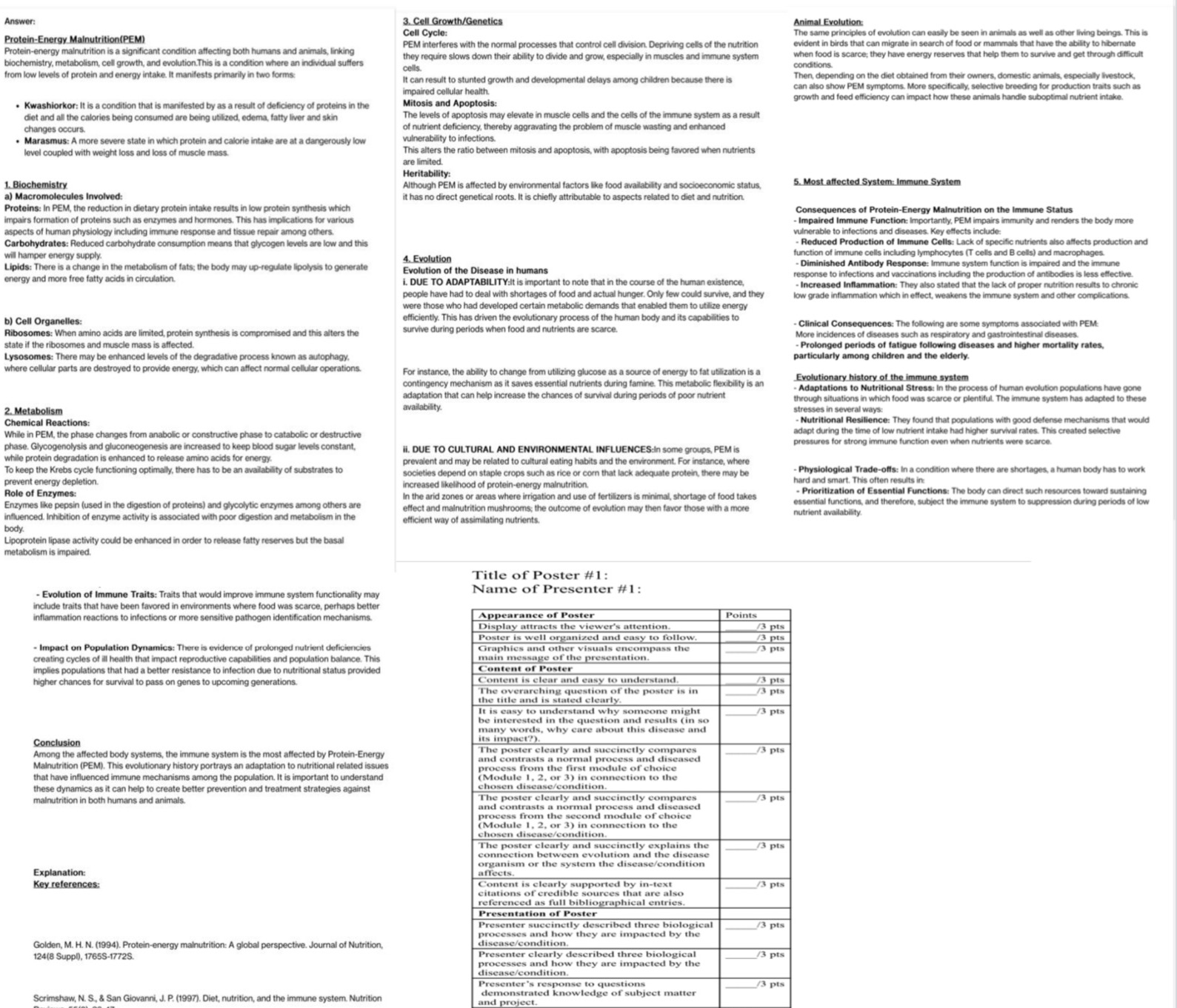
Answer: 3. Cell Growth/Genetics Animal Evolution: Protein-Energy Malnutrition(PEM) Cell Cycle: The same principles of evolution can easily be seen in easty be seen in animals as well as nergy malnutrition is a significant condition affecting both humans and anim PEM interferes with the normal processes that control cell division. Depriving cells of the nutrition umais as well as other living beings. This is evident in birds that can migrate in search of food or mammals that have the ability to hibernat biochemistry, metabolism, cell growth, and evolution. This evolution.This is a condition where an ition where an individual suffers they require slows down their ability to divide and grow, especially in muscles and immune system when food is scarce; they have energy reserves that help them to survive and get through diff from low levels of protein and energy intake. It manifests primarily in two forms: t can result to stunted growth and devel ntal delays among children because there is Then, depending on the diet obtained from their owners, domestic animals, especially livestock. paired cellular health. can also show PEM symptoms. More specifically, selective breed Kwashiorkor: It is a condition that is manifested by as a result of deficiency of proteins in the Mitosis and Apoptosis: growth and feed efficiency can impact how these animals handle suboptimal nutrient intake. diet and all the calories being consumed are bein tty liver and skin of apoptosis may elevate in muscle cells and the cells of the immune system changes occurs. Marasmus: A more severe state in which protein and calorie intake are at a dangerously low vulnerability to infections. level coupled with weight loss and loss of muscle mass. This alters the ratio between mitosis and ap with apoptosis being favored when nutrients are limited. Heritability 1. Biochemistry Although PEM is affected by environmental factors like food availability and socioeconomic status, 5. Most affected System: Immune System a) Macromolecules Involved: Proteins: In PEM, the reducti it has no direct genetical roots. It is chiefly attributable to aspects related to diet and nutrition. M, the reduction in dietary protein intake results in low protein synthesis which impairs formation of proteins such as enzymes and hormones, This ences of Protein-Energy Malnutrition on the Immune Status ymes and hormones. This has implications for various Immune Function: Importantly, PEM impairs immunity and renders the body more aspects of human physiology including immune response and tissue repair among other Carbohydrates: Reduced carbohydrate consumption means that glycogen levels are low d Production of Immune Cells: Lack of specific nutrients also affects p 4. Evolution ding lymphocytes (T cells and B cells) and Lipids: There is a change in the energy and more free fatty acids in circulation. Evolution of the Disease in humans hed Antibody Response: Immune system function is impaired and the in i. DUE TO ADAPTABILITY:It is important to note that in the course of the human existence, to infections and vaccinations including the production of antib stated that the lack of proper nutrition result ortages of food and actual hunger. Only few could survive, and they Inflammation: They also sta flammation which in effect, weakens the immune system and other complications. are those who had developed certain metabolic demands that enabled them to utilize energy b) Cell Organelles: efficiently. This has driven the evolutionary process of the human body and its capabilities to Ribosomes: When amino acids are limited, protein synthesis is co d and this alters the survive during periods when food and nutrients are scarce. Clinical congealedsome onsassociated with PEM state if the ribosomes and muscle mass is affected. Prolonged periods of fatique following diseases and higher mortality rates. Lysosomes: There may be enhanced levels of the degradative process known as autophagy, particularly among children and the elderly. where cellular parts are destroyed to provide energy, which can affect normal cellular for instance, the ty to change from utilizing glucose as a source of energy to fat utilization is a contingency mechanism as it saves essential nutrients during famine. This metabolic flexibility is an Evolutionary history of the immune system adaptation that can help increase the chances of survival during periods of poor nutrient daptations to Nutritional Stress: In the process of human evolution populations have gone availability. rough situations in which food was scarce or plentiful. The immune system has adapted to these 2. Metabolism Chemical Reactions: Nutritional Resilience: They found that populations with good defense mechanisms that would While in PEM, the phase change pt during the time of low nutrient intake had higher survival rates. This created selective sures for strong immune function even when nutrients were scarce. while protein degradation is enhanced to release amino acids for energy. i. DUE TO CULTURAL AND ENVIRONMENTAL INFLUENCES:In some groups, PEM is To keep the Krebs cycle functioning optimally, there has to be an availability of substr talent and may be related to cultural eating habits and the environment. For instance, where spend on staple crops such as rice or corn that lack adequate protein, there may be Physiological Trade-offs: In a condition where there are shortages, a human body has to work prevent energy depletion Role of Enzymes: increased likelihood of protein-energy malnutrition. Prioritization of Essential Functions: The body can direct such resources toward sustaining Enzymes like pepsin (used in the digestion of proteins) and glycolytic enzymes am In the arid zones or areas where irrigation and use of fertilizers is minimal, shortage of food takes influenced. Inhibition of enzyme activity is associated with poor digestion and metabolism in the effect and malnutrition mushrooms; the outcome of evolution may then favor those with a more ntial functions, and therefore, subject the immune system to suppression during periods of low efficient way of assimilating nutrients. nt availability. Lipoprotein lipase activity could be enhanced in order to release fatty reserves but the basal metabolism is impaired. Title of Poster #1: - Evolution of Immune Traits: Traits that would improve immune system functionality may Name of Presenter #1: include traits that have been favored in environments where food was scarce, perhaps better inflammation reactions to infections or more sensitive pathogen identification mechanis Appearance of Poster Points Display attracts the viewer's attention. aster is well organized and ca Impact on Population Dynamics: There is evidence of prolonged nutrient deficiencies creating cycles of ill health that impact reproductive capabilities and population balance. This Graphics and other visuals encompass the implies populations that had a better resistance to infection due to nutritional status provided Content of Poster higher chances for survival to pass on genes to upcoming generations. Content is clear and ea The overarching question of the poster is in 3 pts be interested in the question and results (in so its impacts. Why care about this disease and Conclusion Among the affected body systems, the immune system is the most affected by Protein-Energy The poster clearly and suc y and succinctly compares 3 pts Malnutrition (PEM). This evolutionary history portrays an adaptation to nutritional related issu process from the first module of choice that have influenced immune mechanisms among the population. It is important to understand (Module 1. 2, or 3) in connection to the these dynamics as it can help to create better prevention and treatment strategies against dition. malnutrition in both humans and animals. The poster clearly and succine no succinctly compares 3 pts process from the second module of choice (Module 1. 2, or 3) in connection to the The poster clearly and succinctly explains the 3 pts Explanation: organism or the system the disease/condition affects. Key references: tent is clearly supported by in-text credible sources that are als ferenced as full bibliographical entries. Presentation of Poster succinctly described three biological Presenter succinctly de esses and how they are impacted by the Golden, M. H. N. (1994). Protein-energy malnutrition: A global pe spective. Journal of Nutrition, isease/condition. 124(8 SuppD), 1765S-1772S. Presenter clearly described three biological processes and how they are impacted by the disease/condition. Presenter's response to questions Scrimshaw, N. S, & San Giovanni, J. P. (1997). Diet, nutrition, and the immune system. Nutrition demonstrated knowledge of subject matter Reviews, 55(2). 33-47. TOTAL 39 pts Muehlenbachs, A, & Marmot, M. G. (2012). Evolutionary perspectives on the immune system. Philosophical Transactions of the Royal Society B: Biological Sciences, 367(1601), 2128-2136.Answer 3. Cell Growth/Genetics Animal Evolution: Protein-Energy Malnutrition(PEM) Cell Cycle: The same principles of evolution can easily be seen in animals as well as other living beings. This Protein-energy malnutrition is a significant condition affecting both humans and animals, linking PEM interferes with the normal processes that control cell division. Depriving cells of the nutrition evident in birds that can migrate in search of food or mammals that have the ability to hibern biochemistry, metabolism, cell growth, and evolution. This is a condition where an individual suffers they require slows down their ability to divide and grow, especially in muscles and immune system when food is scarce; they have energy reserves that help them to survive and get through difficult conditions. from low levels of protein and energy intake. It manifests primarily in two forms: It can result to stunted growth and dev ntal delays among children because there is Then, depending on the diet obtained from their owners, domestic animals, especially livestock, impaired cellular health. can also show PEM symptoms. More specifically, selective breeding for production traits such as Kwashiorkor: It is a condition that is manifested by as a result of deficiency of proteins in the Mitosis and Apoptosis: growth and feed efficiency can impact how these animals handle suboptimal nutrient intake diet and all the calories being consumed are being utilized, edema, fatty liver and skin The levels of apoptosis may elevate in muscle cells and the cells of the immune system as a result changes occurs. of nutrient deficiency, thereby aggravating the problem of muscle wasting and enhanced Marasmus: A more severe state in which protein and calorie intake are at a danger vulnerability to infections. level coupled with weight loss and loss of muscle mass. This alters the ratio between mitosis and apoptosis, with apoptosis being favored when nutrients re limited. Heritability: .Biochemistry Although PEM is affected by environmental factors like food availability and socioeconomic status, 5. Most affected System: Immune System a) Macromolecules Involved: it has no direct genetical roots. It is chiefly attributable to aspects related to diet and nutrition. Proteins: In PEM, the reduction in dietary protein intake results in low protein synthesis which equences of Protein-Energy Malnutrition on the Immune Status impairs formation of proteins such as enzymes and hormones. This has implications for vari aired Immune Function: Importantly, PEM impairs imm M impairs immunity and renders the body more aspects of human physiology including immune response and tissue repair among others. ses. Key effects include: Carbohydrates: Reduced carbohydrate consumption means that glycogen levels are low and this une Cells: Lack of specific nutrients also affects production and will hamper energy supply. immune cells including lymphocytes (T cells and B cells) and macrophage Lipids: There is a change in the metabolism of fats; the body may up- 4. Evolution ed Antibody Re onse: Immune system function is impaired and the im and more free fatty acids in circulation. Evolution of the Disease in humans i. DUE TO ADAPTABILITY:It is important to note that in the course of the human existence, ponse to infections and vaccinations including the production of antibodies eased Inflammation: They also stated that the lack of proper nutrition results to chronic people have had to deal with shortages of food and actual hunger. Only few could survive, and they low grade inflammation which in effect, weakens the immune system and other complications. were those who had developed certain metabolic demands that enabled them to utilize energy b) Cell Organelles: ficiently. This has driven the evolutionary process of the human body and its capabilities to Ribosomes: When amino acids are limited, protein synthesis is comp hised and this alters the survive during periods when food and nutrients are scarce. Clinical Consequences: The following are some symptoms associated with PEM state if the ribosomes and muscle mass is affected. fore incidences of diseases such as respiratory and gastrointestinal diseases. Prolonged periods of fatigue following diseases and higher mortality rates. osomes: There may be enhanced levels of the degradative process known as autophagy, particularly among children and the elderly. where cellular parts are destroyed to provide energy, which can affect normal cellular operation For instance, the ability to change from utilizing glucose as a source of energy to fat utilization is a sential nutrients during famine. This metabolic flexibility is an Evolutionary contingency mechanism as it saves essential nutrient nmune system adaptation that can help increase the chances of survival during periods of poor nutrient daptations to Nutritional Stress: In the process of human evolution populations have gone availability. h situations in which food was scarce or plentiful. The immune system has adapt 2. Metabolism Chemical Reactions: Nutritional Resilience: They found that popul While in PEM, the phase changes from anabolic or constructive phas the time of lo tions with good defense mechanisms that would nutrient intake had higher survival rates, Th eated selective phase. Glycogenolysis and gluconeogenesis are increased to keep blood sugar level i. DUE TO CULTURAL AND ENVIRONMENTAL INFLUENCES:In some groups, PEM is pressures for strong immune function even when nutrients were scarce. otein degradation is enhanced to release amino acids for energy. To keep the Krebs cycle functioning optimally, there has to be an availability of substrates to alent and may be related to cultural eating habits and the environment. For instance, where eties depend on staple crops such as rice or corn that lack adequate protein, there may be Physiological Trade-offs: In a condition where there are shortages, a human body has to work prevent ene increased likelihood of protein-energy malnutrition. ard and smart. This often results in Role of Enzymes: In the arid zones or areas where irrigation and use of fertilizers is minimal, shortage of food takes - Prioritization of Essential Functions: The body can direct such resources toward sustaining Enzymes like pepsin (used in the digestion of proteins) and glycolytic enzymes among others are on during periods of low influenced. Inhibition of enzyme activity is associated with poor digestion and metabolism in the effect and malnutrition mushrooms; the outcome of evolution may then favor those with a more sential functions, and therefore, subject the immune system to suppre nutrient availability. efficient way of assimilating nutrients. body Lipoprotein lipase activity could be enhanced in order to release fatty reserves but the basal metabolism is impaired. Title of Poster #1: - Evolution of Immune Traits: Traits that would improve immune system functionality may Name of Presenter #1: include traits that have been favore e been favored in environments where food was scarce, perhaps better inflammation reactions to infections or more sensitive pathogen identification mechanisms. Appearance of Poster Points Display attracts the viewer's attention. /3 pts Poster is well organized and easy to follow Impact on Population Dynamics: There is evidence of prolonged nutrient deficiencies 73 pts creating cycles of ill health that impact reproductive capabilities and population balance. This als encompass the Does me presentation. implies populations that had a better resistance to infection due to nutritional status provided Content of Poster higher chances for survival to pass on genes to upcoming generations. Content is clear and easy to understand. 73 pts areoverarching question of the poster is in 3 pts the title and is stated clearly. It is easy to understand why someone might /3 pts be interested in the question and results (in so many words. why care about this disease and Conclusion its impact?). Among the affected body systems, the immune system is the most affected by Protein-Energy The poster clearly and succinctly compares /3 pts Malnutrition (PEM). This evolutionary history portrays an adaptation to nutritional related issue and contrasts thermal process and discas that have influenced immune mechanisms among the population. It is important to under ule 1. 2. or 3) in connection to the these dynamics as it can help to create better prevention and treatment strategies against chosen disease/condition. malnutrition in both humans and animals. The poster clearly and succinctly compares /3 pts process from the second module of choice (Module 1. 2, or 3) in connection to the chosen disease/condition. 3 pts connection between evolution and the disease Explanation: organism or the system the disease/condition affects. Key references: Content is clearly supported by in-text 3 pts citations of credible sources that are also referenced as full bibliographical entries Presentation of Poster Presenter succinctly described three biological e impacted by the /3 pts Golden, M. H. N. (1994). Protein-energy m ase/condition. 124(8 Supp), 1765S-17725. er clearly described three biological cesses and how they are impacted by the ease/condition. enter's response to questions Scrimshaw, N. S, & San Giovanni, J. P. (1997). Diet, nutrition, and the immune system. Nutrition onstrated knowledge of subject matter /3 pts









 Study Help