







Question: I need help with making pseudocode for these 2 algorithms and the mathematical analysis. The left-to-right algorithm It starts with the leftmost disk and proceeds
I need help with making pseudocode for these 2 algorithms and the mathematical analysis.
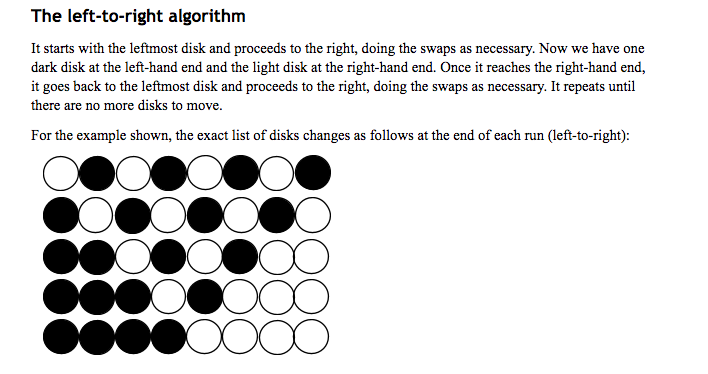
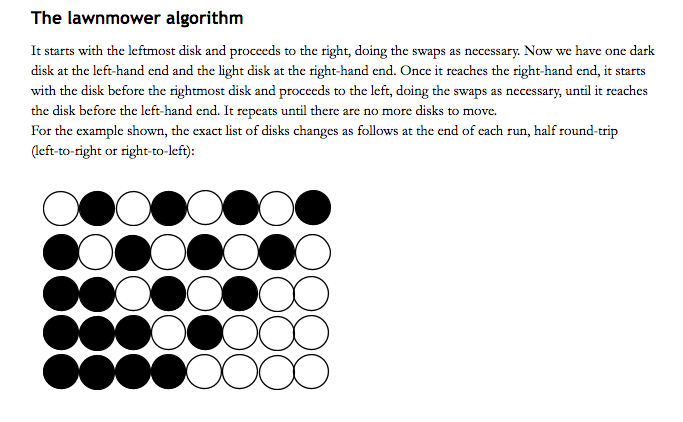
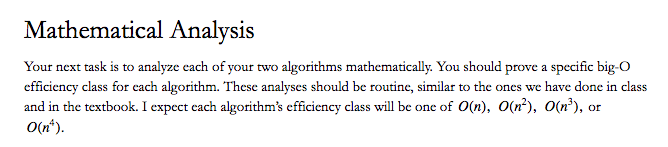
The left-to-right algorithm It starts with the leftmost disk and proceeds to the right, doing the swaps as necessary. Now we have one dark disk at the left-hand end and the light disk at the right-hand end. Once it reaches the right-hand end, it goes back to the leftmost disk and proceeds to the right, doing the swaps as necessary. It repeats until there are no more disks to move. For the example shown, the exact list of disks changes as follows at the end of each run (left-to-right) The lawnmower algorithm It starts with the leftmost disk and proceeds to the right, doing the swaps as necessary. Now we have one dark disk at the left-hand end and the light disk at the right-hand end. Once it reaches the right-hand end, it starts with the disk before the rightmost disk and proceeds to the left, doing the swaps as necessary, until it reaches the disk before the left-hand end. It repeats until there are no more disks to move. For the example shown, the exact list of disks changes as follows at the end of each run, half round-trip (left-to-right or right-to-left): Mathematical Analysis Your next task is to analyze each of your two algorithms mathematically. You should prove a specific big-Co efficiency class for cach algorithm. These analyses should be routine, similar to the ones we have done in class and in the textbook. I expect each algorithm's efficiency class will be one of On), O), O(), or O(n)
Step by Step Solution
There are 3 Steps involved in it

Get step-by-step solutions from verified subject matter experts
 Study Help