Question: i need help with my case study. In 2019, Company X, manufactured a highly desired snack food in their factory. The production of this-item occurred,
i need help with my case study.
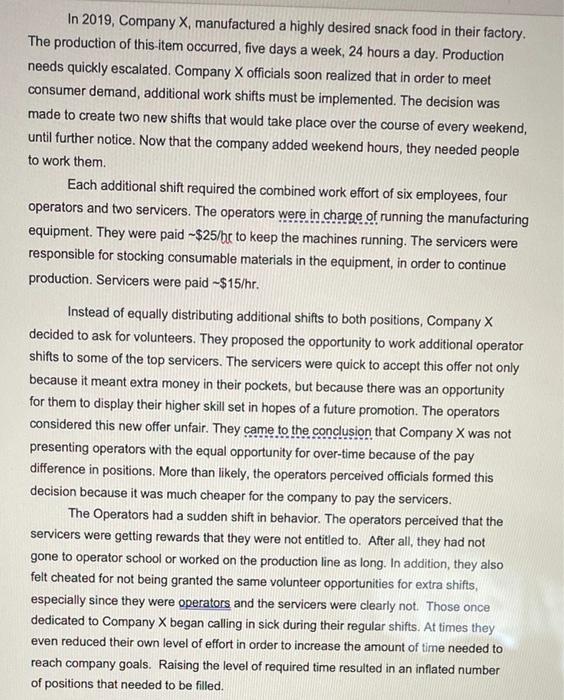
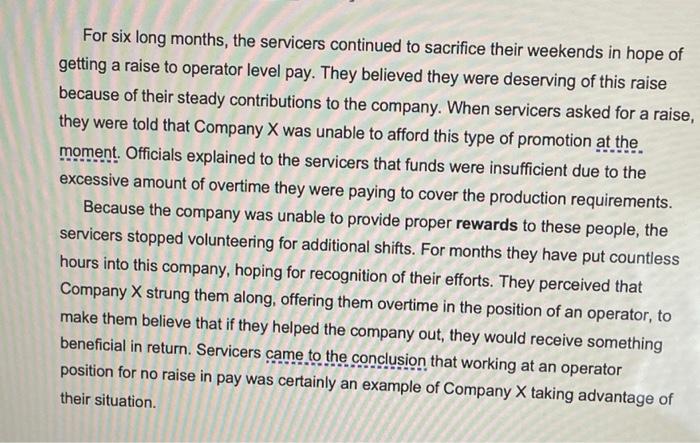
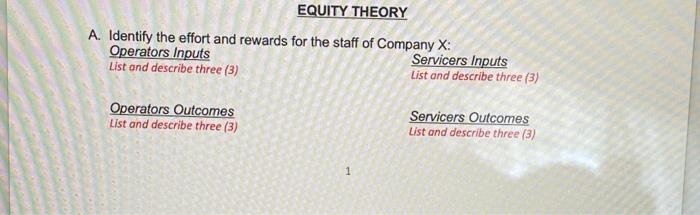
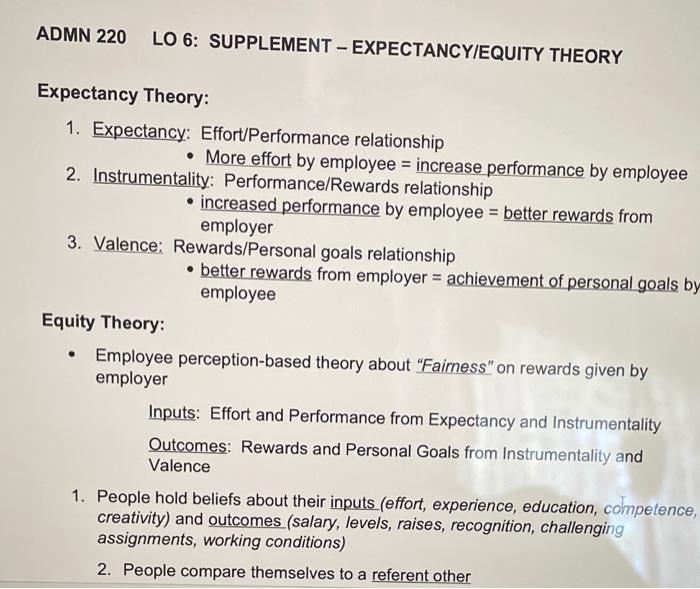
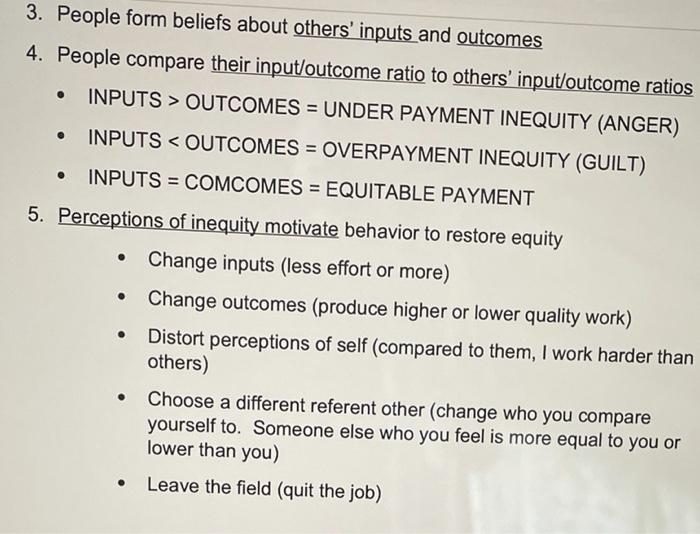
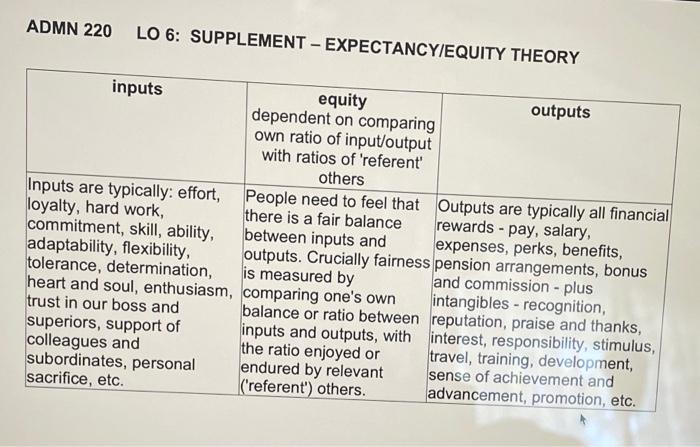
In 2019, Company X, manufactured a highly desired snack food in their factory. The production of this-item occurred, five days a week, 24 hours a day. Production needs quickly escalated. Company X officials soon realized that in order to meet consumer demand, additional work shifts must be implemented. The decision was made to create two new shifts that would take place over the course of every weekend, until further notice. Now that the company added weekend hours, they needed people to work them. Each additional shift required the combined work effort of six employees, four operators and two servicers. The operators were in charge of running the manufacturing equipment. They were paid -$25/ht to keep the machines running. The servicers were responsible for stocking consumable materials in the equipment, in order to continue production. Servicers were paid -$15/hr. Instead of equally distributing additional shifts to both positions, Company X decided to ask for volunteers. They proposed the opportunity to work additional operator shifts to some of the top servicers. The servicers were quick to accept this offer not only because it meant extra money in their pockets, but because there was an opportunity for them to display their higher skill set in hopes of a future promotion. The operators considered this new offer unfair. They came to the conclusion that Company X was not presenting operators with the equal opportunity for over-time because of the pay difference in positions. More than likely, the operators perceived officials formed this decision because it was much cheaper for the company to pay the servicers. The Operators had a sudden shift in behavior. The operators perceived that the servicers were getting rewards that they were not entitled to. After all, they had not gone to operator school or worked on the production line as long. In addition, they also felt cheated for not being granted the same volunteer opportunities for extra shifts, especially since they were operators and the servicers were clearly not. Those once dedicated to Company X began calling in sick during their regular shifts. At times they even reduced their own level of effort in order to increase the amount of time needed to reach company goals. Raising the level of required time resulted in an inflated number of positions that needed to be filled. For six long months, the servicers continued to sacrifice their weekends in hope of getting a raise to operator level pay. They believed they were deserving of this raise because of their steady contributions to the company. When servicers asked for a raise, they were told that Company X was unable to afford this type of promotion at the moment. Officials explained to the servicers that funds were insufficient due to the excessive amount of overtime they were paying to cover the production requirements. Because the company was unable to provide proper rewards to these people, the servicers stopped volunteering for additional shifts. For months they have put countless hours into this company, hoping for recognition of their efforts. They perceived that Company X strung them along, offering them overtime in the position of an operator, to make them believe that if they helped the company out, they would receive something beneficial in return. Servicers came to the conclusion that working at an operator position for no raise in pay was certainly an example of Company X taking advantage of their situation. EQUITY THEORY A. Identify the effort and rewards for the staff of Company X: Operators Inputs Servicers Inputs List and describe three (3) List and describe three (3) Operators Outcomes List and describe three (3) Servicers Outcomes List and describe three (3) 1 ADMN 220 LO 6: SUPPLEMENT - EXPECTANCY/EQUITY THEORY Expectancy Theory: 1. Expectancy: Effort/Performance relationship More effort by employee = increase performance by employee 2. Instrumentality: Performance/Rewards relationship increased performance by employee = better rewards from employer 3. Valence: Rewards/Personal goals relationship better rewards from employer = achievement of personal goals by employee Equity Theory: Employee perception-based theory about Fairness" on rewards given by employer Inputs: Effort and Performance from Expectancy and Instrumentality Outcomes: Rewards and Personal Goals from Instrumentality and Valence 1. People hold beliefs about their inputs (effort, experience, education, competence, creativity) and outcomes (salary, levels, raises, recognition, challenging assignments, working conditions) 2. People compare themselves to a referent other 3. People form beliefs about others' inputs and outcomes 4. People compare their input/outcome ratio to others' input/outcome ratios INPUTS > OUTCOMES = UNDER PAYMENT INEQUITY (ANGER) INPUTS









 Study Help