







Question: I need help with these two questions. The one image with the table is a standalone question while the other two images are one entire
I need help with these two questions. The one image with the table is a standalone question while the other two images are one entire question. The unit these questions come from is the transformation of radical, sinusoidal exponential, and rational functions. Thanks again in advance!
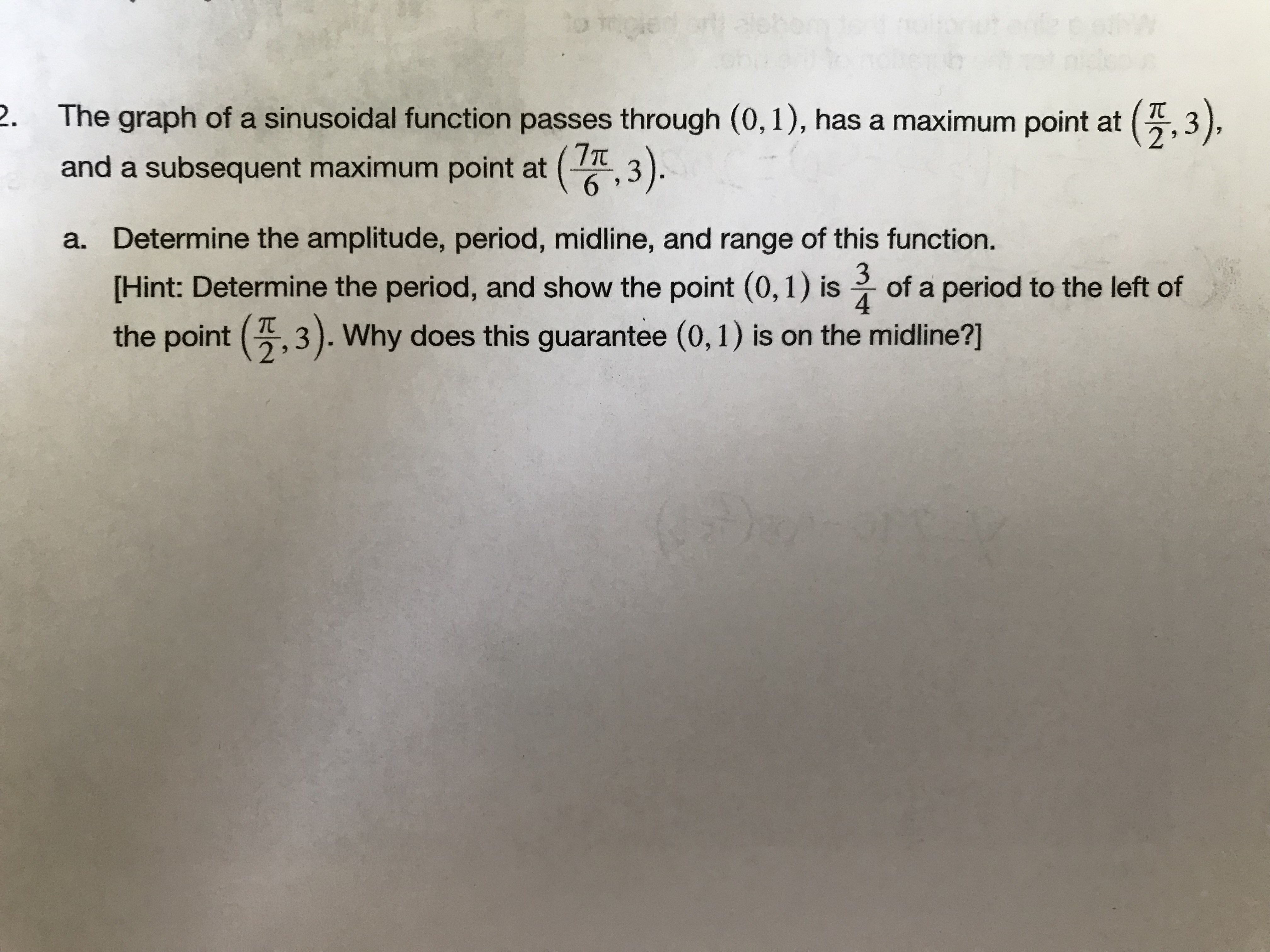
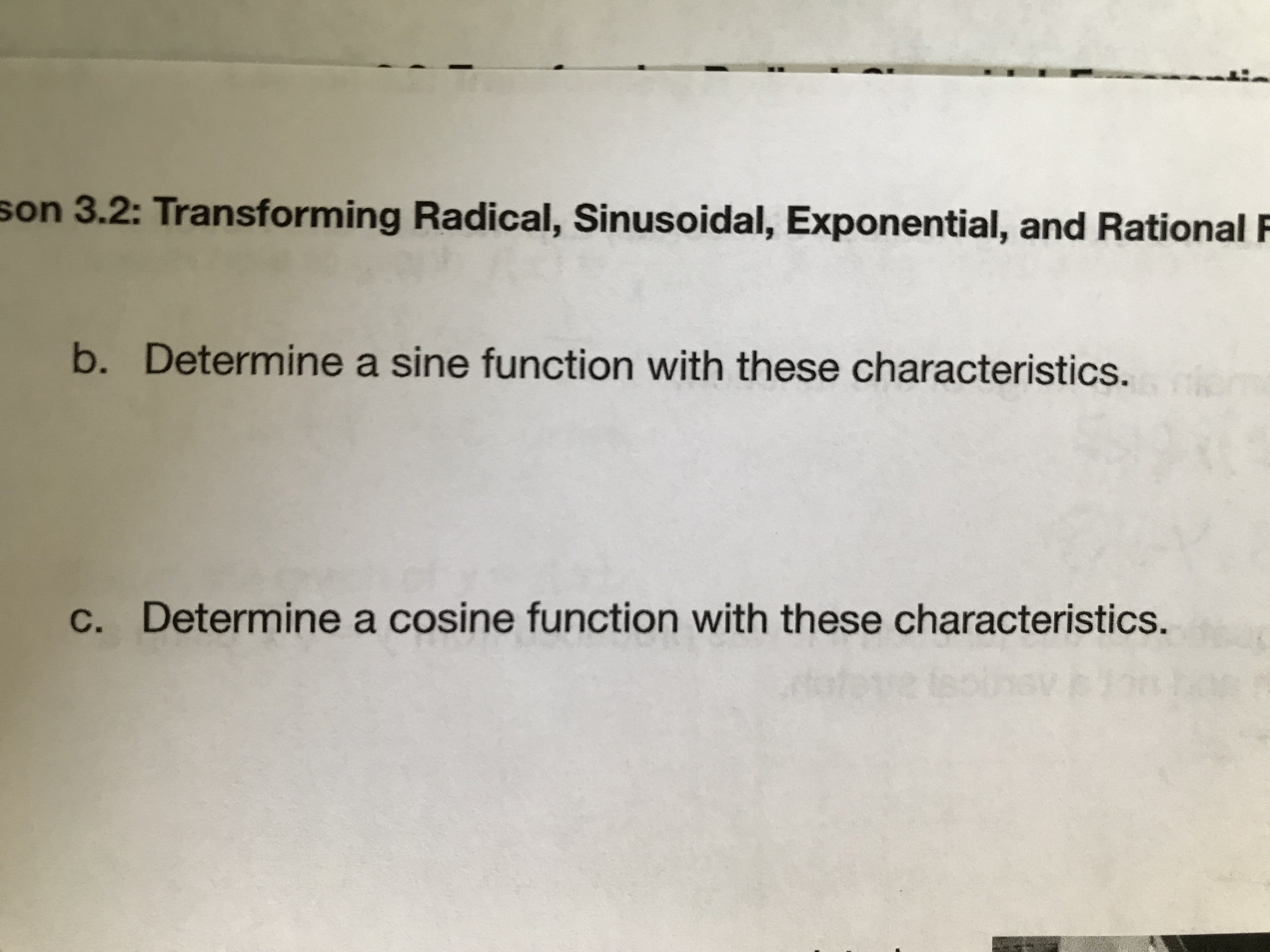
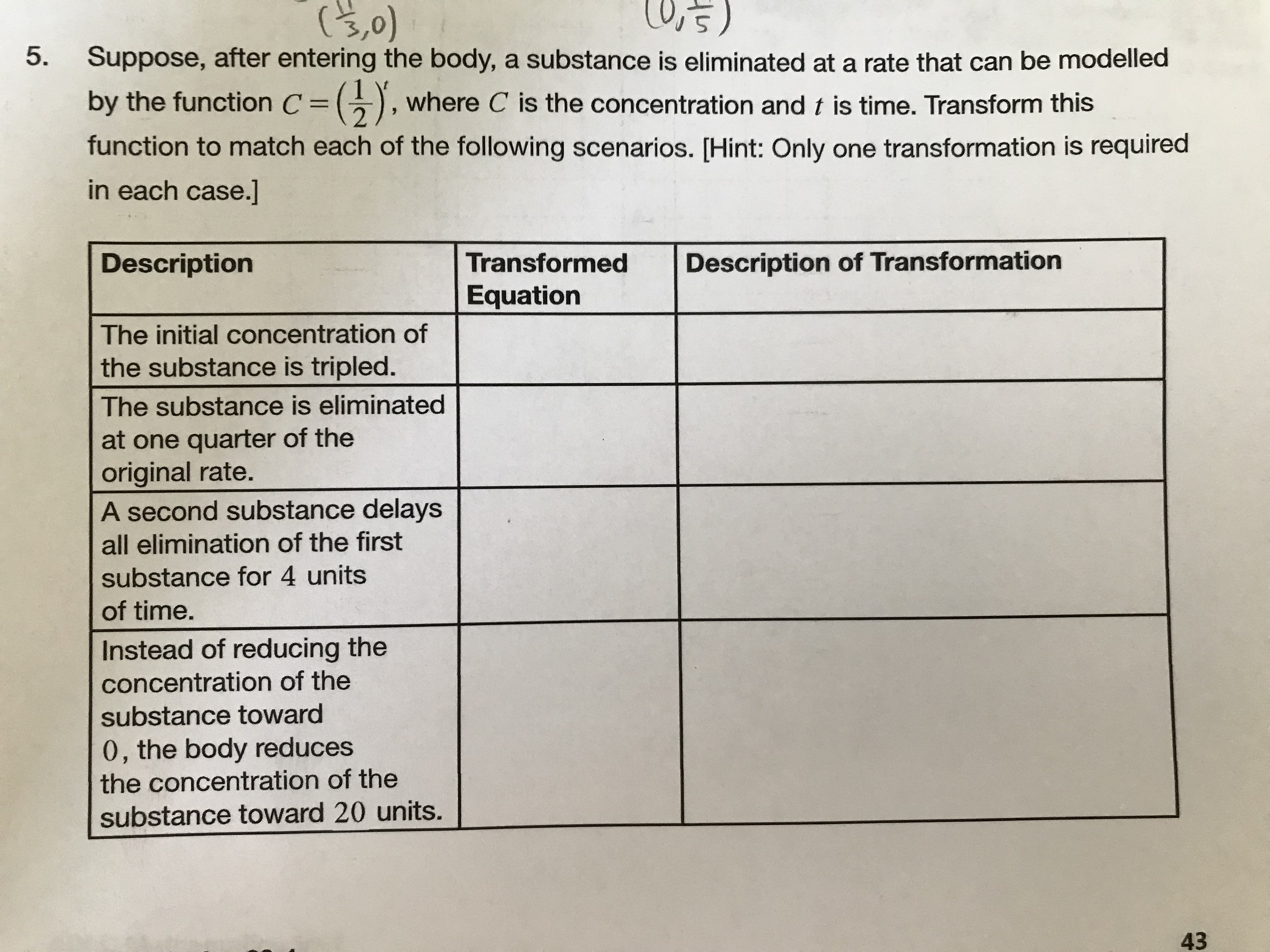
The graph of a sinusoidal function passes through (0, 1), has a maximum point at ( , 3), and a subsequent maximum point at ( 6, 3 ). a. Determine the amplitude, period, midline, and range of this function. [Hint: Determine the period, and show the point (0, 1) is > of a period to the left of the point (2, 3 ). Why does this guarantee (0, 1) is on the midline?]son 3.2: Transforming Radical, Sinusoidal, Exponential, and Rational b. Determine a sine function with these characteristics. c. Determine a cosine function with these characteristics.3,0) 5 Suppose, after entering the body, a substance is eliminated at a rate that can be modelled by the function C = (7 ) , where C is the concentration and t is time. Transform this function to match each of the following scenarios. [Hint: Only one transformation is required in each case.] Description Transformed Description of Transformation Equation The initial concentration of the substance is tripled. The substance is eliminated at one quarter of the original rate. A second substance delays all elimination of the first substance for 4 units of time. Instead of reducing the concentration of the substance toward 0, the body reduces the concentration of the substance toward 20 units
Step by Step Solution
There are 3 Steps involved in it

Get step-by-step solutions from verified subject matter experts
 Study Help