Question: I need help with this presentation. Here's what I got as a feedback so please help me add the information missing. Strengths of the Updated
I need help with this presentation. Here's what I got as a feedback so please help me add the information missing.
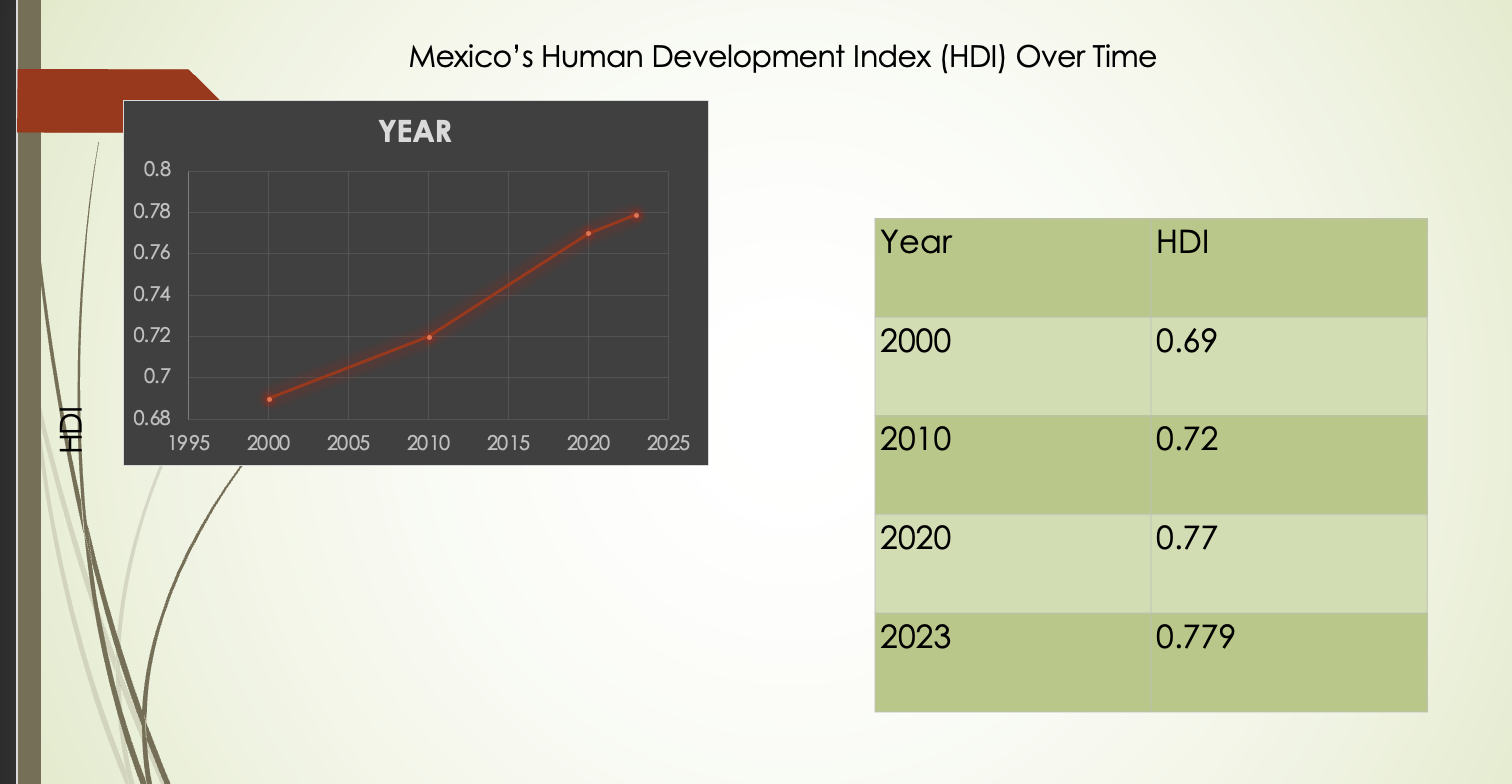
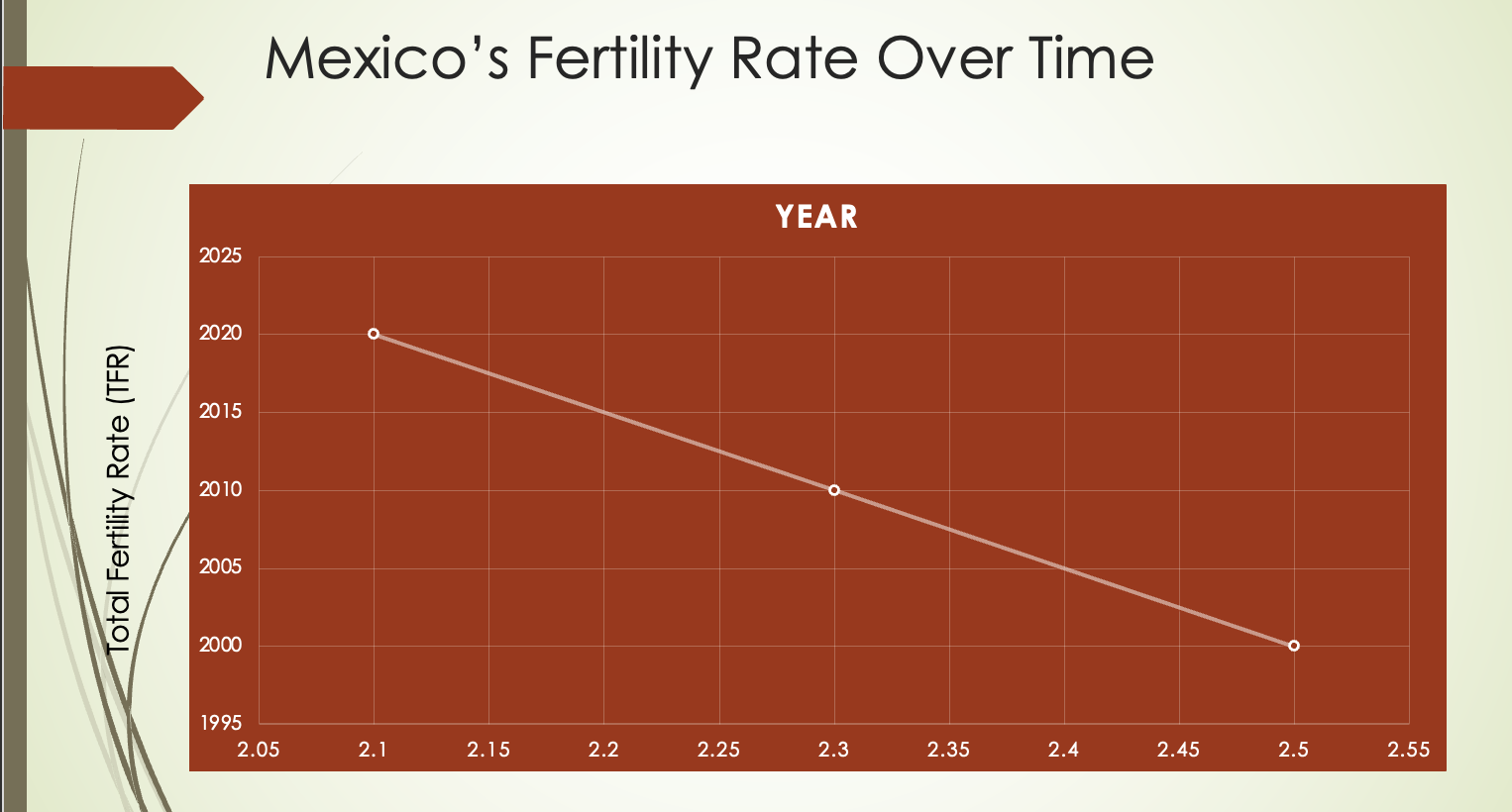
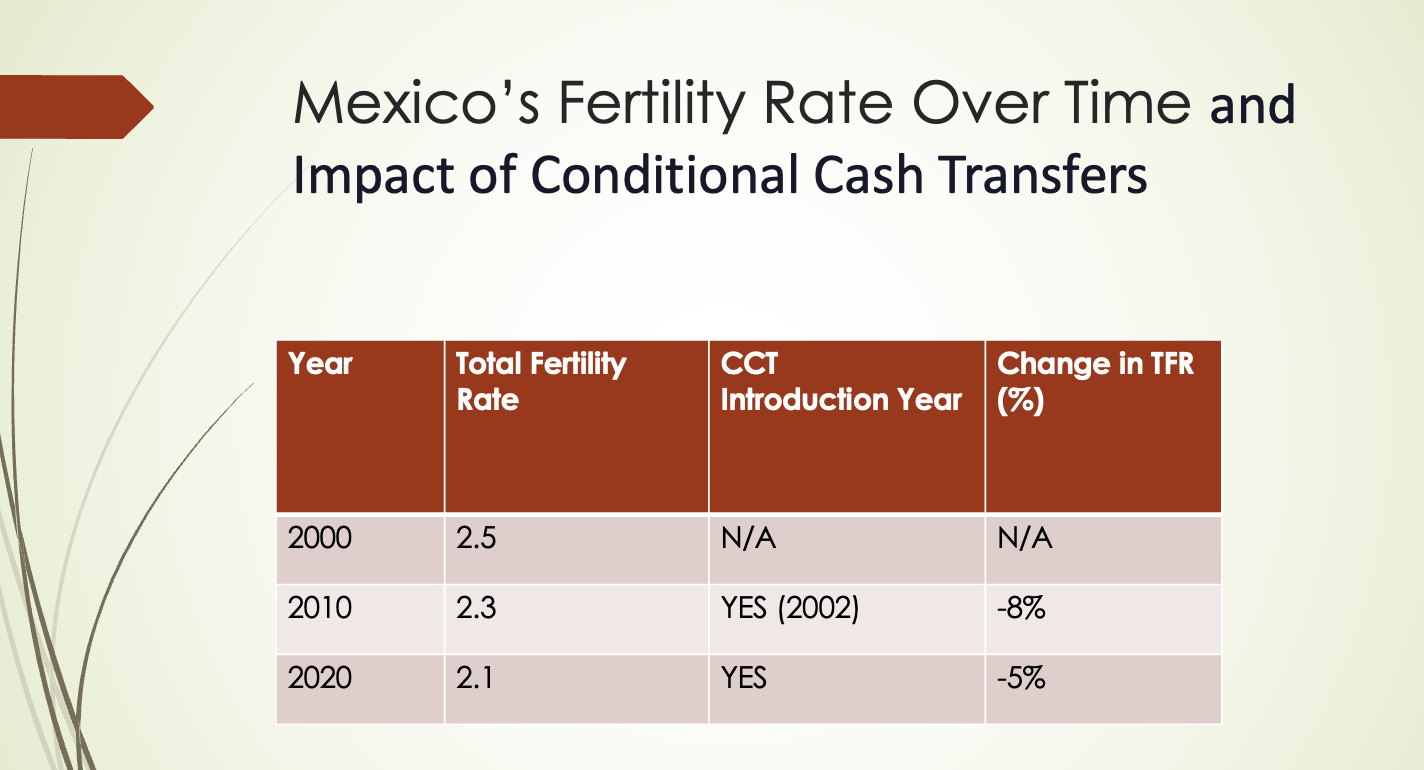
Strengths of the Updated Presentation: 1. Expanded Focus: * The updated study focus explicitly connects Mexico's economic policies and key industries to gender issues, emphasizing the Prospera program. 2. Added Visuals: * New bar charts (e.g., labor force participation and decision-making power before and after Prospera) and tables (e.g., Mexico's GDP composition by sector) improve the presentation? . 3. Incorporation of Key Economic Indicators: * Updated data, including fertility rates and gender disparities, adds depth to the economic context? . 4. Improved Depth in Women's Contributions: * Sections on women's participation in manufacturing, agriculture, and services provide specific examples, which enhance the audience's understanding of their economic roles? . 5. Cited Sources: * All charts and data appear well-cited. Areas for Further Improvement: 1. Storytelling and Theme Development: * While the theme is clearer, ensure it flows consistently throughout the presentation. For example: * Connect each data point (e.g., life expectancy, labor participation rates) back to gender-related economic challenges or successes. * Use transitions to emphasize how gender issues intersect with Mexico's broader economic policies. 2. Visual Design: * Some charts are dense or require better labeling (e.g., HDI over time). Ensure all visuals: * Have legible text. * Include a concise explanation of their relevance in the accompanying narrative. * Consider using consistent colors or designs to make the presentation cohesive. 3. Engagement and Creativity: * Add compelling visuals, such as an infographic summarizing key gender issues in Mexico. For example: * Highlight the wage gap or the share of women in various sectors using visually striking graphics. 4. Analysis and Context: * Some sections present raw data without deeper interpretation. For example: * The Prospera bar chart could elaborate more on why these changes in labor participation and decision-making matter for economic growth. * The fertility rate chart might benefit from a clearer link to economic implications. 5. Practice for Delivery: * Make sure to rehearse transitions between speakers. Each group member should contribute with equal enthusiasm, ensuring smooth handoffs and avoiding a monotonous tone? .
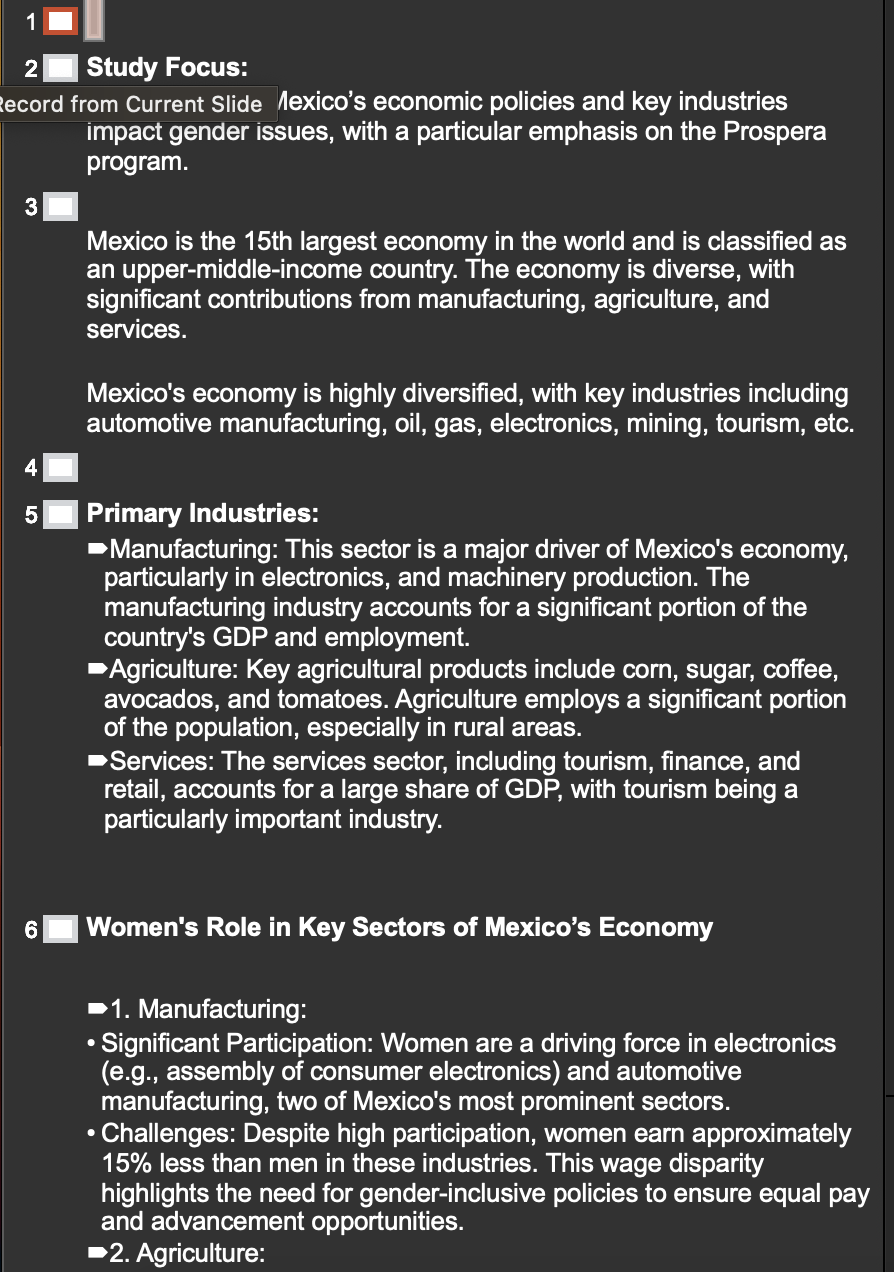
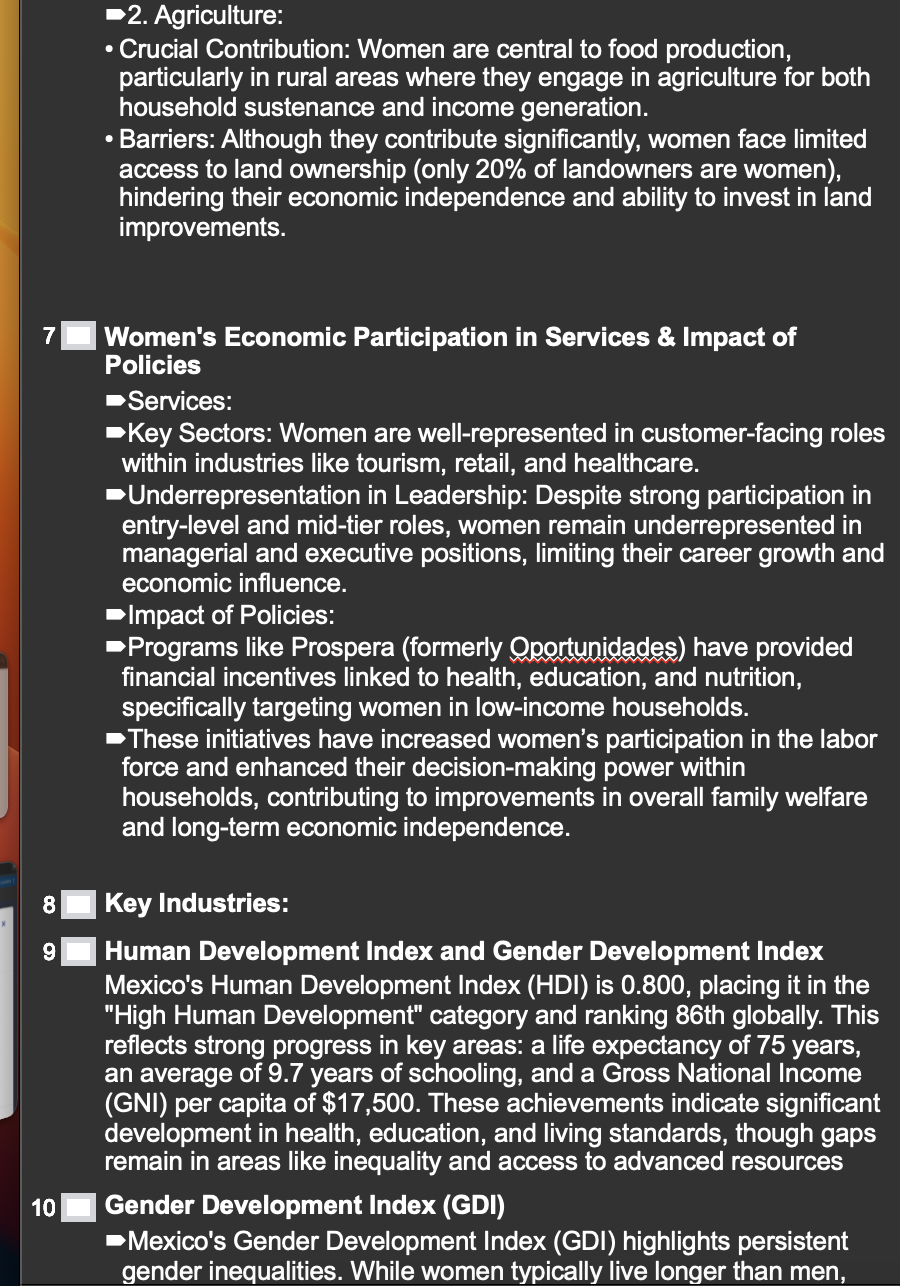
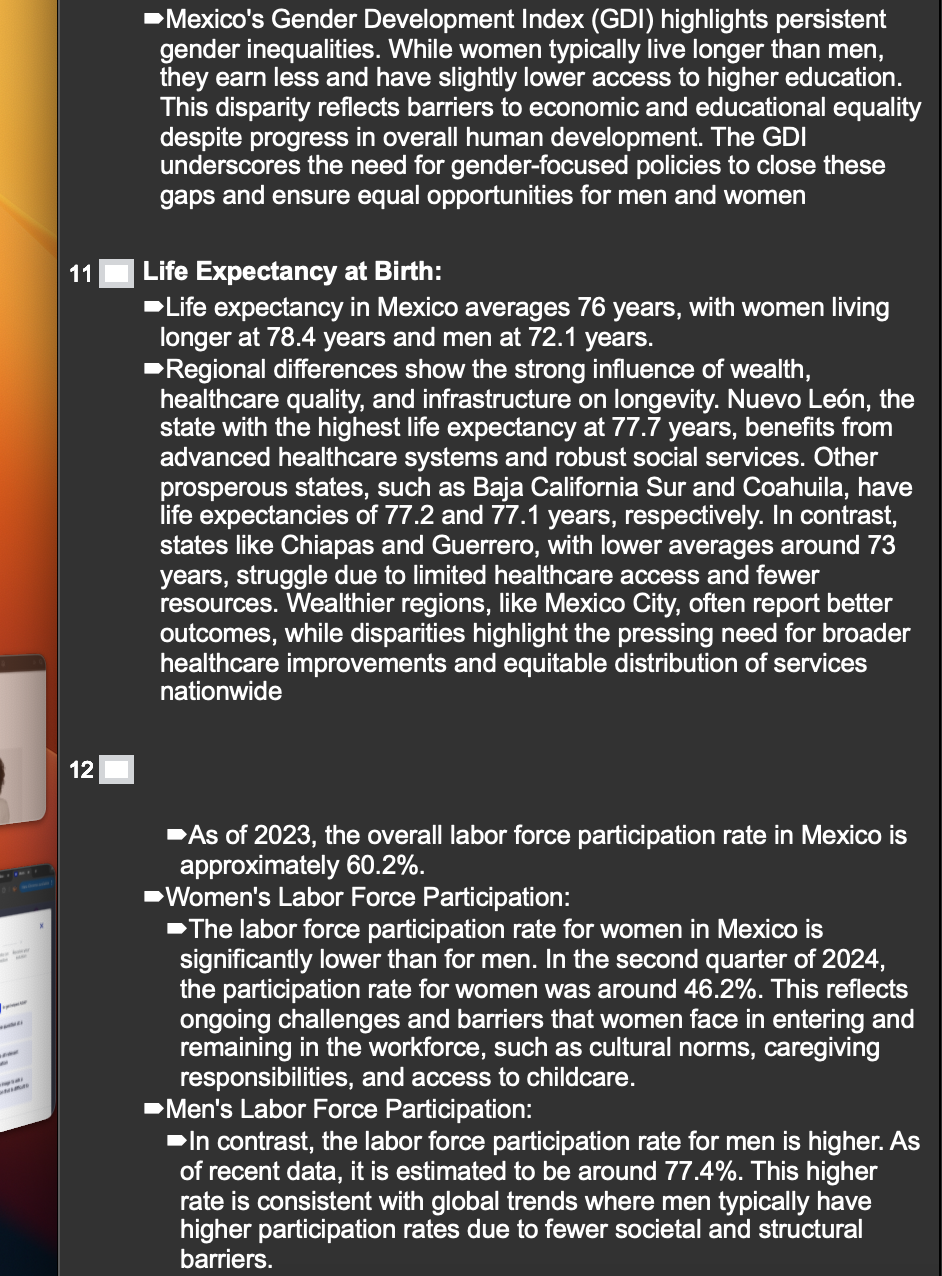
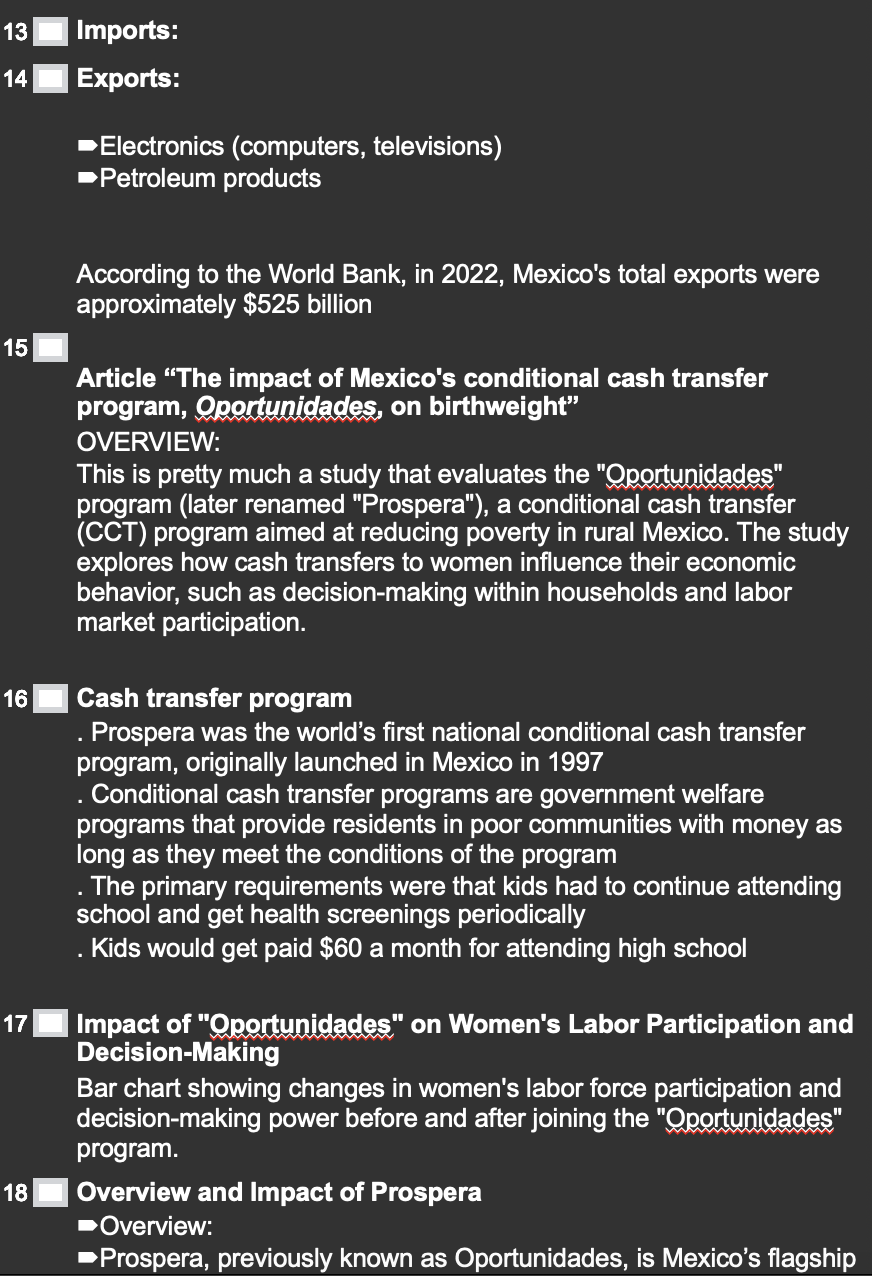
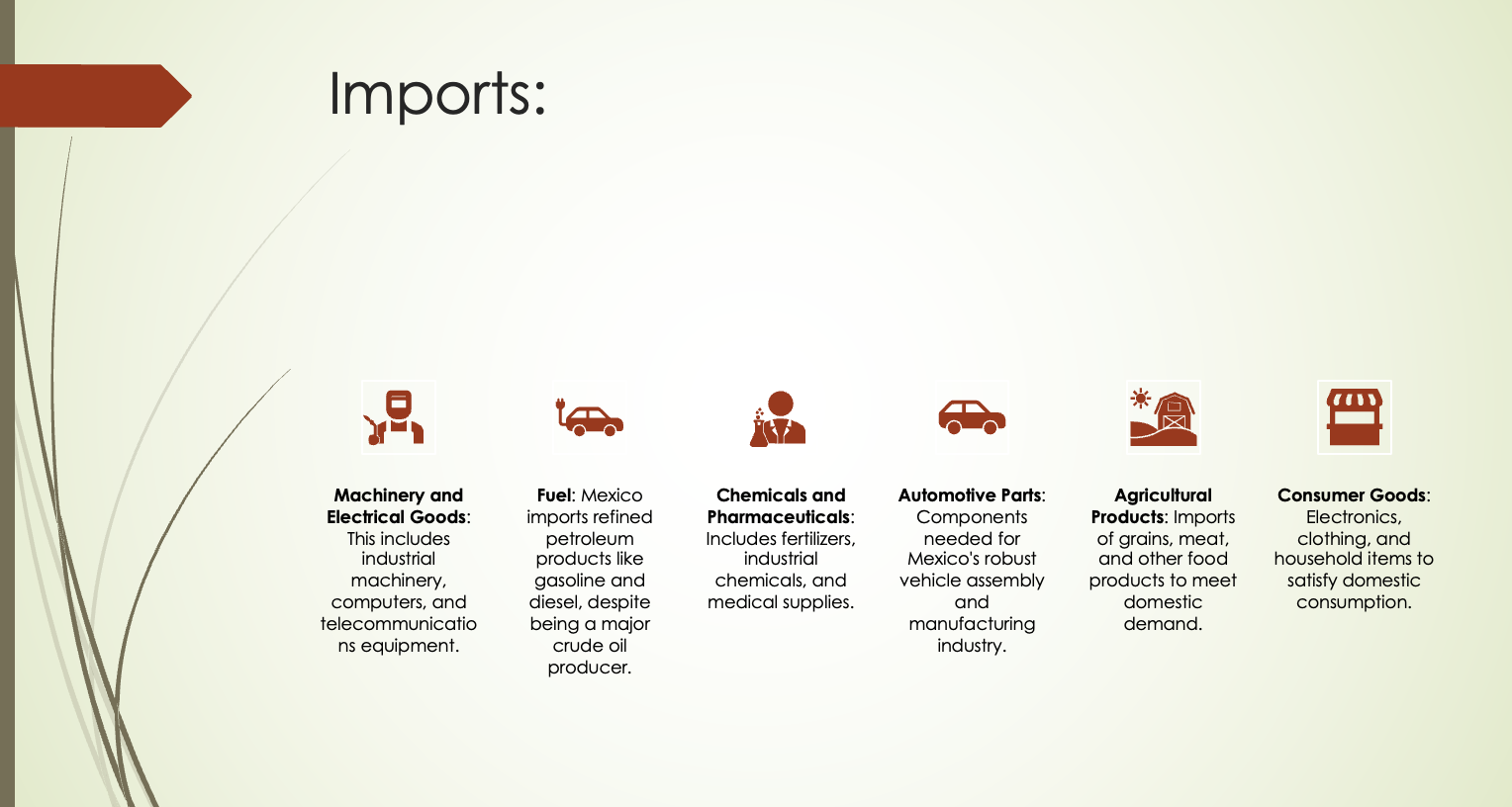
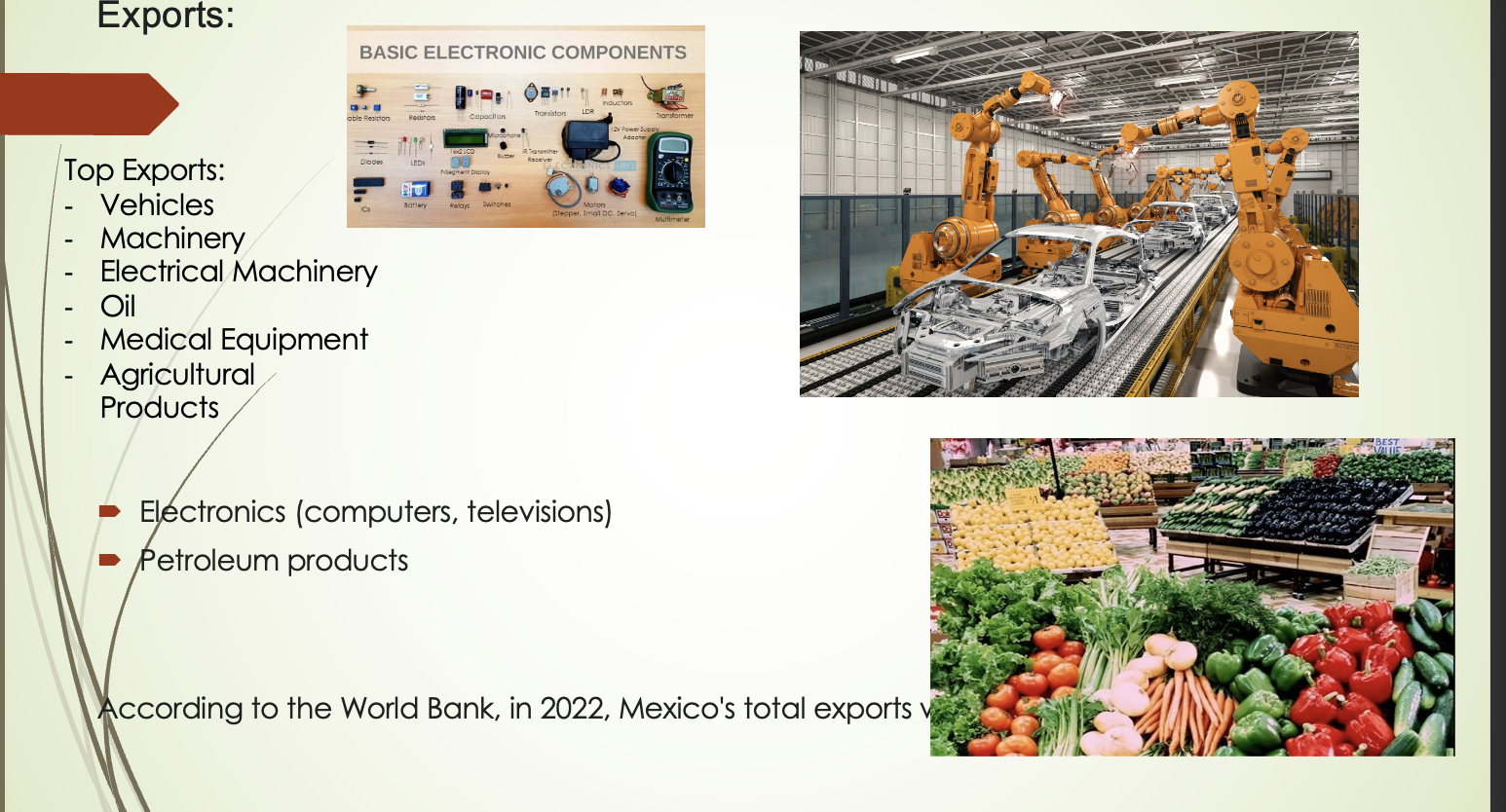
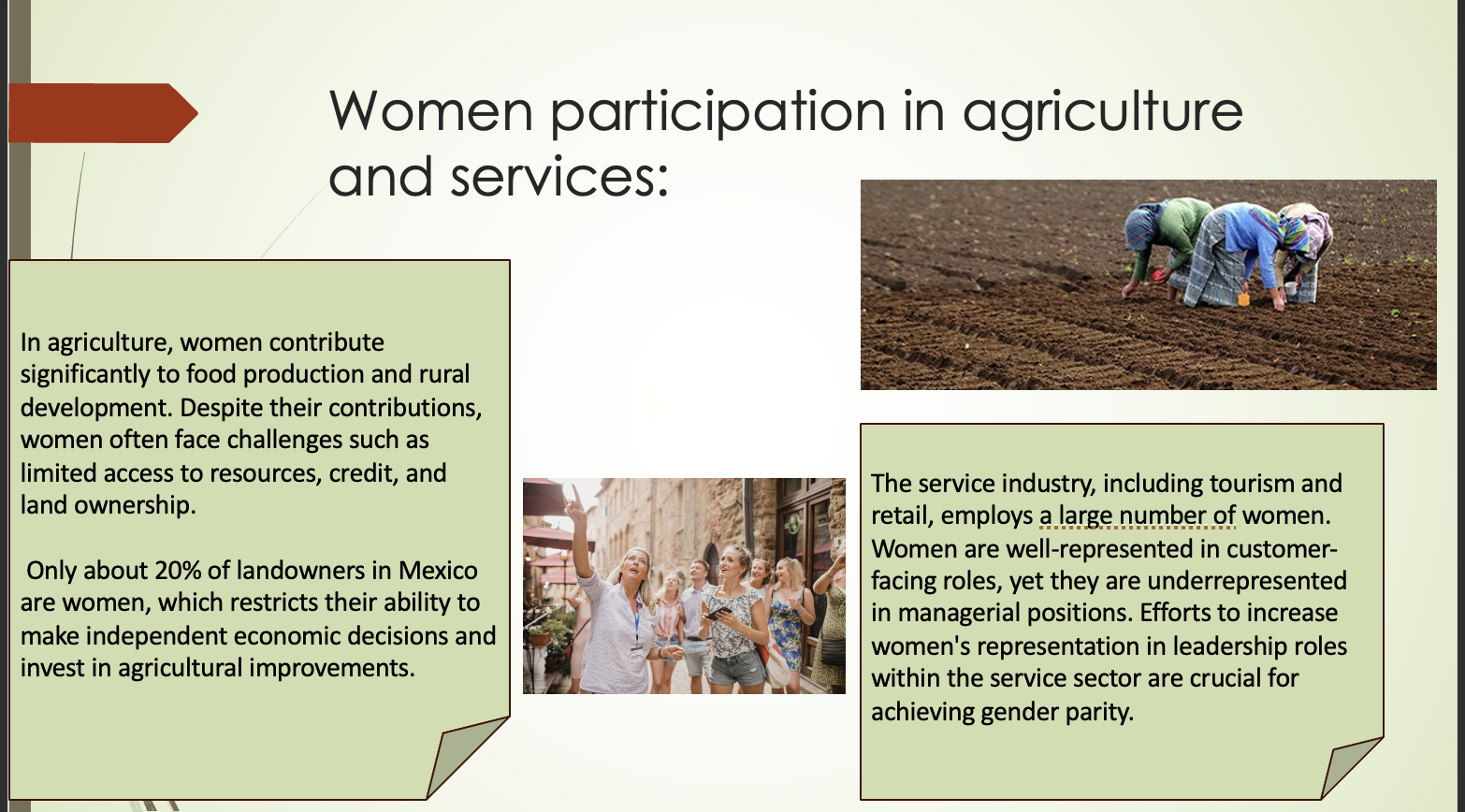
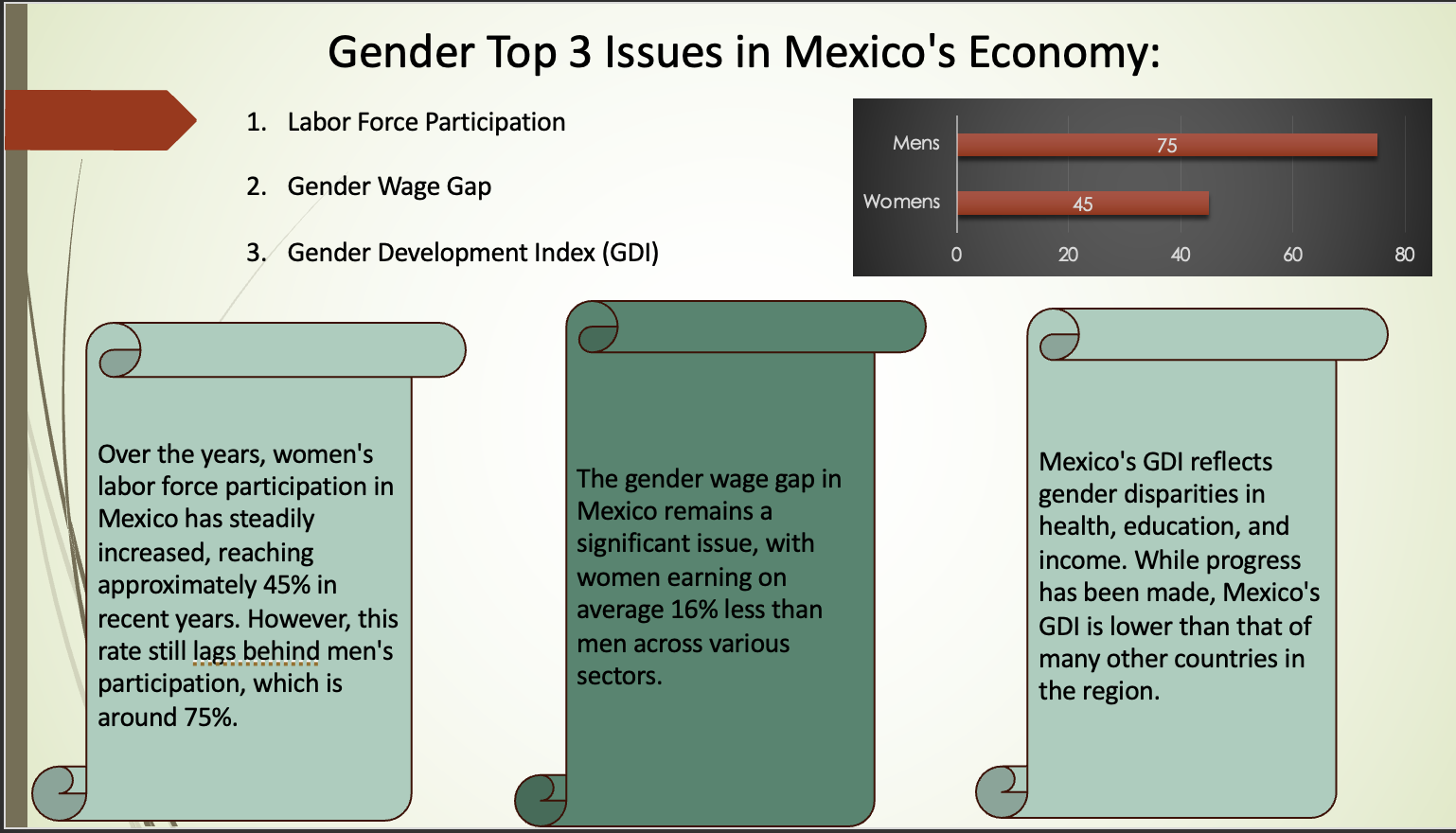
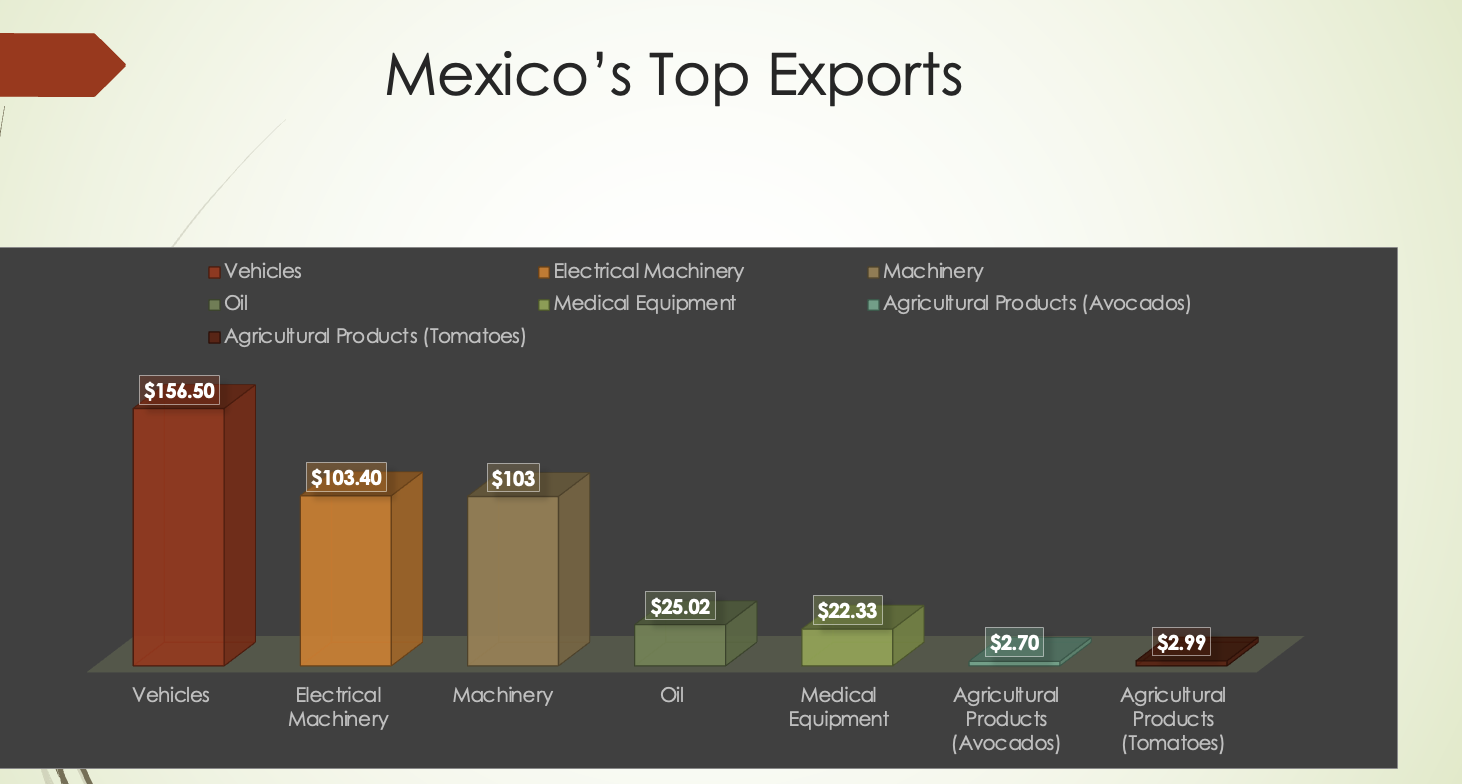
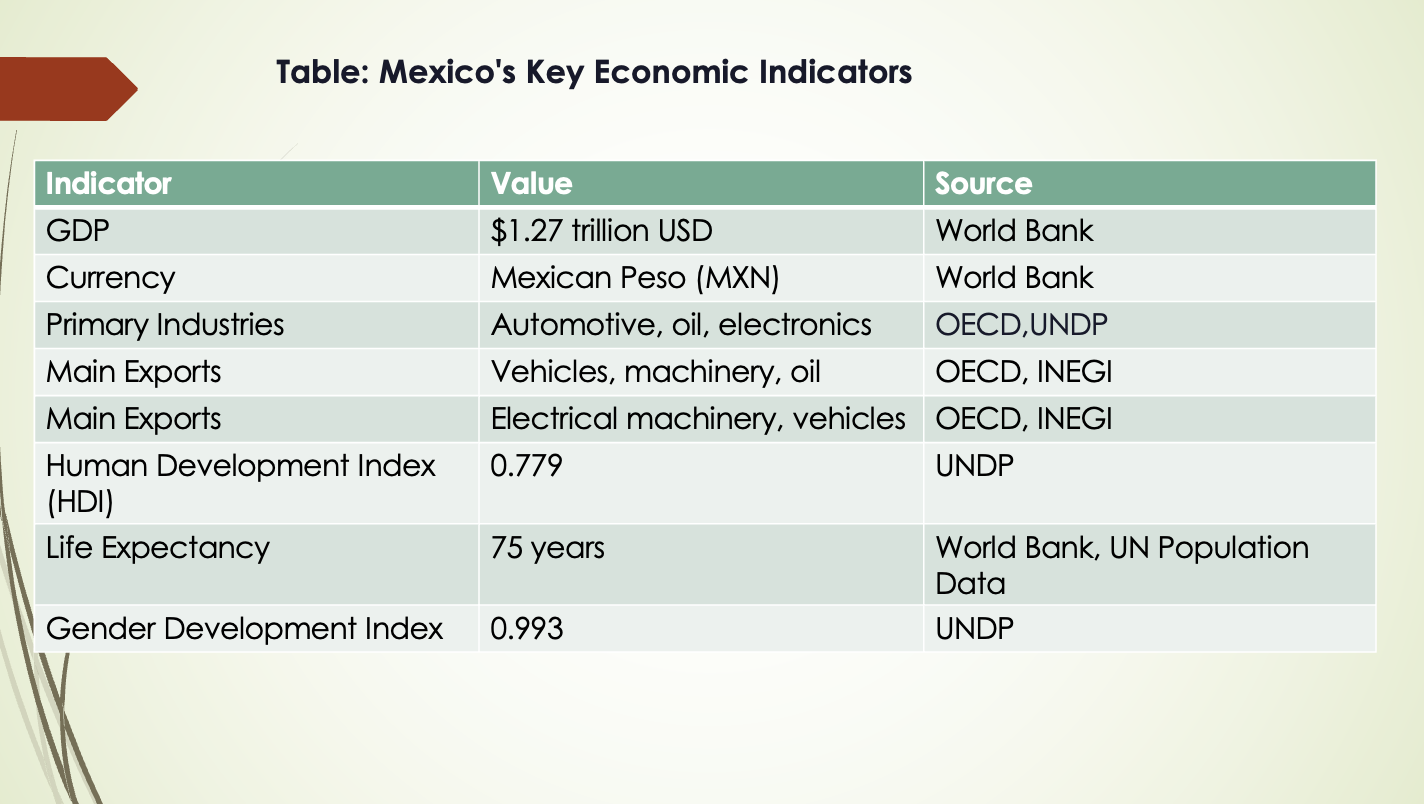
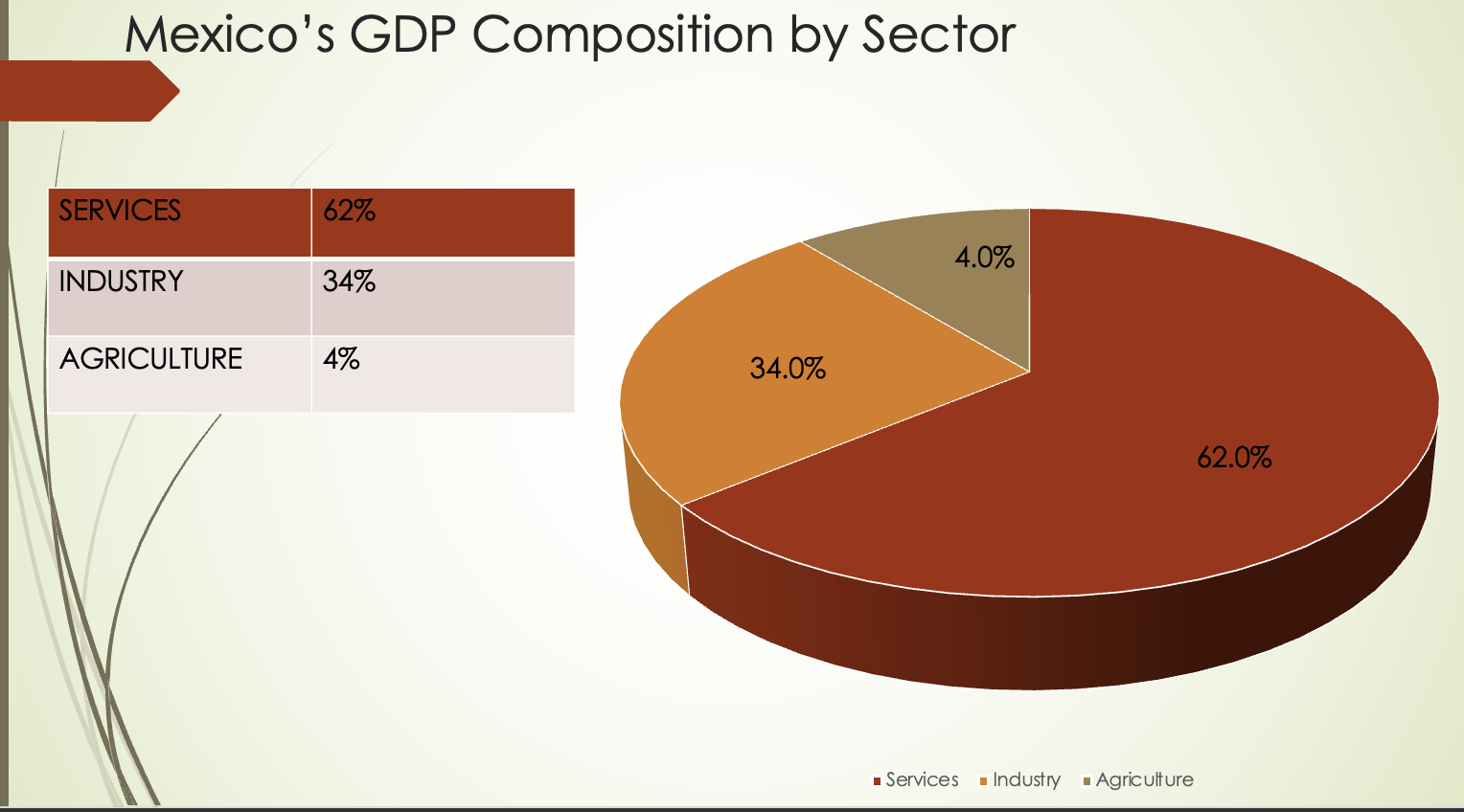
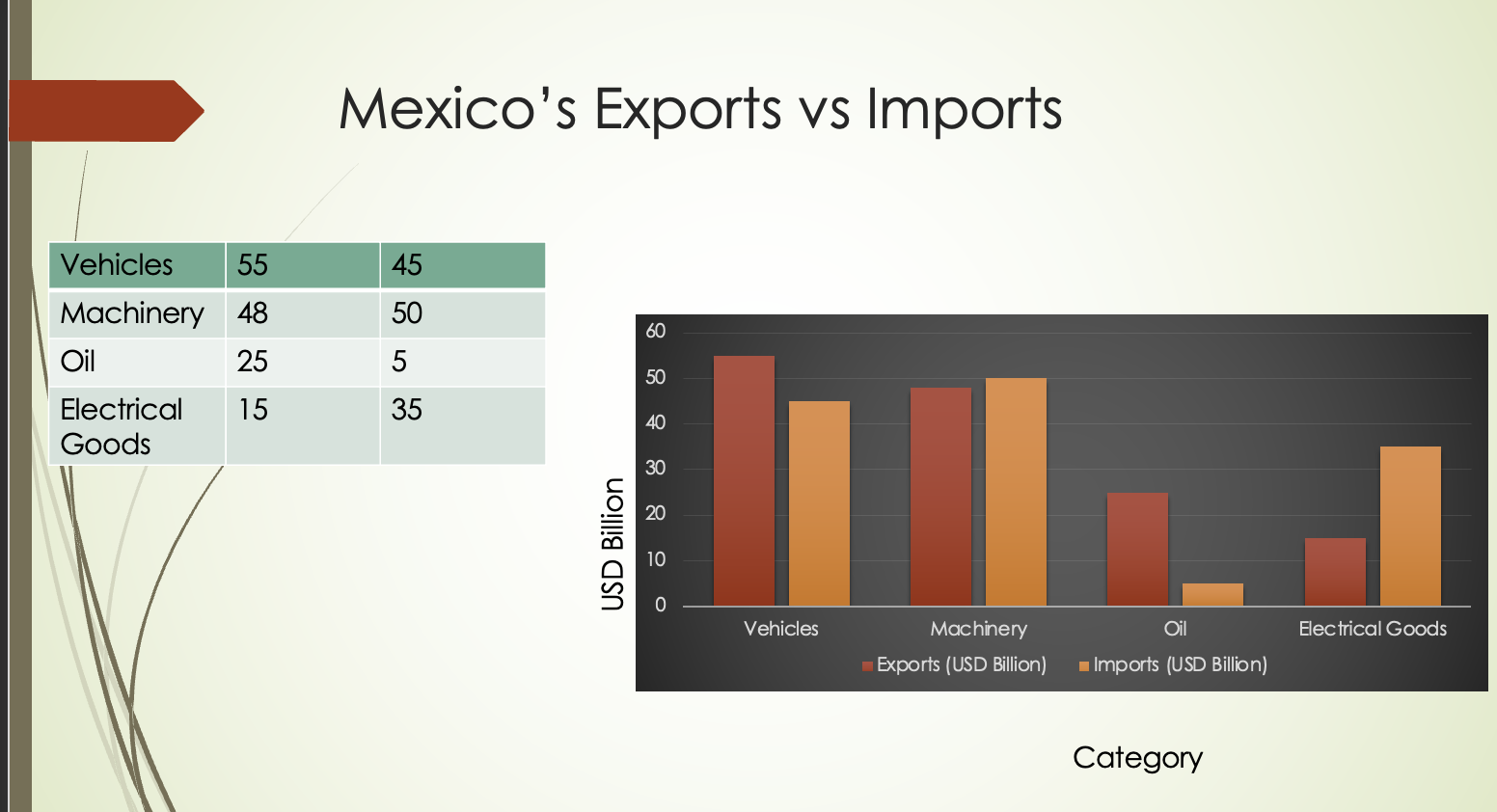
2 [l Study Focus: ecord from Current Slide /exico's economic policies and key industries impact gender issues, with a particular emphasis on the Prospera program. 3 Mexico is the 15th largest economy in the world and is classified as an upper-middle-income country. The economy is diverse, with significant contributions from manufacturing, agriculture, and 1T Vi (ol TR Mexico's economy is highly diversified, with key industries including automotive manufacturing, oil, gas, electronics, mining, tourism, etc. 1 5l Primary Industries: = Manufacturing: This sector is a major driver of Mexico's economy, particularly in electronics, and machinery production. The manufacturing industry accounts for a significant portion of the country's GDP and employment. = Agriculture: Key agricultural products include corn, sugar, coffee, avocados, and tomatoes. Agriculture employs a significant portion of the population, especially in rural areas. = Services: The services sector, including tourism, finance, and retail, accounts for a large share of GDP, with tourism being a particularly important industry. 6 [lll Women's Role in Key Sectors of Mexico's Economy = 1. Manufacturing: Significant Participation: Women are a driving force in electronics (e.g., assembly of consumer electronics) and automotive manufacturing, two of Mexico's most prominent sectors. Challenges: Despite high participation, women earn approximately 15% less than men in these industries. This wage disparity highlights the need for gender-inclusive policies to ensure equal pay and advancement opportunities. w2 Agriculture: w2 Agriculture: Crucial Contribution: Women are central to food production, particularly in rural areas where they engage in agriculture for both household sustenance and income generation. Barriers: Although they contribute significantly, women face limited access to land ownership (only 20% of landowners are women), hindering their economic independence and ability to invest in land improvements. 7 Women's Economic Participation in Services & Impact of Policies LS C1aY [T wKey Sectors: Women are well-represented in customer-facing roles within industries like tourism, retail, and healthcare. = Underrepresentation in Leadership: Despite strong participation in entry-level and mid-tier roles, women remain underrepresented in managerial and executive positions, limiting their career growth and economic influence. = |mpact of Policies: = Programs like Prospera (formerly Qportunidades) have provided financial incentives linked to health, education, and nutrition, specifically targeting women in low-income households. = These initiatives have increased women's participation in the labor force and enhanced their decision-making power within households, contributing to improvements in overall family welfare and long-term economic independence. 8 | Key Industries: 9 [l Human Development Index and Gender Development Index Mexico's Human Development Index (HDI) is 0.800, placing it in the "High Human Development" category and ranking 86th globally. This reflects strong progress in key areas: a life expectancy of 75 years, an average of 9.7 years of schooling, and a Gross National Income (GNI) per capita of $17,500. These achievements indicate significant development in health, education, and living standards, though gaps remain in areas like inequality and access to advanced resources 10 ]l Gender Development Index (GDI) = Mexico's Gender Development Index (GDI) highlights persistent gender inequalities. While women typically live longer than men, = \\exico's Gender Development Index (GDI) highlights persistent gender inequalities. While women typically live longer than men, they earn less and have slightly lower access to higher education. This disparity reflects barriers to economic and educational equality despite progress in overall human development. The GDI underscores the need for gender-focused policies to close these gaps and ensure equal opportunities for men and women 11 |l Life Expectancy at Birth: w| ife expectancy in Mexico averages 76 years, with women living longer at 78.4 years and men at 72.1 years. = Regional differences show the strong influence of wealth, healthcare quality, and infrastructure on longevity. Nuevo Leon, the state with the highest life expectancy at 77.7 years, benefits from advanced healthcare systems and robust social services. Other prosperous states, such as Baja California Sur and Coahuila, have life expectancies of 77.2 and 77.1 years, respectively. In contrast, states like Chiapas and Guerrero, with lower averages around 73 years, struggle due to limited healthcare access and fewer resources. Wealthier regions, like Mexico City, often report better outcomes, while disparities highlight the pressing need for broader healthcare improvements and equitable distribution of services nationwide = As of 2023, the overall labor force participation rate in Mexico is approximately 60.2%. =\\Vomen's Labor Force Participation: = The labor force participation rate for women in Mexico is significantly lower than for men. In the second quarter of 2024, the participation rate for women was around 46.2%. This reflects ongoing challenges and barriers that women face in entering and remaining in the workforce, such as cultural norms, caregiving responsibilities, and access to childcare. = Men's Labor Force Participation: = |n contrast, the labor force participation rate for men is higher. As of recent data, it is estimated to be around 77.4%. This higher rate is consistent with global trends where men typically have higher participation rates due to fewer societal and structural o=y g =T 6F K] RGO Py IS ER = Electronics (computers, televisions) = Petroleum products According to the World Bank, in 2022, Mexico's total exports were approximately $525 billion 6| Article \"The impact of Mexico's conditional cash transfer program, Oportunidades, on birthweight\" OVERVIEW: This is pretty much a study that evaluates the "Qportunidades" program (later renamed "Prospera"), a conditional cash transfer (CCT) program aimed at reducing poverty in rural Mexico. The study explores how cash transfers to women influence their economic behavior, such as decision-making within households and labor market participation. 16 [ll]l Cash transfer program . Prospera was the world's first national conditional cash transfer program, originally launched in Mexico in 1997 . Conditional cash transfer programs are government welfare programs that provide residents in poor communities with money as long as they meet the conditions of the program . The primary requirements were that kids had to continue attending school and get health screenings periodically . Kids would get paid $60 a month for attending high school 17 [l Impact of "Oportunidades\" on Women's Labor Participation and Decision-Making Bar chart showing changes in women's labor force participation and decision-making power before and after joining the "Oportunidades\" program. 18 ]l Overview and Impact of Prospera L OV ER = Prospera, previously known as Oportunidades, is Mexico's flagship conditional cash transfer program. It combats poverty by linking financial assistance to health check-ups, school attendance, and nutrition for families. = |mpact on Women: = Empowered women with greater decision-making roles and workforce participation. = Marked improvements in family income, education levels, and health metrics. = |nfographics highlight gains in household well-being and maternal health outcomes. =| ong-Term Qutcomes: = Significant, lasting advancements in women's education, health, and economic independence. = However, structural challenges, like entrenched gender disparities, persist. 19 [l Women participation on Manufacturing: =\\Vomen play a significant role in Mexico's manufacturing sector, particularly in industries such as electronics and automotive. However, gender disparities persist, with women often occupying lower-paying positions and facing barriers to advancement. According to recent data, women in manufacturing earn approximately 15% less than their male counterparts, highlighting the need for policies that promote gender equality in wages and career opportunities. 20 [lll Women participation in agriculture and services: 21 [l Gender Top 3 Issues in Mexico's Economy: 22 [l Research Articles on Women's Economic Lives in Mexico: = _ The Mexican government has made strides in promoting educational access for girls and women (such as the cash transfer program)resulting in increased literacy that has allowed women to ascend beyond traditional gender roles = Despite this, women still earn less and are burdened with childcare on top of work =_ There is lost economic potential as these women contribute less to social security systems =_Women in rural areas have turned to food production to generate income as well as building their social status 23 Mexico's Top Exports 24 Table: Mexico's Key Economic Indicators 25 Mexico's GDP Composition by Sector 26 Mexico's Exports vs Imports 27 28 Mexico's Fertility Rate Over Time 29 Mexico's Fertility Rate Over Time and Impact of Conditional Cash Transfers 30 Sources: https://www.worldbank.org/en/country/mexico/overview https://hdr.undp.org/data-center/specific-country- data#/countries/MEX https://tradingeconomics.com/mexico/qdp#:~:text=Summary,15211 702.20 https://countryeconomy.com/countries/mexico https://www.statista.com/statistics/803487/mexico-gender-gap- index/ https://www.macrotrends.net/global- metrics/countries/mex/mexico/life-expectancy https://www.statista.com/statistics/1341308/labor-force- participation-rate-by-gender-mexico/ https://mexiconewsdaily.com https://eleconomista.com.mx https://www.gob.mx https://borgenproject.org/conditional-cash-transfer-program/ https://www.mexicohistorico.com/paginas/The-Role-of-Women-in- Mexico---S-Economic-Development.html https://pmc.ncbi.nim.nih.gov/articles/PMC2846434/ https://borgenproject.org/conditional-cash-transfer-program/ https://socialprotection.org/discover/blog/prospera-and-future- social-protection-and-education-mexicoImports: Machinery and Fuel: Mexico Chemicals and Automotive Parts: Agricultural Consumer Goods: Electrical Goods: imports refined Pharmaceuticals: Components Products: Imports Electronics, This includes petroleum Includes fertilizers, needed for of grains, meat, clothing, and industrial products like industrial Mexico's robust and other food household items to machinery, gasoline and chemicals, and vehicle assembly products to meet satisfy domestic computers, and diesel, despite medical supplies. and domestic consumption. telecommunicatio being a major manufacturing demand. ns equipment. crude oil industry. producer.Exports: BASIC ELECTRONIC COMPONENTS inducton LOR able Revisions Roshion Capacitors nansistars Transformer Power Puppy 9 . 1602 LCD Diode LEDS 818 Rocdiver Top Exports: Vehicles Batter Relays Switches Motors Stepper, $mal DC. Serval Multimeter Machinery Electrical Machinery Oil Medical Equipment Agricultural Products Electronics (computers, televisions) Petroleum products According to the World Bank, in 2022, Mexico's total exportsand services: In agriculture, women contribute significantly to food production and rural development. Despite their contributions, women often face challenges such as limited access to resources, credit, and land ownership. Only about 20% of landowners in Mexico are women, which restricts their ability to make independent economic decisions and invest in agricultural improvements. Women participation in agriculture The service industry, including tourism and Women are well-represented in customer- facing roles, yet they are underrepresented in managerial positions. Efforts to increase women's representation in leadership roles within the service sector are crucial for achieving gender parity. Gender Top 3 Issues in Mexico's Economy: 1. Labor Force Participation Mens 75 2. Gender Wage Gap Womens 45 3. Gender Development Index (GDI) 20 40 60 80 Over the years, women's The gender wage gap in Mexico's GDI reflects labor force participation in gender disparities in Mexico has steadily Mexico remains a significant issue, with health, education, and increased, reaching approximately 45% in women earning on income. While progress recent years. However, this average 16% less than has been made, Mexico's GDI is lower than that of rate still lags behind men's men across various many other countries in participation, which is sectors. the region. around 75%.Mexico's Top Exports Vehicles Electrical Machinery Machinery Oil Medical Equipment Agricultural Products (Avocados) Agricultural Products (Tomatoes) $156.50 $103.40 $103 $25.02 $22.33 $2.70 $2.99 Vehicles Electrical Machinery Oil Medical Agricultural Agricultural Machinery Equipment Products Products (Avocados) (Tomatoes)Table: Mexico's Key Economic Indicators Indicator Value Source GDP $1.27 trillion USD World Bank Currency Mexican Peso (MXN) World Bank Primary Industries Automotive, oil, electronics OECD,UNDP Main Exports Vehicles, machinery, oil OECD, INEGI Main Exports Electrical machinery, vehicles OECD, INEGI Human Development Index 0.779 UNDP (HDI) Life Expectancy 75 years World Bank, UN Population Data Gender Development Index 0.993 UNDPMexico's GDP Composition by Sector SERVICES 62% 4.0% INDUSTRY 34% AGRICULTURE 4% 34.0% 62.0% Services . Industry AgricultureMexico's Exports vs Imports Vehicles 55 45 Machinery 48 50 60 Oil 25 5 50 Electrical 15 35 40 Goods 30 20 USD Billion 10 Vehicles Machinery Oil Electrical Goods Exports (USD Billion) Imports (USD Billion) Category\f\fMexico's Fertility Rate Over Time and Impact of Conditional Cash Transfers Year Total Fertility CCT Change in TFR Rate Introduction Year () 2000 2.5 N/A N/A 2010 2.3 YES (2002) -8% 2020 2.1 YES 5%
Step by Step Solution
There are 3 Steps involved in it
1 Expert Approved Answer
Step: 1 Unlock
Question Has Been Solved by an Expert!
Get step-by-step solutions from verified subject matter experts
Step: 2 Unlock
Step: 3 Unlock
Students Have Also Explored These Related Law Questions!









 Study Help