







Question: I need help with this question. A machine that produces a special type of transistor (a component of computers) has a 1% defective rate. The
I need help with this question.
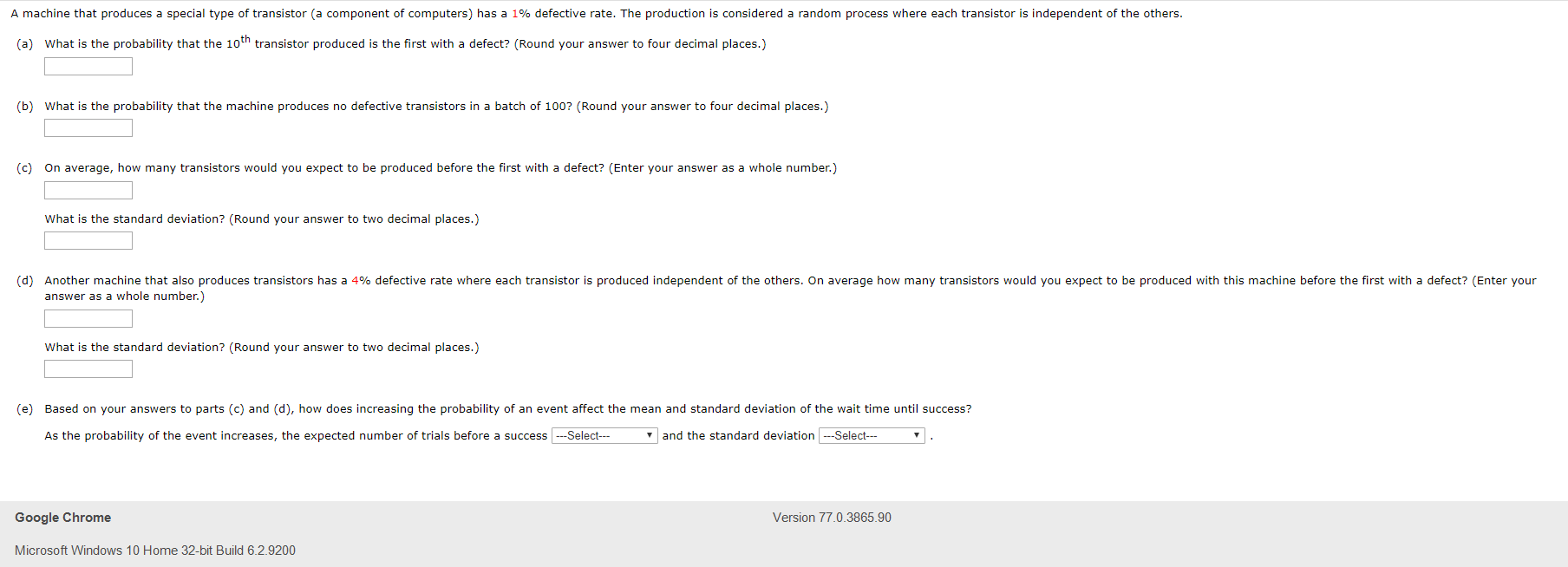
A machine that produces a special type of transistor (a component of computers) has a 1% defective rate. The production is considered a random process where each transistor is independent of the others. (a) What is the probability that the 10" transistor produced is the first with a defect? (Round your answer to four decimal places.) (b) What is the probability that the machine produces no defective transistors in a batch of 100? (Round your answer to four decimal places.) (c) On average, how many transistors would you expect to be produced before the first with a defect? (Enter your answer as a whole number.) What is the standard deviation? (Round your answer to two decimal places.) (d) Another machine that also produces transistors has a 4% defective rate where each transistor is produced independent of the others. On average how many transistors would you expect to be produced with this machine before the first with a defect? (Enter your answer as a whole number.) What is the standard deviation? (Round your answer to two decimal places.) (e) Based on your answers to parts (c) and (d), how does increasing the probability of an event affect the mean and standard deviation of the wait time until success? As the probability of the event increases, the expected number of trials before a success ---Select--- and the standard deviation ---Select--- Google Chrome Version 77.0.3865.90 Microsoft Windows 10 Home 32-bit Build 6.2.9200
Step by Step Solution
There are 3 Steps involved in it

Get step-by-step solutions from verified subject matter experts
 Study Help