







Question: i need the answer quickly Your wealth has grown to $1.5 million, and you are prepared to make long-term investment decisions. After considering the alternatives
i need the answer quickly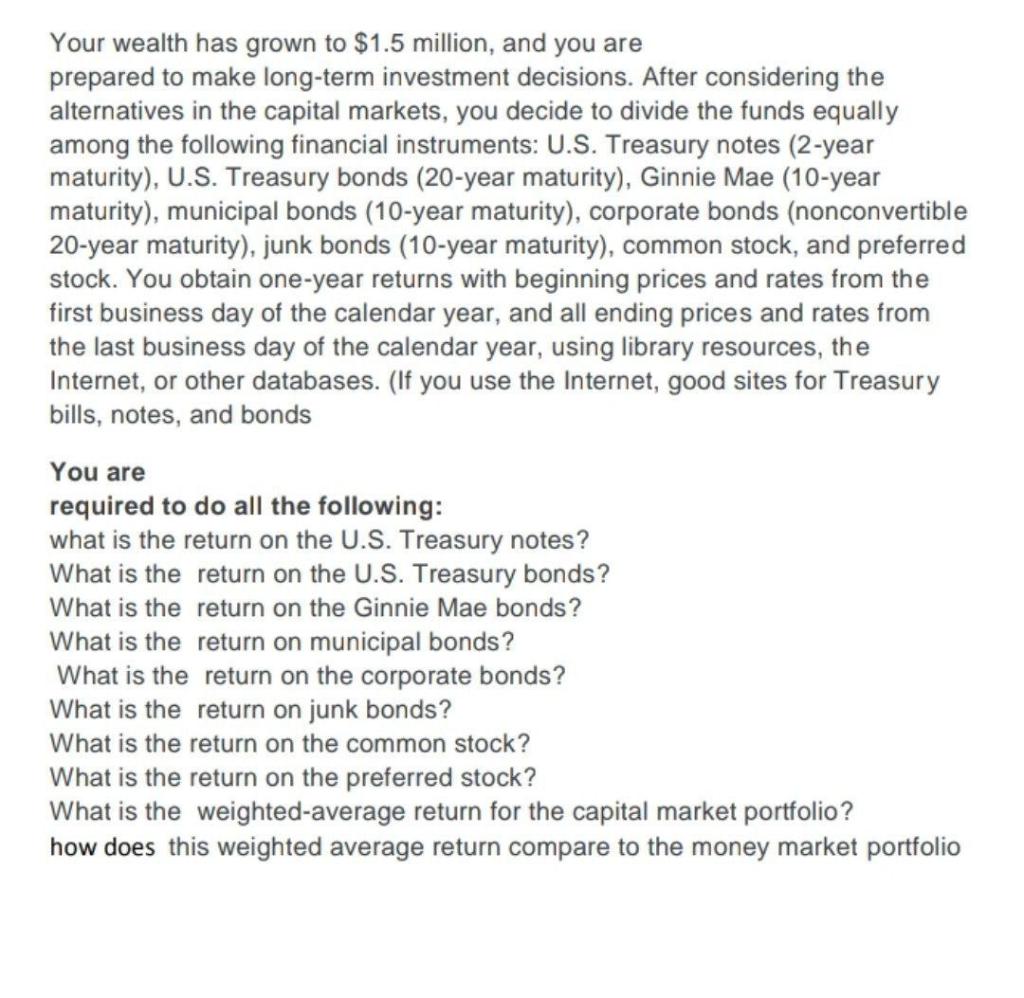
Your wealth has grown to $1.5 million, and you are prepared to make long-term investment decisions. After considering the alternatives in the capital markets, you decide to divide the funds equally among the following financial instruments: U.S. Treasury notes (2-year maturity), U.S. Treasury bonds (20-year maturity), Ginnie Mae (10-year maturity), municipal bonds (10-year maturity), corporate bonds (nonconvertible 20-year maturity), junk bonds (10-year maturity), common stock, and preferred stock. You obtain one-year returns with beginning prices and rates from the first business day of the calendar year, and all ending prices and rates from the last business day of the calendar year, using library resources, the Internet, or other databases. (If you use the Internet, good sites for Treasury bills, notes, and bonds You are required to do all the following: what is the return on the U.S. Treasury notes? What is the return on the U.S. Treasury bonds? What is the return on the Ginnie Mae bonds? What is the return on municipal bonds? What is the return on the corporate bonds? What is the return on junk bonds ? What is the return on the common stock? What is the return on the preferred stock? What is the weighted-average return for the capital market portfolio? how does this weighted average return compare to the money market portfolio Your wealth has grown to $1.5 million, and you are prepared to make long-term investment decisions. After considering the alternatives in the capital markets, you decide to divide the funds equally among the following financial instruments: U.S. Treasury notes (2-year maturity), U.S. Treasury bonds (20-year maturity), Ginnie Mae (10-year maturity), municipal bonds (10-year maturity), corporate bonds (nonconvertible 20-year maturity), junk bonds (10-year maturity), common stock, and preferred stock. You obtain one-year returns with beginning prices and rates from the first business day of the calendar year, and all ending prices and rates from the last business day of the calendar year, using library resources, the Internet, or other databases. (If you use the Internet, good sites for Treasury bills, notes, and bonds You are required to do all the following: what is the return on the U.S. Treasury notes? What is the return on the U.S. Treasury bonds? What is the return on the Ginnie Mae bonds? What is the return on municipal bonds? What is the return on the corporate bonds? What is the return on junk bonds ? What is the return on the common stock? What is the return on the preferred stock? What is the weighted-average return for the capital market portfolio? how does this weighted average return compare to the money market portfolio
Step by Step Solution
There are 3 Steps involved in it

Get step-by-step solutions from verified subject matter experts
 Study Help