







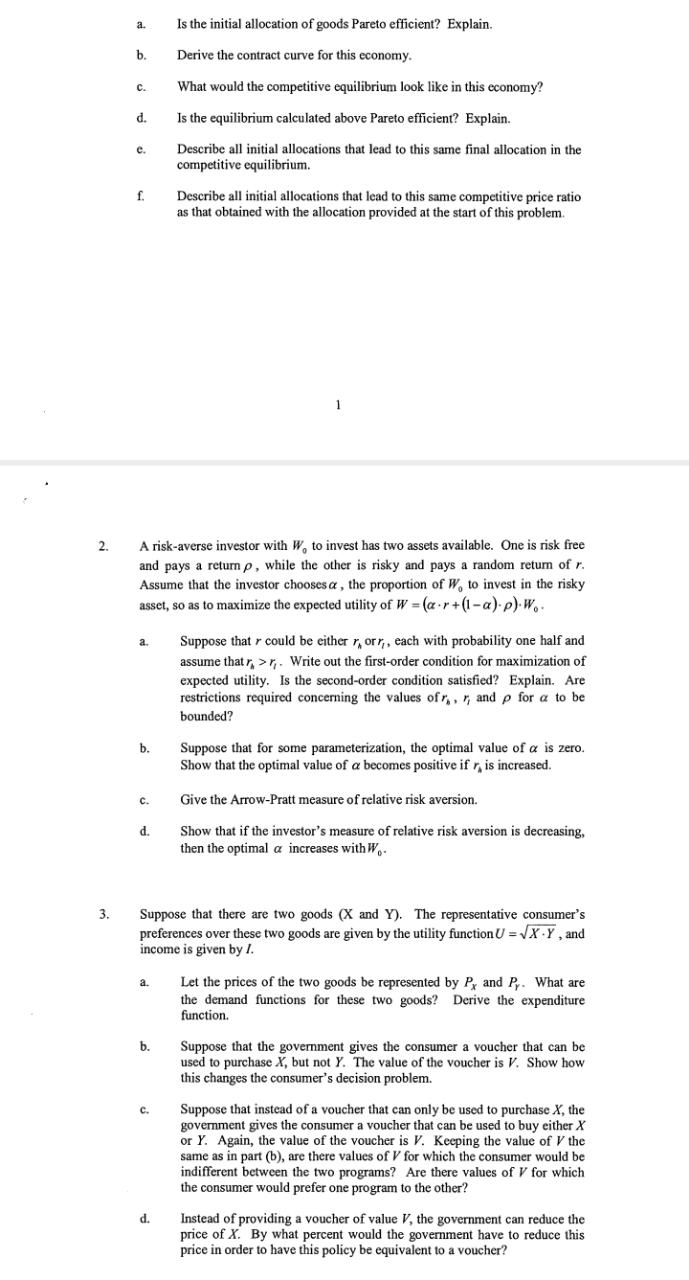
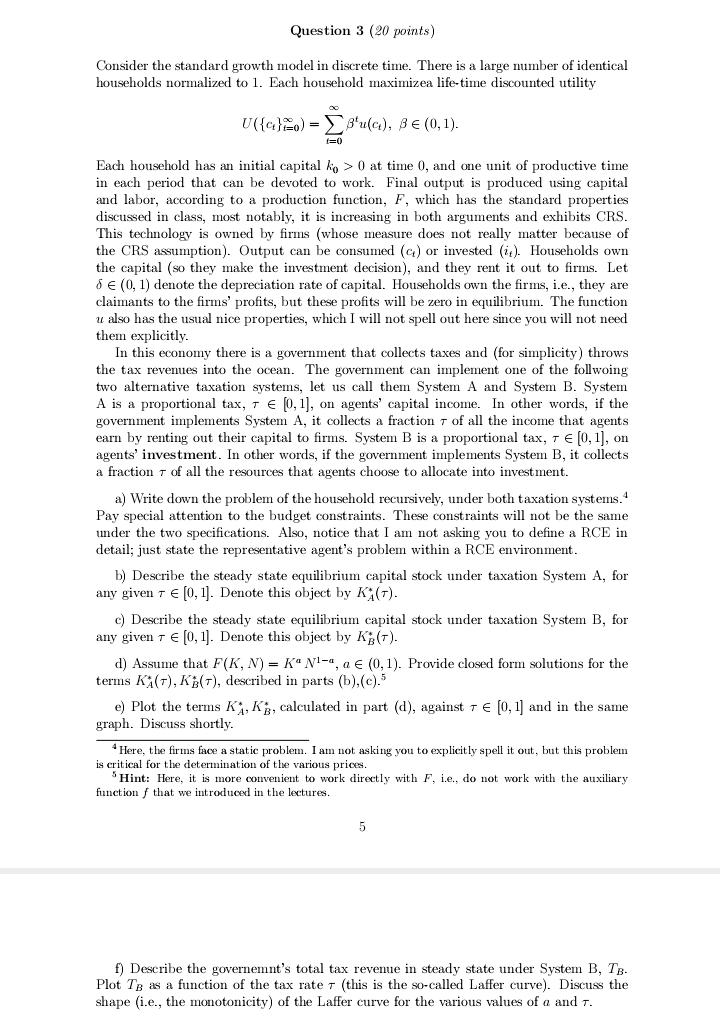
Question: I need your help tutors* a. Is the initial allocation of goods Pareto efficient? Explain. b. Derive the contract curve for this economy. C. What
I need your help tutors*
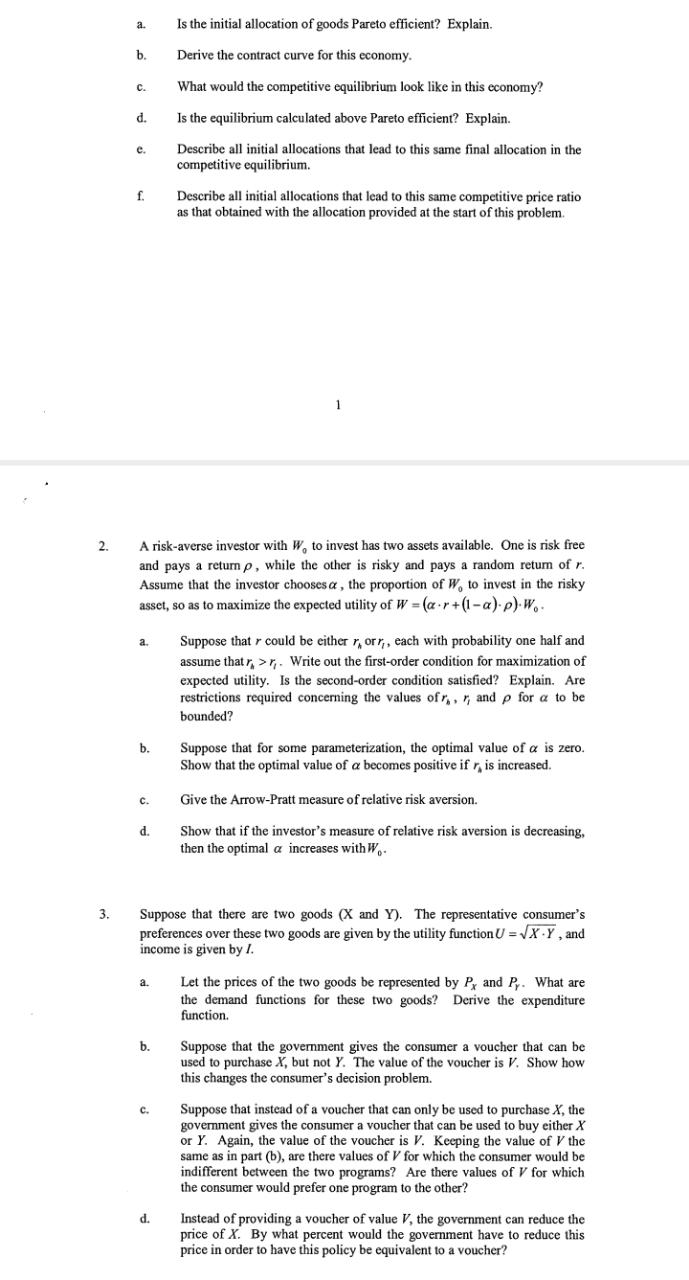
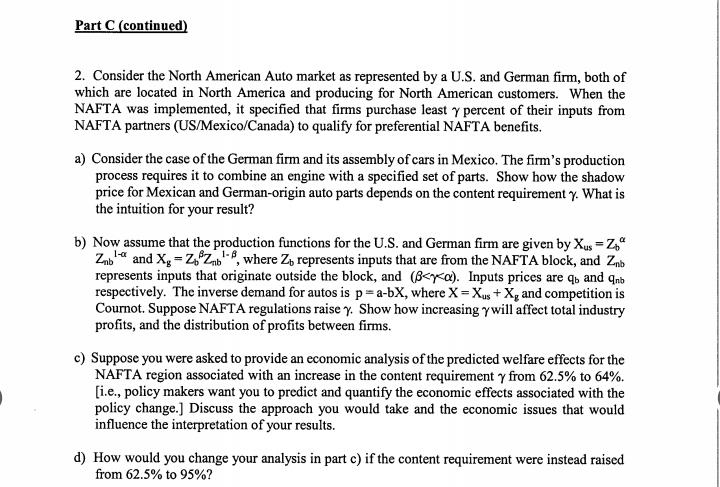
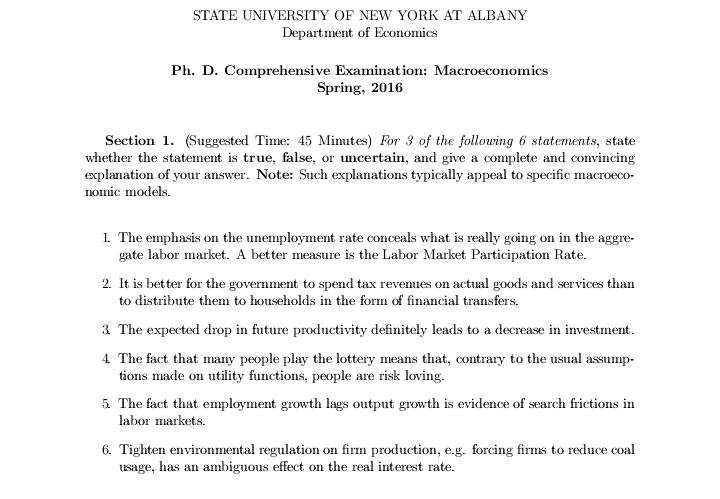
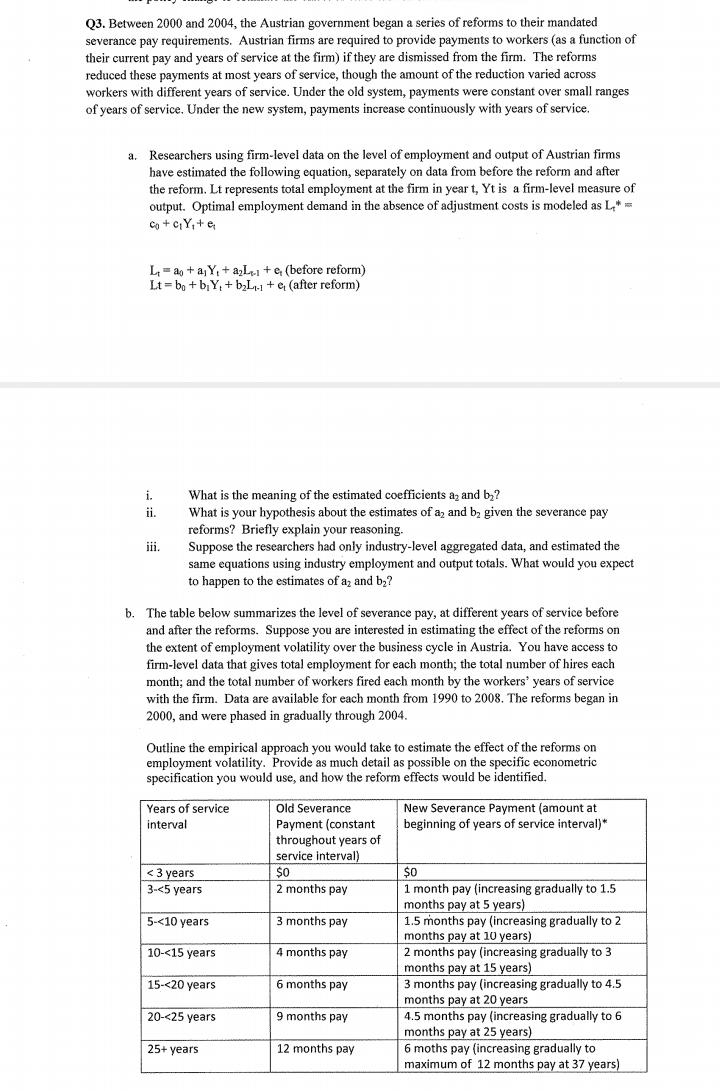
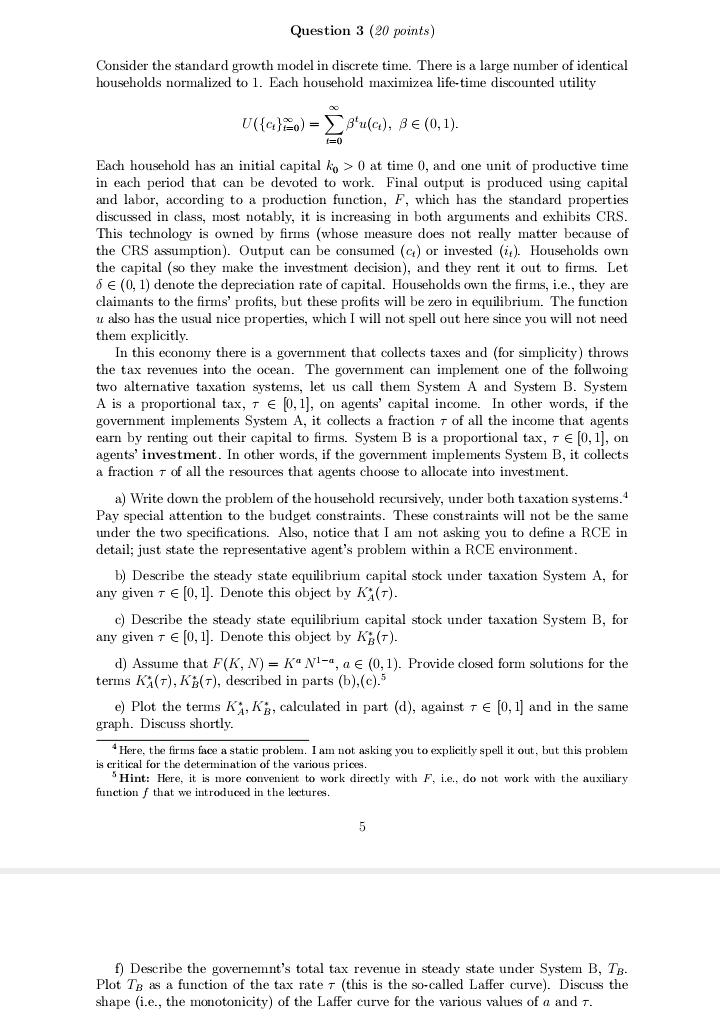
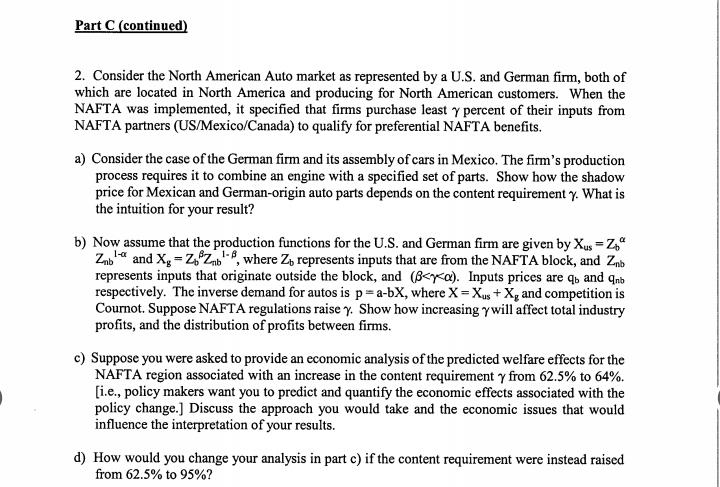
a. Is the initial allocation of goods Pareto efficient? Explain. b. Derive the contract curve for this economy. C. What would the competitive equilibrium look like in this economy? d. Is the equilibrium calculated above Pareto efficient? Explain. C. Describe all initial allocations that lead to this same final allocation in the competitive equilibrium. f. Describe all initial allocations that lead to this same competitive price ratio as that obtained with the allocation provided at the start of this problem. 2. A risk-averse investor with W. to invest has two assets available. One is risk free and pays a return p, while the other is risky and pays a random return of r. Assume that the investor chooses a , the proportion of W. to invest in the risky asset, so as to maximize the expected utility of W = (a.r + (1-a).p).W.. a. Suppose that r could be either r, orr,, each with probability one half and assume that r, > r, . Write out the first-order condition for maximization of expected utility. Is the second-order condition satisfied? Explain. Are restrictions required concerning the values off , r, and p for a to be bounded? b. Suppose that for some parameterization, the optimal value of a is zero. Show that the optimal value of a becomes positive if r is increased. C. Give the Arrow-Pratt measure of relative risk aversion. d. Show that if the investor's measure of relative risk aversion is decreasing, then the optimal a increases with W.. 3. Suppose that there are two goods (X and Y). The representative consumer's preferences over these two goods are given by the utility function U = VX .Y , and income is given by /. a. Let the prices of the two goods be represented by Px and P. What are the demand functions for these two goods? Derive the expenditure function. b. Suppose that the government gives the consumer a voucher that can be used to purchase X, but not Y. The value of the voucher is V. Show how this changes the consumer's decision problem. C. Suppose that instead of a voucher that can only be used to purchase X, the government gives the consumer a voucher that can be used to buy either X or Y. Again, the value of the voucher is V. Keeping the value of I' the same as in part (b), are there values of I for which the consumer would be indifferent between the two programs? Are there values of I for which the consumer would prefer one program to the other? d. Instead of providing a voucher of value , the government can reduce the price of X. By what percent would the government have to reduce this price in order to have this policy be equivalent to a voucher?Part C (continued) 2. Consider the North American Auto market as represented by a U.S. and German firm, both of which are located in North America and producing for North American customers. When the NAFTA was implemented, it specified that firms purchase least y percent of their inputs from NAFTA partners (US/Mexico/Canada) to qualify for preferential NAFTA benefits. a) Consider the case of the German firm and its assembly of cars in Mexico. The firm's production process requires it to combine an engine with a specified set of parts. Show how the shadow price for Mexican and German-origin auto parts depends on the content requirement y. What is the intuition for your result? b) Now assume that the production functions for the U.S. and German firm are given by Xus = Z." Zab and X, = Zo Zab ", where Zo represents inputs that are from the NAFTA block, and Znb represents inputs that originate outside the block, and (B
Step by Step Solution
There are 3 Steps involved in it

Get step-by-step solutions from verified subject matter experts
 Study Help