







Question: I only need help with A, B and C Il. Smithey and Robison studied a random sample of 345 adult criminal probation practices in County
I only need help with A, B and C
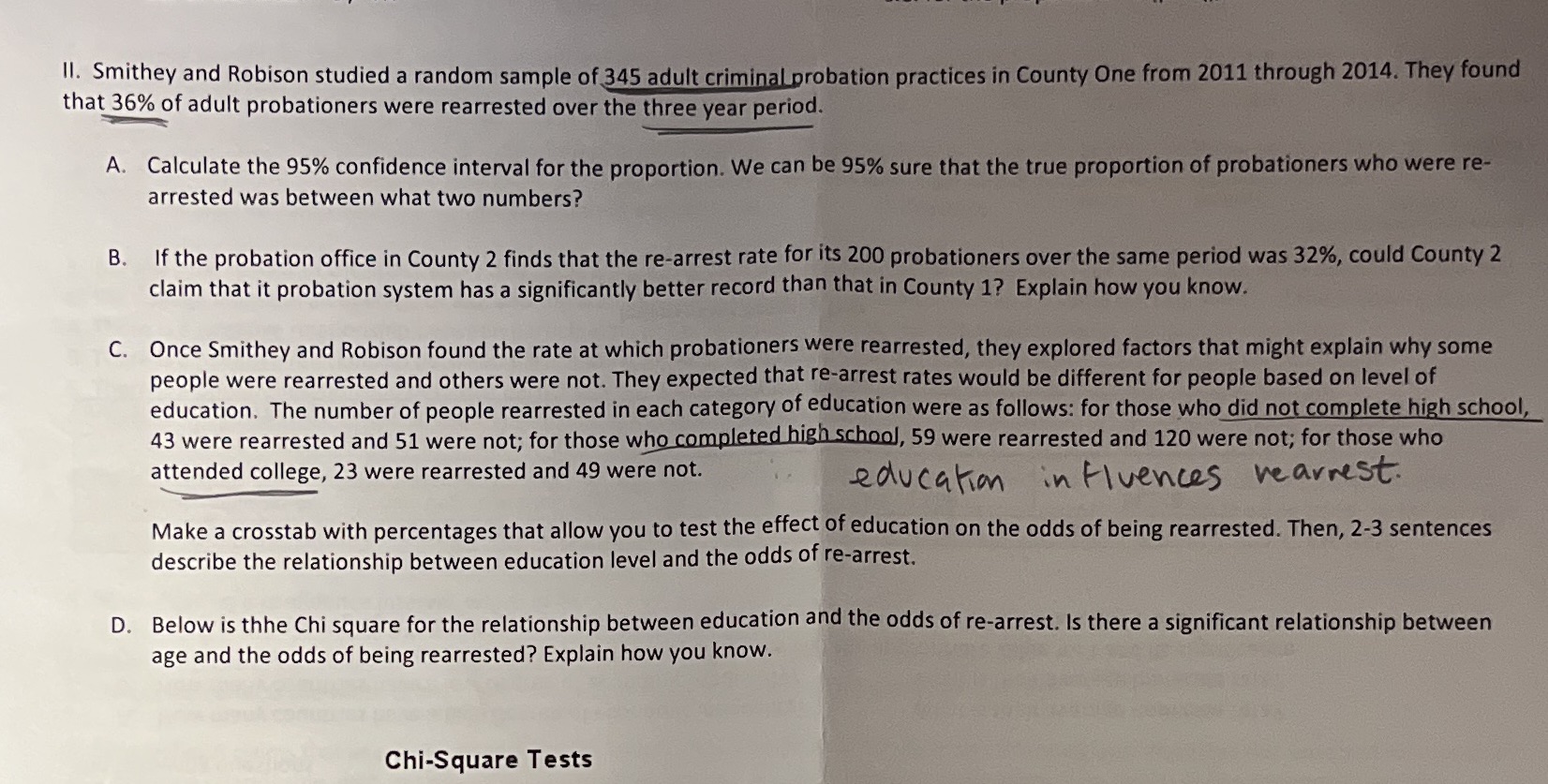
Il. Smithey and Robison studied a random sample of 345 adult criminal probation practices in County One from 2011 through 2014. They found that 36% of adult probationers were rearrested over the three year period. A. Calculate the 95% confidence interval for the proportion. We can be 95% sure that the true proportion of probationers who were re- arrested was between what two numbers? B. If the probation office in County 2 finds that the re-arrest rate for its 200 probationers over the same period was 32%, could County 2 claim that it probation system has a significantly better record than that in County 1? Explain how you know. C. Once Smithey and Robison found the rate at which probationers were rearrested, they explored factors that might explain why some people were rearrested and others were not. They expected that re-arrest rates would be different for people based on level of education. The number of people rearrested in each category of education were as follows: for those who did not complete high school, 43 were rearrested and 51 were not; for those who completed high school, 59 were rearrested and 120 were not; for those who attended college, 23 were rearrested and 49 were not. education influences rearrest. Make a crosstab with percentages that allow you to test the effect of education on the odds of being rearrested. Then, 2-3 sentences describe the relationship between education level and the odds of re-arrest. D. Below is thhe Chi square for the relationship between education and the odds of re-arrest. Is there a significant relationship between age and the odds of being rearrested? Explain how you know. Chi-Square Tests
Step by Step Solution
There are 3 Steps involved in it

Get step-by-step solutions from verified subject matter experts
 Study Help