



Question: I understand it may be against policy to answer both questions but these have done it before and I beg that you answer these both!
I understand it may be against policy to answer both questions but these have done it before and I beg that you answer these both! This is the last question post I can make and I need to see both of the solutions asap. Thank you for understanding.
1.
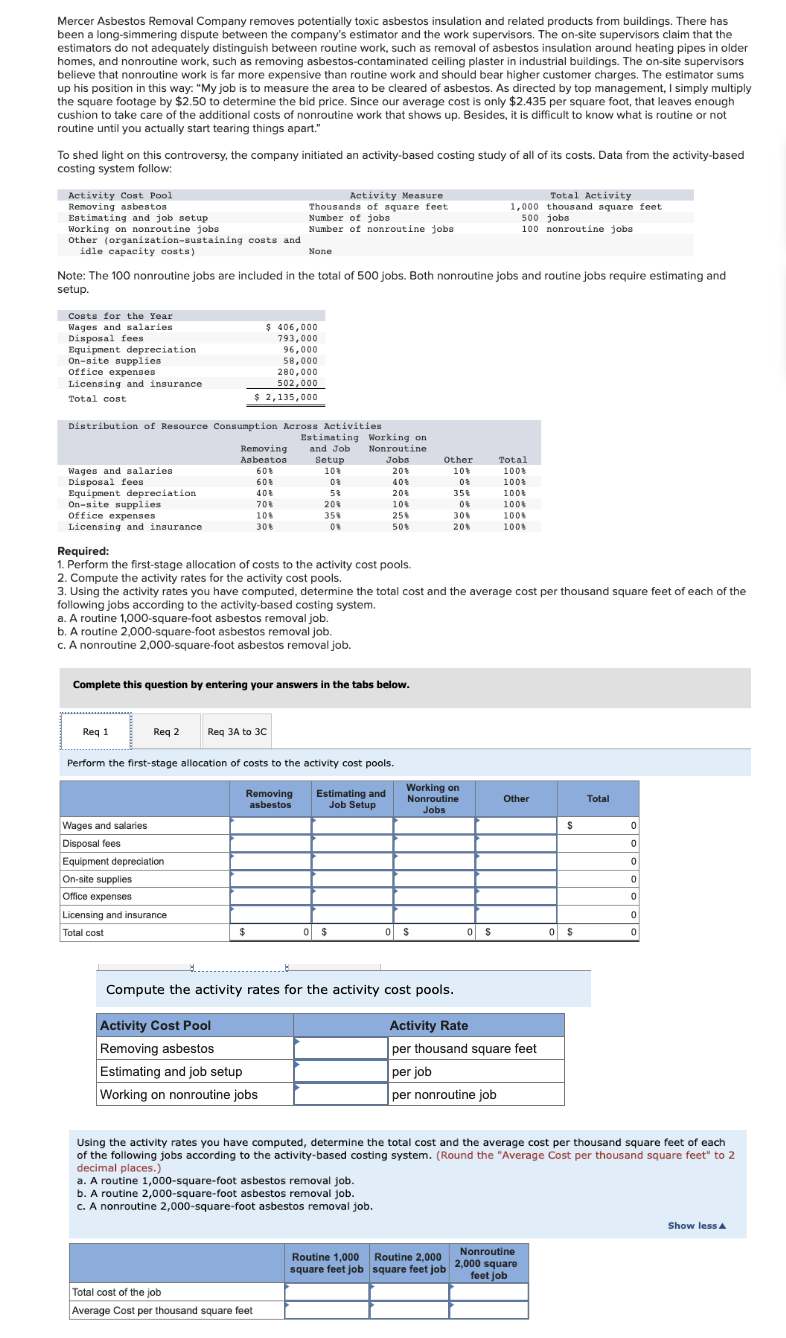
2)
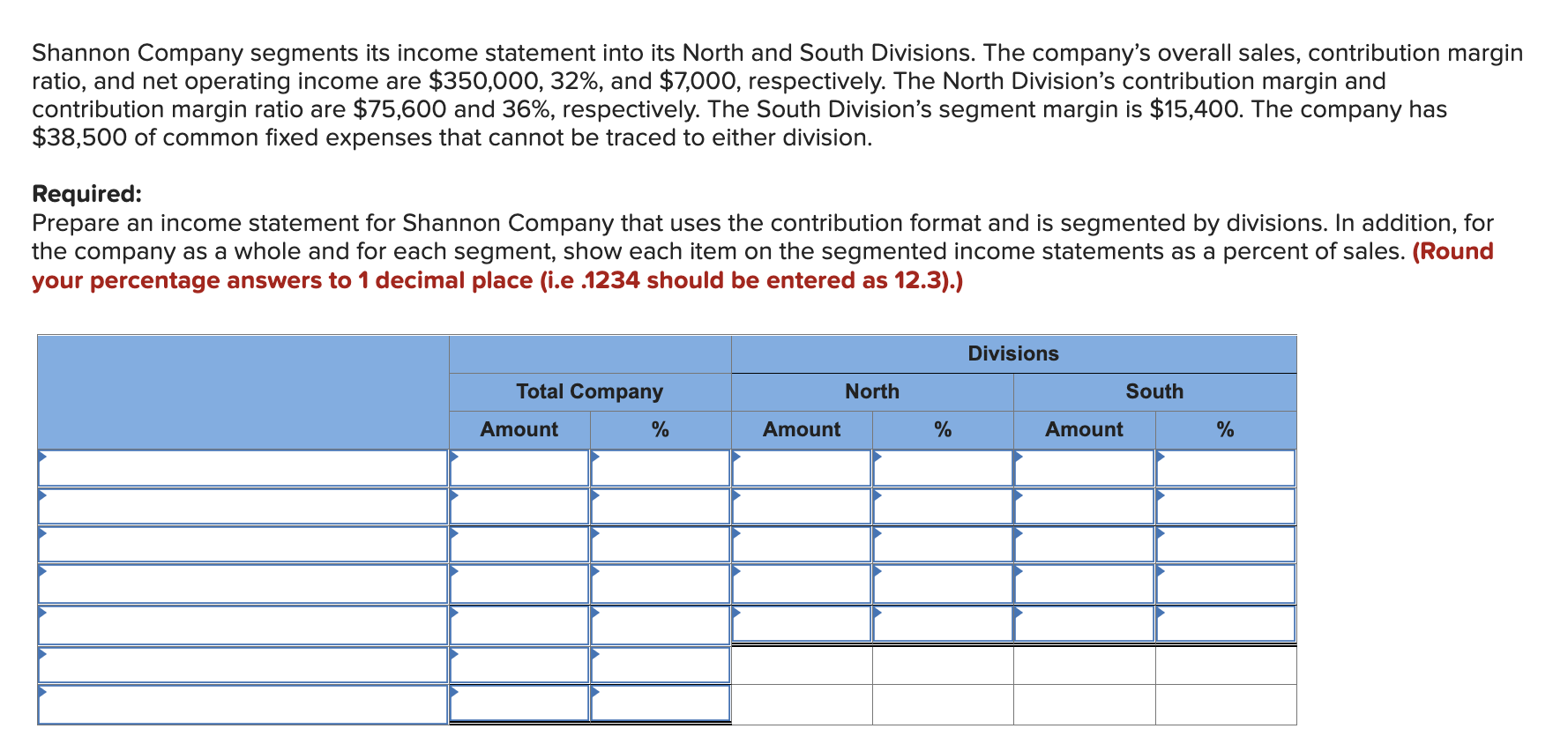
I understand it may be against policy to answer both questions but you have done it before and I beg that you answer these both! This is the last question post I can make and I need to see both of the solutions asap. Thank you for understanding.
Will give a thumbs up.
Mercer Asbestos Removal Company removes potentially toxic asbestos insulation and related products from buildings. There has been a long-simmering dispute between the company's estimator and the work supervisors. The on-site supervisors claim that the estimators do not adequately distinguish between routine work, such as removal of asbestos insulation around heating pipes in older homes, and nonroutine work, such as removing asbestos-contaminated ceiling plaster in industrial buildings. The on-site supervisors believe that nonroutine work is far more expensive than routine work and should bear higher customer charges. The estimator sums up his position in this way: "My job is to measure the area to be cleared of asbestos. As directed by top management, I simply multiply the square footage by $2.50 to determine the bid price. Since our average cost is only $2.435 per square foot, that leaves enough cushion to take care of the additional costs of nonroutine work that shows up. Besides, it is difficult to know what is routine or not routine until you actually start tearing things apart." To shed light on this controversy, the company initiated an activity-based costing study of all of its costs. Data from the activity-based costing system follow: Activity Cost Pool Removing asbestos Estimating and job setup Working on nonroutine jobs Other (organization-sustaining costs and idle capacity costs) Costs for the Year Wages and salaries Disposal fees Equipment depreciation On-site supplies office expenses Licensing and insurance Total cost Note: The 100 nonroutine jobs are included in the total of 500 jobs. Both nonroutine jobs and routine jobs require estimating and setup. Wages and salaries Disposal fees Equipment depreciation On-site supplies Office expenses Licensing and insurance Distribution of Resource Consumption Across Activities Req 1 Req 2 Removing Asbestos 60% 60% 40% Wages and salaries Disposal fees Equipment depreciation On-site supplies Office expenses Licensing and insurance Total cost $ 406,000 793,000 96,000 58,000 280,000 502,000 $ 2,135,000 Activity Measure Thousands of square feet Number of jobs Number of nonroutine jobs None 70% 108 30% Complete this question by entering your answers in the tabs below. Req 3A to 3C $ Required: 1. Perform the first-stage allocation of costs to the activity cost pools. 2. Compute the activity rates for the activity cost pools. 3. Using the activity rates you have computed, determine the total cost and the average cost per thousand square feet of each of the following jobs according to the activity-based costing system. a. A routine 1,000-square-foot asbestos removal job. b. A routine 2,000-square-foot asbestos removal job. c. A nonroutine 2,000-square-foot asbestos removal job. Removing asbestos Perform the first-stage allocation of costs to the activity cost pools. Estimating Working on and Job Nonroutine Setup Jobs 10% 20 % 0% 40% 58 20% 20% 10% 35% 25% 08 50% Total cost of the job Average Cost per thousand square feet Estimating and Job Setup 0 $ Other 10% 0% 35% a. A routine 1,000-square-foot asbestos removal job. b. A routine 2,000-square-foot asbestos removal job. c. A nonroutine 2,000-square-foot asbestos removal job. 0 $ 0% 30% 20% Working on Nonroutine Jobs Compute the activity rates for the activity cost pools. Activity Cost Pool Removing asbestos Estimating and job setup Working on nonroutine jobs Total Activity 1,000 thousand square feet 500 jobs 100 nonroutine jobs 0 $ Routine 1,000 Routine 2,000 square feet job square feet job Total 100% 100% 100% 100% 100% 100% Other Activity Rate per thousand square feet per job per nonroutine job $ Nonroutine 2,000 square feet job 0 $ Using the activity rates you have computed, determine the total cost and the average cost per thousand square feet of each of the following jobs according to the activity-based costing system. (Round the "Average Cost per thousand square feet" to 2 decimal places.) Total 0 0 0 0 0 0 0 Show less A Shannon Company segments its income statement into its North and South Divisions. The company's overall sales, contribution margin ratio, and net operating income are $350,000, 32%, and $7,000, respectively. The North Division's contribution margin and contribution margin ratio are $75,600 and 36%, respectively. The South Division's segment margin is $15,400. The company has $38,500 of common fixed expenses that cannot be traced to either division. Required: Prepare an income statement for Shannon Company that uses the contribution format and is segmented by divisions. In addition, for the company as a whole and for each segment, show each item on the segmented income statements as a percent of sales. (Round your percentage answers to 1 decimal place (i.e.1234 should be entered as 12.3).) Total Company Amount % Amount North % Divisions Amount South %
Step by Step Solution
There are 3 Steps involved in it

Get step-by-step solutions from verified subject matter experts