







Question: I want to make changes in my code that will enable to do that things: For example of the output: the text file input My
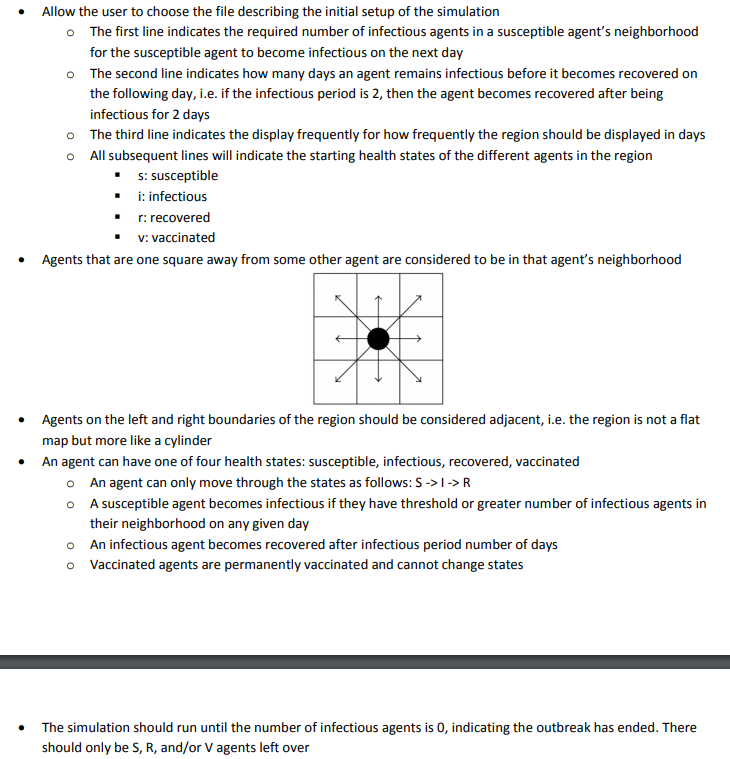
I want to make changes in my code that will enable to do that things:
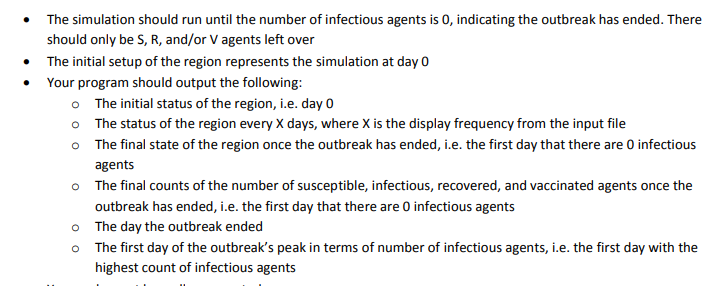
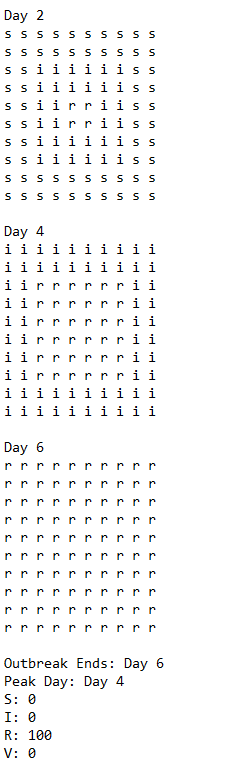
For example of the output:
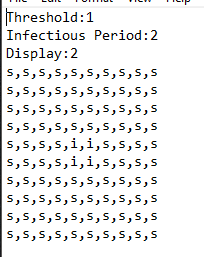
the text file input
My code is:
#include
#include
#include
#include
template
class MatrixT; // forward declaration
template
void swap(MatrixT&, MatrixT&); // proto
template
class MatrixT {
friend void swap(MatrixT&, MatrixT&);
public:
typedef VALUE Value;
private:
size_t _nRows, _nCols;
std::vector _values;
public:
MatrixT(size_t nRows, size_t nCols, Value value = (Value)0) :
_nRows(nRows), _nCols(nCols), _values(_nRows * _nCols, value)
{ }
~MatrixT() = default;
MatrixT(const MatrixT&) = default;
MatrixT& operator=(const MatrixT&) = default;
size_t getNumCols() const { return _nCols; }
size_t getNumRows() const { return _nRows; }
const std::vector& get() const { return _values; }
Value* operator[](size_t i) { return &_values[0] + i * _nCols; }
const Value* operator[](size_t i) const { return &_values[0] + i * _nCols; }
};
template
void swap(MatrixT &mat1, MatrixT &mat2)
{
std::swap(mat1._nRows, mat2._nRows);
std::swap(mat1._nCols, mat2._nCols);
std::swap(mat1._values, mat2._values);
}
typedef MatrixT Board;
bool operator==(const Board &board1, const Board &board2)
{
return board1.getNumRows() == board2.getNumRows()
&& board1.getNumCols() == board2.getNumCols()
&& board1.get() == board2.get();
}
std::ostream& operator
{
for (size_t i = 1, nRows = board.getNumRows() - 1; i
for (size_t j = 1, nCols = board.getNumCols() - 1; j
out
}
out
}
return out;
}
void doSimStep(const Board &board, Board &board1)
{
assert(board.getNumRows() == board1.getNumRows());
assert(board.getNumCols() == board1.getNumCols());
for (size_t i = 1, nRows = board.getNumRows() - 1; i
for (size_t j = 1, nCols = board.getNumCols() - 1; j
const char person = board[i][j];
char person1 = person;
switch (person) {
case 's': { // search for infection in neighbourhood
bool infect = false;
for (int iP = -2; !infect && iP
for (int jP = -2; !infect && jP
infect = board[i + iP][j + jP] == 'i';
}
}
person1 = infect ? 'i' : 's';
} break;
case 'i': // infected -> recover
// fall through
case 'r': // recovered: stable state
person1 = 'r';
break;
default: assert(false); // Wrong cell contents!
}
board1[i][j] = person1;
}
}
}
int main()
{
size_t nRows = 10, nCols = 10;
#if 0 // disabled for demo
std::cout > nRows;
std::cout > nCols;
/// @todo check nRows, nCols for sufficient values
#endif // 0
// init board
std::cout
Board board(nRows + 2, nCols + 2);
std::fill(board[0], board[nRows + 2], 's');
std::cout
// infect somebody
size_t i = nRows / 2 + 1, j = nCols / 2 + 1;
#if 0 // disabled for demo
std::cout
std::cout > i;
std::cout > j;
/// @todo check i, j for matching the boundaries
#endif // 0
board[i][j] = 'i';
// simulation loop
for (unsigned day = 0;;) {
std::cout
std::cout
// simulate next day
++day;
Board board1(board);
doSimStep(board, board1);
if (board == board1) {
std::cout
break; // exit sim. loop
}
// store data of new day
swap(board, board1);
}
// done
std::cout
return 0;
}
Allow the user to choose the file describing the initial setup of the simulation The first line indicates the required number of infectious agents in a susceptible agent's neighborhood for the susceptible agent to become infectious on the next day The second line indicates how many days an agent remains infectious before it becomes recovered on the following day, i.e. if the infectious period is 2, then the agent becomes recovered after being infectious for 2 days The third line indicates the display frequently for how frequently the region should be displayed in days All subsequent lines will indicate the starting health states of the different agents in the region o o o o S: susceptible i: infectious r: recovered v: vaccinated Agents that are one square away from some other agent are considered to be in that agent's neighborhood Agents on the left and right boundaries of the region should be considered adjacent, i.e. the region is not a flat map but more like a cylinder An agent can have one of four health states: susceptible, infectious, recovered, vaccinated o An agent can only move through the states as follows: S->R o A susceptible agent becomes infectious if they have threshold or greater number of infectious agents in their neighborhood on any given day o An infectious agent becomes recovered after infectious period number of days o Vaccinated agents are permanently vaccinated and cannot change states The simulation should run until the number of infectious agents is 0, indicating the outbreak has ended. There should only be S, R, and/or V agents left over Allow the user to choose the file describing the initial setup of the simulation The first line indicates the required number of infectious agents in a susceptible agent's neighborhood for the susceptible agent to become infectious on the next day The second line indicates how many days an agent remains infectious before it becomes recovered on the following day, i.e. if the infectious period is 2, then the agent becomes recovered after being infectious for 2 days The third line indicates the display frequently for how frequently the region should be displayed in days All subsequent lines will indicate the starting health states of the different agents in the region o o o o S: susceptible i: infectious r: recovered v: vaccinated Agents that are one square away from some other agent are considered to be in that agent's neighborhood Agents on the left and right boundaries of the region should be considered adjacent, i.e. the region is not a flat map but more like a cylinder An agent can have one of four health states: susceptible, infectious, recovered, vaccinated o An agent can only move through the states as follows: S->R o A susceptible agent becomes infectious if they have threshold or greater number of infectious agents in their neighborhood on any given day o An infectious agent becomes recovered after infectious period number of days o Vaccinated agents are permanently vaccinated and cannot change states The simulation should run until the number of infectious agents is 0, indicating the outbreak has ended. There should only be S, R, and/or V agents left over
Step by Step Solution
There are 3 Steps involved in it

Get step-by-step solutions from verified subject matter experts
 Study Help