







Question: i wrote an essay and i need someone to double check it and tell me if it needs any adjustments. feel free to change anything
i wrote an essay and i need someone to double check it and tell me if it needs any adjustments.
feel free to change anything to make it better if it needs to. and please make it easy to follow.
i will add the instruction sheet first then the essay right after. thank you
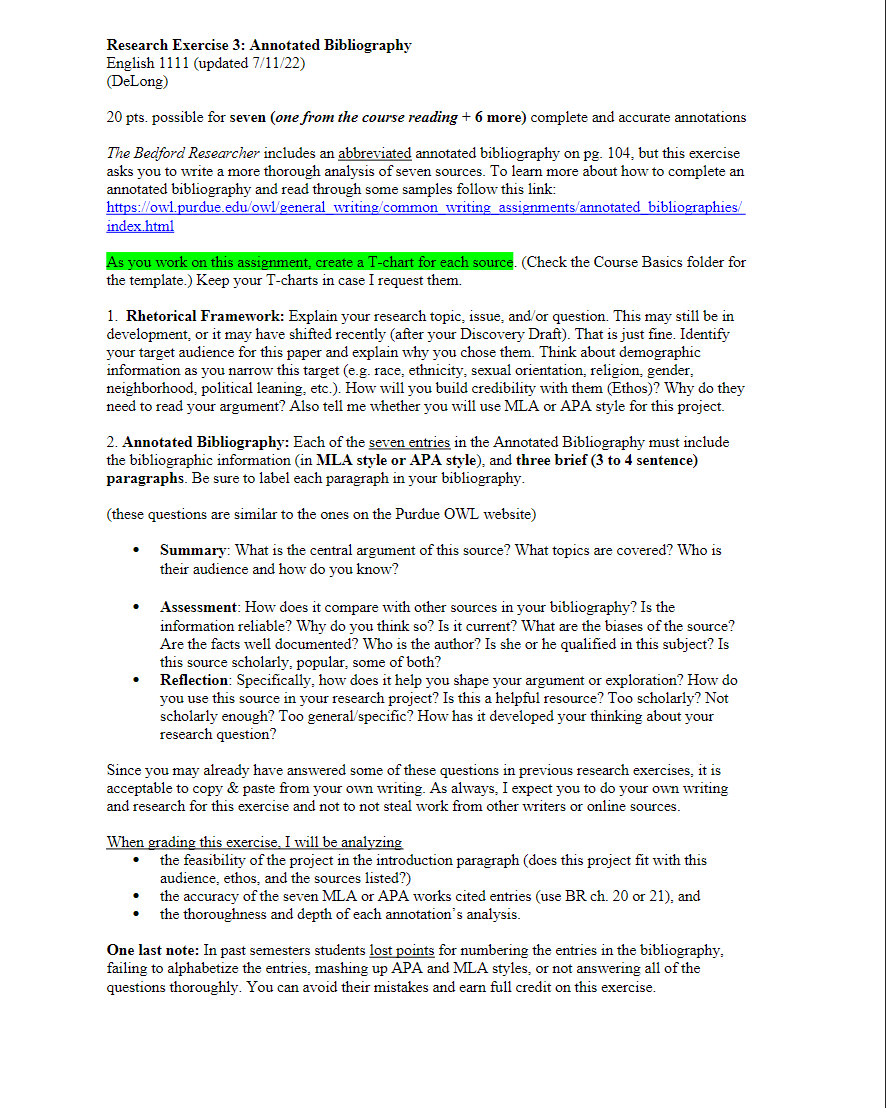
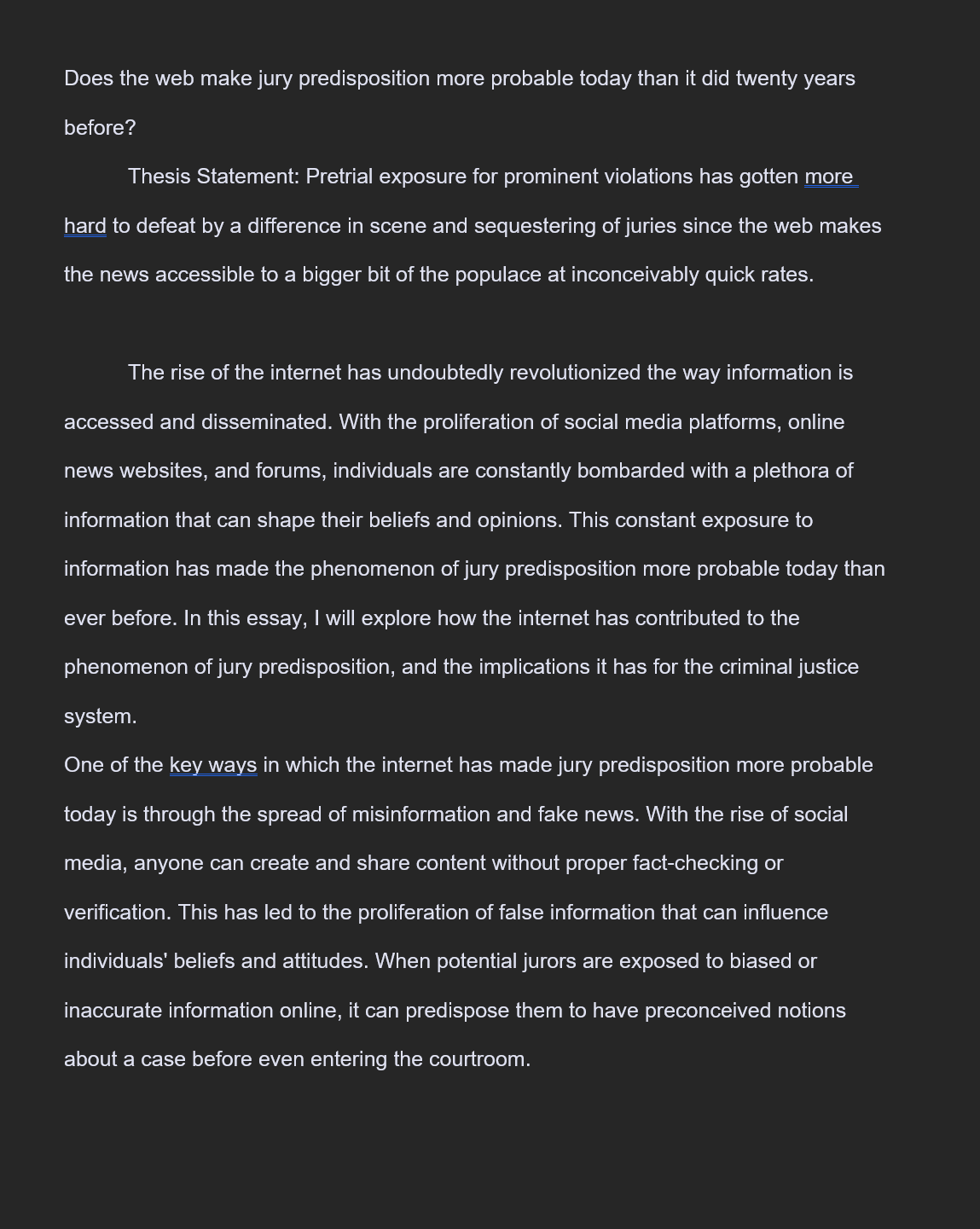
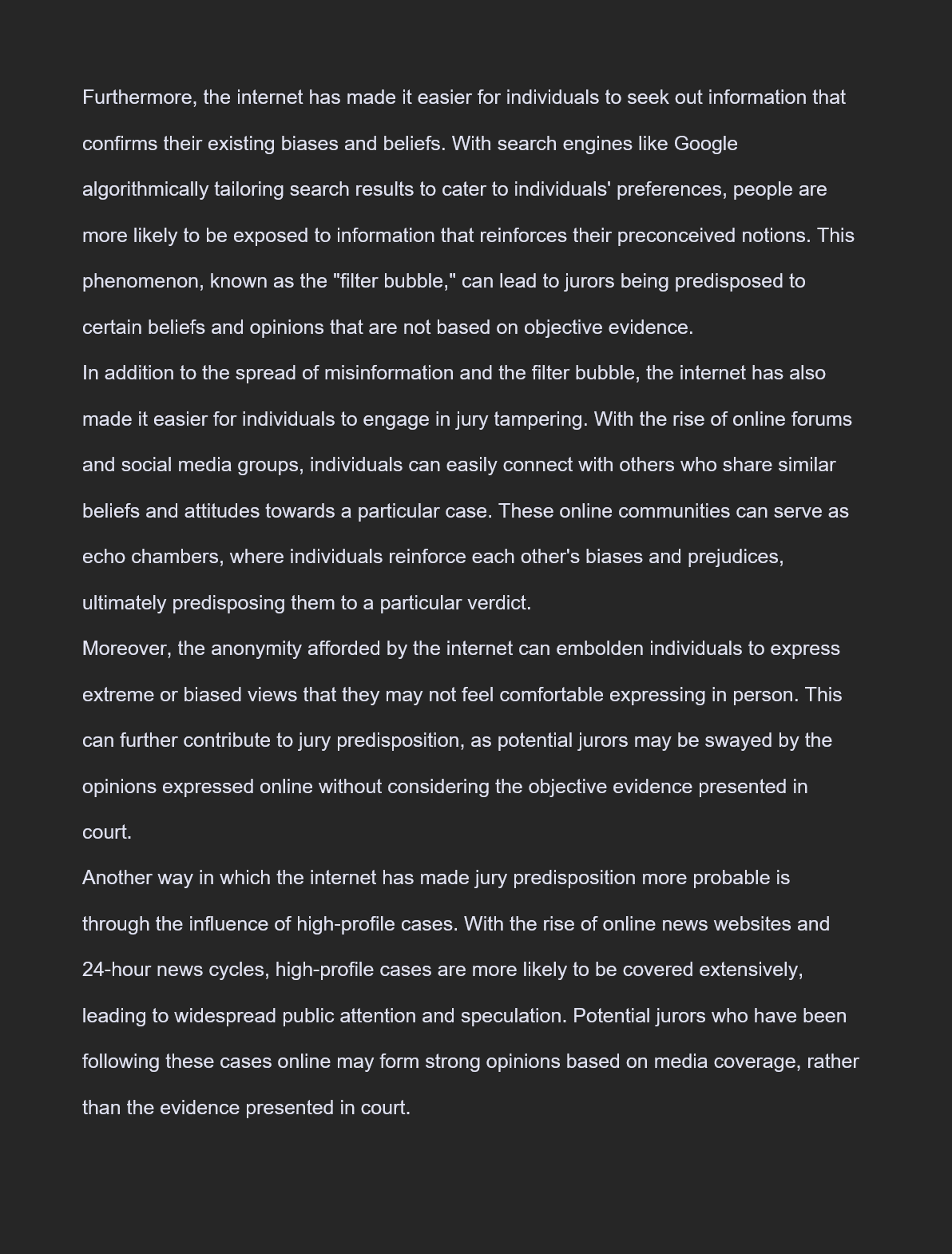
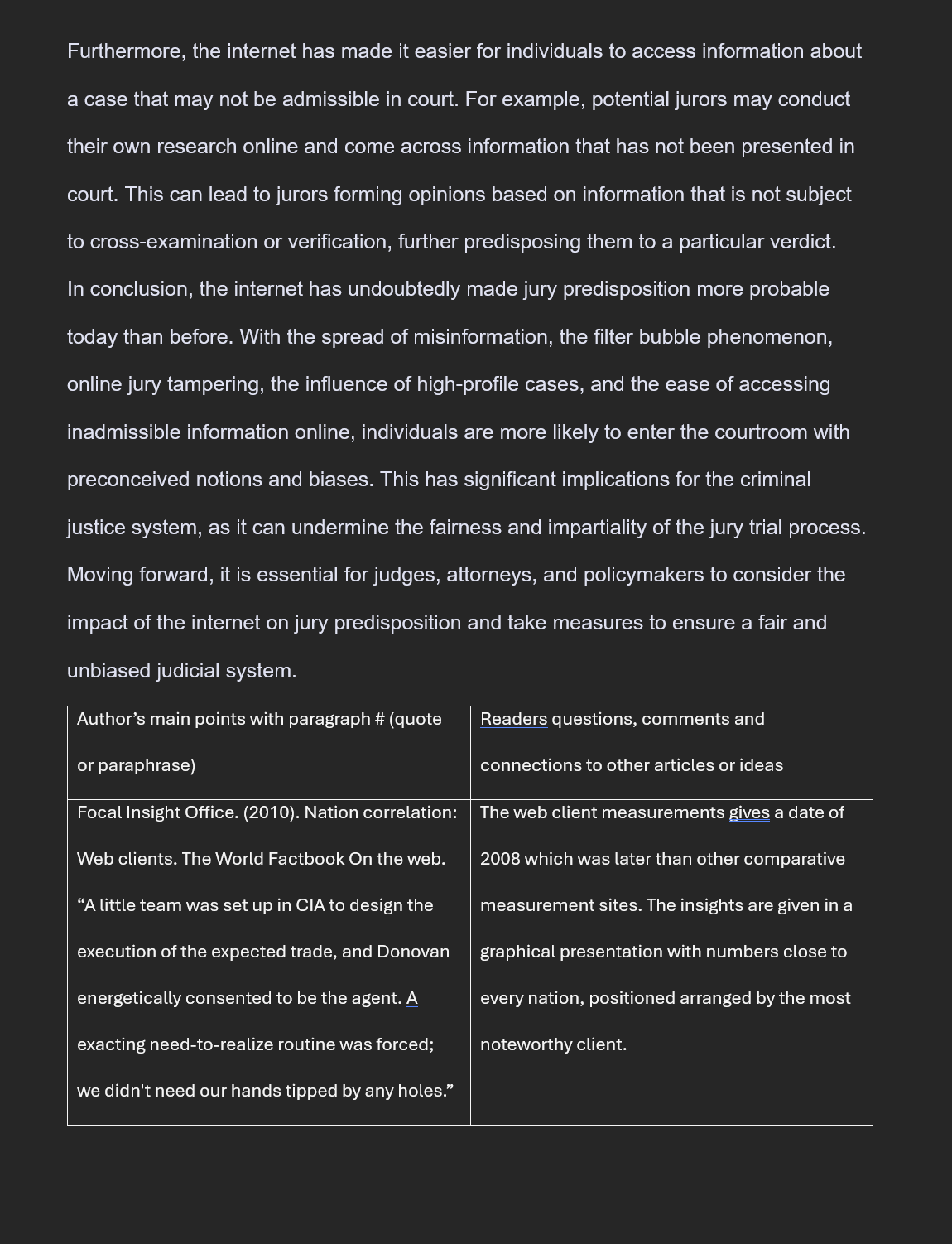
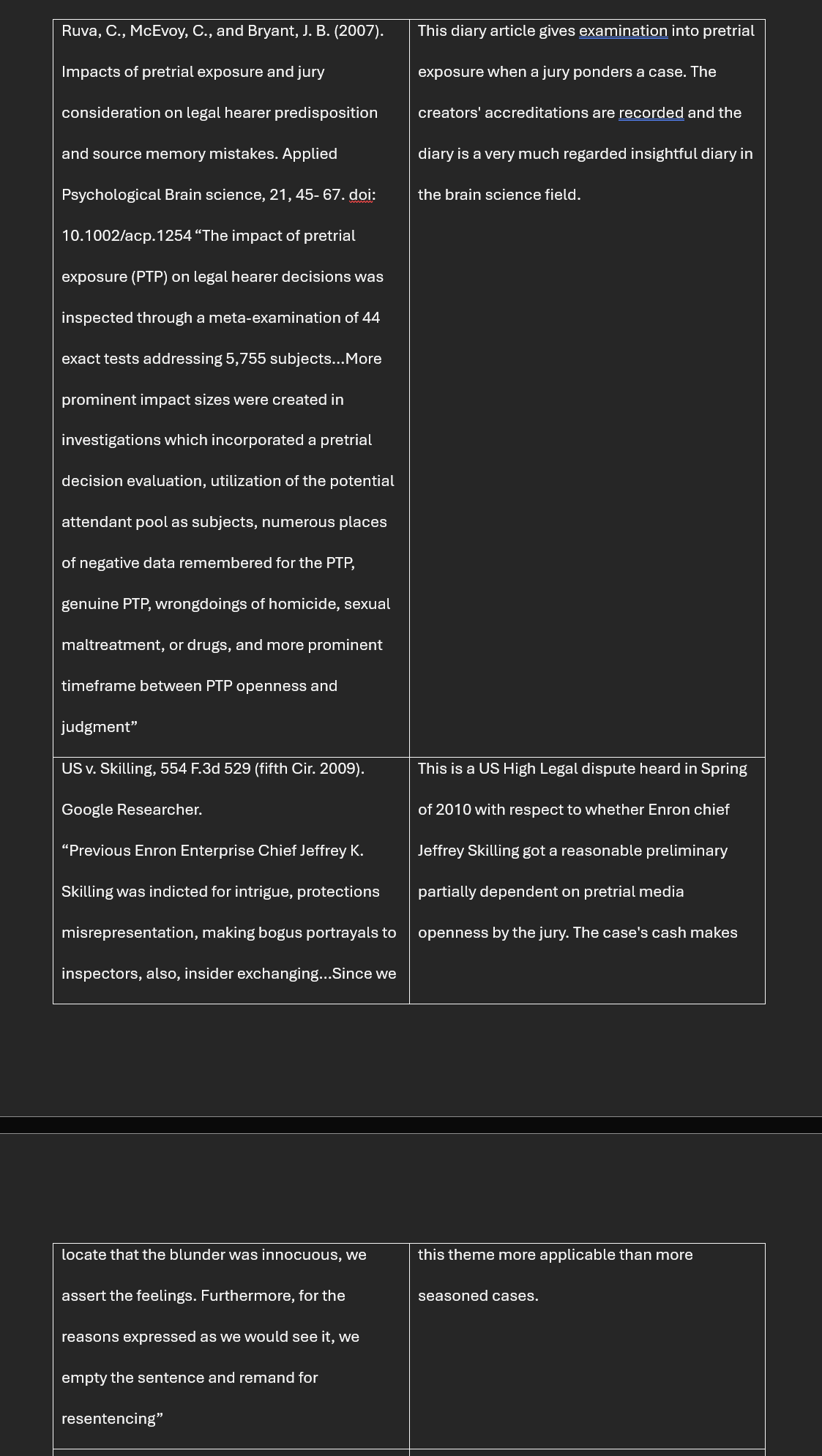
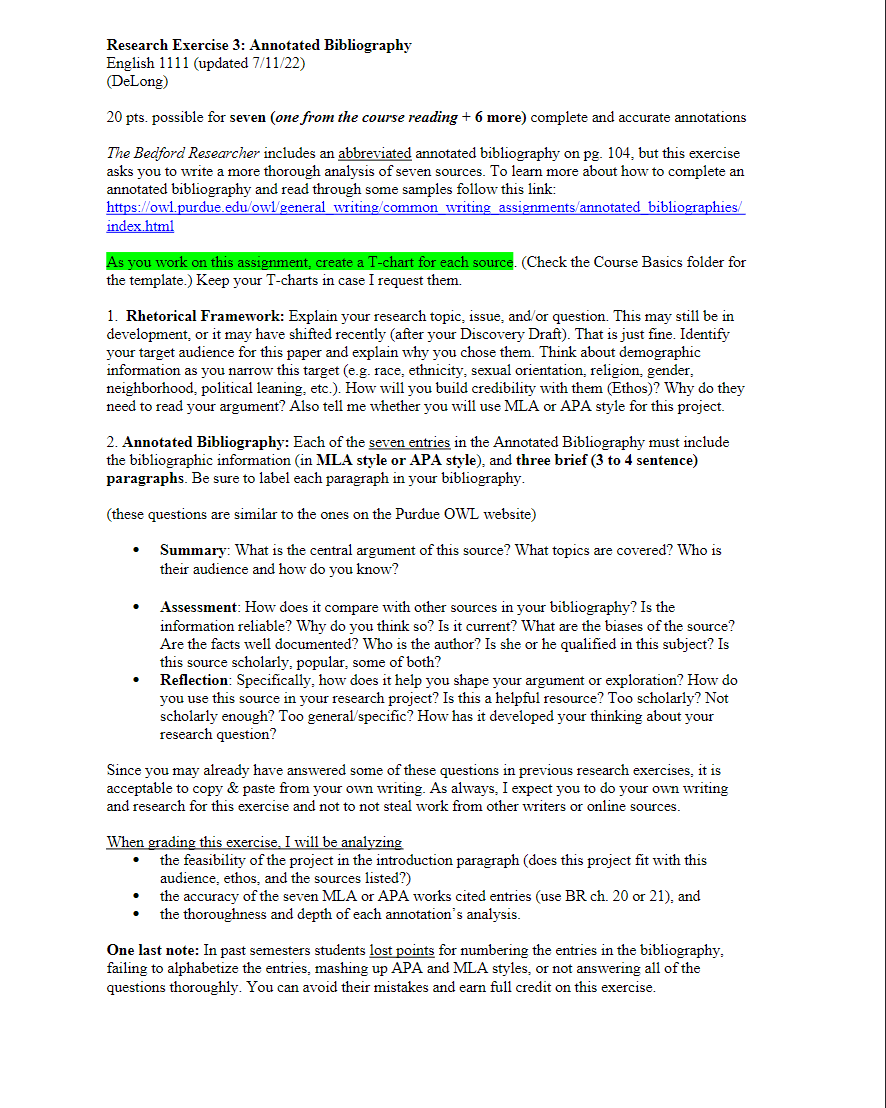
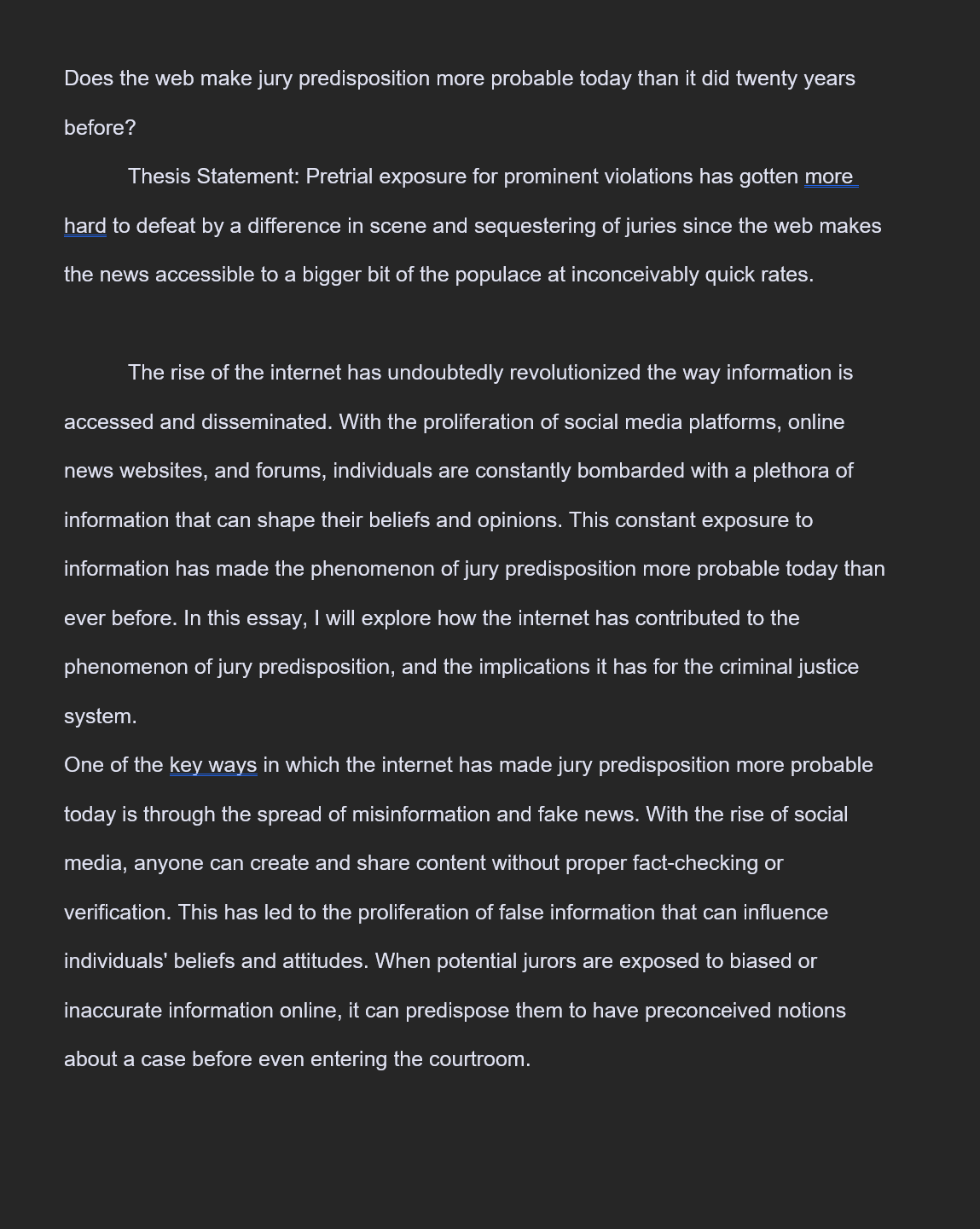
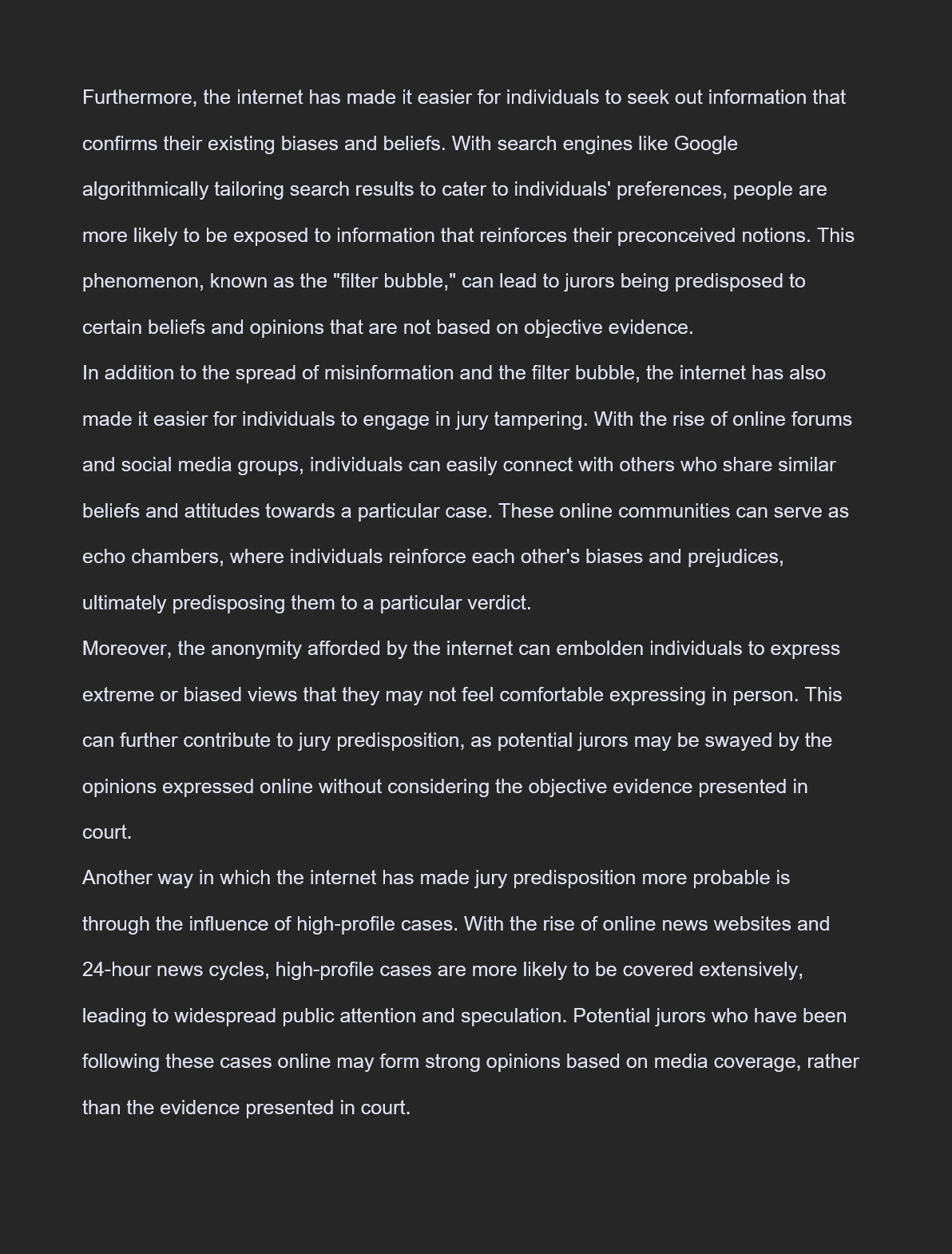
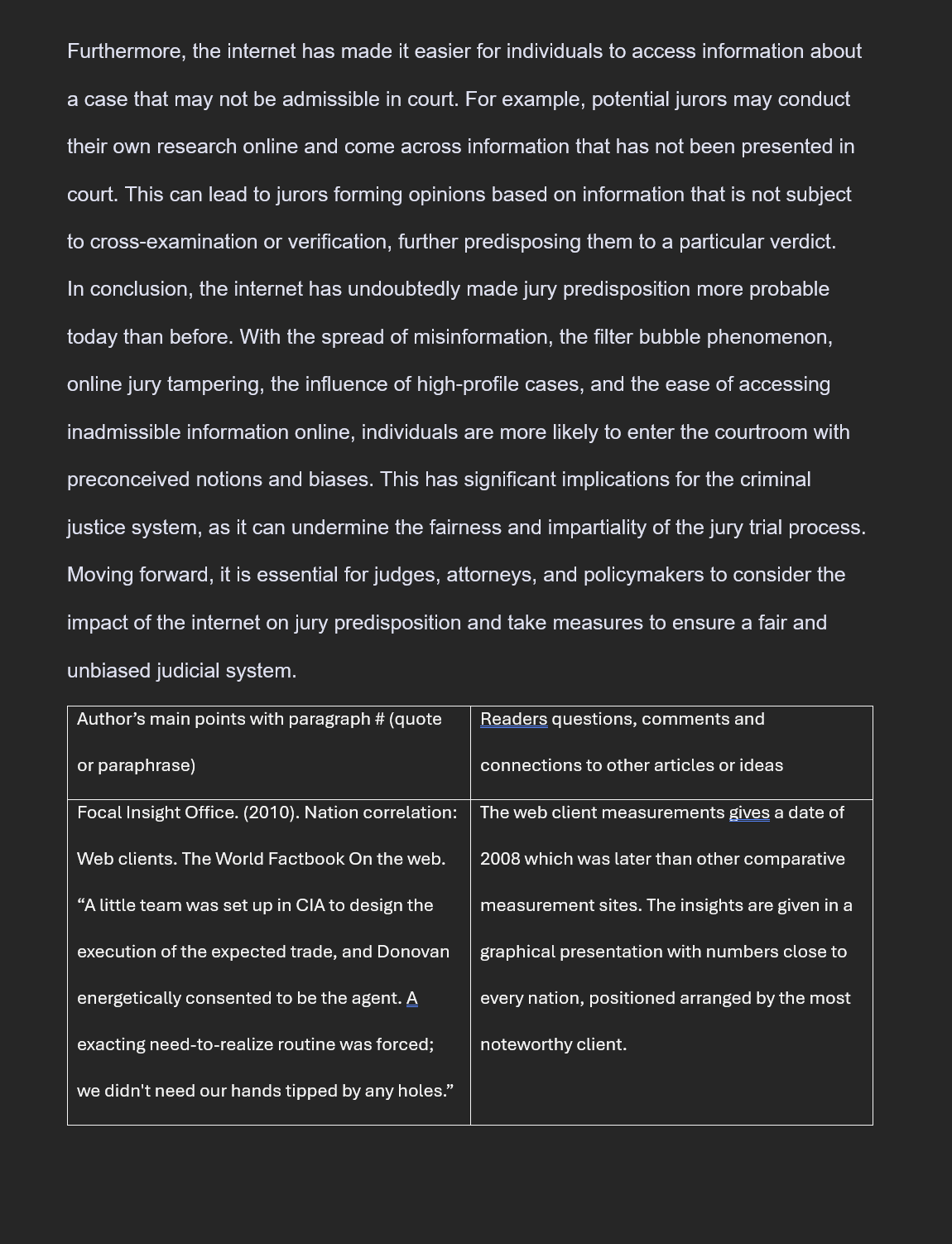
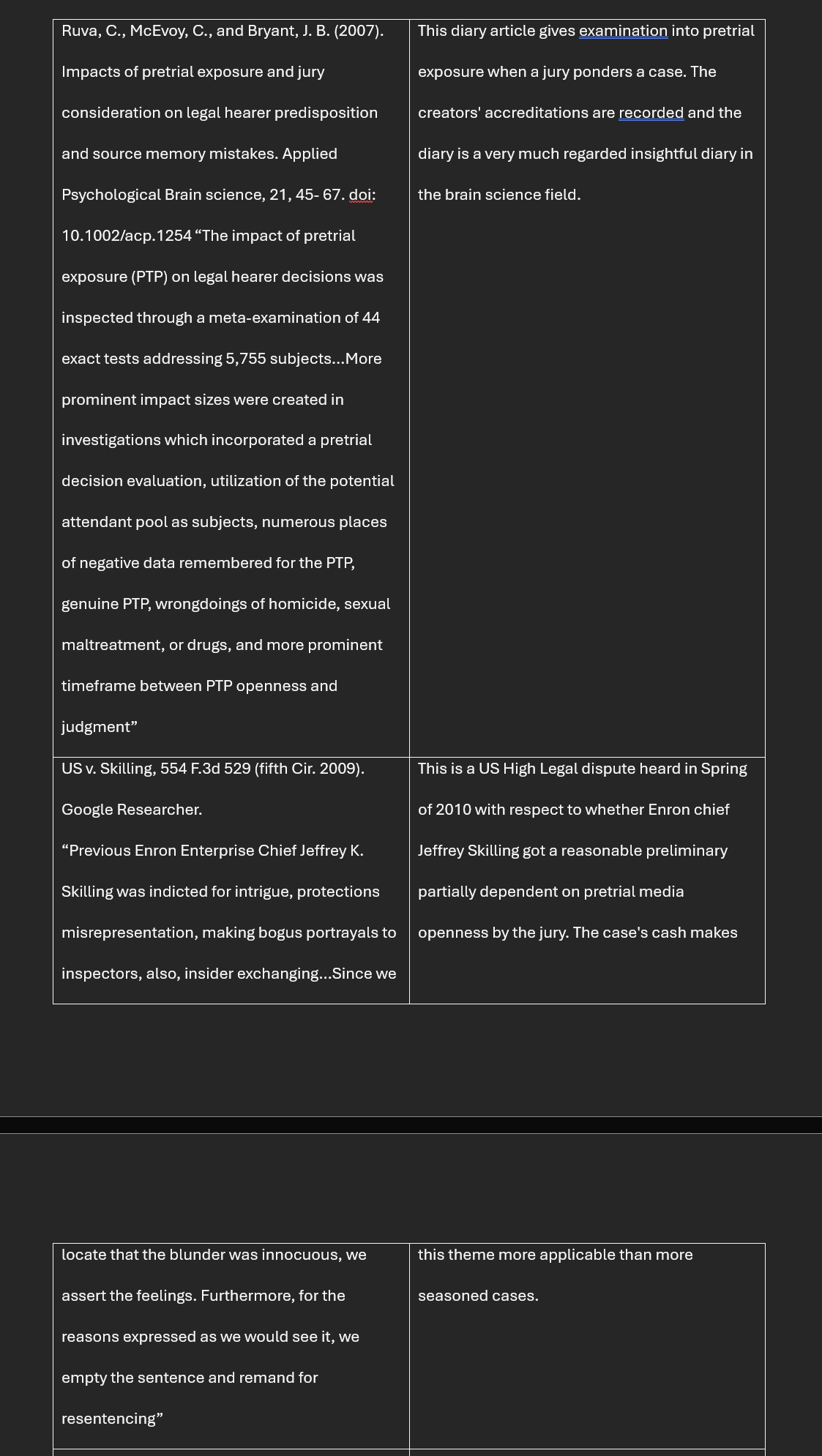
Research Exercise 3: Annotated Bibliography English 1111 (updated 7/11/22) (DeLong) 20 pts. possible for seven (one from the course reading + 6 more) complete and accurate annotations The Bedford Researcher includes an abbreviated annotated bibliography on pg. 104, but this exercise asks you to write a more thorough analysis of seven sources. To learn more about how to complete an annotated bibliography and read through some samples follow this link https://owl.purdue.edw/owl general writing common writing assignments/annotated bibliographies/ index.htm As you work on this assignment, create a T-chart for each source. (Check the Course Basics folder for the template.) Keep your T-charts in case I request them. 1. Rhetorical Framework: Explain your research topic, issue, and or question. This may still be in development, or it may have shifted recently (after your Discovery Draft). That is just fine. Identify your target audience for this paper and explain why you chose them. Think about demographic information as you narrow this target (e.g. race, ethnicity, sexual orientation, religion, gender, neighborhood, political leaning, etc.). How will you build credibility with them (Ethos)? Why do they need to read your argument? Also tell me whether you will use MLA or APA style for this project. 2. Annotated Bibliography: Each of the seven entries in the Annotated Bibliography must include the bibliographic information (in MLA style or APA style), and three brief (3 to 4 sentence) paragraphs. Be sure to label each paragraph in your bibliography. (these questions are similar to the ones on the Purdue OWL website) Summary: What is the central argument of this source? What topics are covered? Who is their audience and how do you know? Assessment: How does it compare with other sources in your bibliography? Is the information reliable? Why do you think so? Is it current? What are the biases of the source? Are the facts well documented? Who is the author? Is she or he qualified in this subject? Is this source scholarly, popular, some of both? Reflection: Specifically, how does it help you shape your argument or exploration? How do you use this source in your research project? Is this a helpful resource? Too scholarly? Not scholarly enough? Too general/specific? How has it developed your thinking about your research question? Since you may already have answered some of these questions in previous research exercises, it is acceptable to copy & paste from your own writing. As always, I expect you to do your own writing and research for this exercise and not to not steal work from other writers or online sources. When grading this exercise. I will be analyzing the feasibility of the project in the introduction paragraph (does this project fit with this audience, ethos, and the sources listed?) the accuracy of the seven MLA or APA works cited entries (use BR ch. 20 or 21), and the thoroughness and depth of each annotation's analysis. One last note: In past semesters students lost points for numbering the entries in the bibliography failing to alphabetize the entries, mashing up APA and MLA styles, or not answering all of the questions thoroughly. You can avoid their mistakes and earn full credit on this exercise.Does the web make jury predisposition more probable today than it did twenty years o]=1{e] (4 Thesis Statement: Pretrial exposure for prominent violations has gotten more hard to defeat by a difference in scene and sequestering of juries since the web makes the news accessible to a bigger bit of the populace at inconceivably quick rates. The rise of the internet has undoubtedly revolutionized the way information is accessed and disseminated. With the proliferation of social media platforms, online news websites, and forums, individuals are constantly bombarded with a plethora of information that can shape their beliefs and opinions. This constant exposure to information has made the phenomenon of jury predisposition more probable today than ever before. In this essay, | will explore how the internet has contributed to the phenomenon of jury predisposition, and the implications it has for the criminal justice system. One of the key ways in which the internet has made jury predisposition more probable today is through the spread of misinformation and fake news. With the rise of social media, anyone can create and share content without proper fact-checking or verification. This has led to the proliferation of false information that can influence individuals' beliefs and attitudes. When potential jurors are exposed to biased or inaccurate information online, it can predispose them to have preconceived notions about a case before even entering the courtroom. Furthermore, the internet has made it easier for individuals to seek out information that confirms their existing biases and beliefs. With search engines like Google algorithmically tailoring search results to cater to individuals' preferences, people are more likely to be exposed to information that reinforces their preconceived notions. This phenomenon, known as the "filter bubble," can lead to jurors being predisposed to certain beliefs and opinions that are not based on objective evidence. In addition to the spread of misinformation and the filter bubble, the internet has also made it easier for individuals to engage in jury tampering. With the rise of online forums and social media groups, individuals can easily connect with others who share similar beliefs and attitudes towards a particular case. These online communities can serve as echo chambers, where individuals reinforce each other's biases and prejudices, ultimately predisposing them to a particular verdict. Moreover, the anonymity afforded by the internet can embolden individuals to express extreme or biased views that they may not feel comfortable expressing in person. This can further contribute to jury predisposition, as potential jurors may be swayed by the opinions expressed online without considering the objective evidence presented in (e]l[g Another way in which the internet has made jury predisposition more probable is through the influence of high-profile cases. With the rise of online news websites and 24-hour news cycles, high-profile cases are more likely to be covered extensively, leading to widespread public attention and speculation. Potential jurors who have been following these cases online may form strong opinions based on media coverage, rather than the evidence presented in court. Furthermore, the internet has made it easier for individuals to access information about a case that may not be admissible in court. For example, potential jurors may conduct their own research online and come across information that has not been presented in court. This can lead to jurors forming opinions based on information that is not subject to cross-examination or verification, further predisposing them to a particular verdict. In conclusion, the internet has undoubtedly made jury predisposition more probable today than before. With the spread of misinformation, the filter bubble phenomenon, online jury tampering, the influence of high-profile cases, and the ease of accessing inadmissible information online, individuals are more likely to enter the courtroom with preconceived notions and biases. This has significant implications for the criminal justice system, as it can undermine the fairness and impartiality of the jury trial process. Moving forward, it is essential for judges, attorneys, and policymakers to consider the impact of the internet on jury predisposition and take measures to ensure a fair and unbiased judicial system. Author's main points with paragraph # (quote Readers questions, comments and or paraphrase) connections to other articles or ideas Web clients. The World Factbook On the web. \"A little team was set up in CIA to design the execution of the expected trade, and Donovan energetically consented to be the agent. A exacting need-to-realize routine was forced; we didn't need our hands tipped by any holes.\" Focal Insight Office. (2010). Nation correlation: The web client measurements gives a date of 2008 which was later than other comparative measurement sites. The insights are given in a graphical presentation with numbers close to every nation, positioned arranged by the most noteworthy client. Ruva, C., McEvoy, C., and Bryant, J. B. (2007). Impacts of pretrial exposure and jury consideration on legal hearer predisposition and source memory mistakes. Applied Psychological Brain science, 21, 45- 67. doi: 10.1002/acp.1254 \"The impact of pretrial exposure (PTP) on legal hearer decisions was inspected through a meta-examination of 44 exact tests addressing 5,755 subjects...More prominent impact sizes were created in investigations which incorporated a pretrial decision evaluation, utilization of the potential attendant pool as subjects, numerous places of negative data remembered for the PTP, genuine PTP, wrongdoings of homicide, sexual maltreatment, or drugs, and more prominent timeframe between PTP openness and judgment\" This diary article gives examination into pretrial exposure when a jury ponders a case. The creators' accreditations are recorded and the diary is a very much regarded insightful diary in the brain science field. US v. Skilling, 554 F.3d 529 (fifth Cir. 2009). Google Researcher. \"Previous Enron Enterprise Chief Jeffrey K. Skilling was indicted for intrigue, protections misrepresentation, making bogus portrayals to inspectors, also, insider exchanging...Since we This is a US High Legal dispute heard in Spring of 2010 with respect to whether Enron chief Jeffrey Skilling got a reasonable preliminary partially dependent on pretrial media openness by the jury. The case's cash makes locate that the blunder was innocuous, we assert the feelings. Furthermore, for the reasons expressed as we would see it, we empty the sentence and remand for resentencing\" this theme more applicable than more seasoned cases
Step by Step Solution
There are 3 Steps involved in it

Get step-by-step solutions from verified subject matter experts
 Study Help