







Question: ID: A 9. A 60-day, 10% note for $9,000, dated the note is We note for $9.000, dated April 15, is received from a customer
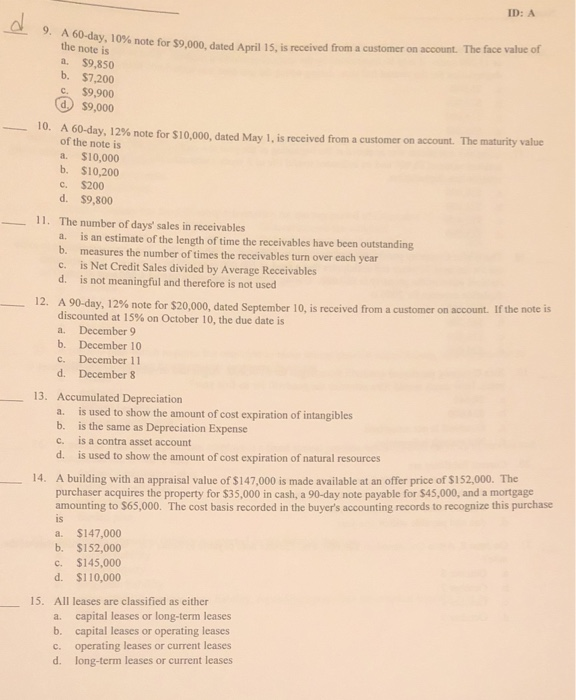
ID: A 9. A 60-day, 10% note for $9,000, dated the note is We note for $9.000, dated April 15, is received from a customer on account. The face value of a. $9.850 b. $7,200 c. $9.900 $9,000 A 60-day, 12% note for $10.000 dated May is received from a customer on account. The maturity value of the note is a. $10,000 b. S10,200 c. $200 d. $9,800 10. 11. The number of days' sales in receivables a. is an estimate of the length of time the receivables have been outstanding b. measures the number of times the receivables turn over each year c. is Net Credit Sales divided by Average Receivables d. is not meaningful and therefore is not used 12. A 90-day, 12% note for $20,000, dated September 10, is received from a customer on account. If the note is discounted at 15% on October 10, the due date is a. December 9 b. December 10 c. December 11 d. December 8 13. Accumulated Depreciation a is used to show the amount of cost expiration of intangibles b. is the same as Depreciation Expense c. is a contra asset account d. is used to show the amount of cost expiration of natural resources 14. A building with an appraisal value of $147,000 is made available at an offer price of $152,000. The purchaser acquires the property for $35,000 in cash, a 90-day note payable for $45,000, and a mortgage amounting to $65,000. The cost basis recorded in the buyer's accounting records to recognize this purchase a. b. c. d. $147,000 $152,000 $145,000 $110,000 15. All leases are classified as either a capital leases or long-term leases b. capital leases or operating leases C. operating leases or current leases d. long-term leases or current leases
Step by Step Solution
There are 3 Steps involved in it

Get step-by-step solutions from verified subject matter experts
 Study Help