







Question: ID Group 1 Control 2 Control 3 Control 4 Control 5 Control 6 Control 7 Control 8 Control 9 Control 10 Control 11 Control 12
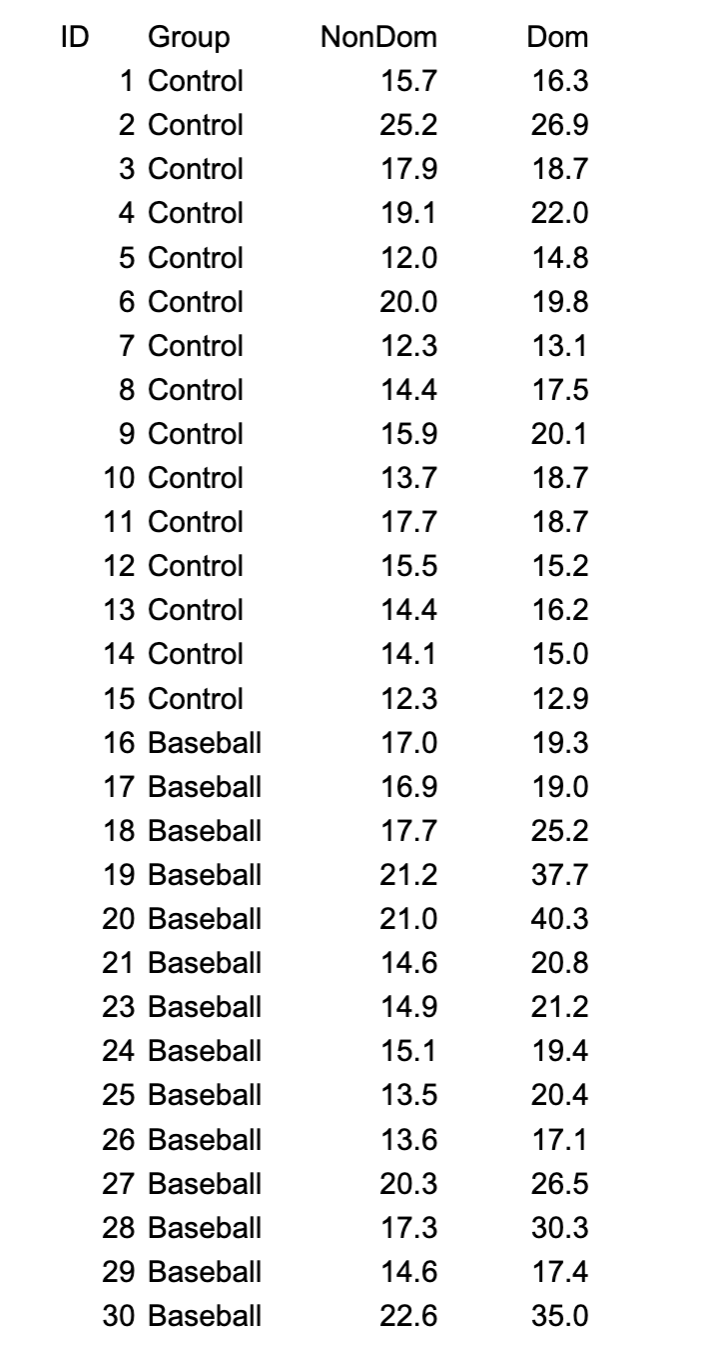
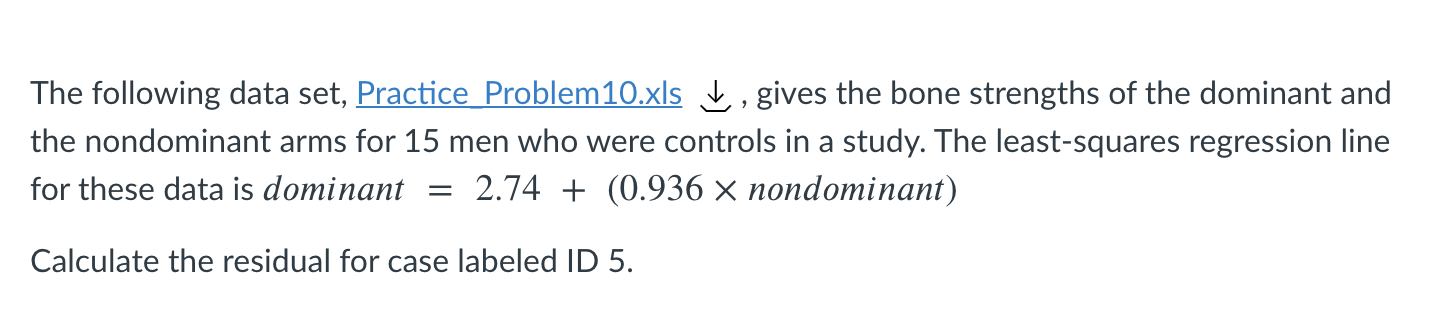
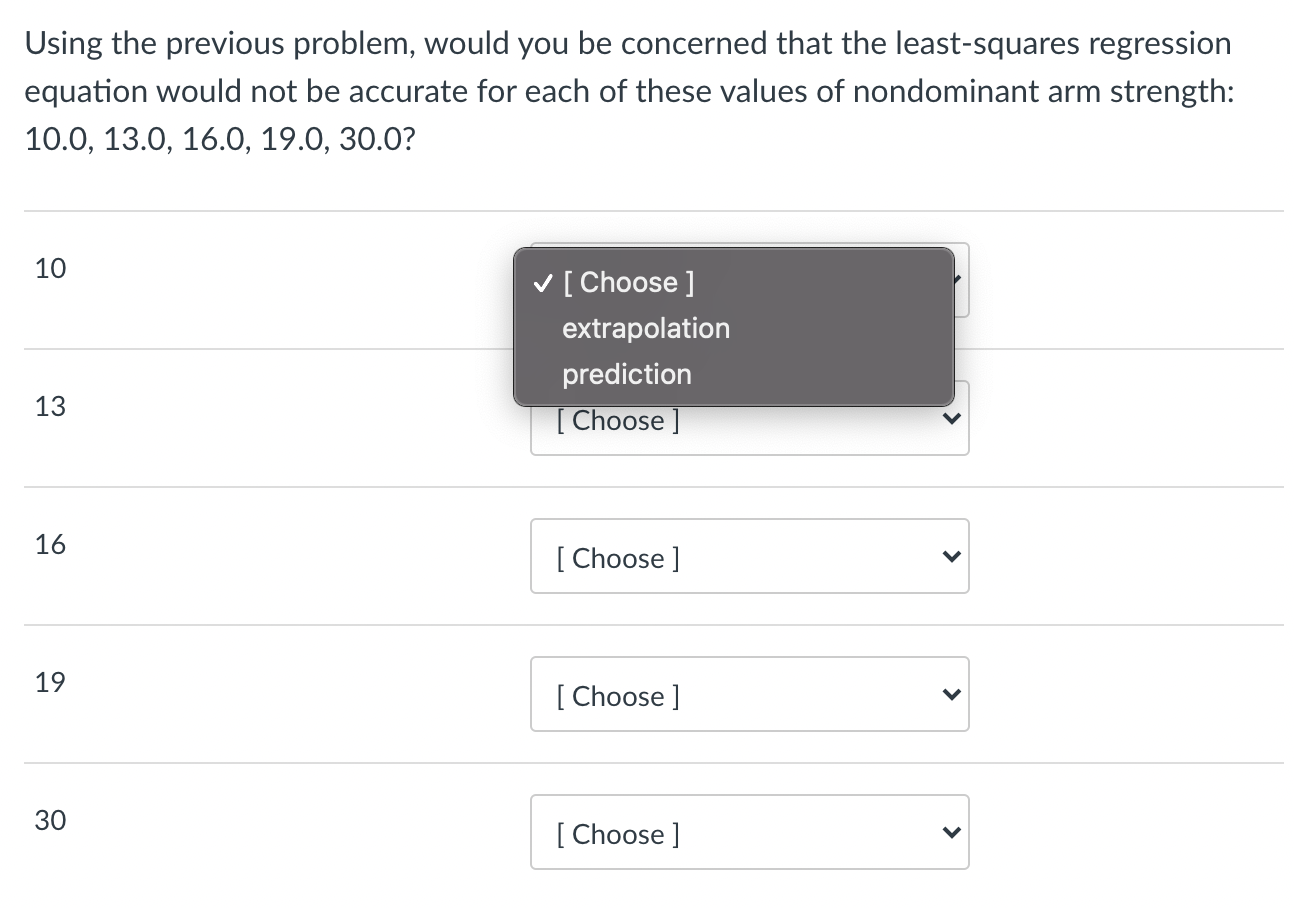
ID Group 1 Control 2 Control 3 Control 4 Control 5 Control 6 Control 7 Control 8 Control 9 Control 10 Control 11 Control 12 Control 13 Control 14 Control 15 Control 16 Baseball 17 Baseball 18 Baseball 19 Baseball 20 Baseball 21 Baseball 23 Baseball 24 Baseball 25 Baseball 26 Baseball 27 Baseball 28 Baseball 29 Baseball 30 Baseball NonDom 15.7 25.2 17.9 19.1 12.0 20.0 12.3 14.4 15.9 13.7 17.7 15.5 14.4 14.1 12.3 17.0 16.9 17.7 21.2 21.0 14.6 14.9 15.1 13.5 13.6 20.3 17.3 14.6 22.6 Dom 16.3 26.9 18.7 22.0 14.8 19.8 13.1 17.5 20.1 18.7 18.7 15.2 16.2 15.0 12.9 19.3 19.0 25.2 37.7 40.3 20.8 21.2 19.4 20.4 17.1 26.5 30.3 17.4 35.0 The following data set, Practice Problem10.xls \\L , gives the bone strengths of the dominant and the nondominant arms for 15 men who were controls in a study. The least-squares regression line for these data is dominant = 2.74 + (0.936 X nondominant) Calculate the residual for case labeled ID 5. Using the previous problem, would you be concerned that the least-squares regression equation would not be accurate for each of these values of nondominant arm strength: 10.0, 13.0, 16.0, 19.0, 30.0? 10 J [ Choose ] extrapolation prediction 13 [ Choose] 16 [ Choose ] V 19 [ Choose ] V 30 [ Choose ] v
Step by Step Solution
There are 3 Steps involved in it

Get step-by-step solutions from verified subject matter experts
 Study Help