



Question: Identify and analyze the transaction by using the following steps: 1. Determine activity - operating, investing or financing. 2. Determine accounts affected and the amount
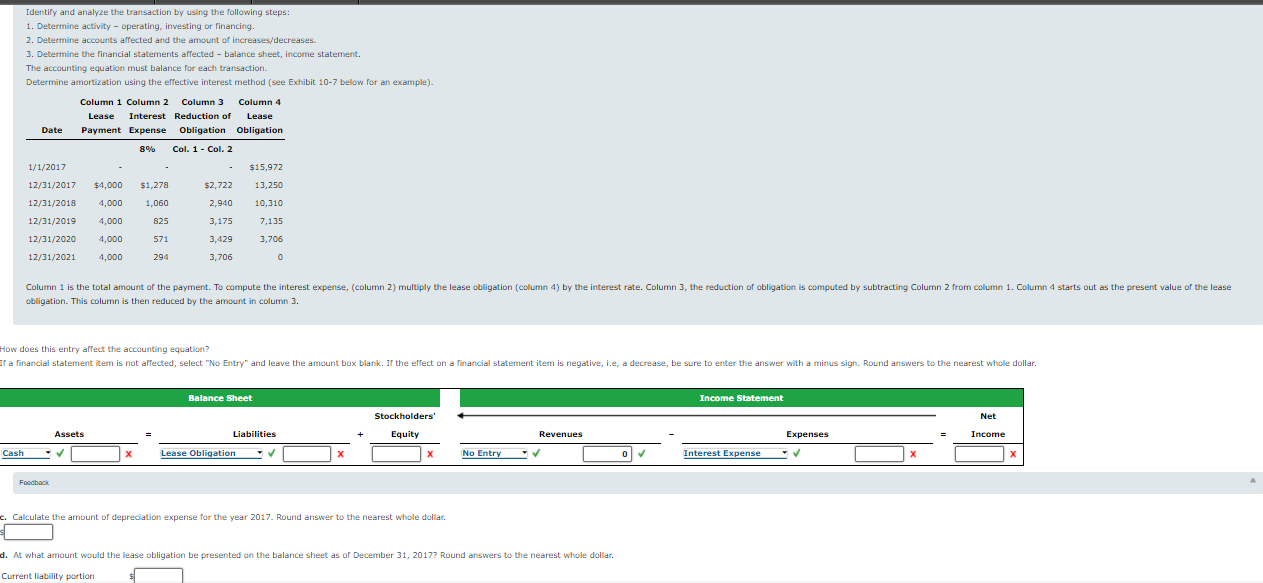
Identify and analyze the transaction by using the following steps: 1. Determine activity - operating, investing or financing. 2. Determine accounts affected and the amount of increases/decreases. 3. Determine the financial statements affected - balance sheet, income statement. The accounting equation must balance for each transaction. Determine amortization using the effective interest method (See Exhibit 10-7 below for an example). Date Column 1 Column 2 Column 3 Column 4 Lease Interest Reduction of Lease Payment Expense Obligation Obligation 8% Col. 1 - Col. 2 1/1/2017 $15,972 12/31/2017 $4,000 $1,278 $2,722 13,250 12/31/2018 4,000 1,060 10,310 2,940 3,175 12/31/2019 825 4,000 4,000 7,135 3,706 12/31/2020 571 3,429 12/31/2021 4,000 294 3,706 0 Column 1 is the total amount of the payment. To compute the interest expense, (column 2) multiply the lease obligation (column 4) by the interest rate. Column 3, the reduction of obligation is computed by subtracting Column 2 from column 1. Column 4 starts out as the present value of the lease obligation. This column is then reduced by the amount in column 3. How does this entry affect the accounting equation? If a financial statement item is not affected, select "No Entry" and leave the amount box blank. If the effect on a financial statement item is negative, i.e, a decrease, be sure to enter the answer with a minus sign. Round answers to the nearest whole dollar. Balance Sheet Income Statement Net Stockholders Equity Assets Liabilities Revenues Expenses Income Cash Lease Obligation No Entry 0 Interest Expense Foodback c. Calculate the amount of depreciation expense for the year 2017. Round answer to the nearest whole dollar. d. At what amount would the lease obligation be presented on the balance sheet as of December 31, 2017? Round answers to the nearest whole dollar. Current liability portion Identify and analyze the transaction by using the following steps: 1. Determine activity - operating, investing or financing. 2. Determine accounts affected and the amount of increases/decreases. 3. Determine the financial statements affected - balance sheet, income statement. The accounting equation must balance for each transaction. Determine amortization using the effective interest method (See Exhibit 10-7 below for an example). Date Column 1 Column 2 Column 3 Column 4 Lease Interest Reduction of Lease Payment Expense Obligation Obligation 8% Col. 1 - Col. 2 1/1/2017 $15,972 12/31/2017 $4,000 $1,278 $2,722 13,250 12/31/2018 4,000 1,060 10,310 2,940 3,175 12/31/2019 825 4,000 4,000 7,135 3,706 12/31/2020 571 3,429 12/31/2021 4,000 294 3,706 0 Column 1 is the total amount of the payment. To compute the interest expense, (column 2) multiply the lease obligation (column 4) by the interest rate. Column 3, the reduction of obligation is computed by subtracting Column 2 from column 1. Column 4 starts out as the present value of the lease obligation. This column is then reduced by the amount in column 3. How does this entry affect the accounting equation? If a financial statement item is not affected, select "No Entry" and leave the amount box blank. If the effect on a financial statement item is negative, i.e, a decrease, be sure to enter the answer with a minus sign. Round answers to the nearest whole dollar. Balance Sheet Income Statement Net Stockholders Equity Assets Liabilities Revenues Expenses Income Cash Lease Obligation No Entry 0 Interest Expense Foodback c. Calculate the amount of depreciation expense for the year 2017. Round answer to the nearest whole dollar. d. At what amount would the lease obligation be presented on the balance sheet as of December 31, 2017? Round answers to the nearest whole dollar. Current liability portion
Step by Step Solution
There are 3 Steps involved in it

Get step-by-step solutions from verified subject matter experts