







Question: If a project has a 5-year life, requires an initial investment of $200,000, and is expected to yield annual cash flows of $60,000, what is
If a project has a 5-year life, requires an initial investment of $200,000, and is expected to yield annual cash flows of $60,000, what is the net present value of the project if the required rate of return is set at 10%? If required, round your answer to the nearest cent.
Present Value Tables The Present Value of an Ordinary Annuity is the value of a stream of expected or promised future payments that have been discounted to a single equivalent value today. It is extremely useful for comparing two separate cash flows that differ in some way.

| Net Present Value Computation = | $__?__ | x | (A. 3.791 B. 1.759 C. 3.89) | $? |
What NPV does the previous calculation yield? $___?___
Internal Rate of Return Introduced
The internal rate of return (IRR) method uses present value concepts to compute the rate of return from a capital investment proposal based on its expected net cash flows. This method, sometimes called the time-adjusted rate of return method, starts with the proposal's net cash flows and works backward to estimate the proposal's expected rate of return.
Internal Rate of Return Calculation (Even Cashflows)
| IRR Factor = | Investment |
| Annual cash flows | |
If a project has a 6-year life, requires an initial investment of $189,200, and is expected to yield annual cash flows of $50,000, what is the internal rate of return?
| IRR Factor = | $__?__ | = (A. 3.784 B. 4.355 C. 4.767) |
| $__?__ |
The calculated value corresponds to which percentage in the table for the present value of ordinary annuities?

A. 15% B. 10% C. 7%
APPLY THE CONCEPTS: Net present value
Project A This project requires an initial investment of $139,590. The project will have a life of 4 years. Annual revenues associated with the project will be $90,000 and expenses associated with the project will be $45,000 for an annual net cash flow of $__?__.
Note: Enter cash flows as positive numbers.
| Cash Flows | ||
| Year 0 | -$139,590 | |
| Year 1 | ? | |
| Year 2 | ? | |
| Year 3 | ? | |
| Year 4 | ? | |
Project B This project requires an initial investment of $129,600. The project will have a life of 4 years. Annual revenues associated with the project will be $100,000, and expenses associated with the project will be $60,000, for an annual net cash flow of $___?___.
| Cash Flows | ||
| Year 0 | -$129,600 | |
| Year 1 | ? | |
| Year 2 | ? | |
| Year 3 | ? | |
| Year 4 | ? | |
The cost of capital for the company is 6%.
Present Value Tables:
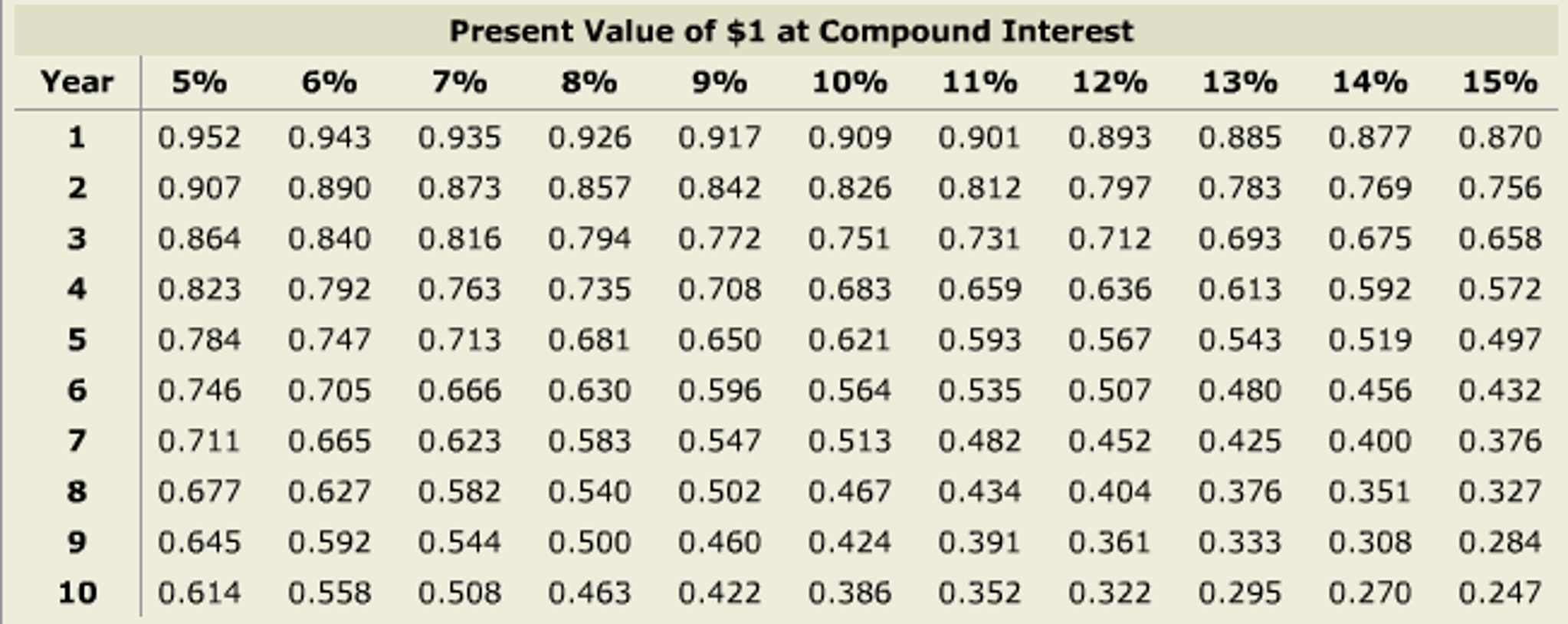
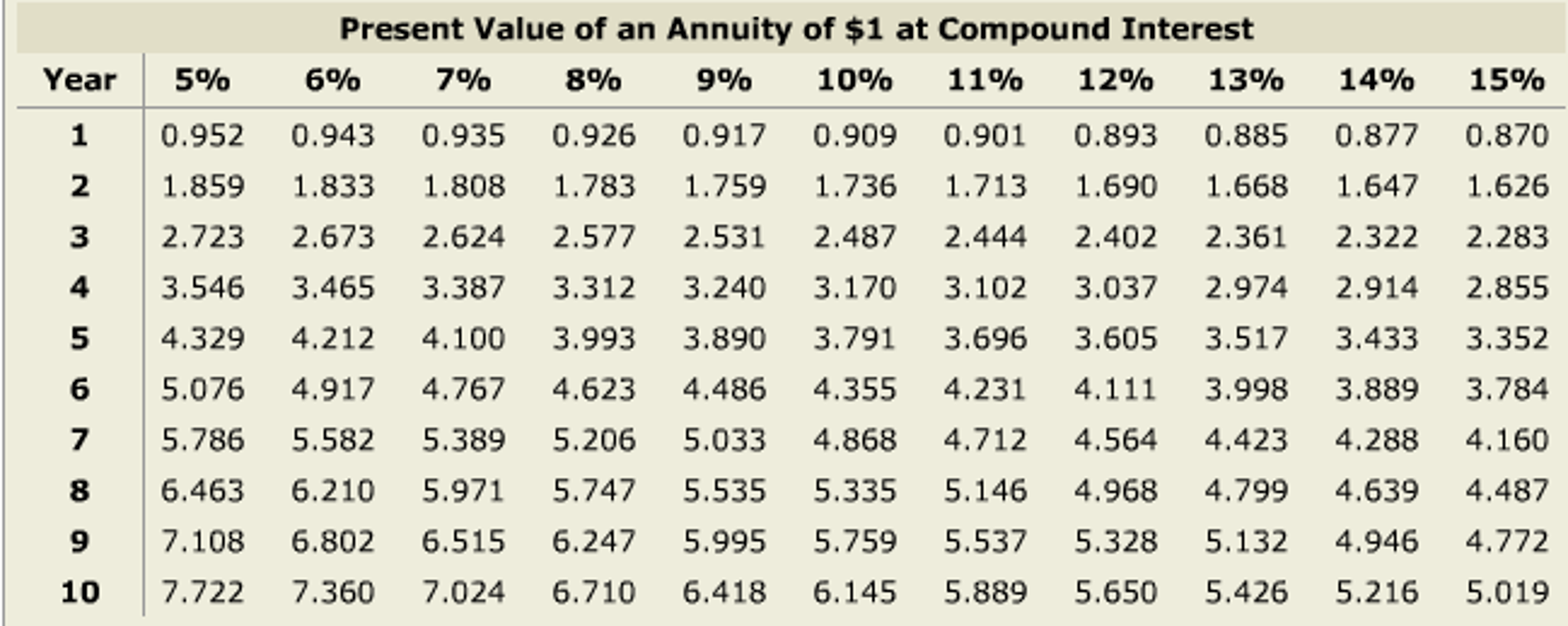
Use the minus sign to indicate a negative NPV. If an amount is zero, enter "0".
| Project A NPV Analysis | |||||||||
| Year | Cash Flow | Discount Factor | Present Value | ||||||
| 0 | $139,590 | 1.000 | $139,590 | ||||||
| 14 | 45,000 | A. 3.465 B. 0.792 C. 3.24 | ? | ||||||
| NPV | $ ? | ||||||||
| Project B NPV Analysis | |||||||||
| Year | Cash Flow | Discount Factor | Present Value | ||||||
| 0 | $129,600 | 1.000 | $129,600 | ||||||
| 14 | 40,000 | A. 3.465 B. 0.792 C. 3.24 | ? | ||||||
| NPV | $ ? | ||||||||
Based upon net present value, which project has the more favorable profit prospects? A. (Project A) B. (Project B) C. (Either project)
Internal rate of return:
Calculate the internal rate of return for Project A and Project B (defined previously). Enter the IRR with the percent sign (i.e. 4%).
Project A: IRR Analysis
With an initial investment of $139,590 and annual cash flows of $__?__, the internal rate of return for Project A is __?__ .
Project B: IRR Analysis
With an intial investment of $129,600 and annual cash flows of $__?__, the internal rate of return for Project B is __?__ .
Present Value of an Annuity of $1 at Compound Interest 9% 10% 11% 12% 13% 14% 15% 4 3.546 3.465 3.387 3.312 3.240 3.170 3.102 3.037 2.974 2.914 2.855 5 4.329 4.212 4.100 3.993 3.890 3.791 3.696 3.605 3.517 3.433 3.352 6 5.076 4.917 4.767 4.623 4.486 4.355 4.231 4.111 3.998 3.889 3.784 Year 5% 6% 690 7% 7010 8%
Step by Step Solution
There are 3 Steps involved in it

Get step-by-step solutions from verified subject matter experts
 Study Help