







Question: If we had used fixed point representation (instead of floating point representation) to store numbers in a 9-bit decimal (base-10) computer that uses 1 bit
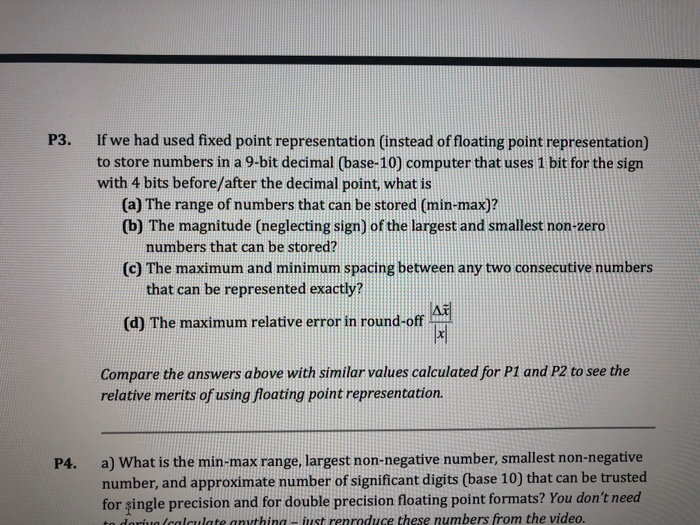
If we had used fixed point representation (instead of floating point representation) to store numbers in a 9-bit decimal (base-10) computer that uses 1 bit for the sign with 4 bits before/after the decimal point what is P3. (a) The range of numbers that can be stored (min-max)? (b) The magnitude (neglecting sign) of the largest and smallest non-zero numbers that can be stored? (c) The maximum and minimum spacing between any two consecutive numbers that can be represented exactly? (d) The maximum relative error in round -off Compare the answers above with similar values calculated for P1 and P2 to see the relative merits of using floating point representation. a) What is the min-max range, largest non-negative number, smallest non-negative number, and approximate number of significant digits (base 10) that can be trusted for single precision and for double precision floating point formats? You don't need P4. lariuo (cglculate anuthina - iust renroduce these numbers from the video
Step by Step Solution
There are 3 Steps involved in it

Get step-by-step solutions from verified subject matter experts
 Study Help