







Question: If we use Kirchhoff's rules in their initial form we end up with 3 equations in three unknowns. Using the current equation, we can simplify
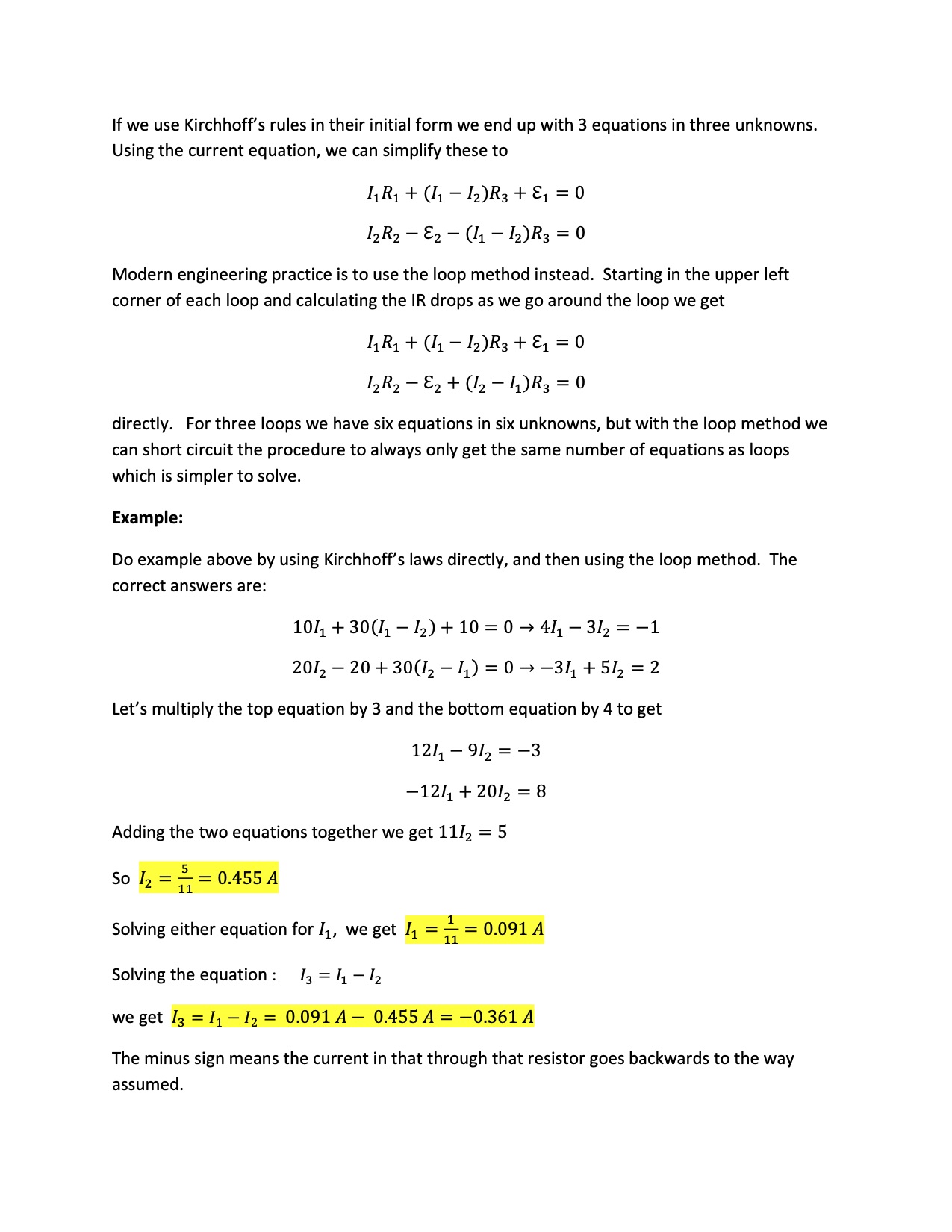
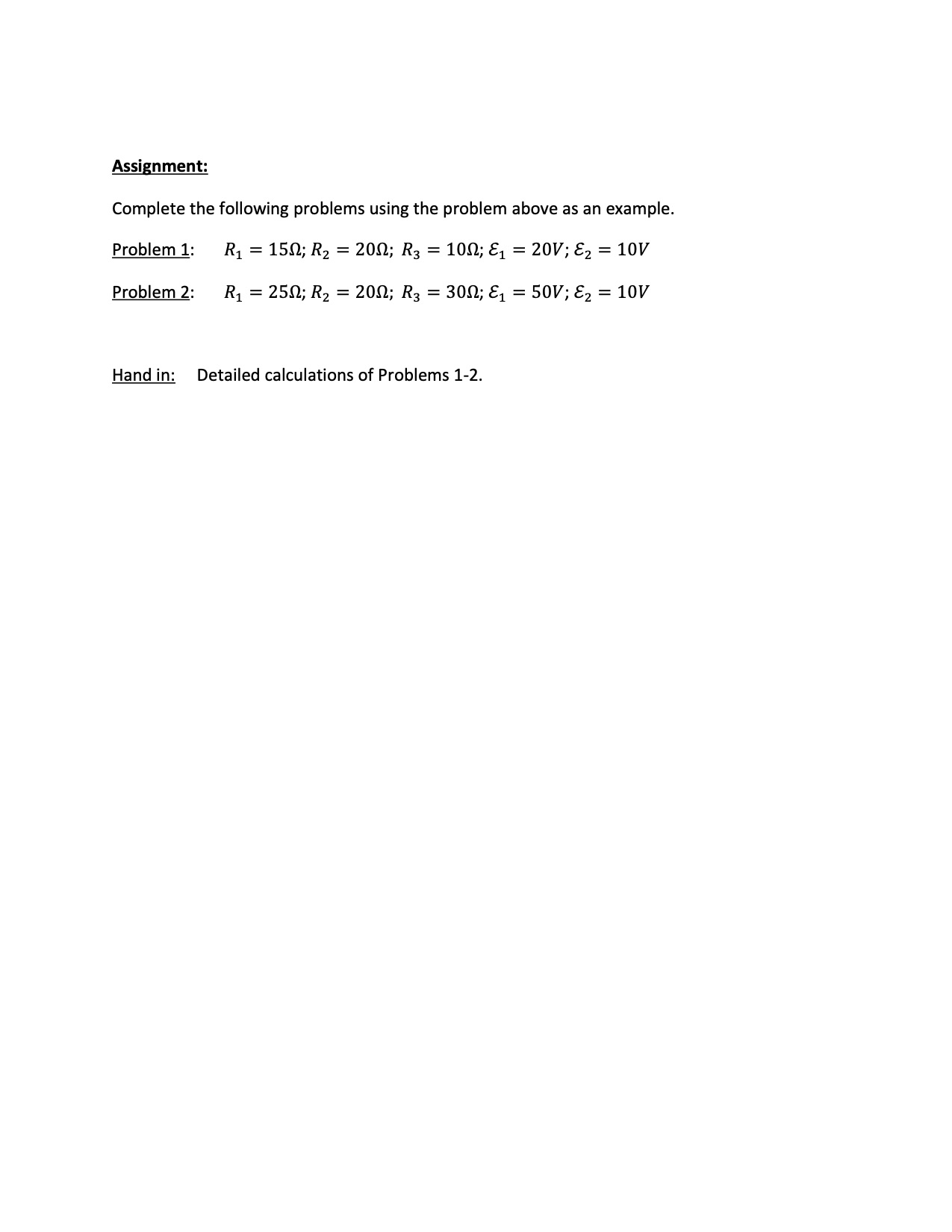
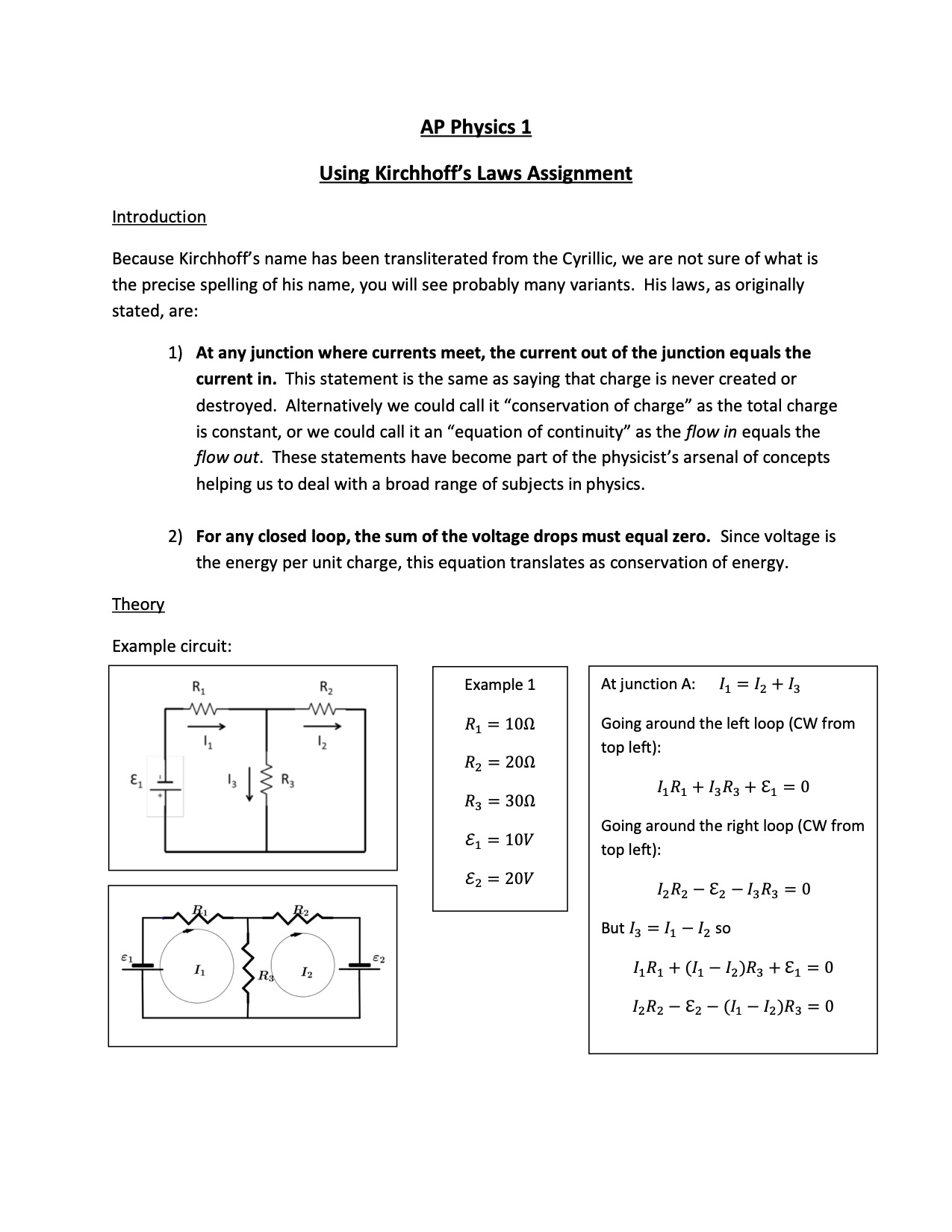
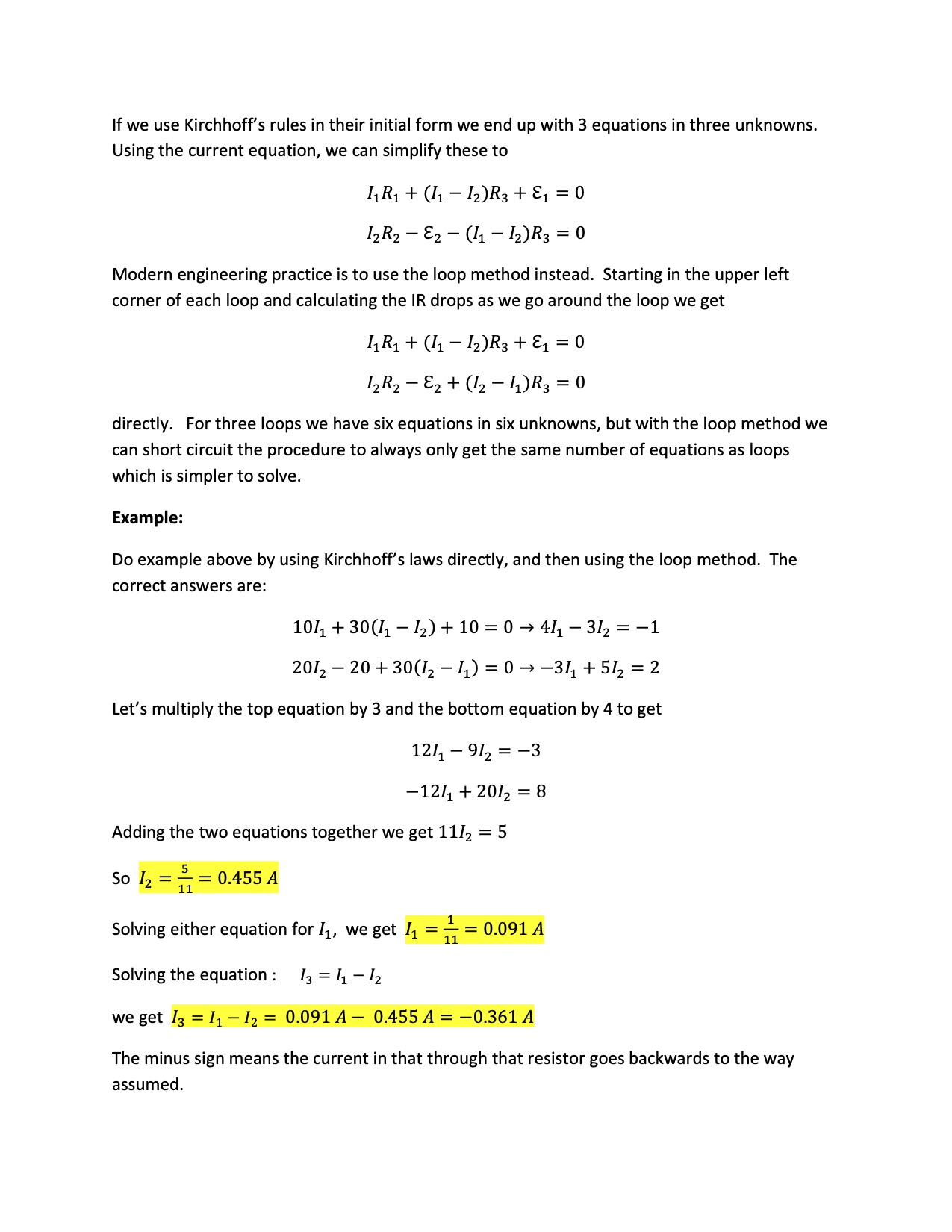
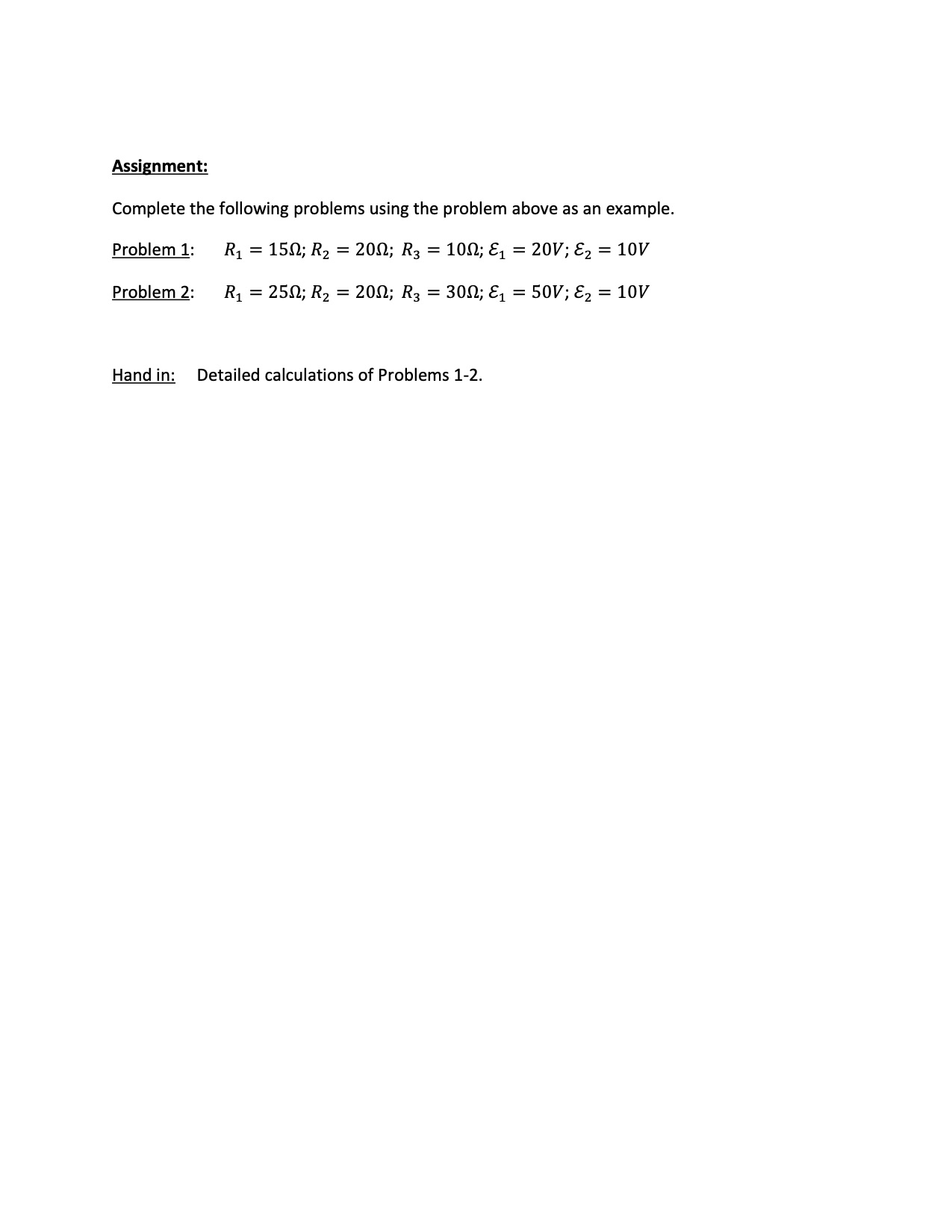
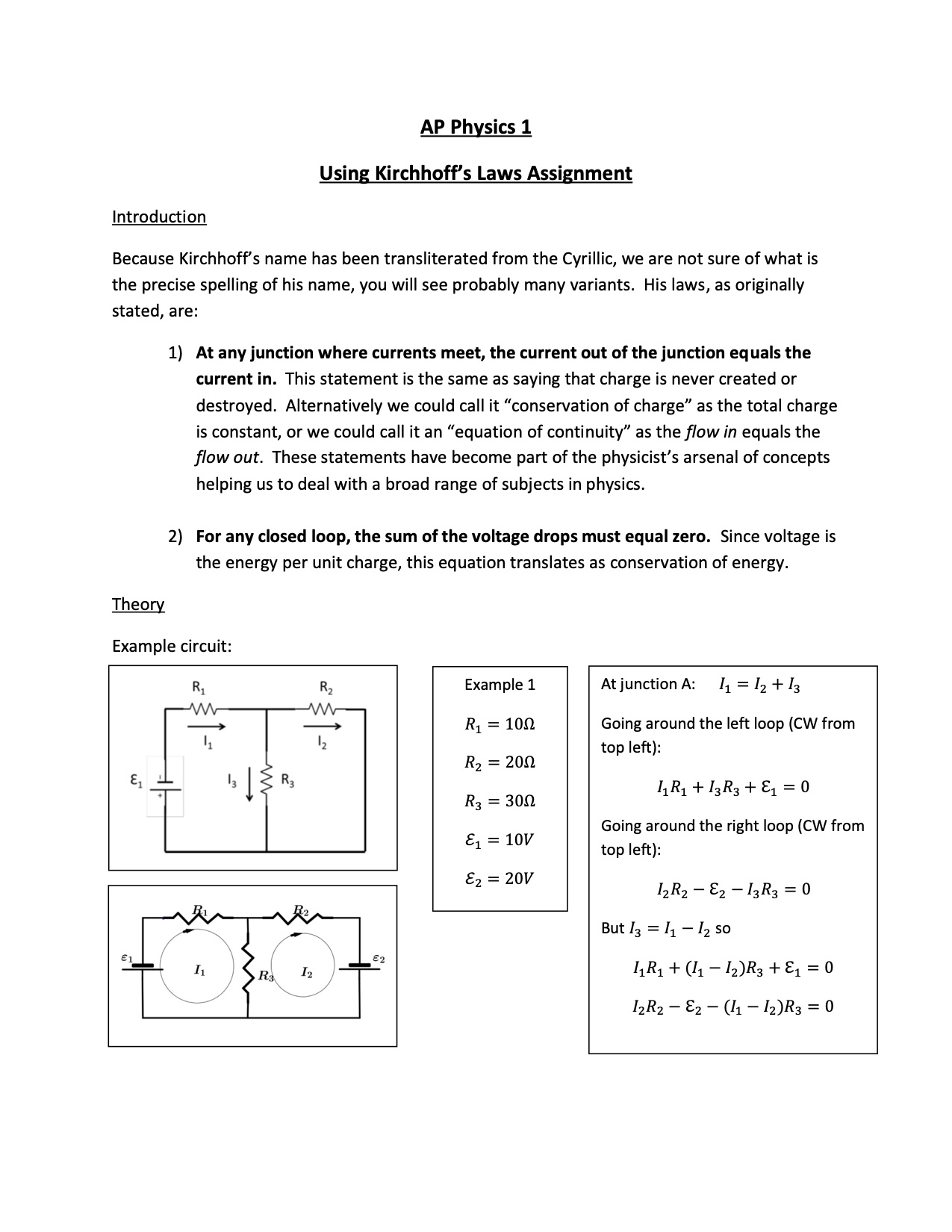
If we use Kirchhoff's rules in their initial form we end up with 3 equations in three unknowns. Using the current equation, we can simplify these to IR1 + (1 - 12) R3 + 81 = 0 12R2 - E2 - (11 - 12)R3 = 0 Modern engineering practice is to use the loop method instead. Starting in the upper left corner of each loop and calculating the IR drops as we go around the loop we get R1 + (1 - 12)R3 + 81 = 0 12 R2 - E2 + ( 12 - 1,) R3 = 0 directly. For three loops we have six equations in six unknowns, but with the loop method we can short circuit the procedure to always only get the same number of equations as loops which is simpler to solve. Example: Do example above by using Kirchhoff's laws directly, and then using the loop method. The correct answers are: 10/1 + 30(11 - 12) + 10 = 0 - 411 -312 = -1 2012 - 20 + 30(12 - 11) = 0 - -31 +512 = 2 Let's multiply the top equation by 3 and the bottom equation by 4 to get 1211 - 912 = -3 -12/1 + 2012 = 8 Adding the two equations together we get 11/2 = 5 So I2 = = 0.455 A Solving either equation for 1, we get /1 = = 0.091 A Solving the equation : 13 = 11 -12 we get 13 = 11 - 12 = 0.091 A - 0.455 A = -0.361 A The minus sign means the current in that through that resistor goes backwards to the way assumed.Assignment: Complete the following problems using the problem above as an example. Problem 1: R1 = 15.0; R; = 200.; R3 = 10.0.;81 = 20V; 82 = 10V Problem 2: R1 = 25.0; R2 = 200; R3 = 30.0.;81 = 50V; 82 = 101/ Hand in: Detailed calculations of Problems 1-2. AP Physics 1 Using Kirchhoff's Laws Assignment Introduction Because Kirchhoff's name has been transliterated from the Cyrillic, we are not sure of what is the precise spelling of his name, you will see probably many variants. His laws, as originally stated, are: 1) At any junction where currents meet, the current out of the junction equals the current in. This statement is the same as saying that charge is never created or destroyed. Alternatively we could call it "conservation of charge" as the total charge is constant, or we could call it an "equation of continuity" as the flow in equals the flow out. These statements have become part of the physicist's arsenal of concepts helping us to deal with a broad range of subjects in physics. 2) For any closed loop, the sum of the voltage drops must equal zero. Since voltage is the energy per unit charge, this equation translates as conservation of energy. Theory Example circuit: R1 R Example 1 At junction A: 11 = 12 + 13 R1 = 100 Going around the left loop (CW from top left): R2 = 200 E1 MM R3 HR1+ 13R3 + 81 = 0 R3 = 300 Going around the right loop (CW from E1 = 10V top left): E2 = 20V 12 R2 - E2 - 13 R3 = 0 But 13 = 1 - 12 So R3. 1R1 + (1 - 12) R3 + 81 = 0 12 R2 - E2 - (11 - 12)R3 = 0
Step by Step Solution
There are 3 Steps involved in it

Get step-by-step solutions from verified subject matter experts
 Study Help