







Question: IFRS allows more flexibility with where some items are reported on the Statement of Cash Flows IFRS requires that Interest Expense and Interest Income are
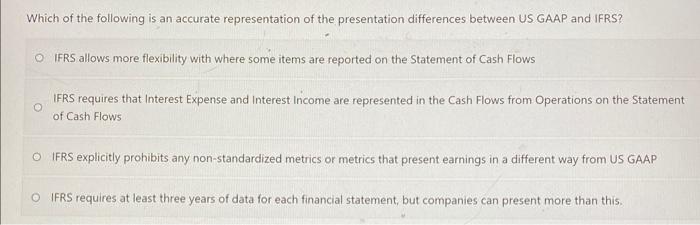
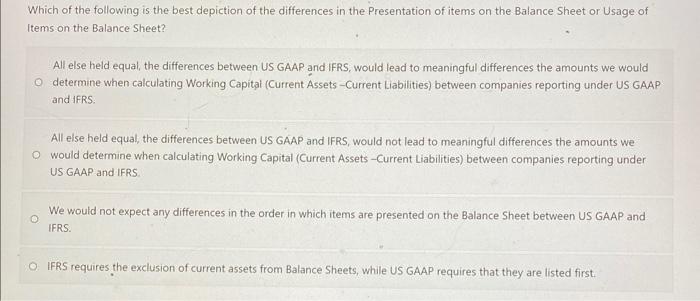
IFRS allows more flexibility with where some items are reported on the Statement of Cash Flows IFRS requires that Interest Expense and Interest Income are represented in the Cash Flows from Operations on the Stateme of Cash Flows IFRS explicitly prohibits any non-standardized metrics or metrics that present earnings in a different way from US GAAP IFRS requires at least three years of data for each financial statement, but companies can present more than this. Which of the following is the best depiction of the differences in the Presentation of items on the Balance Sheet or Usage of Items on the Balance Sheet? All else held equal, the differences between US GAAP and IFRS, would lead to meaningful differences the amounts we would determine when calculating Working Capital (Current Assets -Current Liabilities) between companies reporting under US GAAP and IFRS. All else held equal, the differences between US GAAP and IFRS, would not lead to meaningful differences the amounts we would determine when calculating Working Capital (Current Assets-Current Liabilities) between companies reporting under US GAAP and IFRS. We would not expect any differences in the order in which items are presented on the Balance Sheet between US GAAP and IFRS. IFRS requires the exclusion of current assets from Balance Sheets, while US GAAP requires that they are listed first
Step by Step Solution
There are 3 Steps involved in it

Get step-by-step solutions from verified subject matter experts
 Study Help