Question: Il. Chapter 3 Lecture Outline Opening Section The introduction presents the idea that language and thought are related. Some languages have more words for a
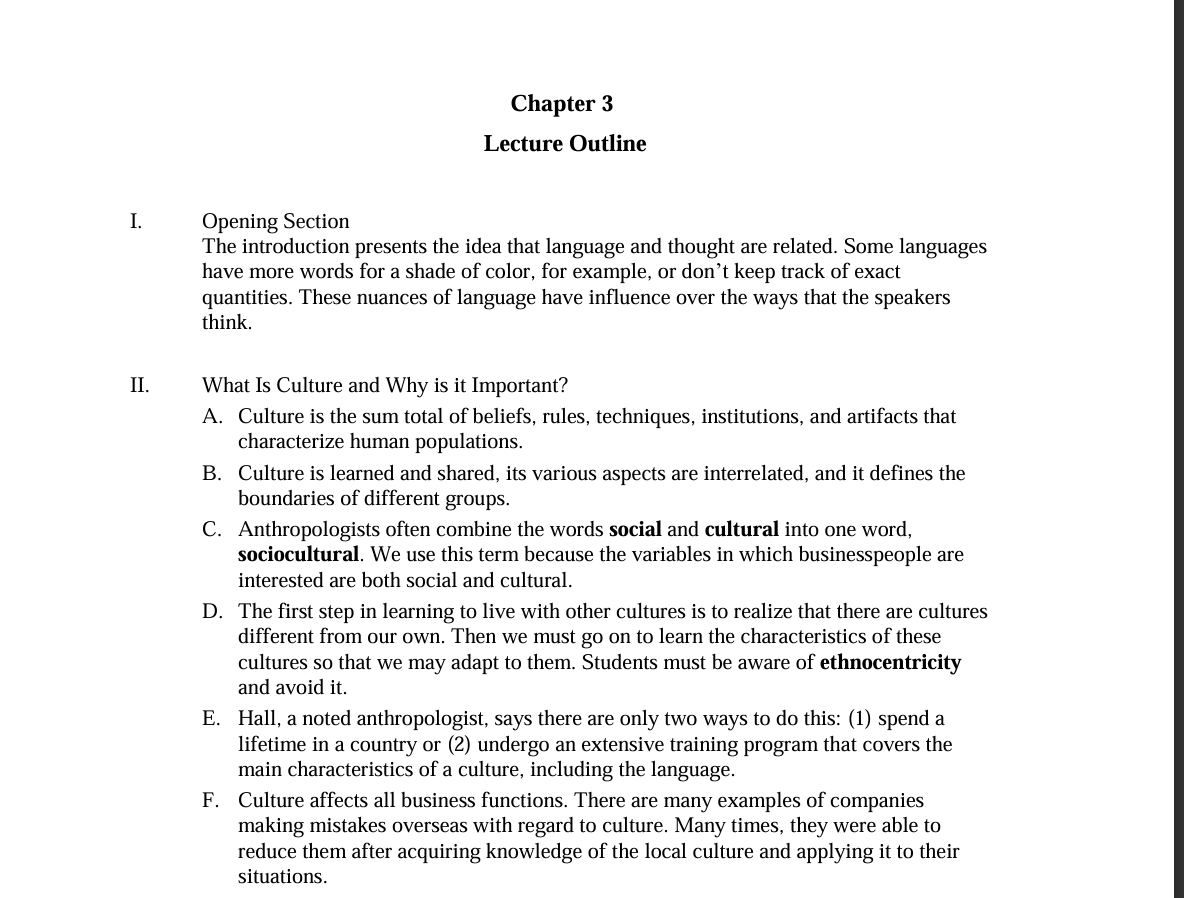
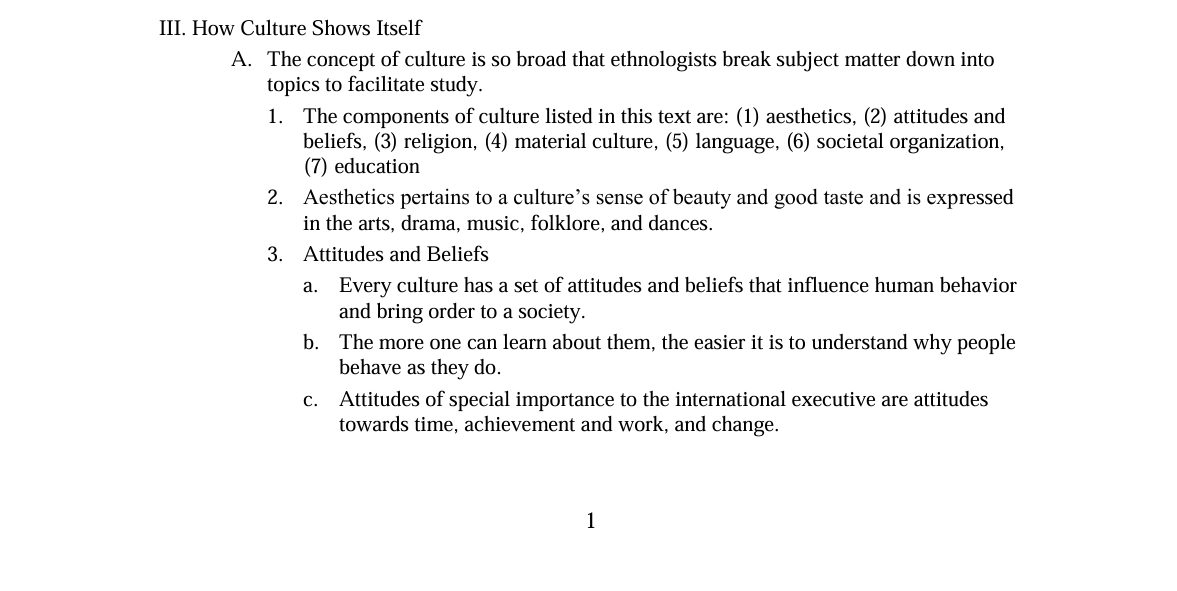
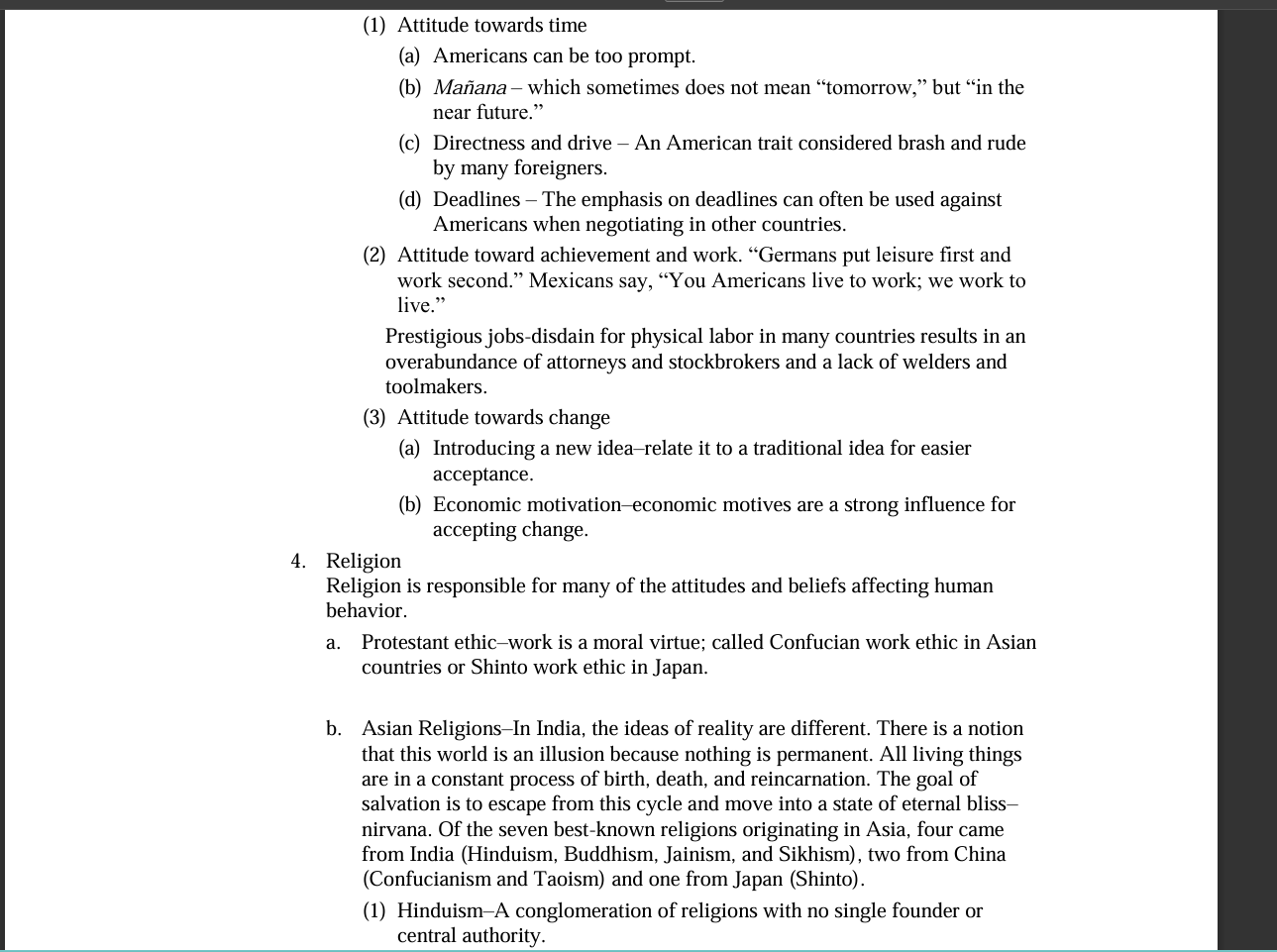
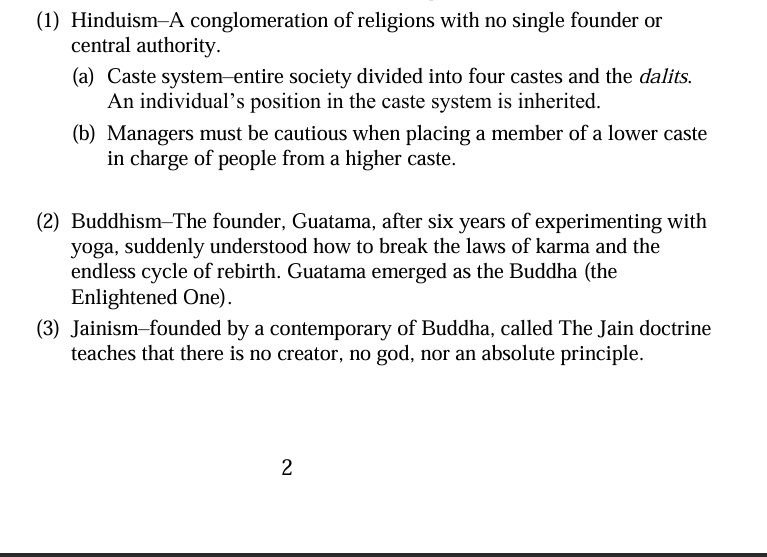
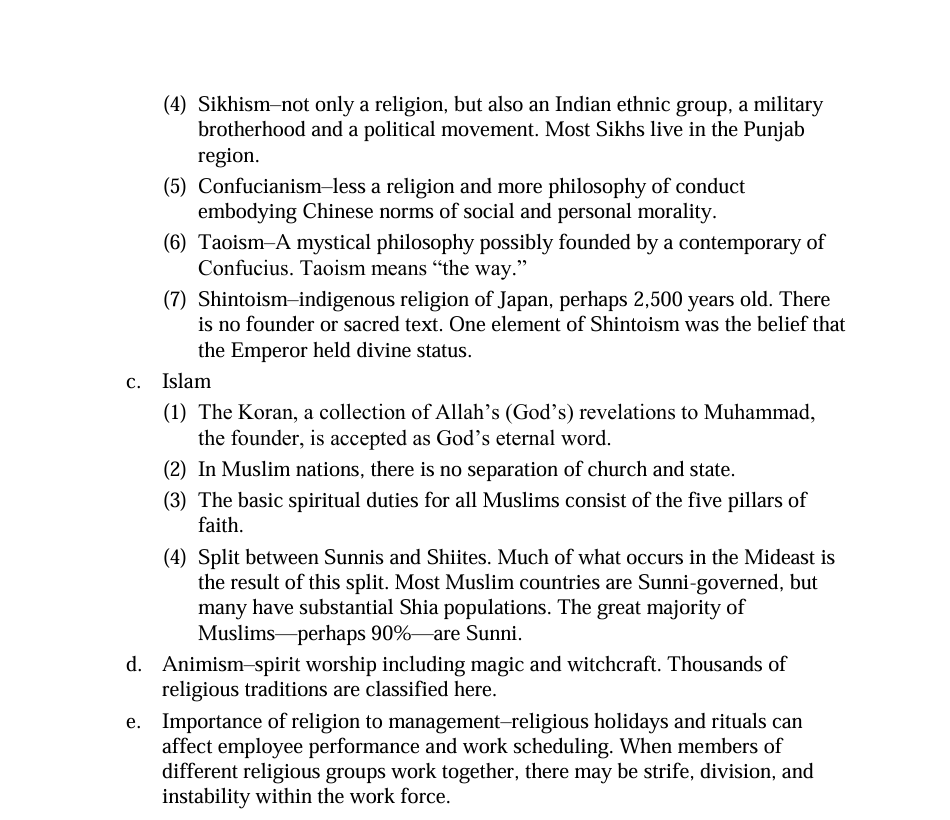
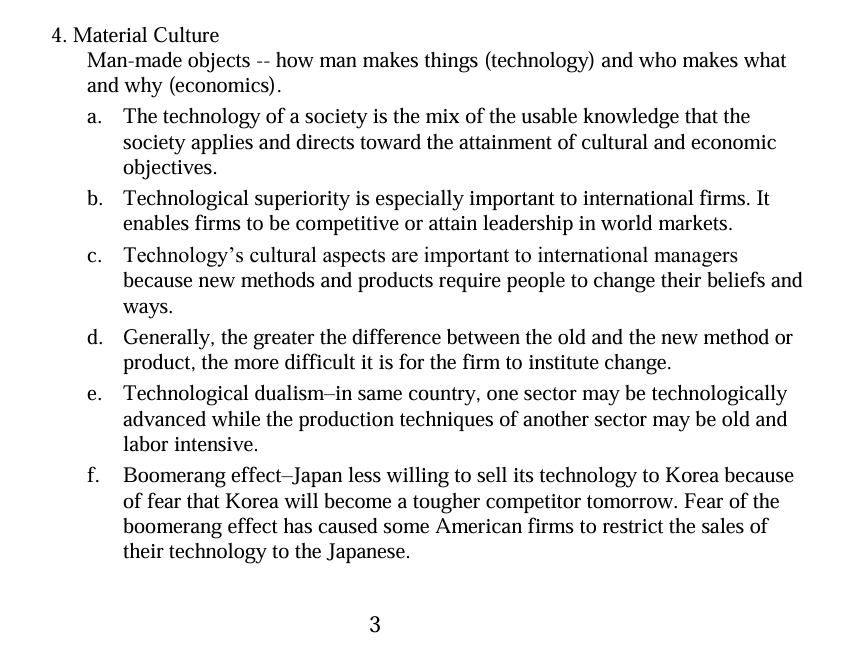
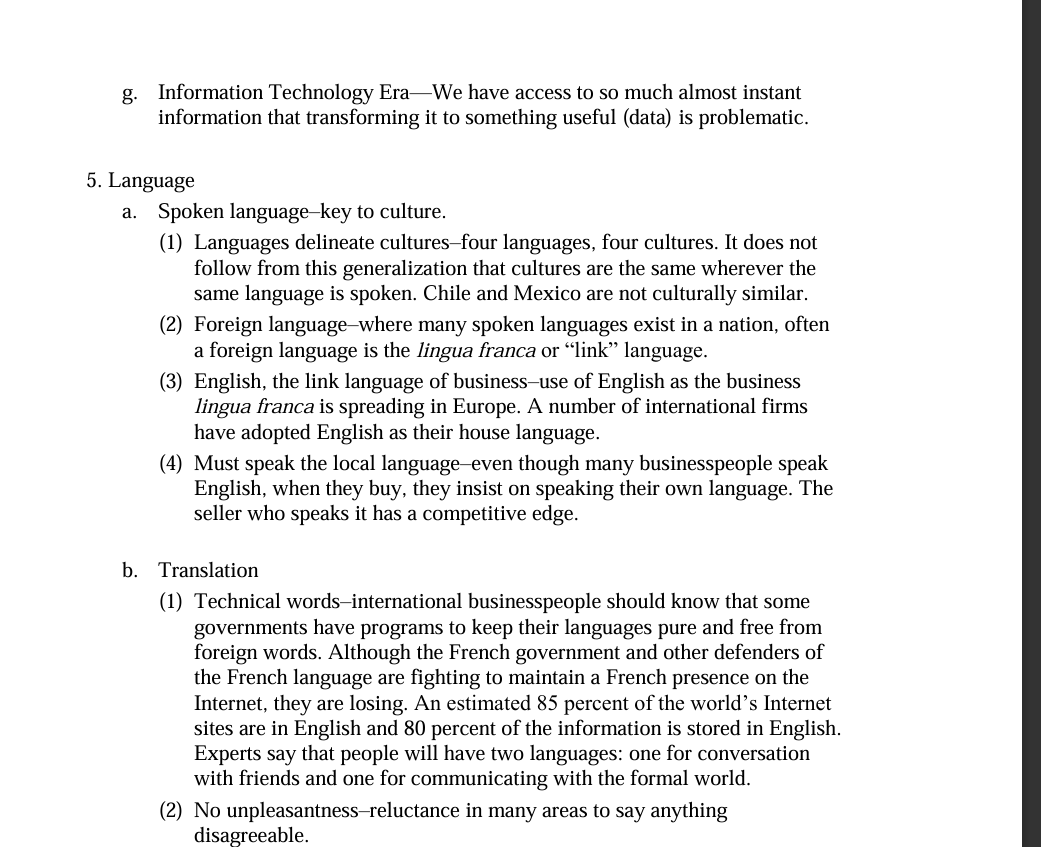
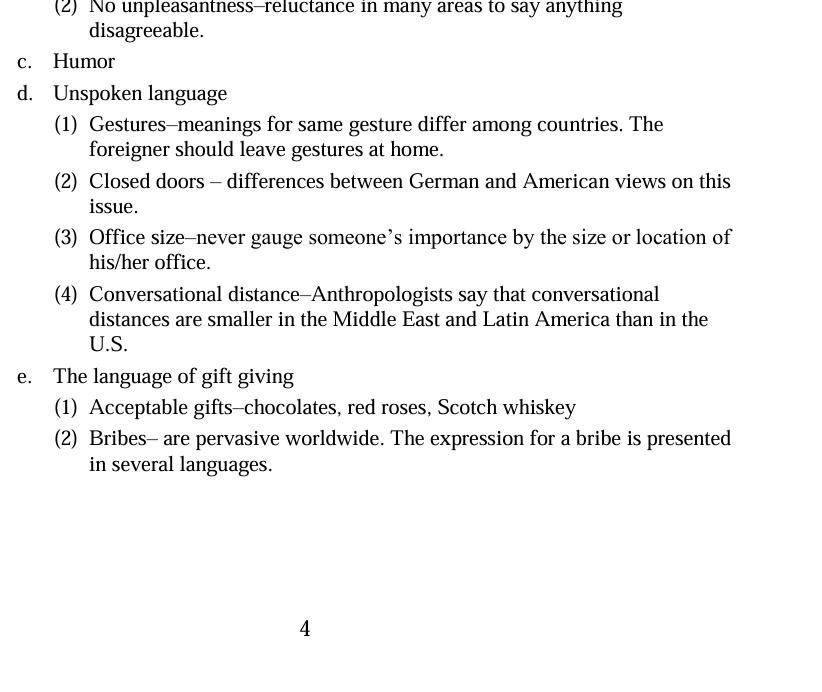
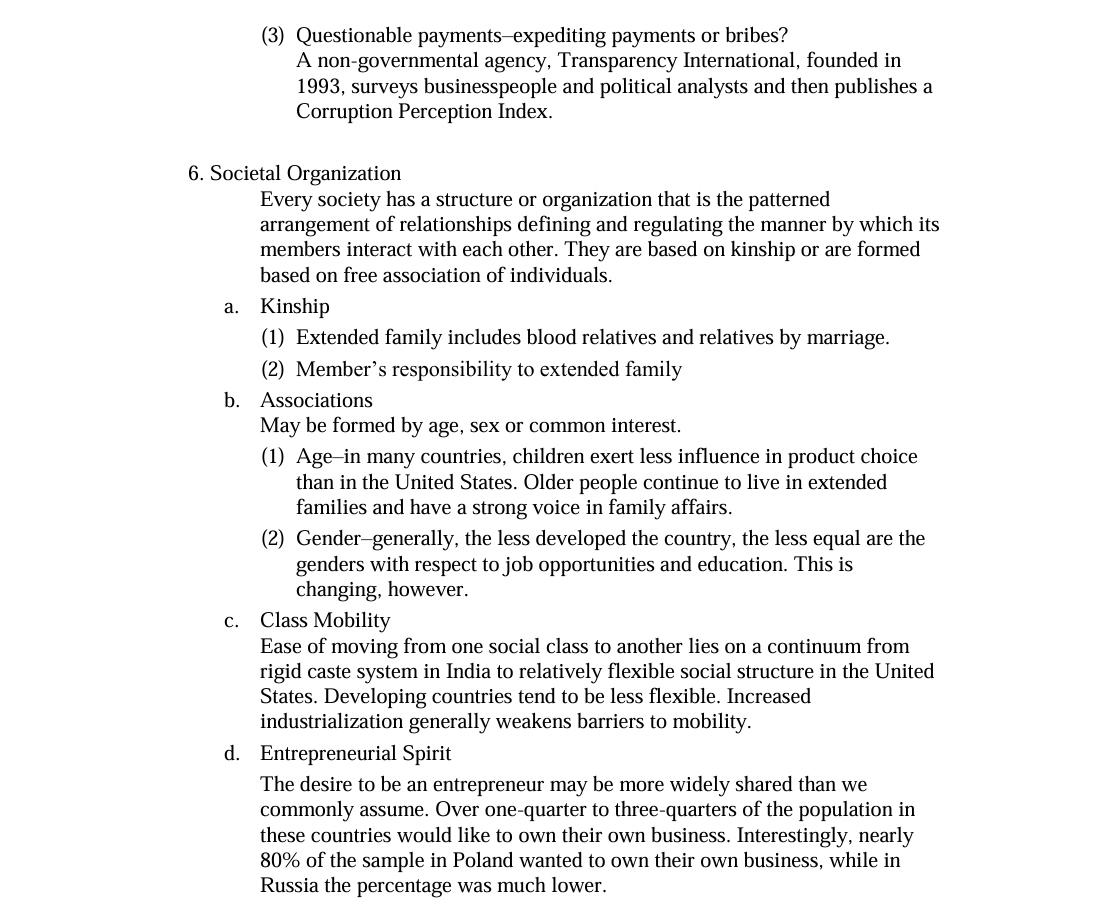
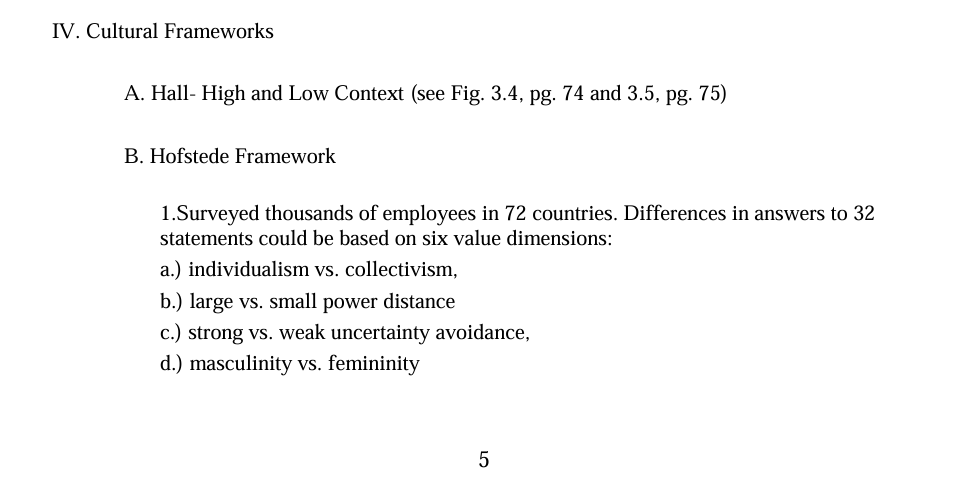
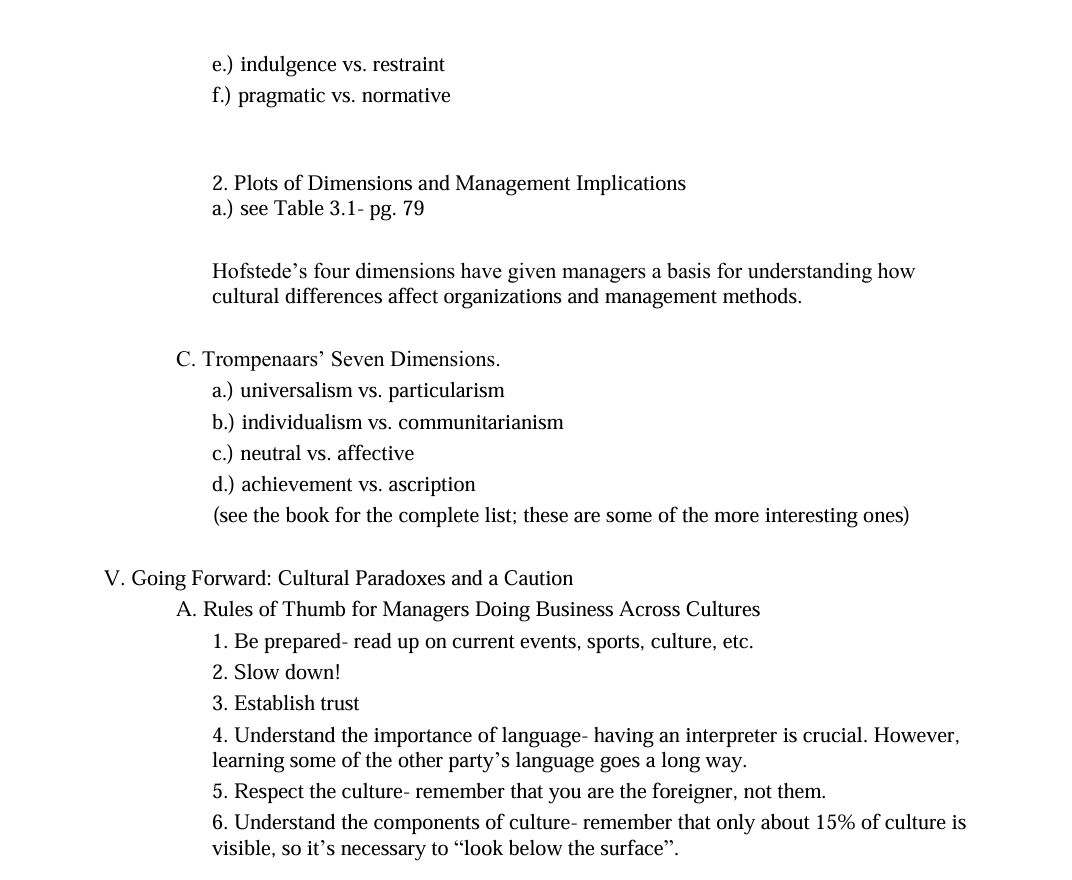
Il. Chapter 3 Lecture Outline Opening Section The introduction presents the idea that language and thought are related. Some languages have more words for a shade of color, for example, or don't keep track of exact quantities. These nuances of language have influence over the ways that the speakers think. What Is Culture and Why is it Important? A. Culture is the sum total of beliefs, rules, techniques, institutions, and artifacts that characterize human populations. B. Culture is learned and shared, its various aspects are interrelated, and it defines the boundaries of different groups. C. Anthropologists often combine the words social and cultural into one word, sociocultural. We use this term because the variables in which businesspeople are interested are both social and cultural. D. The first step in learning to live with other cultures is to realize that there are cultures different from our own. Then we must go on to learn the characteristics of these cultures so that we may adapt to them. Students must be aware of ethnocentricity and avoid it. E. Hall, a noted anthropologist, says there are only two ways to do this: (1) spend a lifetime in a country or (2) undergo an extensive training program that covers the main characteristics of a culture, including the language. F. Culture affects all business functions. There are many examples of companies making mistakes overseas with regard to culture. Many times, they were able to reduce them after acquiring knowledge of the local culture and applying it to their situations. III. How Culture Shows Itself A. The concept of culture is so broad that ethnologists break subject matter down into topics to facilitate study. 1. The components of culture listed in this text are: (1) aesthetics, (2) attitudes and beliefs, (3) religion, (4) material culture, (5) language, (6) societal organization, (7) education 2. Aesthetics pertains to a culture's sense of beauty and good taste and is expressed in the arts, drama, music, folklore, and dances. 3. Attitudes and Beliefs a. Every culture has a set of attitudes and beliefs that influence human behavior and bring order to a society. b. The more one can learn about them, the easier it is to understand why people behave as they do. c. Attitudes of special importance to the international executive are attitudes towards time, achievement and work, and change. (1) Attitude towards time (a) Americans can be too prompt. (b) Mafiana which sometimes does not mean \"tomorrow,\" but \"in the near future.\" (c) Directness and drive An American trait considered brash and rude by many foreigners. (d) Deadlines The emphasis on deadlines can often be used against Americans when negotiating in other countries. (2) Attitude toward achievement and work. \"Germans put leisure first and work second.\" Mexicans say, \"You Americans live to work; we work to live.\" Prestigious jobs-disdain for physical labor in many countries results in an overabundance of attorneys and stockbrokers and a lack of welders and toolmakers. (3) Attitude towards change (a) Introducing a new idea-relate it to a traditional idea for easier acceptance. (b) Economic motivation-economic motives are a strong influence for accepting change. 4. Religion Religion is responsible for many of the attitudes and beliefs affecting human behavior. Protestant ethic-work is a moral virtue; called Confucian work ethic in Asian countries or Shinto work ethic in Japan. b. Asian ReligionsIn India, the ideas of reality are different. There is a notion that this world is an illusion because nothing is permanent. All living things are in a constant process of birth, death, and reincarnation. The goal of salvation is to escape from this cycle and move into a state of eternal bliss nirvana. Of the seven best-known religions originating in Asia, four came from India (Hinduism, Buddhism, Jainism, and Sikhism), two from China (Confucianism and Taoism) and one from Japan (Shinto). (1) HinduismA conglomeration of religions with no single founder or central authority. (1) HinduismA conglomeration of religions with no single founder or central authority. (a) Caste systementire society divided into four castes and the dalits. An individual's position in the caste system is inherited. (b) Managers must be cautious when placing a member of a lower caste in charge of people from a higher caste. (2) BuddhismThe founder, Guatama, after six years of experimenting with yoga, suddenly understood how to break the laws of karma and the endless cycle of rebirth. Guatama emerged as the Buddha (the Enlightened One). (3) Jainismfounded by a contemporary of Buddha, called The Jain doctrine teaches that there is no creator, no god, nor an absolute principle. (4) Sikhism-not only a religion, but also an Indian ethnic group, a military brotherhood and a political movement. Most Sikhs live in the Punjab region. (5) Confucianism-less a religion and more philosophy of conduct embodying Chinese norms of social and personal morality. (6) Taoism-A mystical philosophy possibly founded by a contemporary of Confucius. Taoism means "the way." (7) Shintoism-indigenous religion of Japan, perhaps 2,500 years old. There is no founder or sacred text. One element of Shintoism was the belief that the Emperor held divine status. c. Islam (1) The Koran, a collection of Allah's (God's) revelations to Muhammad, the founder, is accepted as God's eternal word. (2) In Muslim nations, there is no separation of church and state. (3) The basic spiritual duties for all Muslims consist of the five pillars of faith. (4) Split between Sunnis and Shiites. Much of what occurs in the Mideast is the result of this split. Most Muslim countries are Sunni-governed, but many have substantial Shia populations. The great majority of Muslims-perhaps 90% are Sunni. d. Animism-spirit worship including magic and witchcraft. Thousands of religious traditions are classified here. e. Importance of religion to management-religious holidays and rituals can affect employee performance and work scheduling. When members of different religious groups work together, there may be strife, division, and instability within the work force.4. Material Culture Man-made objects -- how man makes things (technology) and who makes what and why (economics). a. The technology of a society is the mix of the usable knowledge that the society applies and directs toward the attainment of cultural and economic objectives. Technological superiority is especially important to international firms. It enables firms to be competitive or attain leadership in world markets. Technology's cultural aspects are important to international managers because new methods and products require people to change their beliefs and ways. Generally, the greater the difference between the old and the new method or product, the more difficult it is for the firm to institute change. Technological dualismin same country, one sector may be technologically advanced while the production techniques of another sector may be old and labor intensive. Boomerang effectJapan less willing to sell its technology to Korea because of fear that Korea will become a tougher competitor tomorrow. Fear of the boomerang effect has caused some American firms to restrict the sales of their technology to the Japanese. g. Information Technology EraWe have access to so much almost instant information that transforming it to something useful (data) is problematic. 5. Language a. Spoken languagekey to culture. (1) Languages delineate culturesfour languages, four cultures. It does not follow from this generalization that cultures are the same wherever the same language is spoken. Chile and Mexico are not culturally similar. (2) Foreign languagewhere many spoken languages exist in a nation, often a foreign language is the Jingua franca or \"link\" language. (3) English, the link language of businessuse of English as the business lingua franca is spreading in Europe. A number of international firms have adopted English as their house language. (4) Must speak the local languageeven though many businesspeople speak English, when they buy, they insist on speaking their own language. The seller who speaks it has a competitive edge. b. Translation (1) Technical wordsinternational businesspeople should know that some governments have programs to keep their languages pure and free from foreign words. Although the French government and other defenders of the French language are fighting to maintain a French presence on the Internet, they are losing. An estimated 85 percent of the world's Internet sites are in English and 80 percent of the information is stored in English. Experts say that people will have two languages: one for conversation with friends and one for communicating with the formal world. (2) No unpleasantnessreluctance in many areas to say anything disagreeable. ce d. e. (Z) No unpleasantnessreluctance in many areas to say anything disagreeable. Humor Unspoken language (1) Gesturesmeanings for same gesture differ among countries. The foreigner should leave gestures at home. (2) Closed doors differences between German and American views on this issue. (3) Office sizenever gauge someone's importance by the size or location of his/her office. (4) Conversational distanceAnthropologists say that conversational distances are smaller in the Middle East and Latin America than in the U.S. The language of gift giving (1) Acceptable giftschocolates, red roses, Scotch whiskey (2) Bribes are pervasive worldwide. The expression for a bribe is presented in several languages. (3) Questionable paymentsexpediting payments or bribes? A non-governmental agency, Transparency International, founded in 1993, surveys businesspeople and political analysts and then publishes a Corruption Perception Index. 6. Societal Organization Every society has a structure or organization that is the patterned arrangement of relationships defining and regulating the manner by which its members interact with each other. They are based on kinship or are formed based on free association of individuals. a. Kinship (1) Extended family includes blood relatives and relatives by marriage. (2) Member's responsibility to extended family b. Associations May be formed by age, sex or common interest. (1) Agein many countries, children exert less influence in product choice than in the United States. Older people continue to live in extended families and have a strong voice in family affairs. (2) Gendergenerally, the less developed the country, the less equal are the genders with respect to job opportunities and education. This is changing, however. c. Class Mobility Ease of moving from one social class to another lies on a continuum from rigid caste system in India to relatively flexible social structure in the United States. Developing countries tend to be less flexible. Increased industrialization generally weakens barriers to mobility. d. Entrepreneurial Spirit The desire to be an entrepreneur may be more widely shared than we commonly assume. Over one-quarter to three-quarters of the population in these countries would like to own their own business. Interestingly, nearly 80% of the sample in Poland wanted to own their own business, while in Russia the percentage was much lower. IV. Cultural Frameworks A. Hall- High and Low Context (see Fig. 3.4, pg. 74 and 3.5, pg. 75) B. Hofstede Framework 1.Surveyed thousands of employees in 72 countries. Differences in answers to 32 statements could be based on six value dimensions: a.) individualism vs. collectivism, b.) large vs. small power distance c.) strong vs. weak uncertainty avoidance, d.) masculinity vs. femininity e.) indulgence vs. restraint f.) pragmatic vs. normative 2. Plots of Dimensions and Management Implications a.) see Table 3.1- pg. 79 Hofstede's four dimensions have given managers a basis for understanding how cultural differences affect organizations and management methods. C. Trompenaars' Seven Dimensions. a.) universalism vs. particularism b.) individualism vs. communitarianism c.) neutral vs. affective d.) achievement vs. ascription (see the book for the complete list; these are some of the more interesting ones) V. Going Forward: Cultural Paradoxes and a Caution A. Rules of Thumb for Managers Doing Business Across Cultures 1. Be prepared- read up on current events, sports, culture, etc. 2. Slow down! 3. Establish trust 4, Understand the importance of language- having an interpreter is crucial. However, learning some of the other party's language goes a long way. 5. Respect the culture- remember that you are the foreigner, not them. 6. Understand the components of culture- remember that only about 15% of culture is visible, so it's necessary to \"look below the surface\
Step by Step Solution
There are 3 Steps involved in it
1 Expert Approved Answer
Step: 1 Unlock
Question Has Been Solved by an Expert!
Get step-by-step solutions from verified subject matter experts
Step: 2 Unlock
Step: 3 Unlock
Students Have Also Explored These Related Accounting Questions!









 Study Help