







Question: Im somewhat confused on what to do here. It's assembly language x86 Kip Irvine 2. fibonacci.asm computes the following. a. Compute fib(n) for n -
Im somewhat confused on what to do here. It's assembly language x86 Kip Irvine
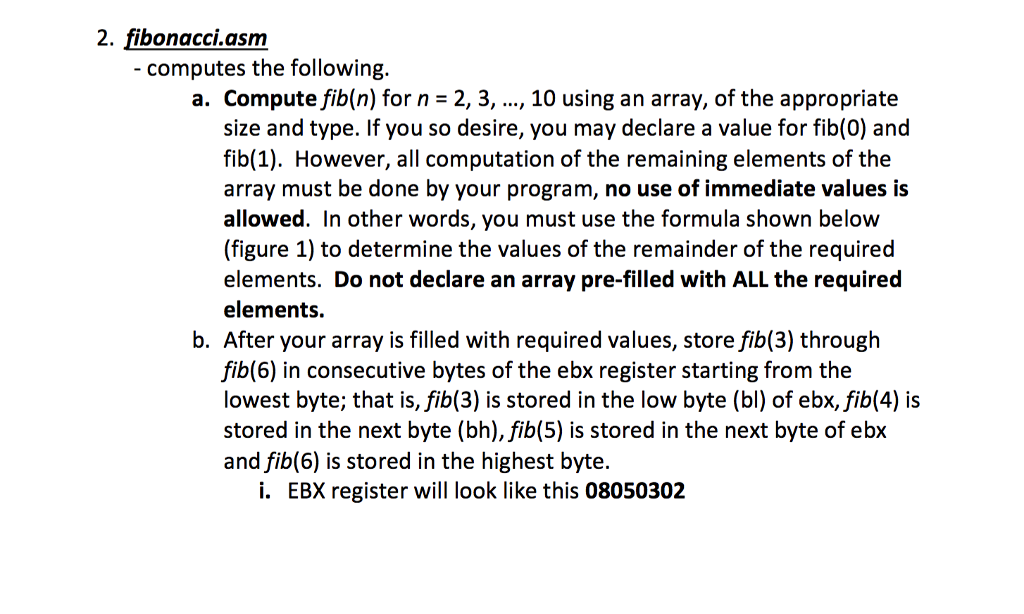
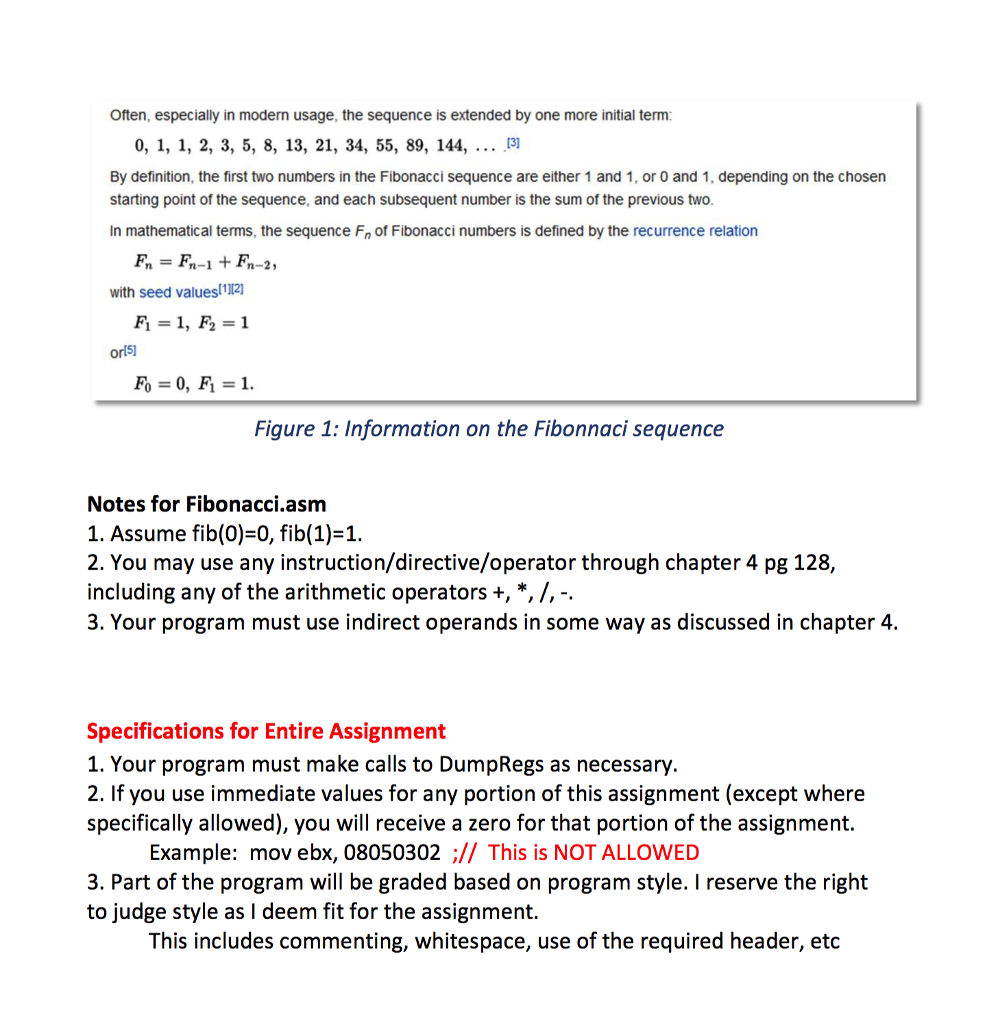
2. fibonacci.asm computes the following. a. Compute fib(n) for n - 2, 3,..., 10 using an array, of the appropriate size and type. If you so desire, you may declare a value for fib(0) and fib(1). However, all computation of the remaining elements of the array must be done by your program, no use of immediate values is allowed. In other words, you must use the formula shown below (figure 1) to determine the values of the remainder of the required elements. Do not declare an array pre-filled with ALL the required elements. b. After your array is filled with required values, store fib(3) through fib(6) in consecutive bytes of the ebx register starting from the lowest byte; that is, fib(3) is stored in the low byte (bl) of ebx, fib(4) is stored in the next byte (bh), fib(5) is stored in the next byte of ebx and fib(6) is stored in the highest byte. i. EBX register will look like this 08050302
Step by Step Solution
There are 3 Steps involved in it

Get step-by-step solutions from verified subject matter experts
 Study Help