Question: image binarization C++ may you add comments In computer vision, image binarization, a.k.a. thresholding is the process of taking a grayscale image and converting it
image binarization C++
may you add comments
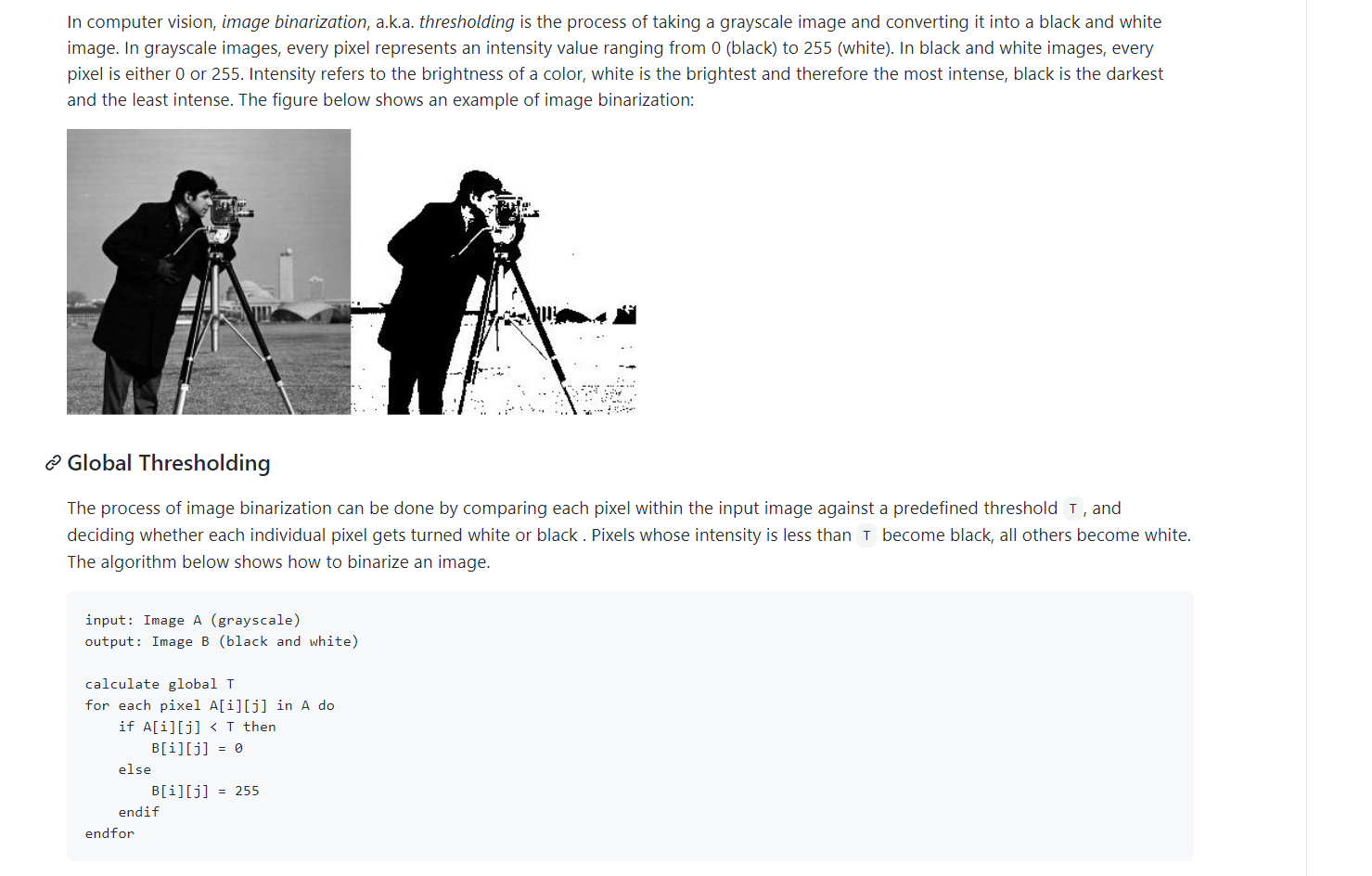
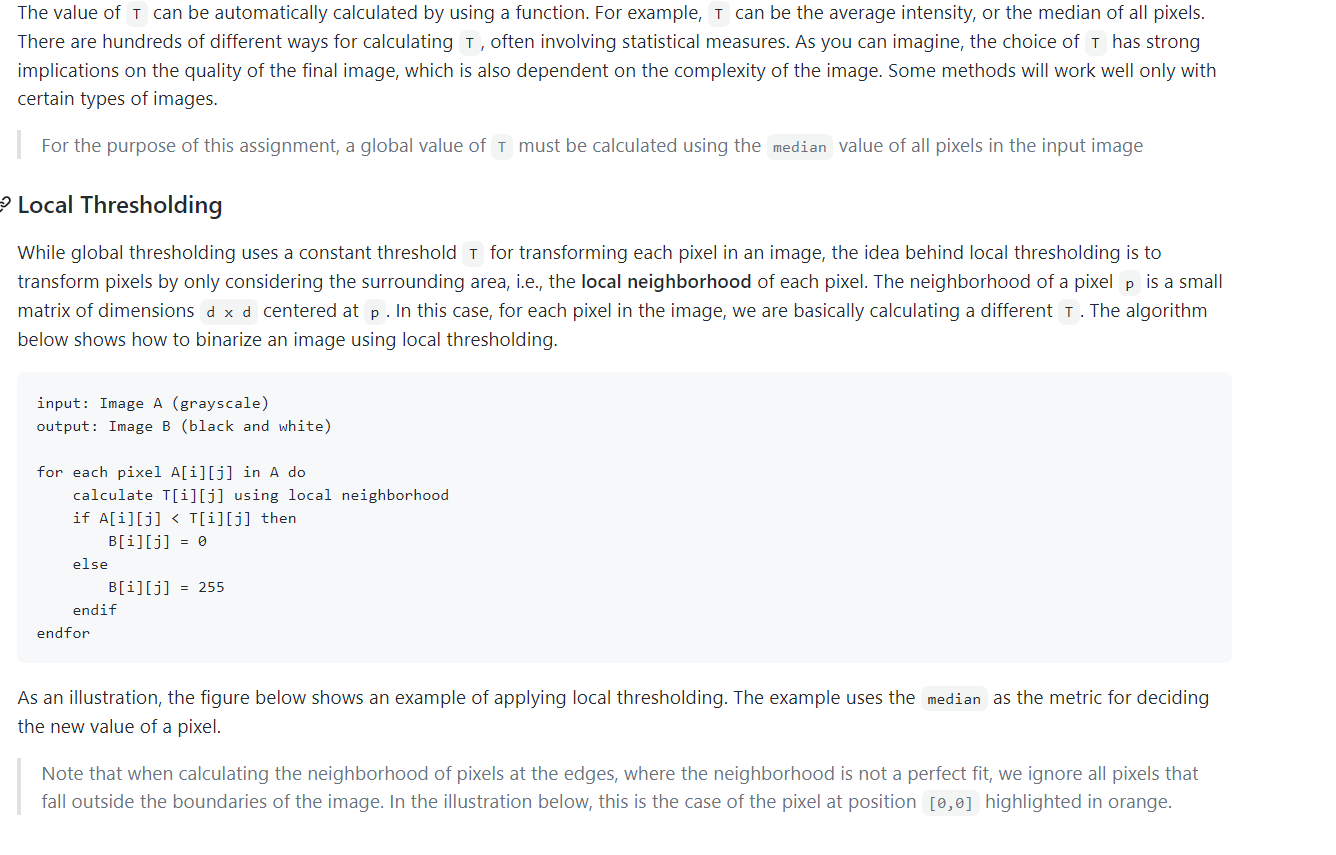
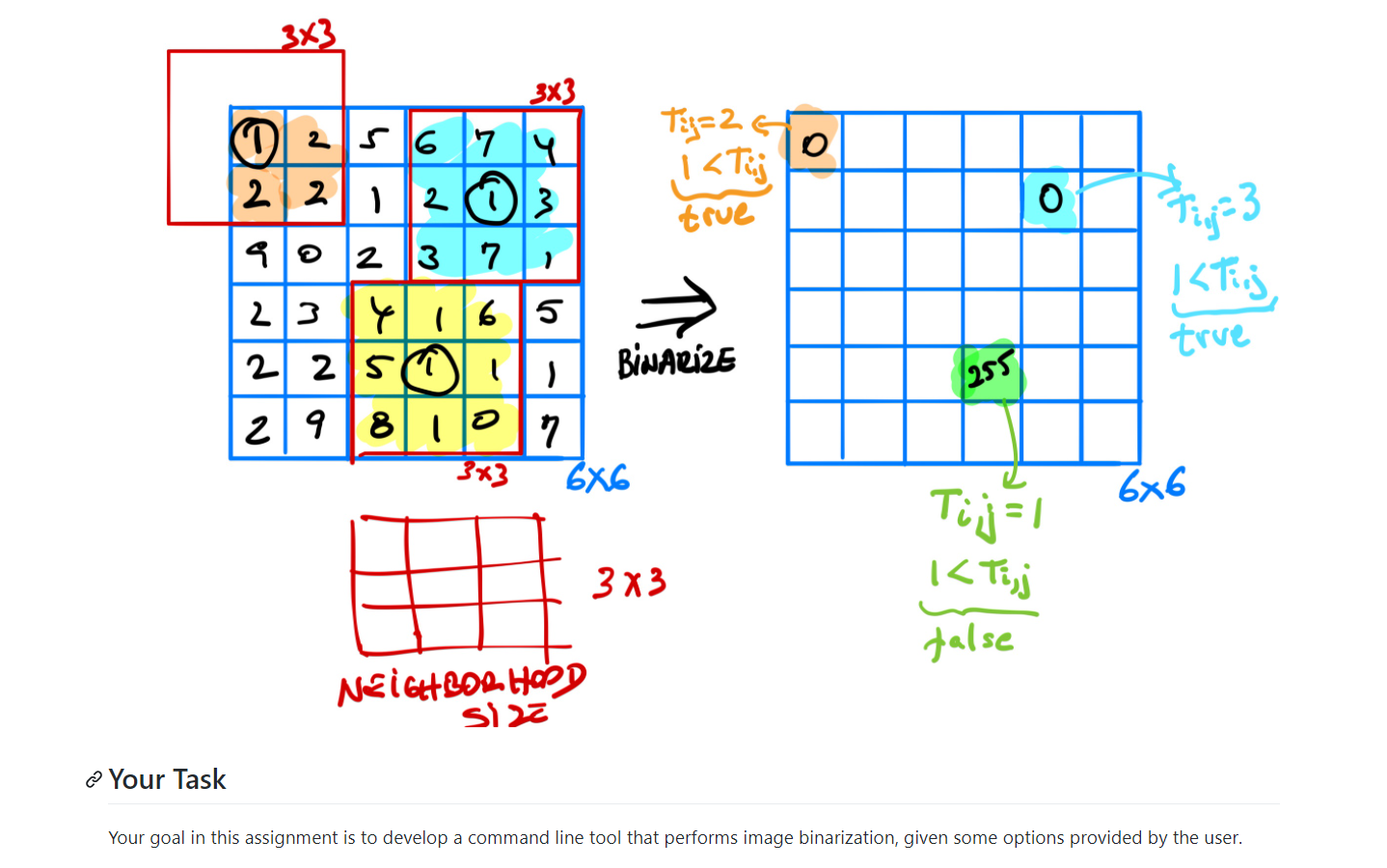
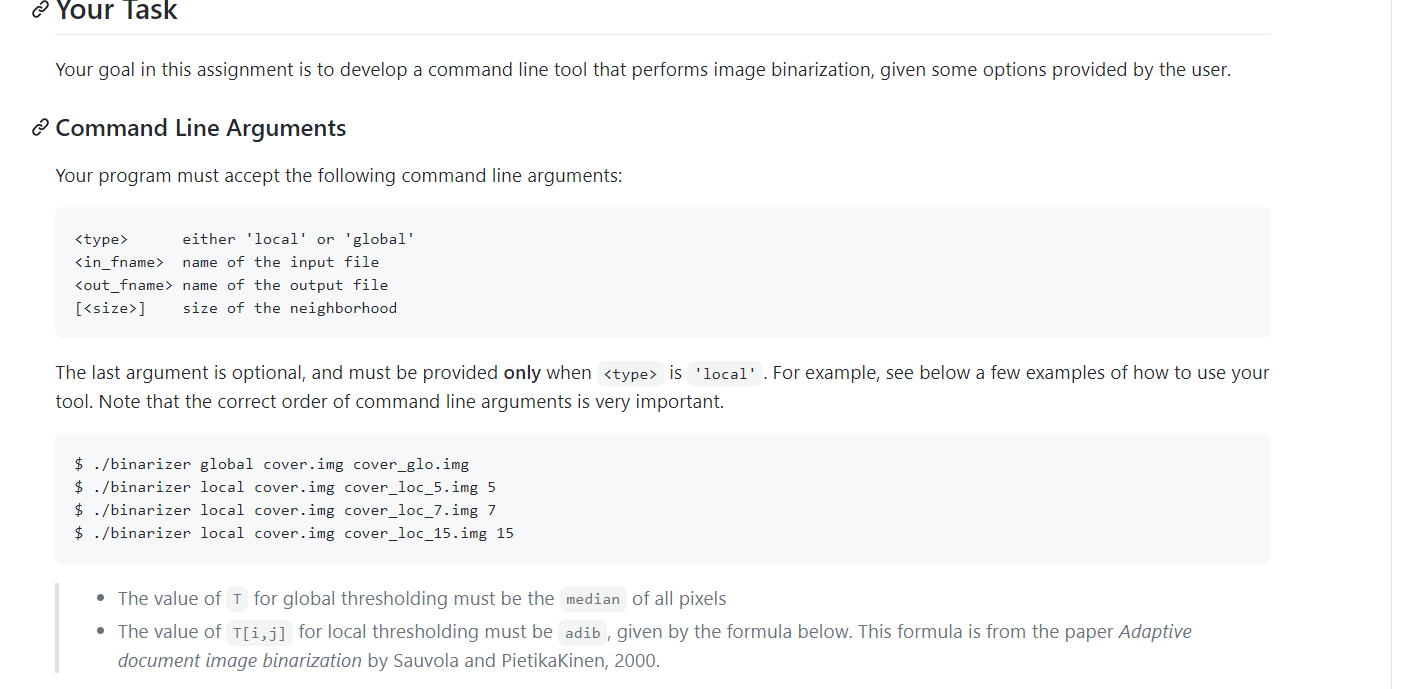
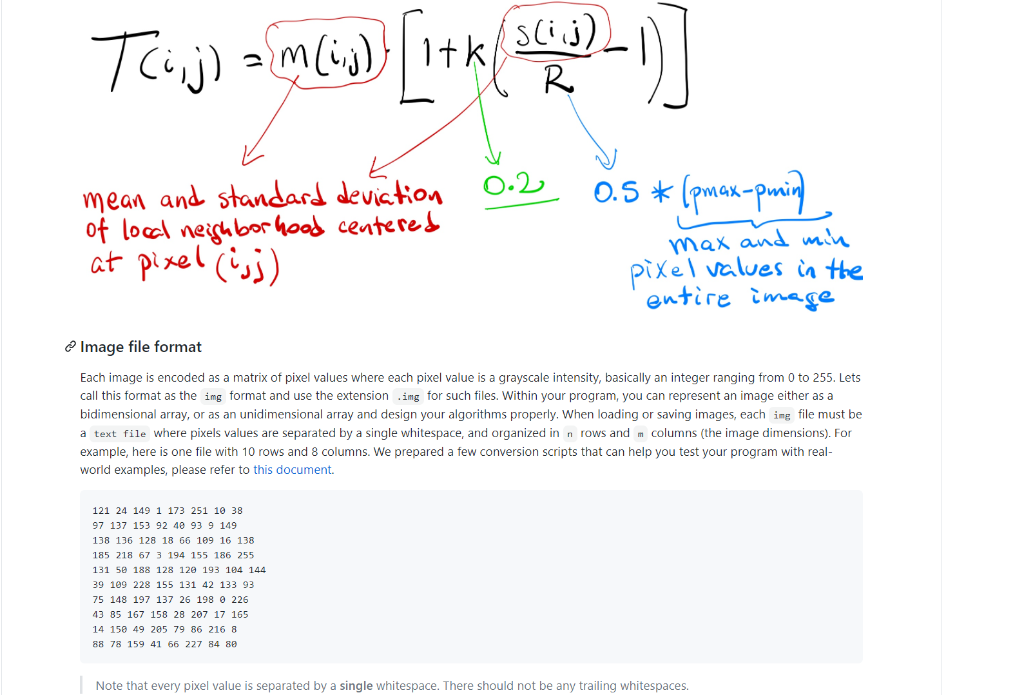
In computer vision, image binarization, a.k.a. thresholding is the process of taking a grayscale image and converting it into a black and white image. In grayscale images, every pixel represents an intensity value ranging from 0 (black) to 255 (white). In black and white images, every pixel is either 0 or 255. Intensity refers to the brightness of a color, white is the brightest and therefore the most intense, black is the darkest and the least intense. The figure below shows an example of image binarization: @ Global Thresholding The process of image binarization can be done by comparing each pixel within the input image against a predefined threshold 1, and deciding whether each individual pixel gets turned white or black. Pixels whose intensity is less than I become black, all others become white. The algorithm below shows how to binarize an image. input: Image A (grayscale) output: Image B (black and white) calculate global T for each pixel A[i][j] in A do if A[i][j] either 'local' or 'global' name of the input file name of the output file [] size of the neighborhood The last argument is optional, and must be provided only when is 'local' . For example, see below a few examples of how to use your tool. Note that the correct order of command line arguments is very important. $ ./binarizer global cover.img cover_glo.img $ ./binarizer local cover.img cover_loc_5.img 5 $ ./binarizer local cover.img cover_loc_7.img 7 $ ./binarizer local cover.img cover_loc_15.img 15 The value of 1 for global thresholding must be the median of all pixels The value of T[i,j] for local thresholding must be adib, given by the formula below. This formula is from the paper Adaptive document image binarization by Sauvola and Pietikakinen, 2000. Tij) = m (s) 306) [ 14 1+k/SCIB) tk slij R 0.2 mean and standard deviation of local neighborhood centered at pixel (j) 0.5*(pmax-pmin) Max and min pixel values in the entire image Image file format Each image is encoded as a matrix of pixel values where each pixel value is a grayscale intensity, basically an integer ranging from 0 to 255. Lets call this format as the img format and use the extension img for such files. Within your program, you can represent an image either as a bidimensional array, or as an unidimensional array and design your algorithms properly. When loading or saving images, each ing file must be a text file where pixels values are separated by a single whitespace, and organized in n rows and m columns (the image dimensions). For example, here is one file with 10 rows and 8 columns. We prepared a few conversion scripts that can help you test your program with real- world examples, please refer to this document. 121 24 149 1 173 251 10 38 97 137 153 92 40 93 9 149 138 136 128 18 66 189 16 138 185 218 67 3 194 155 186 255 131 50 188 128 129 193 194 144 39 109 228 155 131 42 133 93 75 148 197 137 26 198 226 43 85 167 158 28 207 17 165 14 158 49 205 79 86 216 8 88 78 159 41 66 227 84 80 Note that every pixel value is separated by a single whitespace. There should not be any trailing whitespaces









 Study Help