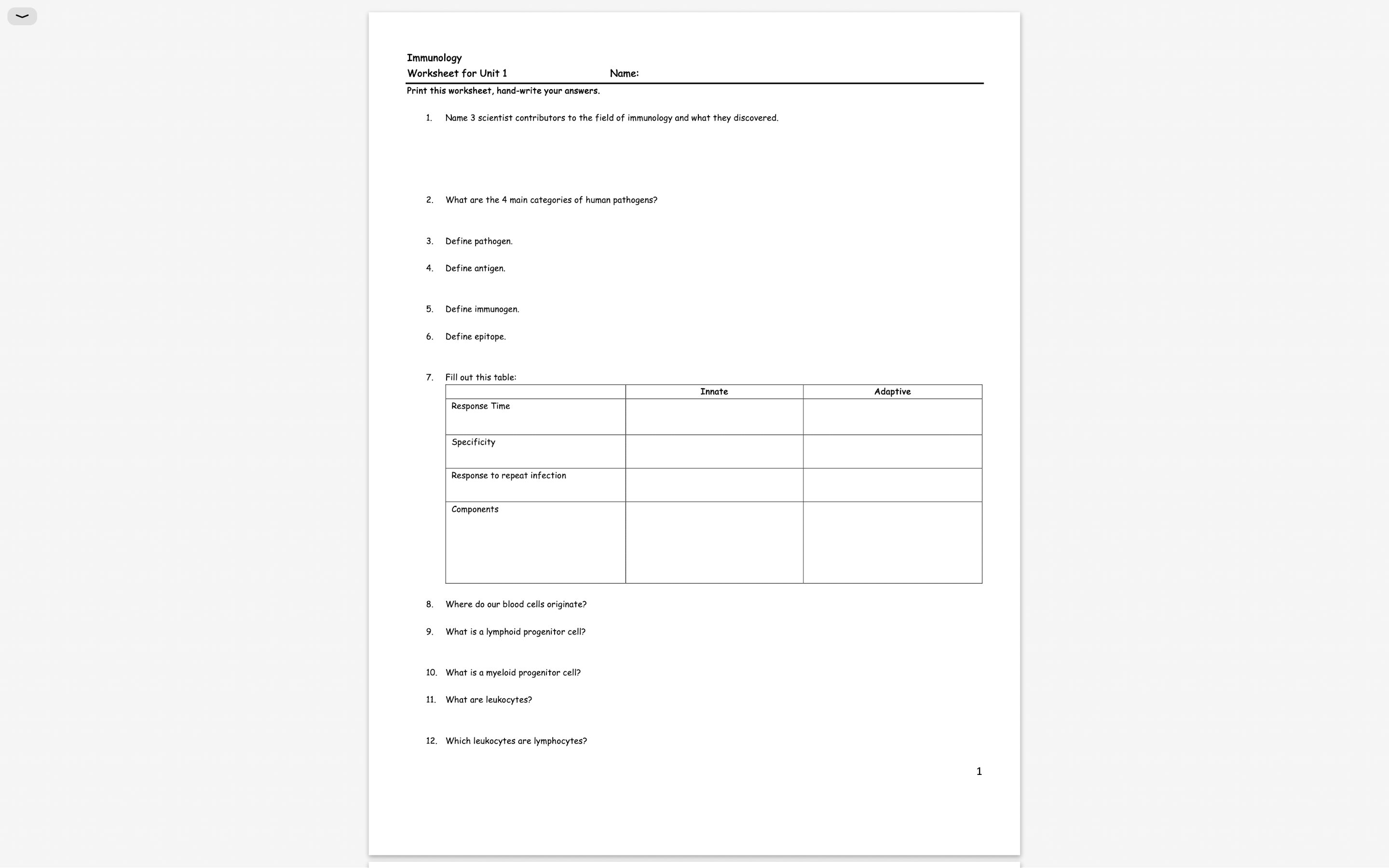
Question: Immunology Worksheet for Unit 1 Print this worksheet, hand-write your answers. 1, 10. 11, 12. Name 3 scientist contributors to the field of immunology and
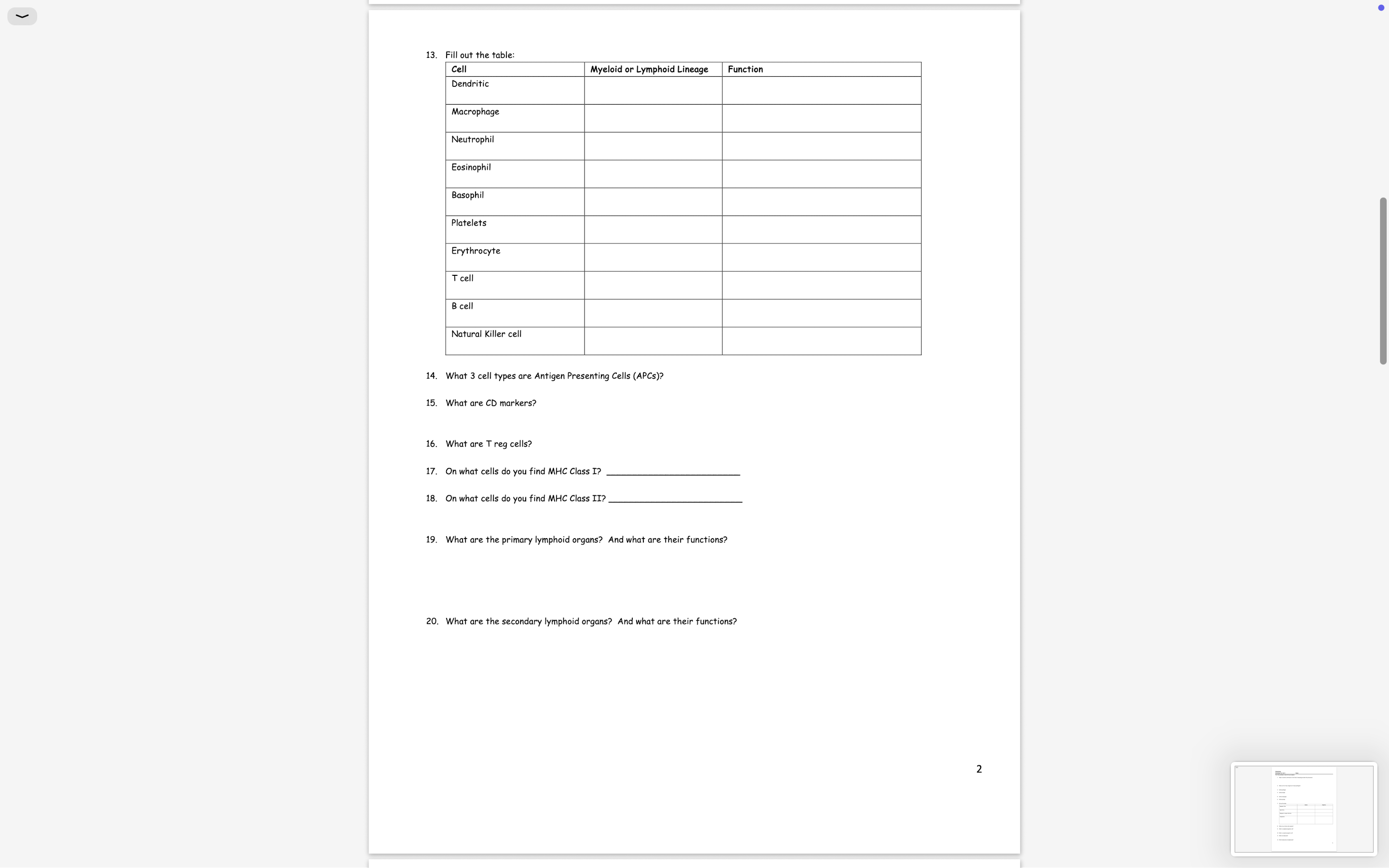
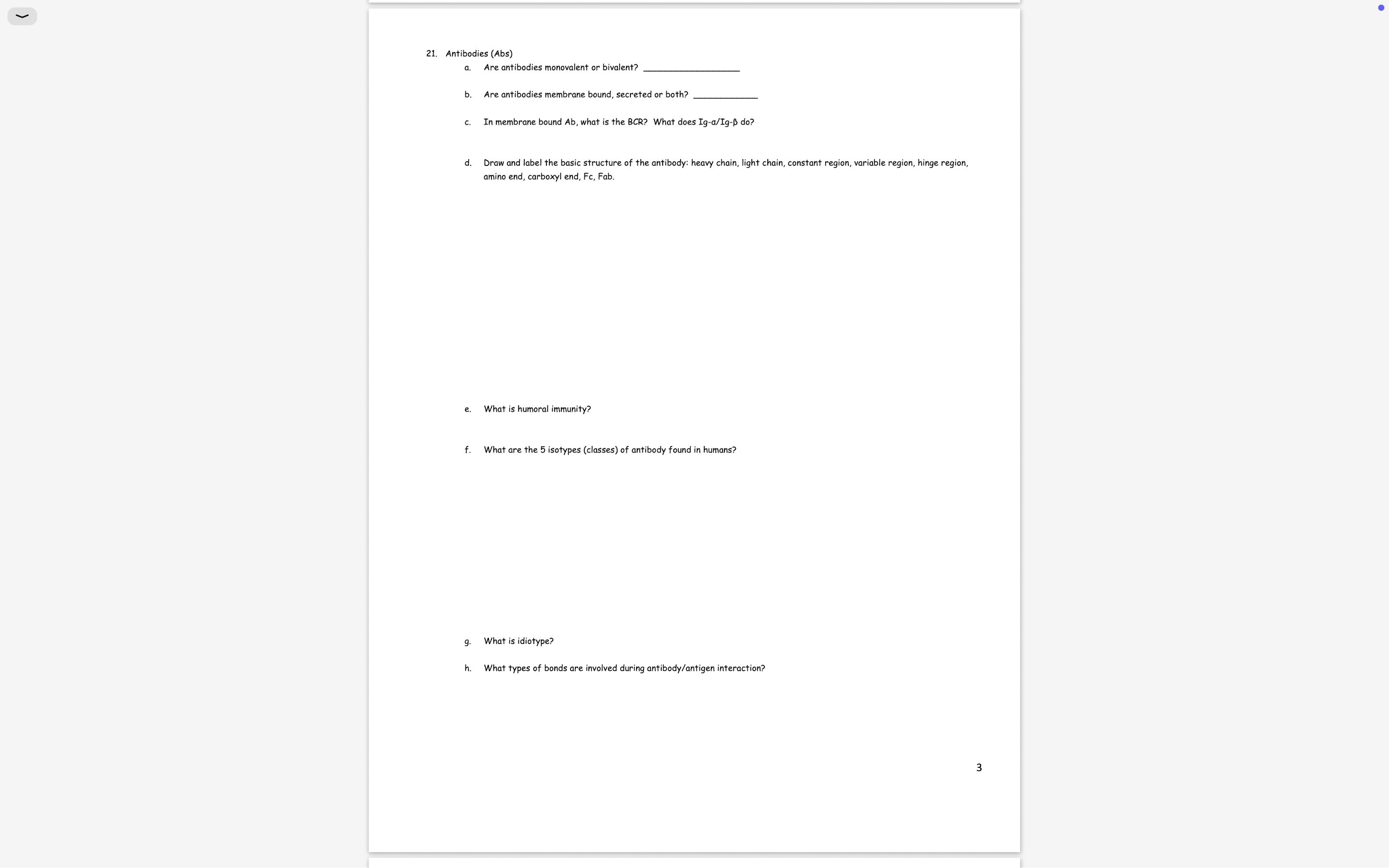
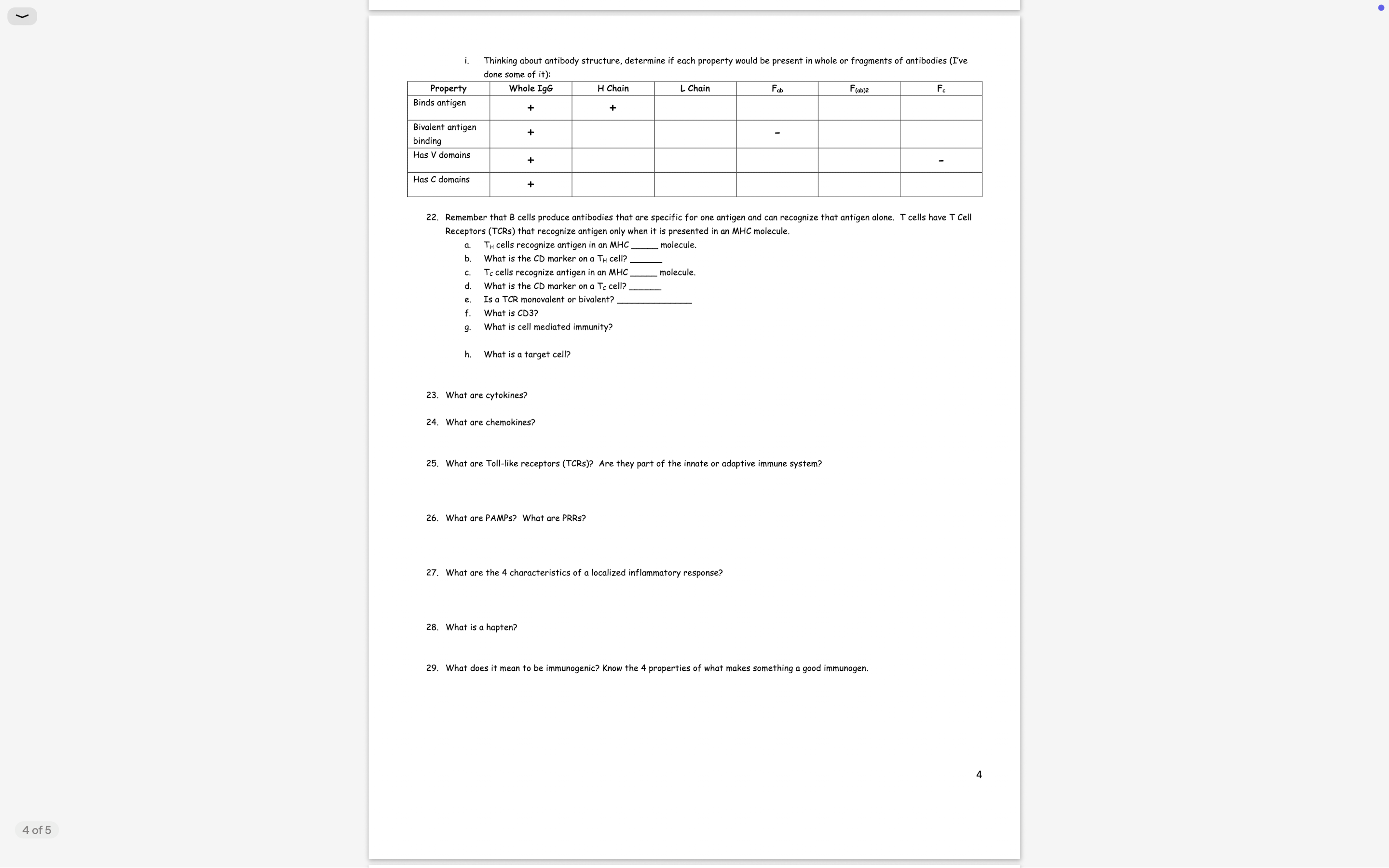
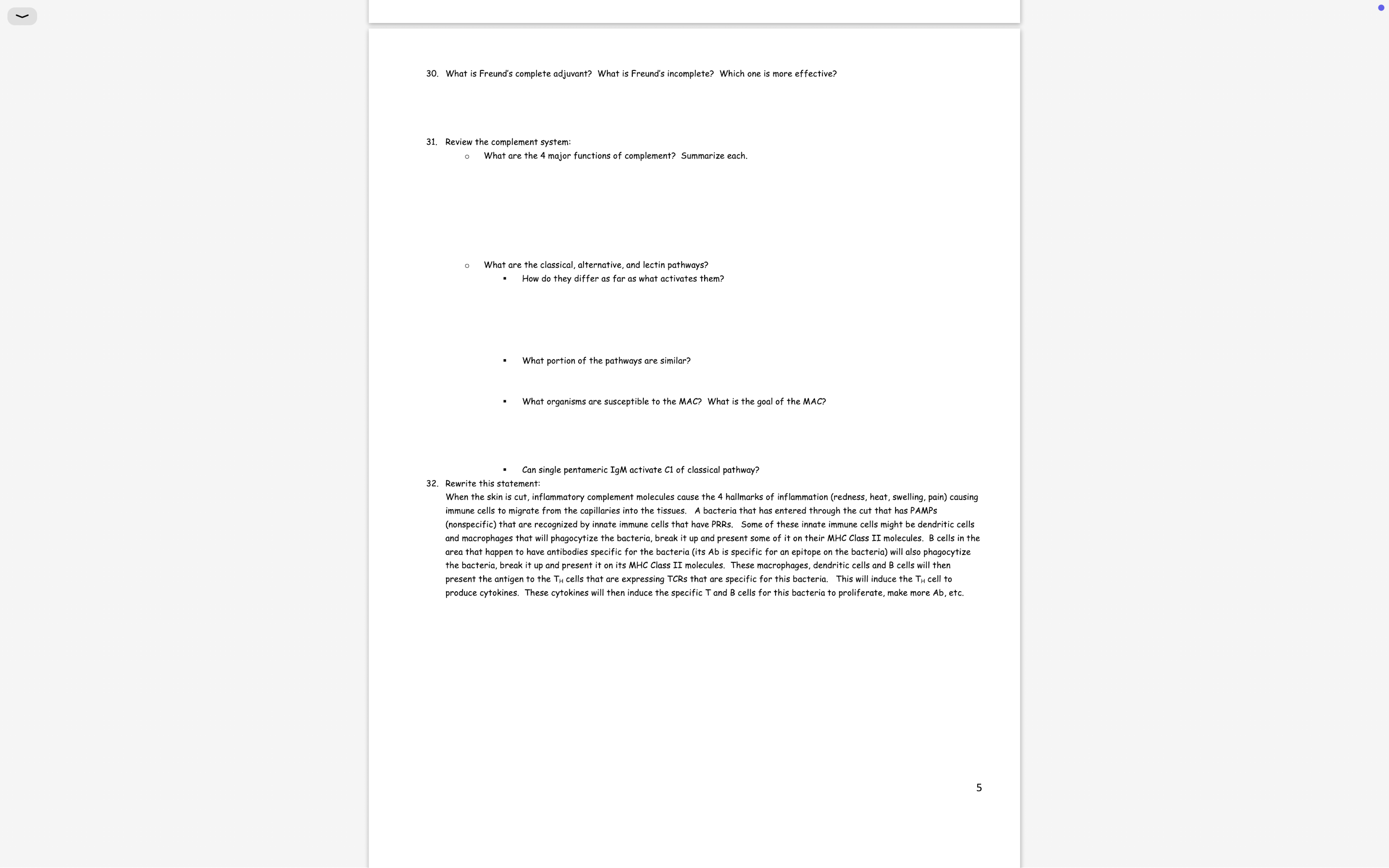
Immunology Worksheet for Unit 1 Print this worksheet, hand-write your answers. 1, 10. 11, 12. Name 3 scientist contributors to the field of immunology and what they discovered. Name: What are the 4 main categories of human pathogens? Define pathogen. Define antigen. Define immunogen. Define epitope. Fill out this table: Innate 'Adaptive Response Time Specificity Response to repeat infection Components Where do our blood cells originate? What is a lymphoid progenitor cell? What is a myeloid progenitor cell? What are leukocytes? Which leukocytes are lymphocytes? 13. Fill out the table Cell Myeloid or Lymphoid Lineage Function Dendritic Macrophage Neutrophil Eosinophil Basophil Platelets Erythrocyte T cell B cell Natural Killer cell 14. What 3 cell types are Antigen Presenting Cells (APCs)? 15. What are CD markers? 16. What are Treg cells? 17. On what cells do you find MHC Class I? 18. On what cells do you find MHC Class II? 19. What are the primary lymphoid organs? And what are their functions? 20. What are the secondary lymphoid organs? And what are their functions? N21. Antibodies (Abs) a. Are antibodies monovalent or bivalent? b. Are antibodies membrane bound, secreted or both? In membrane bound Ab, what is the BCR? What does Ig-a/Ig-B do? d. Draw and label the basic structure of the antibody: heavy chain, light chain, constant region, variable region, hinge region, amino end, carboxyl end, Fc, Fab. What is humoral immunity? f. What are the 5 isotypes (classes) of antibody found in humans? 9. What is idiotype? h. What types of bonds are involved during antibody/antigen interaction? wThinking about antibody structure, determine if each property would be present in whole or fragments of antibodies (I've done some of it): Property Whole IgG H Chain L Chain Fab F(ab)2 Fc Binds antigen Bivalent antigen binding Has V domains Has C domains 22. Remember that B cells produce antibodies that are specific for one antigen and can recognize that antigen alone. T cells have T Cell Receptors (TCRs) that recognize antigen only when it is presented in an MHC molecule. a. TH cells recognize antigen in an MHC. _ molecule. b. What is the CD marker on a TH cell?_ c. Tc cells recognize antigen in an MHC molecule . d. What is the CD marker on a Tc cell? e . Is a TCR monovalent or bivalent? f. What is CD3? 9. What is cell mediated immunity? h. What is a target cell? 23. What are cytokines? 24. What are chemokines? 25. What are Toll-like receptors (TCRs)? Are they part of the innate or adaptive immune system? 26. What are PAMPs? What are PRRs? 27. What are the 4 characteristics of a localized inflammatory response? 28. What is a hapten? 29. What does it mean to be immunogenic? Know the 4 properties of what makes something a good immunogen. 4 of 530. What is Freund's complete adjuvant? Wha Freund's incomplete? Which one is more effective? 31. Review the complement system: o What are the 4 major functions of complement? Summarize each. What are the classi I, alternative, and lectin pathways? * How do they differ as far as what activates them? + What portion of the pathways are similar? + What organisms are susceptible to the MAC? What is the goal of the MAC? * Can single pentameric IgM activate C1 of classical pathway? 32, Rewrite this statement: When the skin is cut, inflammatory complement molecules cause the 4 hallmarks of inflammation (redness, heat, swelling, pain) causing immune cells to migrate from the capillaries into the tissues. A bacteria that has entered through the cut that has PAMPs (nonspecific) that are recognized by innate immune cells that have PRRs. Some of these innate immune cells might be dendritic cells and macrophages that will phagocytize the bacteria, break it up and present some of it on their MHC Class II molecules. B cells in the area that happen to have antibodies specific for the bacteria (its Ab is specific for an epitope on the bacteria) will also phagocytize the bacteria, break it up and present it on its MHC Class II molecules. These macrophages, dendritic cells and B cells will then present the antigen to the Ty, cells that are expressing TCRs that are specific for this bacteria, This will induce the Ty cell to produce cytokines. These cytokines will then induce the specific T and B cells for this bacteria to proliferate, make more Ab, etc
Step by Step Solution
There are 3 Steps involved in it
1 Expert Approved Answer
Step: 1 Unlock
Question Has Been Solved by an Expert!
Get step-by-step solutions from verified subject matter experts
Step: 2 Unlock
Step: 3 Unlock
Students Have Also Explored These Related Accounting Questions!









 Study Help