







Question: Implement a function def factors(num). This function is given a positive integer num, and returns a generator, that when iterated over, it will have all
Implement a function def factors(num). This function is given a positive integer num, and returns a generator, that when iterated over, it will have all of nums divisors in an ascending order. For Example, if we execute the following code: for curr_factor in factors(100): print(curr_factor) The expected output is: 1 2 4 5 10 20 25 50 100 Implementation requirement: Pay attention to the running time of your implementation. The for loop like the above, should run in a total cost of 14.
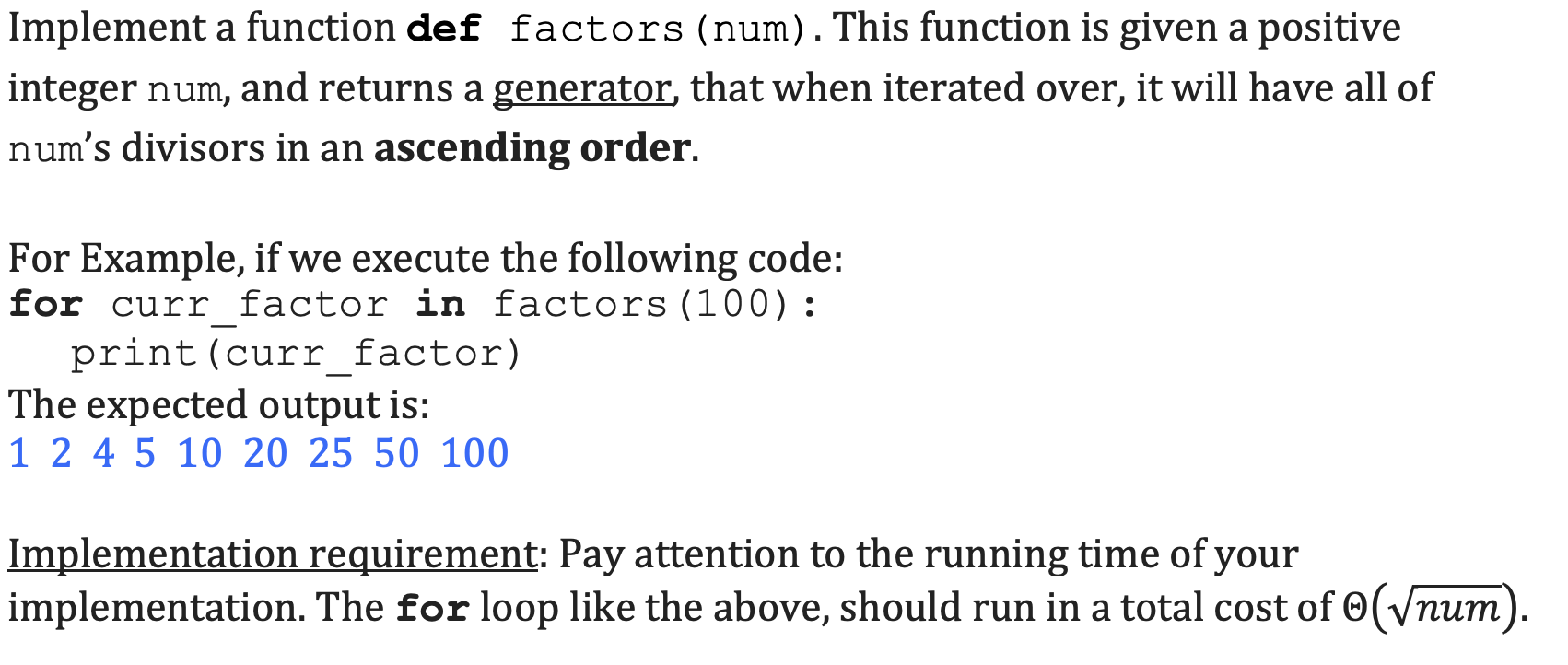
Implement a function def factors (num). This function is given a positive integer num, and returns a generator, that when iterated over, it will have all of num's divisors in an ascending order. For Example, if we execute the following code: for curr factor in factors (100): print(curr_factor) The expected output is: 1 2 4 5 10 20 25 50 100 Implementation requirement: Pay attention to the running time of your implementation. The for loop like the above, should run in a total cost of (Vnum)
Step by Step Solution
There are 3 Steps involved in it

Get step-by-step solutions from verified subject matter experts
 Study Help