







Question: import sys from random import seed, randint from math import gcd try arg for seed, length, max_value -input Enter three strictly positive integers: ). split)
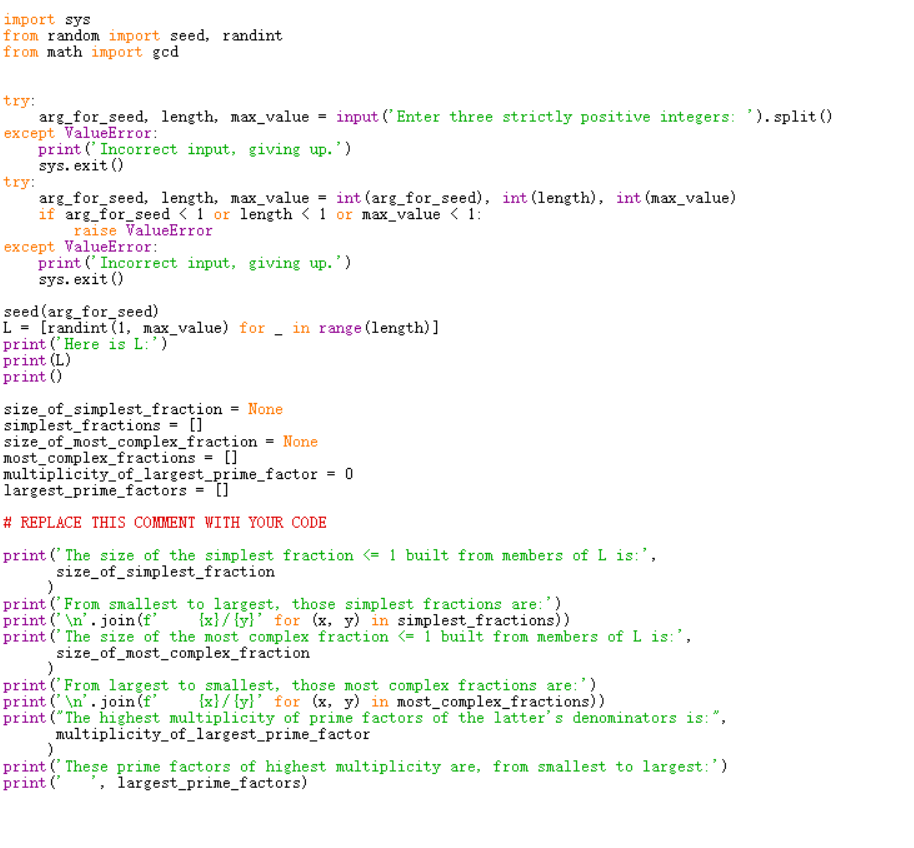
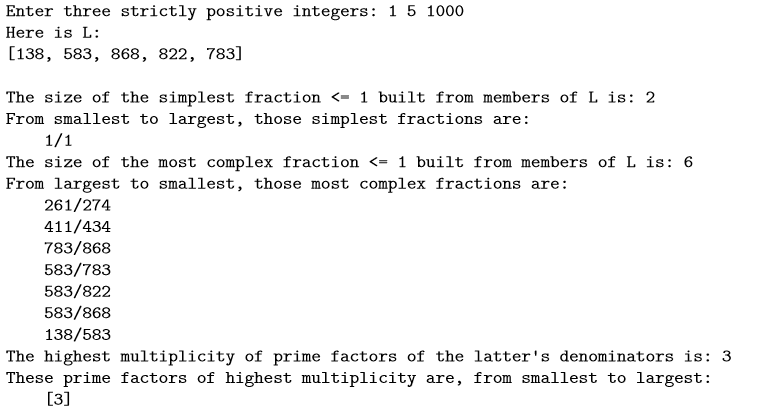
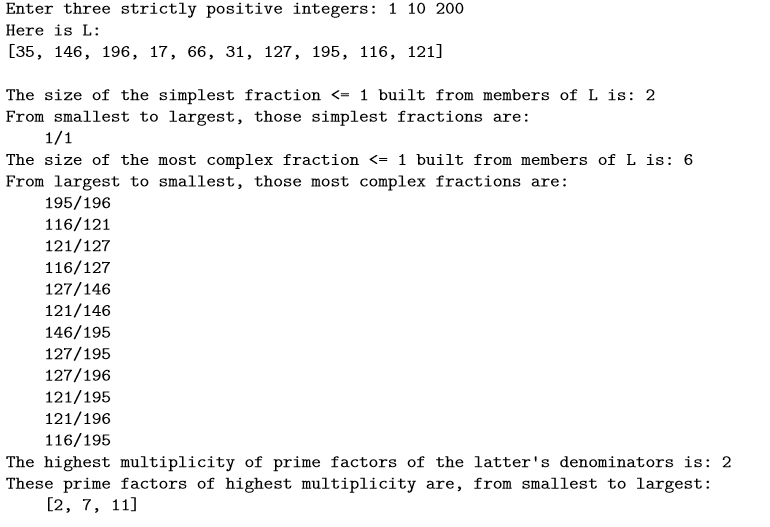
import sys from random import seed, randint from math import gcd try arg for seed, length, max_value -input Enter three strictly positive integers: ). split) except ValueError print Incorrect input, giving up.') sys. exit O int (arg-for-seed), or nax-value 1 int(length), int(max-value) arg-for-seed, length, nax-value= if arg-for-seed 1 or length 1 raise ValueError except ValueError print Incorrect input, giving up.') sys. exit ) seed (arg for seed) [randint (1, nax-value) for- in range (length)] print Here is L:' print (L) print ) size-of-simplest-fraction = None simplest_fractions-[] sze ot most complex traction None most complex fractions-[] multplicity of largest prime factor 0 largest prime factors[ # REPLACE THIS COMMENT WITH YOUR CODE print The size of the simplest fraction built from members of L is:", size of simplest fraction print (From smallest to largest, those simplest fractions are: ') print ( " . join(fx)/yl' for (x, y) in simplest fractions)) print ('The size of the most complex fraction
Step by Step Solution
There are 3 Steps involved in it

Get step-by-step solutions from verified subject matter experts
 Study Help