







Question: In a ballistic pendulum experiment, a small marble is fired into a cup attached to the end of a pendulum. If the mass of the
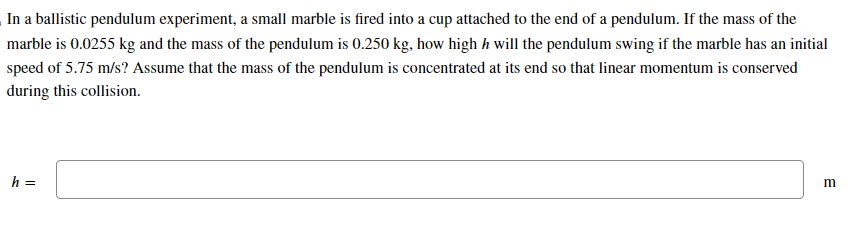
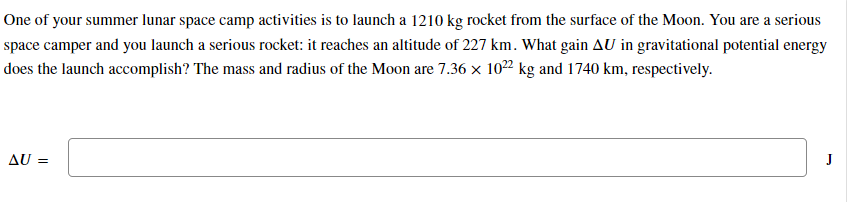
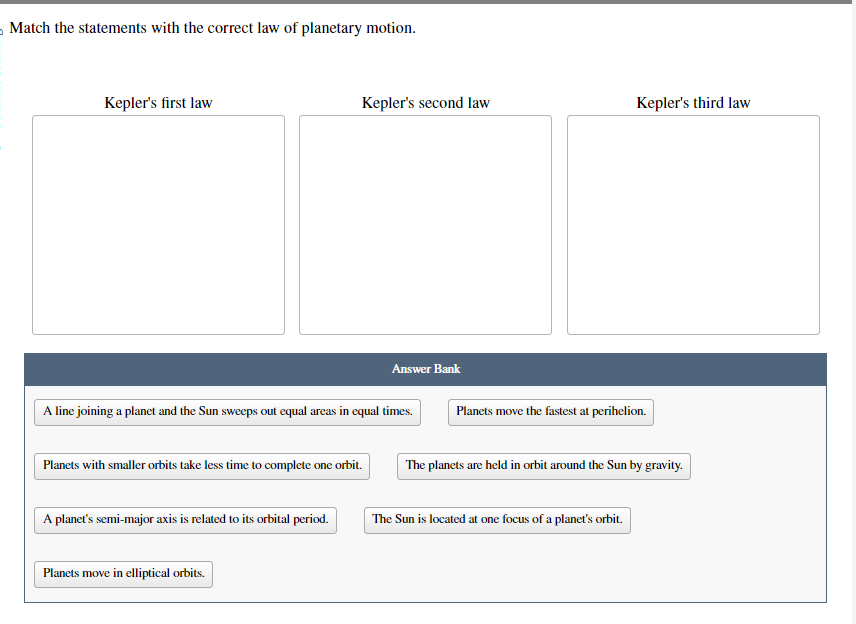
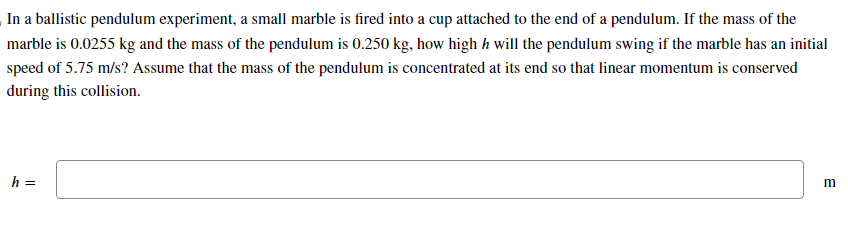
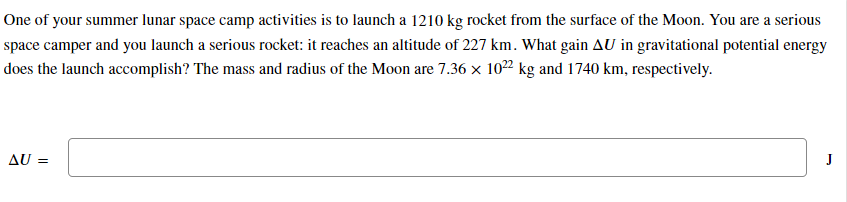
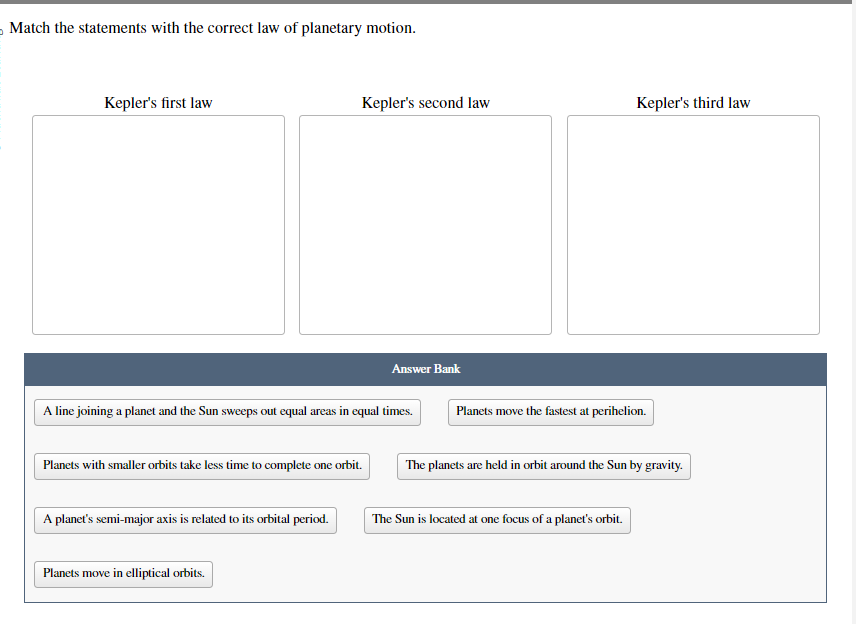
In a ballistic pendulum experiment, a small marble is fired into a cup attached to the end of a pendulum. If the mass of the marble is 0.0255 kg and the mass of the pendulum is 0.250 kg, how high h will the pendulum swing if the marble has an initial speed of 5.75 m/s? Assume that the mass of the pendulum is concentrated at its end so that linear momentum is conserved during this collision. h = mOne of your summer lunar space camp activities is to launch a 1210 kg rocket from the surface of the Moon. You are a serious space camper and you launch a serious rocket: it reaches an altitude of 22? km; What gain NJ in gravitational potential energy does the launch accomplish? The mass and radius of the Moon are 136 x ml22 kg and IMO km. respectively. 310': I Match the statements with the correct law of planetary motion. Kepler's first law Kepler's second law Kepler's third law Answer Bank A line joining a planet and the Sun sweeps out equal areas in equal times. Planets move the fastest at perihelion. Planets with smaller orbits take less time to complete one orbit. The planets are held in orbit around the Sun by gravity. A planet's semi-major axis is related to its orbital period. The Sun is located at one focus of a planet's orbit. Planets move in elliptical orbits
Step by Step Solution
There are 3 Steps involved in it

Get step-by-step solutions from verified subject matter experts
 Study Help