







Question: In a simple macroeconomic model, assuming constant prices and a marginal propensity to spend of 2/3, an autonomous increase in investment of $1 million should
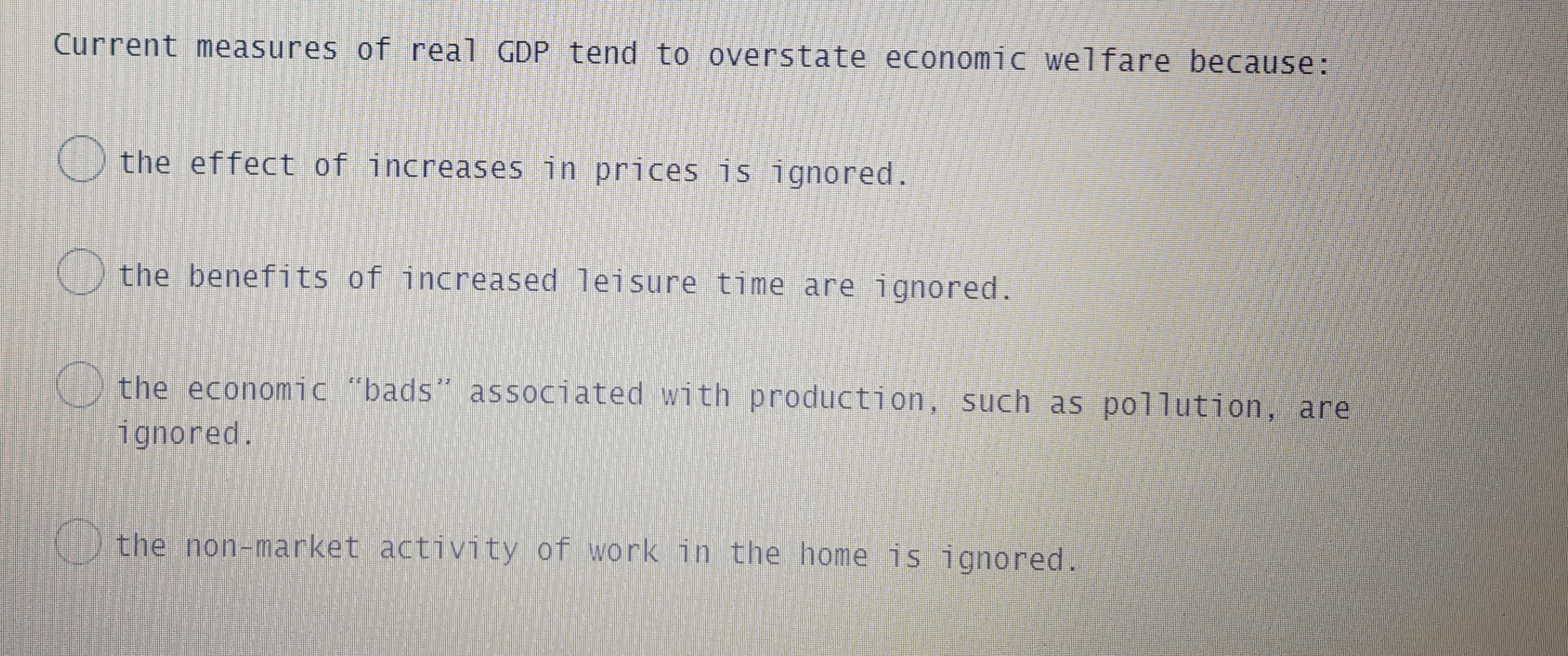
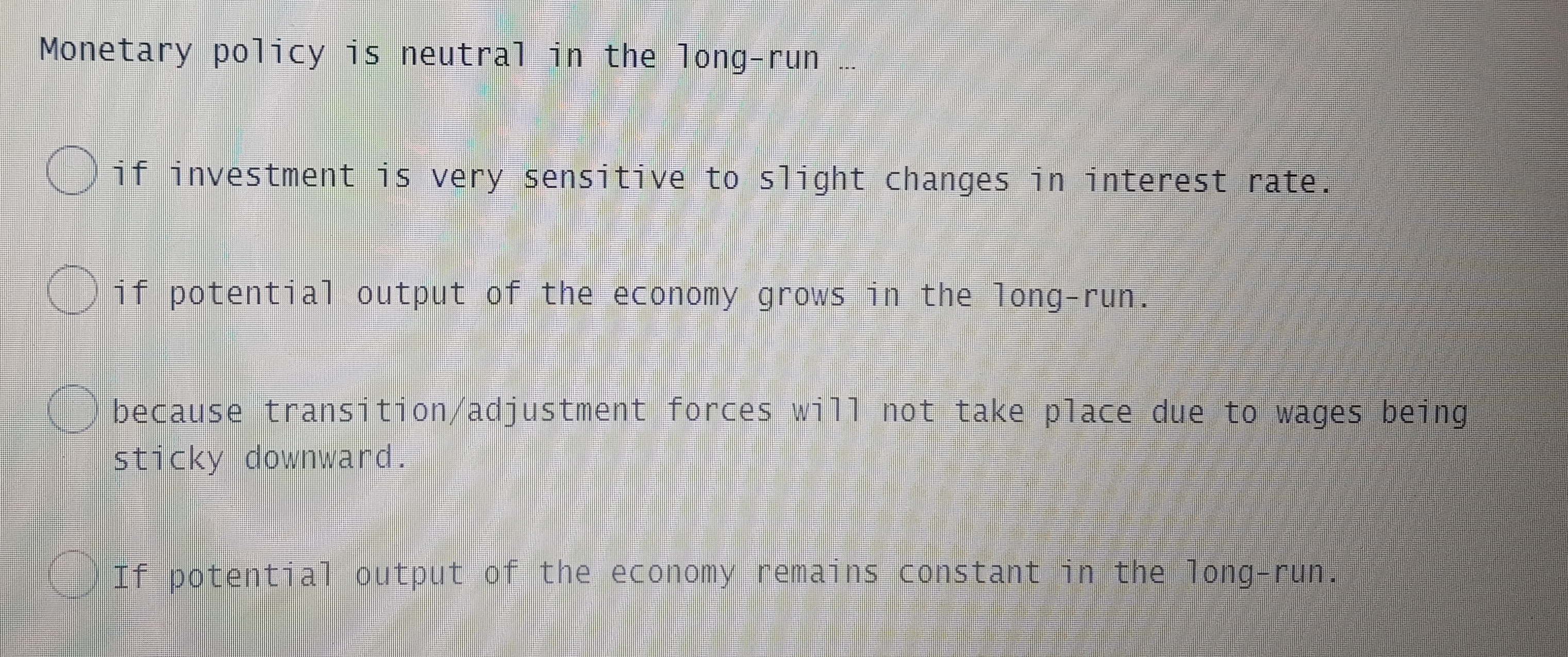

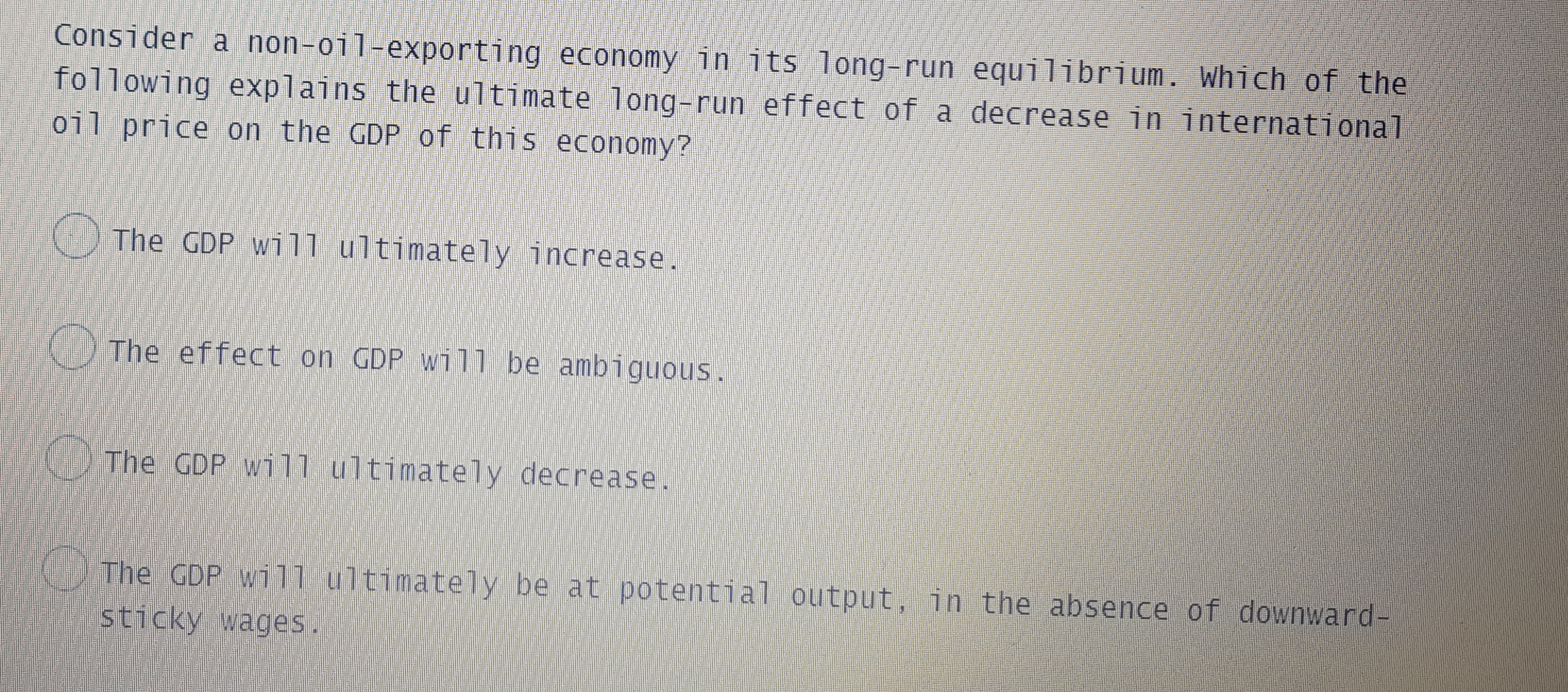
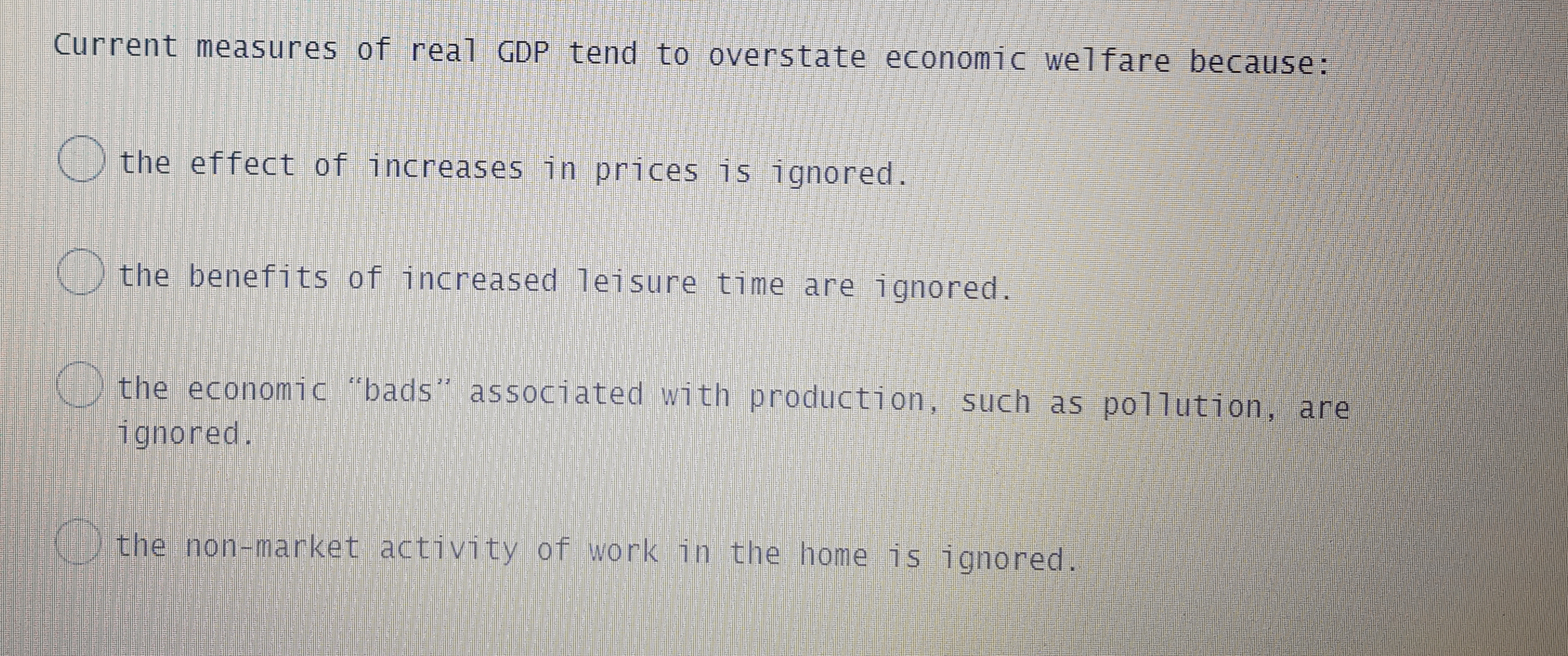
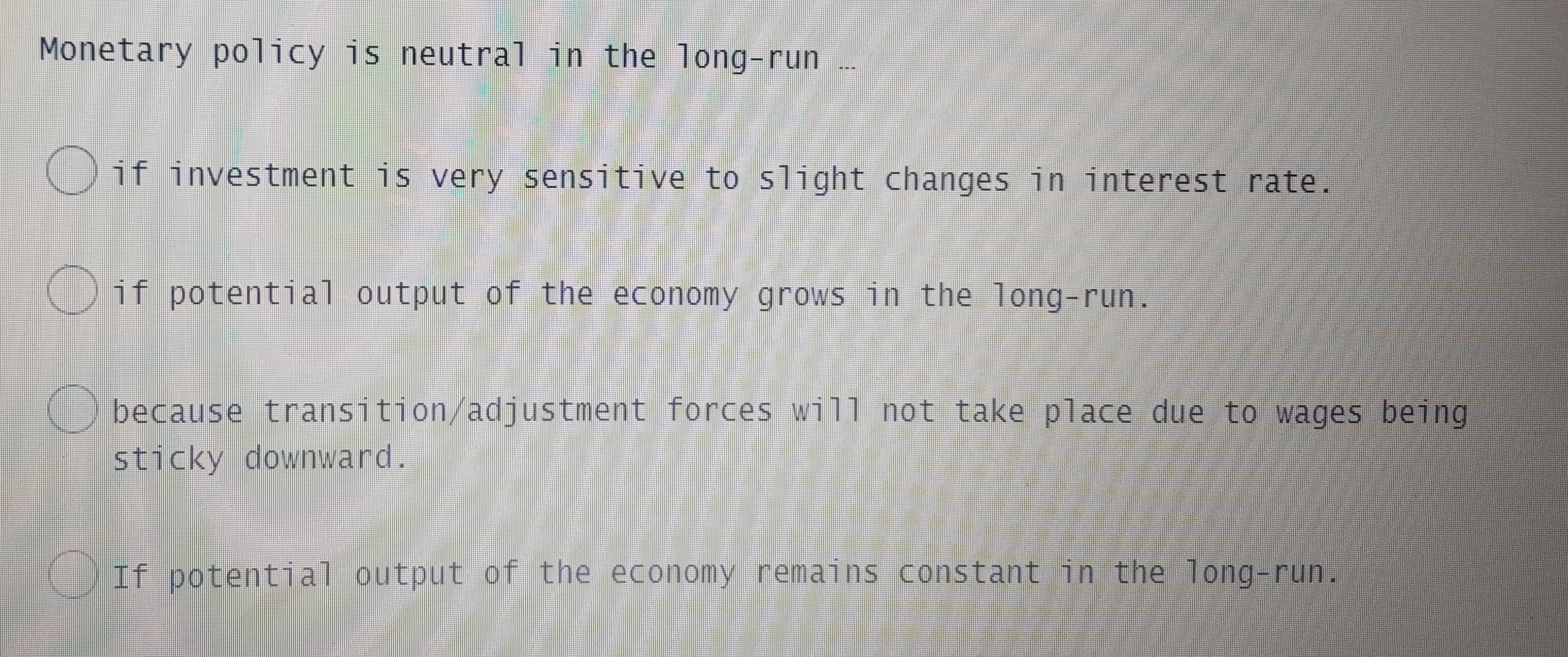
In a simple macroeconomic model, assuming constant prices and a marginal propensity to spend of 2/3, an autonomous increase in investment of $1 million should increase equilibrium real national income by : $3 million. $1.5 million. O $667 , 000. $1 million.Consider a non-oil-exporting economy in its long-run equilibrium. Which of the following explains the ultimate long-run effect of a decrease in international oil price on the GDP of this economy? The GDP will ultimately increase. The effect on GDP will be ambiguous. The GDP will ultimately decrease. The CDP will ultimately be at potential output, in the absence of downward- sticky wages.Current measures of real GDP tend to overstate economic welfare because: O the effect of increases in prices is ignored. the benefits of increased leisure time are ignored. the economic "bads" associated with production, such as pollution, are ignored. the non-market activity of work in the home is ignored.Monetary policy is neutral in the long-run if investment is very sensitive to slight changes in interest rate. if potential output of the economy grows in the long-run. because transition/ adjustment forces will not take place due to wages being sticky downward. If potential output of the economy remains constant in the long-run
Step by Step Solution
There are 3 Steps involved in it

Get step-by-step solutions from verified subject matter experts
 Study Help