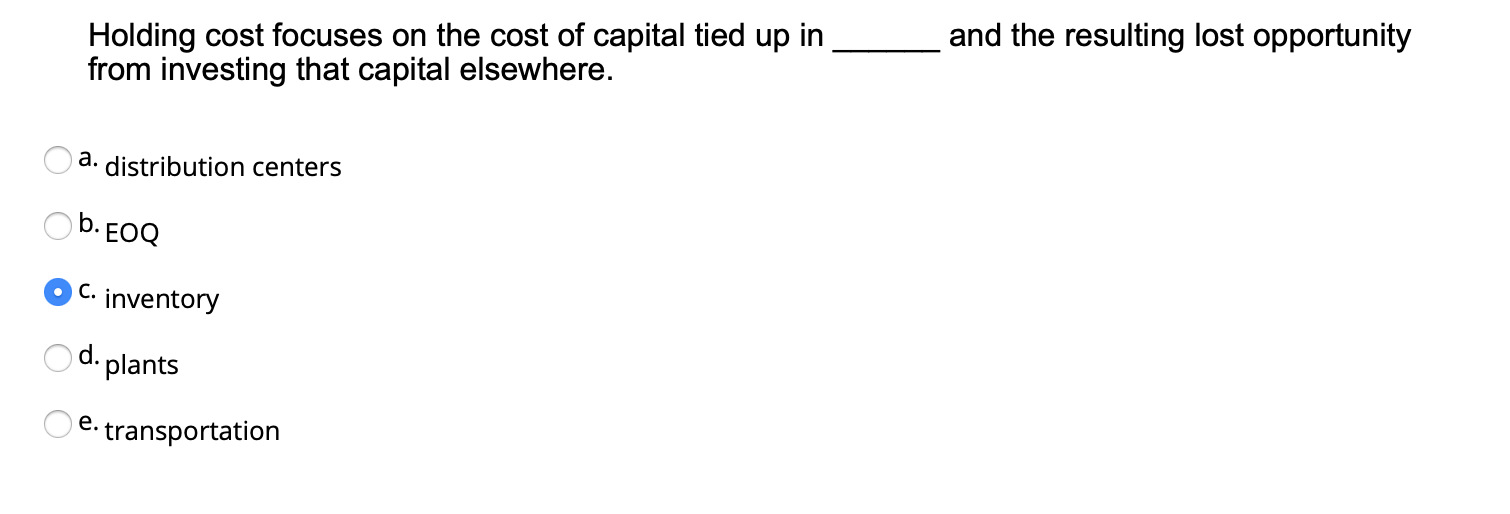
Question: In an EOQ system, as Q increases, the cost per order: a. decreases Ob.stays the same OC. is expedited O d. cannot be determined O
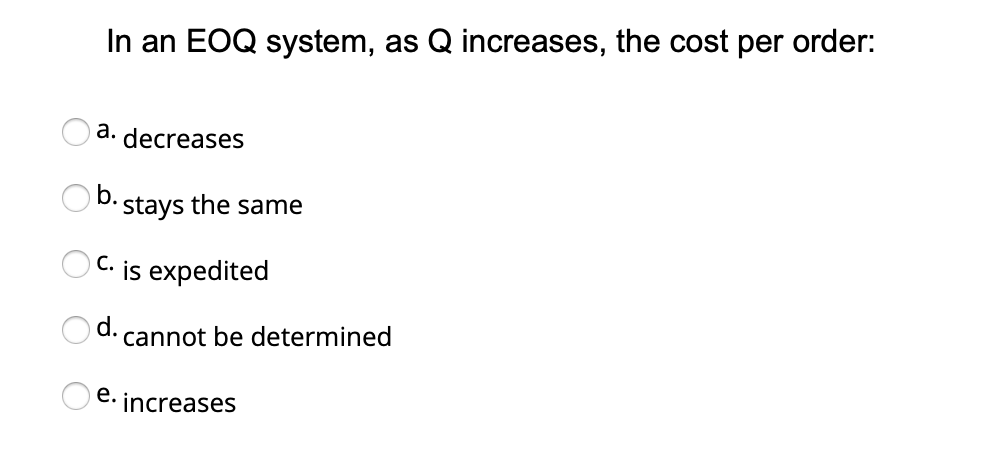
In an EOQ system, as Q increases, the cost perIn an EOQ system, as Q increases, the cost perIn an EOQ system, as Q increases, the cost perIn an EOQ system, as Q increases, the cost per

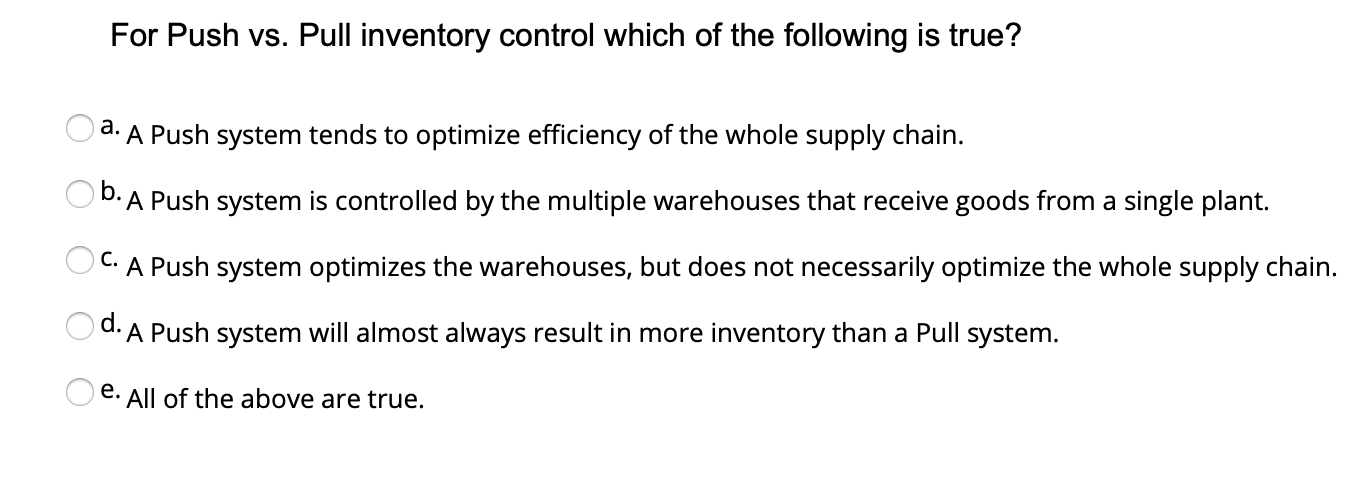
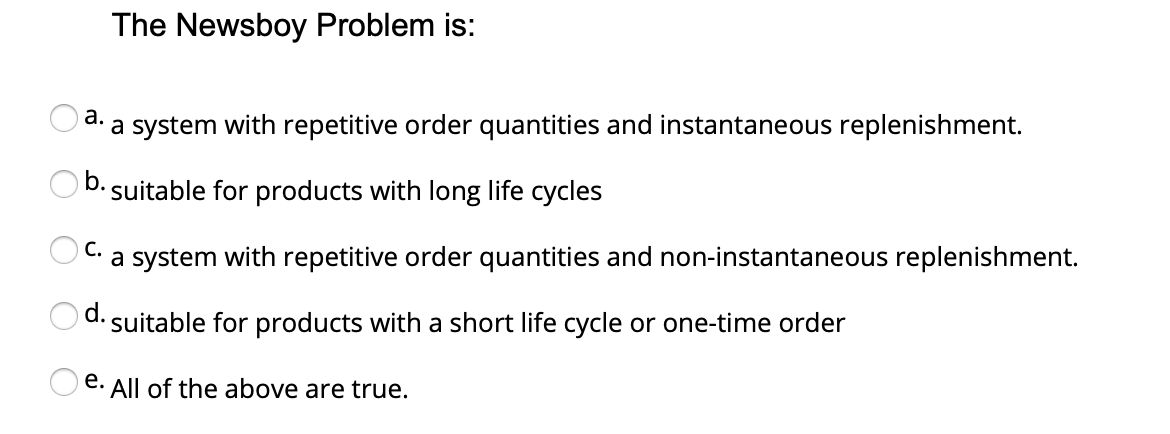
In an EOQ system, as Q increases, the cost per order: a. decreases Ob.stays the same OC. is expedited O d. cannot be determined O e. increases For Push vs. Pull inventory control which of the following is true? O a. A Push system tends to optimize efficiency of the whole supply chain. Ob. A Push system is controlled by the multiple warehouses that receive goods from a single plant. C. A Push system optimizes the warehouses, but does not necessarily optimize the whole supply chain. Od. A Push system will almost always result in more inventory than a Pull system. Oe. All of the above are true. The Newsboy Problem is: O a. a system with repetitive order quantities and instantaneous replenishment. O b.suitable for products with long life cycles OC. a system with repetitive order quantities and non-instantaneous replenishment. O d. suitable for products with a short life cycle or one-time order e. All of the above are true. Holding cost focuses on the cost of capital tied up in from investing that capital elsewhere. and the resulting lost opportunity a. distribution centers Ob. EOQ OC. inventory Od. plants O e. transportation
Step by Step Solution

There are 3 Steps involved in it

1 Expert Approved Answer
Step: 1 Unlock blur-text-image

Question Has Been Solved by an Expert!

Get step-by-step solutions from verified subject matter experts

Step: 2 Unlock
Step: 3 Unlock

Students Have Also Explored These Related General Management Questions!