







Question: In C Programming Language: Implement a parallelized version of the odd-even transposition sort A description of the odd-even sort and the algorithm is provided. Details
In C Programming Language:
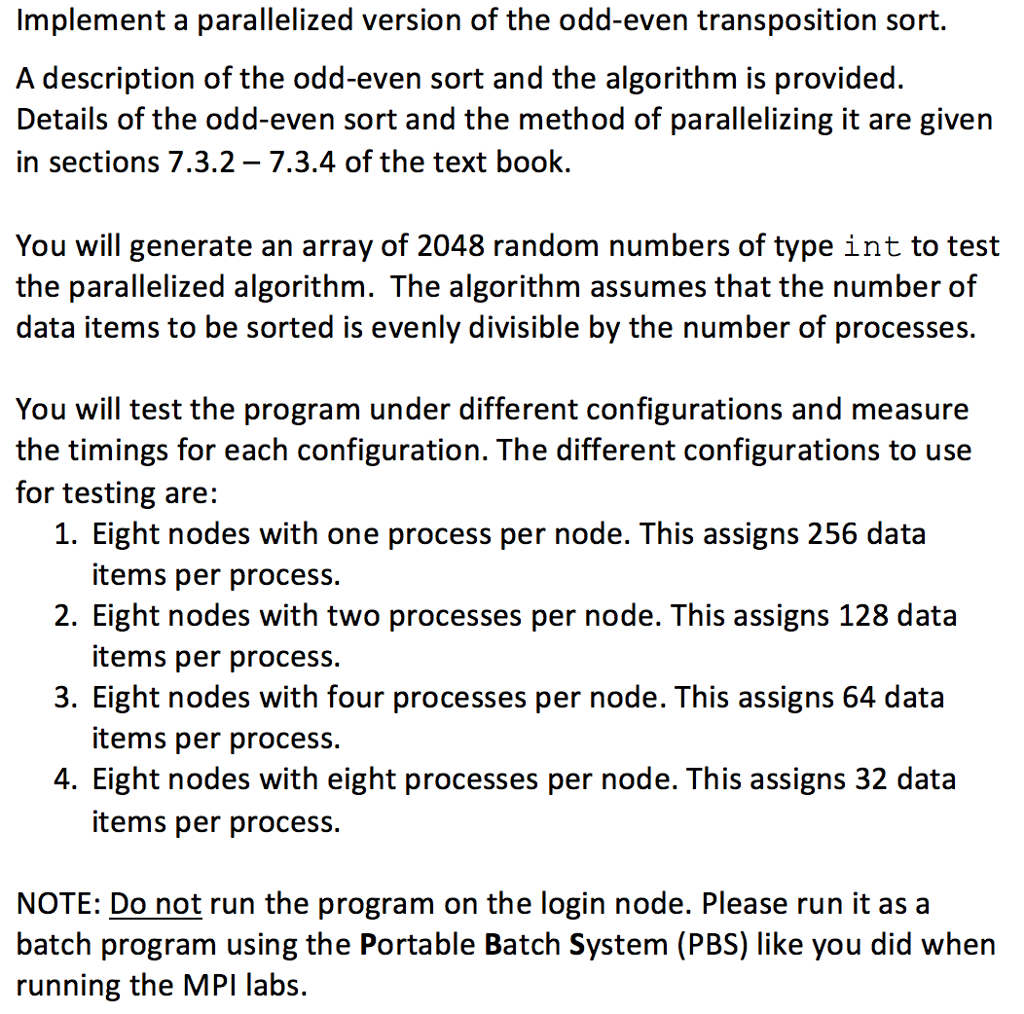
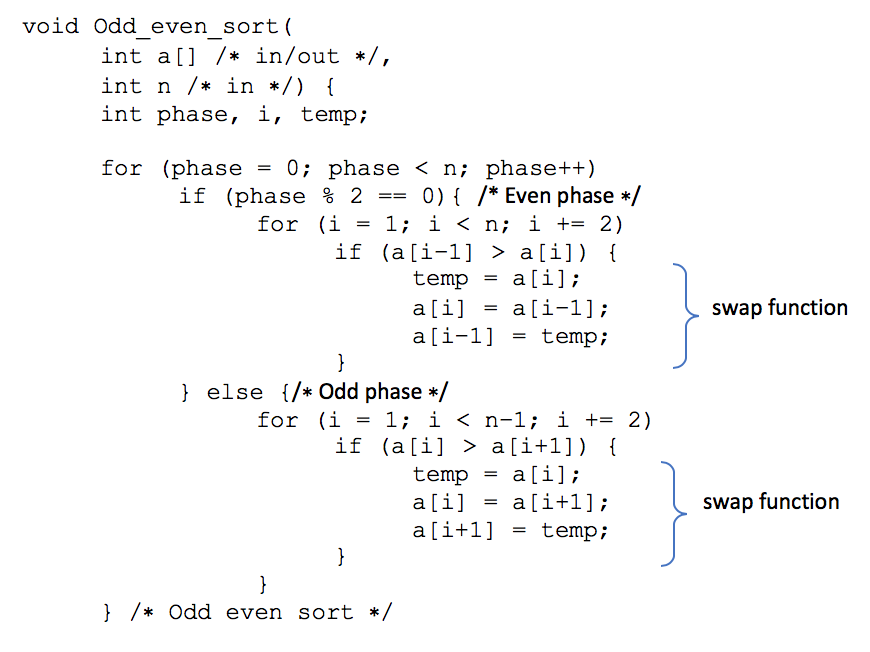
Implement a parallelized version of the odd-even transposition sort A description of the odd-even sort and the algorithm is provided. Details of the odd-even sort and the method of parallelizing it are given in sections 7.3.2-7.3.4 of the text book. You will generate an array of 2048 random numbers of type int to test the parallelized algorithm. The algorithm assumes that the number of data items to be sorted is evenly divisible by the number of processes. You will test the program under different configurations and measure the timings for each configuration. The different configurations to use for testing are: 1. Eight nodes with one process per node. This assigns 256 data 2. Eight nodes with two processes per node. This assigns 128 data 3. Eight nodes with four processes per node. This assigns 64 data 4. Eight nodes with eight processes per node. This assigns 32 data items per process. items per process. items per process. tems per process. NOTE: Do not run the program on the login node. Please run it as a batch program using the Portable Batch System (PBS) like you did when running the MPI labs. Implement a parallelized version of the odd-even transposition sort A description of the odd-even sort and the algorithm is provided. Details of the odd-even sort and the method of parallelizing it are given in sections 7.3.2-7.3.4 of the text book. You will generate an array of 2048 random numbers of type int to test the parallelized algorithm. The algorithm assumes that the number of data items to be sorted is evenly divisible by the number of processes. You will test the program under different configurations and measure the timings for each configuration. The different configurations to use for testing are: 1. Eight nodes with one process per node. This assigns 256 data 2. Eight nodes with two processes per node. This assigns 128 data 3. Eight nodes with four processes per node. This assigns 64 data 4. Eight nodes with eight processes per node. This assigns 32 data items per process. items per process. items per process. tems per process. NOTE: Do not run the program on the login node. Please run it as a batch program using the Portable Batch System (PBS) like you did when running the MPI labs
Step by Step Solution
There are 3 Steps involved in it

Get step-by-step solutions from verified subject matter experts
 Study Help