







Question: In Example 2.8, we discussed the recent increase in world demand for copper, due in part to China's rising consumption. Using the original elasticities of
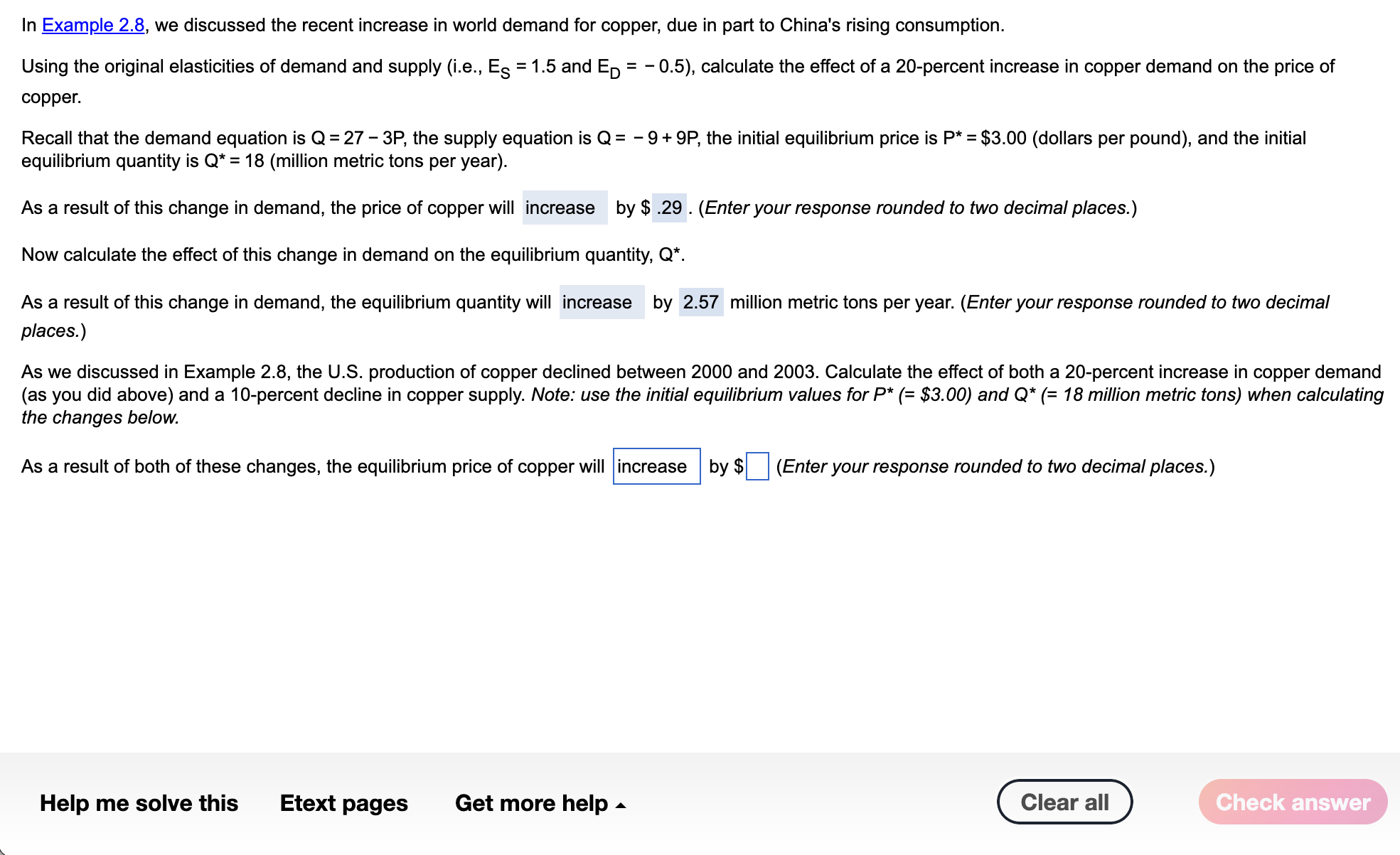
In Example 2.8, we discussed the recent increase in world demand for copper, due in part to China's rising consumption. Using the original elasticities of demand and supply (i.e., E8 = 1.5 and ED = - 0.5), calculate the effect of a 20-percent increase in copper demand on the price of coppen Recall that the demand equation is Q = 27 3P, the supply equation is Q = 9 + 9P, the initial equilibrium price is P* = $3.00 (dollars per pound), and the initial equilibrium quantity is Q' = 18 (million metric tons per year). As a result of this change in demand, the price of copper will increase by $ .29 . (Enter your response rounded to two decimal places.) Now calculate the effect of this change in demand on the equilibrium quantity, 0*. As a result of this change in demand, the equilibrium quantity will increase by 2.57 million metric tons per year. (Enter your response rounded to two decimal places.) As we discussed in Example 2.8, the U.S. production of copper declined between 2000 and 2003. Calculate the effect of both a 20percent increase in copper demand (as you did above) and a 10-percent decline in copper supply. Note: use the initial equilibrium values for P\" (= $3.00) and Q' (= 18 million metric tons) when calculating the changes below. As a result of both of these changes, the equilibrium price of copper will by $D (Enter your response rounded to two decimal places.) Help me solve this Etext pages Get more help - Clear all
Step by Step Solution
There are 3 Steps involved in it

Get step-by-step solutions from verified subject matter experts
 Study Help