







Question: In February 2 0 2 3 , Crane Construction signed a contract and commenced construction on a parking garage. The total contract price was
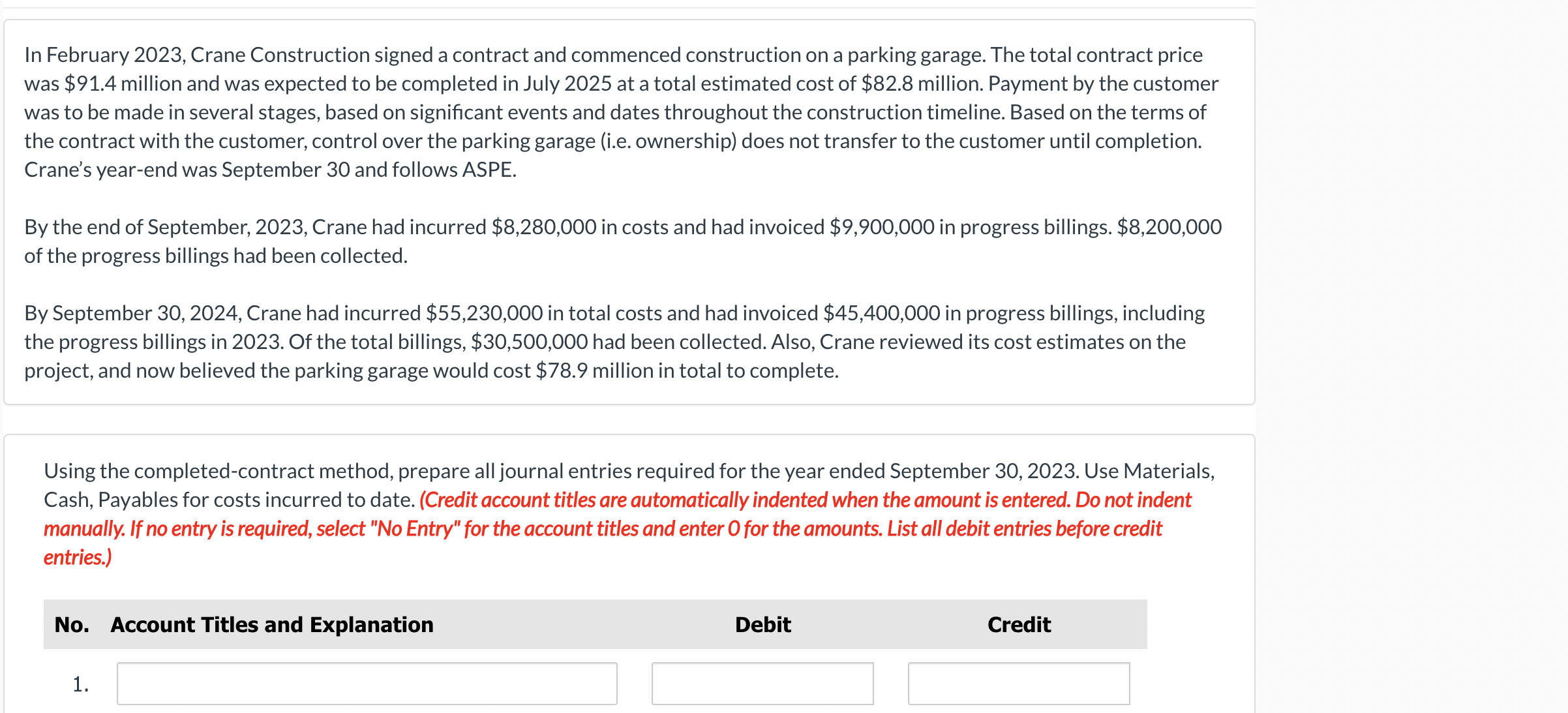
In February Crane Construction signed a contract and commenced construction on a parking garage. The total contract price was $ million and was expected to be completed in July at a total estimated cost of $ million. Payment by the customer was to be made in several stages, based on significant events and dates throughout the construction timeline. Based on the terms of the contract with the customer, control over the parking garage ie ownership does not transfer to the customer until completion. Crane's yearend was September and follows ASPE.
By the end of September, Crane had incurred $ in costs and had invoiced $ in progress billings. $ of the progress billings had been collected.
By September Crane had incurred $ in total costs and had invoiced $ in progress billings, including the progress billings in Of the total billings, $ had been collected. Also, Crane reviewed its cost estimates on the project, and now believed the parking garage would cost $ million in total to complete.
Using the completedcontract method, prepare all journal entries required for the year ended September Use Materials, Cash, Payables for costs incurred to date. Credit account titles are automatically indented when the amount is entered. Do not indent manually. If no entry is required, select No Entry" for the account titles and enter for the amounts. List all debit entries before credit entries.
No Account Titles and Explanation
Debit
Credit
Using the completedcontract method, prepare all journal entries required for the year ended September Use Materials, Cash, Payables for costs incurred to date. Credit account titles are automatically indented when the amount is entered. Do not indent manually. If no entry is required, select No Entry" for the account titles and enter for the amounts. List all debit entries before credit entries.
No Account Titles and Explanation
To record the cost of construction
To record the progress billings
To record the cash collections Using the completedcontract method, prepare all journal entries required for the year ended September Use Materials, Cash, Payables for costs incurred to date. Credit account titles are automatically indented when the amount is entered. Do not indent manually. If no entry is required, select No Entry" for the account titles and enter for the amounts. List all debit entries before credit entries.
No Account Titles and Explanation
To record the cost of construction
To record the progress billings
To record the cash collections Prepare the journal entry to record revenue and cost of construction on completion of the project, assuming all billings are completed and the total actual cost is the same as the estimate. Use Materials, Cash, Payables for costs incurred to date. Credit account titles are automatically indented when the amount is entered. Do not indent manually. If no entry is required, select No Entry" for the account titles and enter for the amounts. List all debit entries before credit entries.
Account Titles and Explanation
Debit
Credit
To record the cost of construction
To record the progress billings
To record the cash collections
To record revenue, costs and gross profit of construction of parking garage
Step by Step Solution
There are 3 Steps involved in it
1 Expert Approved Answer
Step: 1 Unlock

Question Has Been Solved by an Expert!
Get step-by-step solutions from verified subject matter experts
Step: 2 Unlock
Step: 3 Unlock
 Study Help