







Question: In question 3rd, the multiple choices have F & U after the amount. F stands for 'favourable' & U stands for 'unfavourable'. Pls. Answer accordingly
In question 3rd, the multiple choices have F & U after the amount. "F" stands for 'favourable' & "U" stands for 'unfavourable'. Pls. Answer accordingly
Pls. Answer all these questions fast fast pls. Pls. Pls. Answer all these fast. I promise, I'll get you 7 thumbs up promise pls. Pls. Pls.
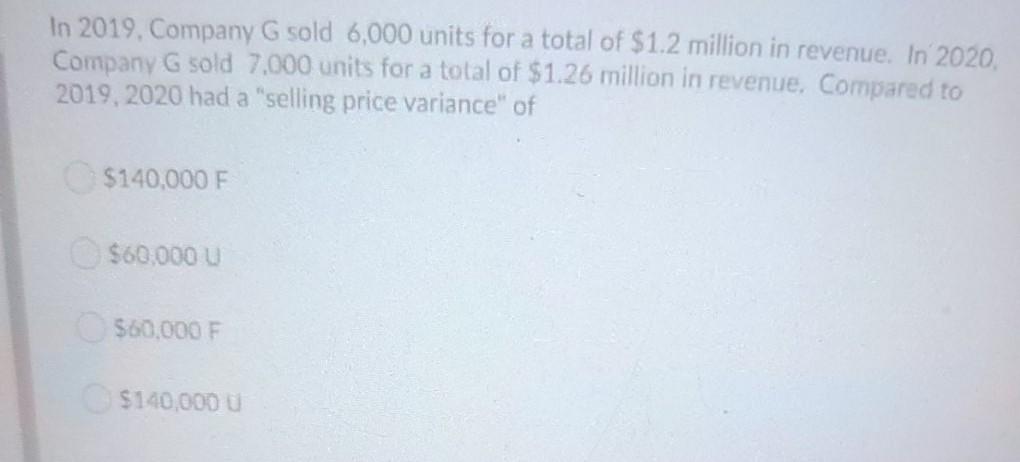
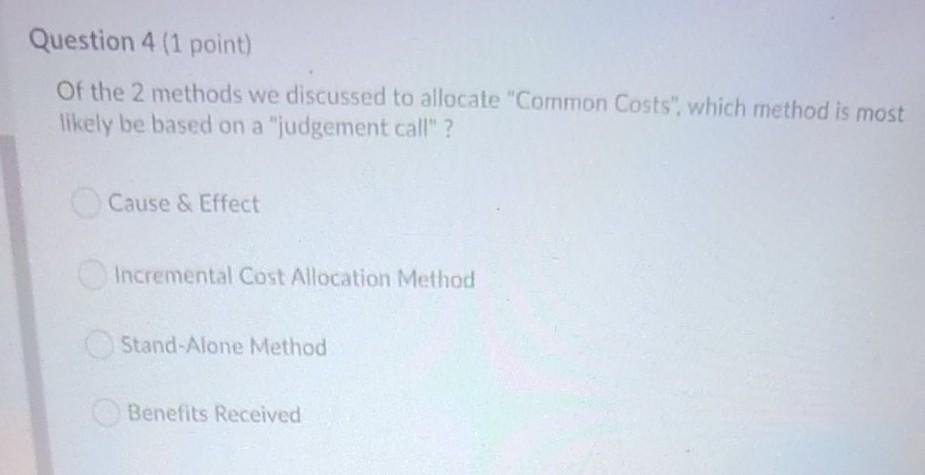
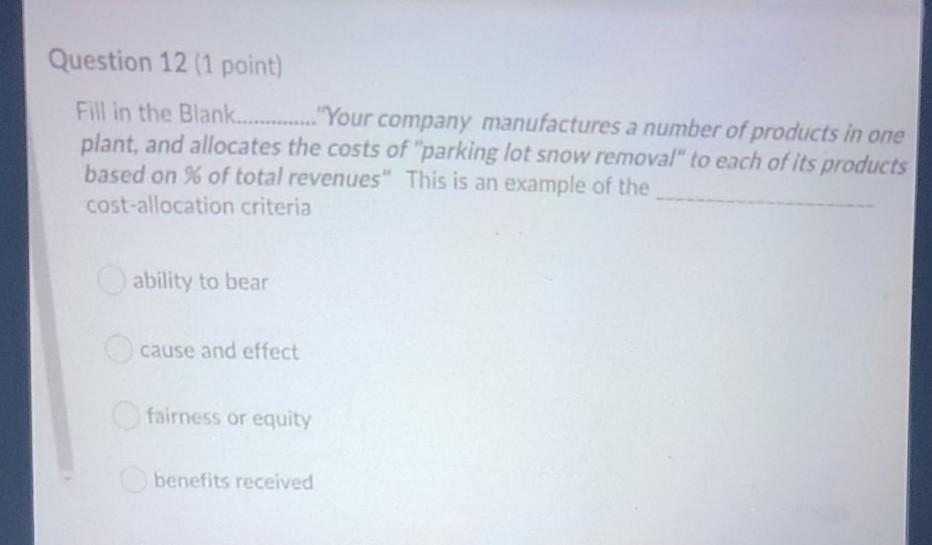
In 2019. Company G sold 6,000 units for a total of $1.2 million in revenue. In 2020, Company G sold 7.000 units for a total of $1.26 million in revenue, Compared to 2019, 2020 had a "selling price variance" of $140,000 F $60,000 W $60,000 $140,000 u Question 4 (1 point) Of the 2 methods we discussed to allocate "Common Costs", which method is most likely be based on a "judgement call" ? Cause & Effect Incremental Cost Allocation Method Stand-Alone Method Benefits Received Question 12 (1 point) Fill in the Blank............. "Your company manufactures a number of products in one plant, and allocates the costs of "parking lot snow removal" to each of its products based on % of total revenues" This is an example of the cost-allocation criteria ability to bear cause and effect fairness or equity benefits receivedStep by Step Solution
There are 3 Steps involved in it
1 Expert Approved Answer
Step: 1 Unlock

Question Has Been Solved by an Expert!
Get step-by-step solutions from verified subject matter experts
Step: 2 Unlock
Step: 3 Unlock
 Study Help