







Question: In recent years, the World Food Programme ( WFP ) has managed complex emergencies, natural disasters, epidemics, and pandemics. Emergency preparedness and response is rooted
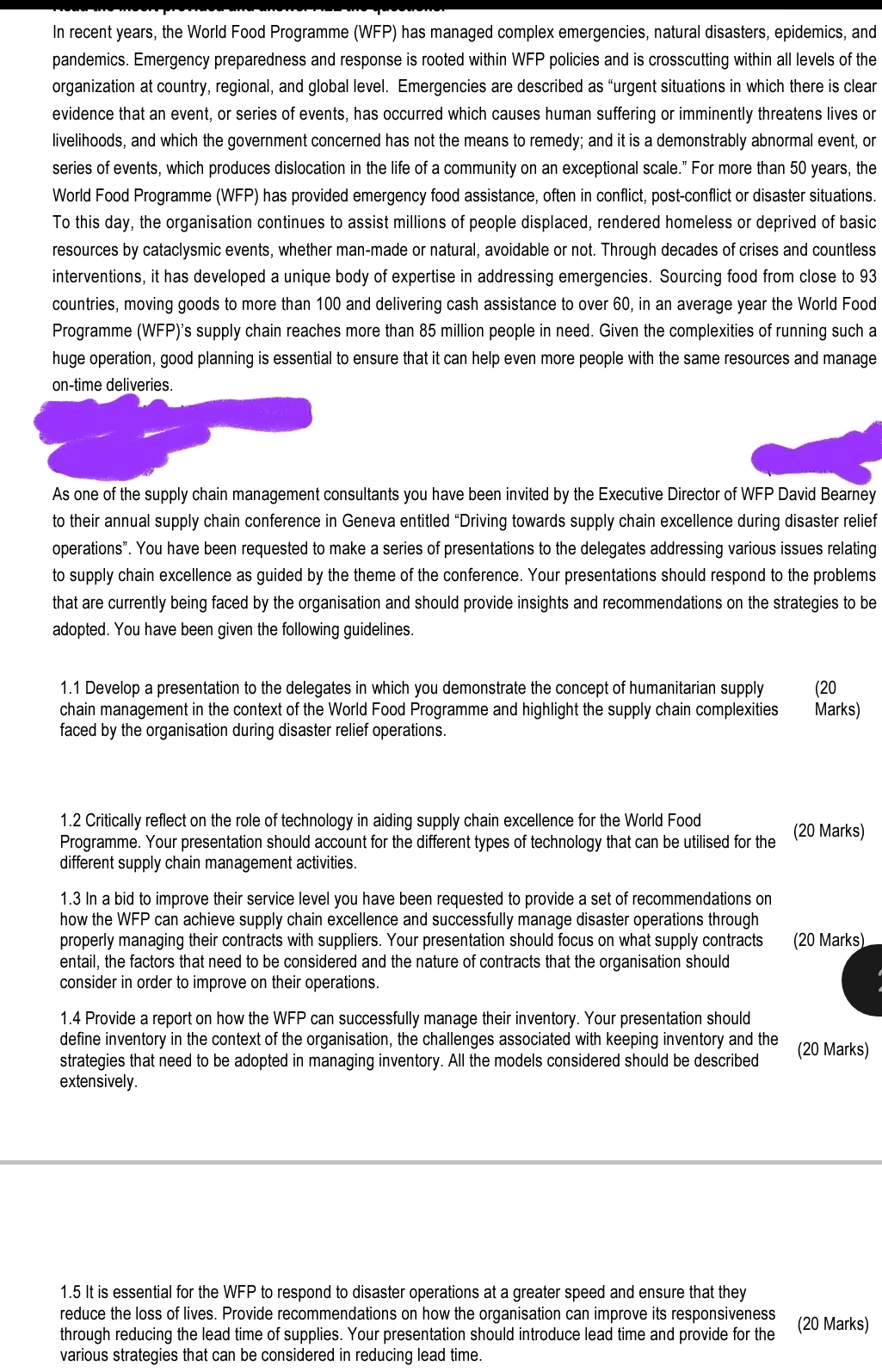
In recent years, the World Food Programme WFP has managed complex emergencies, natural disasters, epidemics, and pandemics. Emergency preparedness and response is rooted within WFP policies and is crosscutting within all levels of the organization at country, regional, and global level. Emergencies are described as "urgent situations in which there is clear evidence that an event, or series of events, has occurred which causes human suffering or imminently threatens lives or livelihoods, and which the government concerned has not the means to remedy; and it is a demonstrably abnormal event, or series of events, which produces dislocation in the life of a community on an exceptional scale." For more than years, the World Food Programme WFP has provided emergency food assistance, often in conflict, postconflict or disaster situations. To this day, the organisation continues to assist millions of people displaced, rendered homeless or deprived of basic resources by cataclysmic events, whether manmade or natural, avoidable or not. Through decades of crises and countless interventions, it has developed a unique body of expertise in addressing emergencies. Sourcing food from close to countries, moving goods to more than and delivering cash assistance to over in an average year the World Food Programme WFPs supply chain reaches more than million people in need. Given the complexities of running such a huge operation, good planning is essential to ensure that it can help even more people with the same resources and manage ontime deliveries.
As one of the supply chain management consultants you have been invited by the Executive Director of WFP David Bearney to their annual supply chain conference in Geneva entitled "Driving towards supply chain excellence during disaster relief operations". You have been requested to make a series of presentations to the delegates addressing various issues relating to supply chain excellence as guided by the theme of the conference. Your presentations should respond to the problems that are currently being faced by the organisation and should provide insights and recommendations on the strategies to be adopted. You have been given the following guidelines.
Develop a presentation to the delegates in which you demonstrate the concept of humanitarian supply
chain management in the context of the World Food Programme and highlight the supply chain complexities Marks faced by the organisation during disaster relief operations.
Critically reflect on the role of technology in aiding supply chain excellence for the World Food Programme. Your presentation should account for the different types of technology that can be utilised for the Marks different supply chain management activities.
In a bid to improve their service level you have been requested to provide a set of recommendations on how the WFP can achieve supply chain excellence and successfully manage disaster operations through properly managing their contracts with suppliers. Your presentation should focus on what supply contracts entail, the factors that need to be considered and the nature of contracts that the organisation should consider in order to improve on their operations.
Provide a report on how the WFP can successfully manage their inventory. Your presentation should define inventory in the context of the organisation, the challenges associated with keeping inventory and the strategies that need to be adopted in managing inventory. All the models considered should be described Marks extensively.
It is essential for the WFP to respond to disaster operations at a greater speed and ensure that they reduce the loss of lives. Provide recommendations on how the organisation can improve its responsiveness through reducing the lead time of supplies. Your presentation should introduce lead time and provide for the
Marks
various strategies that can be considered in reducing lead time.
Step by Step Solution
There are 3 Steps involved in it
1 Expert Approved Answer
Step: 1 Unlock

Question Has Been Solved by an Expert!
Get step-by-step solutions from verified subject matter experts
Step: 2 Unlock
Step: 3 Unlock
 Study Help