







Question: In the above example (question #3), how would you record the transaction at maturity? (A) Debit Cash $6,000; Credit Notes Receivable $6,000 (B) Debit Cash
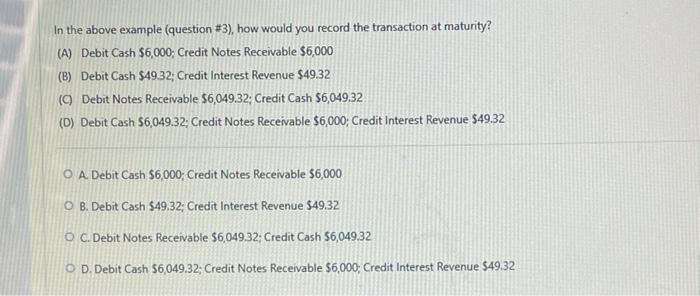
In the above example (question #3), how would you record the transaction at maturity? (A) Debit Cash $6,000; Credit Notes Receivable $6,000 (B) Debit Cash $49.32; Credit Interest Revenue $49.32 (Debit Notes Receivable $6,049.32; Credit Cash $6,049.32 (D) Debit Cash $6,049.32; Credit Notes Receivable $6,000; Credit Interest Revenue $49.32 O A. Debit Cash $6,000; Credit Notes Receivable $6,000 OB. Debit Cash $49.32; Credit Interest Revenue $49.32 O C. Debit Notes Receivable $6,049.32: Credit Cash S6,049.32 O D. Debit Cash 56,049.32; Credit Notes Receivable $6,000; Credit Interest Revenue $49.32 In the above example (question #3), how would you record the transaction at maturity? (A) Debit Cash $6,000; Credit Notes Receivable $6,000 (B) Debit Cash $49.32; Credit Interest Revenue $49.32 (Debit Notes Receivable $6,049.32; Credit Cash $6,049.32 (D) Debit Cash $6,049.32; Credit Notes Receivable $6,000; Credit Interest Revenue $49.32 O A. Debit Cash $6,000; Credit Notes Receivable $6,000 OB. Debit Cash $49.32; Credit Interest Revenue $49.32 O C. Debit Notes Receivable $6,049.32: Credit Cash S6,049.32 O D. Debit Cash 56,049.32; Credit Notes Receivable $6,000; Credit Interest Revenue $49.32
Step by Step Solution
There are 3 Steps involved in it

Get step-by-step solutions from verified subject matter experts
 Study Help