



Question: In the circuit shown in Fig. P 7 . 2 6 , both switches operate together; that is , they either open or close at
In the circuit shown in Fig. P both switches operate together; that is they either open or close at the same time. The switches are closed a long time before opening at t
at
Calculate:
ai
bi
ct
dit when t
After the switch in the circuit of Fig. P has been open for a long time, it is closed at t
Calculate:
ai
bi
ct
dit when t
The switch in the circuit shown in Fig. P has been in position a for a long time. At t
the switch moves instantaneously to position b
ait when t
bvt for t
Figure P
After the switch in the circuit of Fig. P has been open for a long time, it is closed at t
Calculate:
ai
bi
ct
dit when t
The switch in the circuit shown in Fig. P has been in position a for a long time. At t
the switch moves instantaneously to position b
ait when t
bvt for t
Figure P
The switch in the circuit shown in Fig. P has been in position a for a long time. At t
the switch moves instantaneously to position b
ait when t
bvt for t
Figure P
Assume that the switch in the circuit of Fig. P has been in position a for a long time and
that at t it is moved to position b Find:
avc
bvcinfty
ctau for t
di
evct
fit
Assume that the switch in the circuit of Fig. P has been in position a for a long time and
that at t it is moved to position b Find:
avc
bvcinfty
ctau for t
di
evct
fit
The switch in the circuit seen in Fig. P has been in position a for a long time. At t
the switch moves instantaneously to position b For t find:
avt
bit
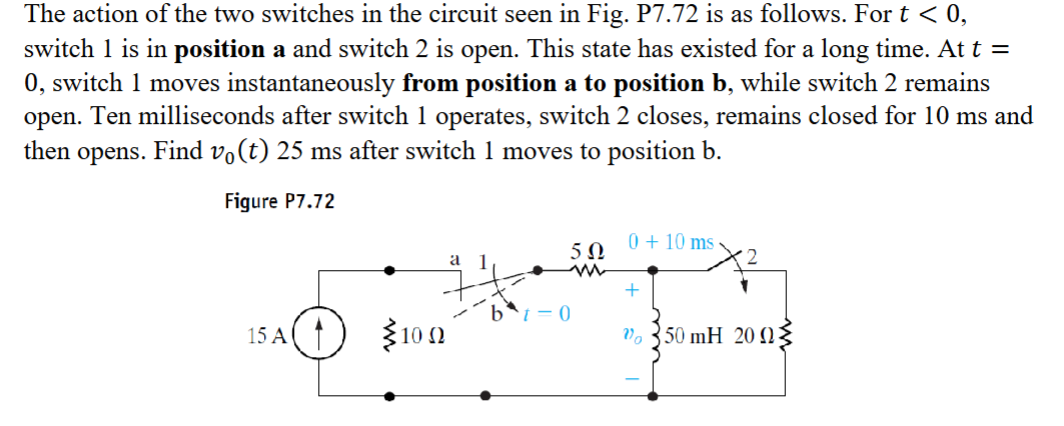
Figure P The action of the two switches in the circuit seen in Fig. P is as follows. For t switch is in position a and switch is open. This state has existed for a long time. At t switch moves instantaneously from position a to position mathbfb while switch remains open. Ten milliseconds after switch operates, switch closes, remains closed for ms and then opens. Find vtmathrm~ms after switch moves to position b
Figure P
Step by Step Solution
There are 3 Steps involved in it
1 Expert Approved Answer
Step: 1 Unlock

Question Has Been Solved by an Expert!
Get step-by-step solutions from verified subject matter experts
Step: 2 Unlock
Step: 3 Unlock