



Question: In the course reader article Key Concepts: Underlying Structures of Culture how do the authors Hall & Hall describe differences between Monochronic and Polychronic time?
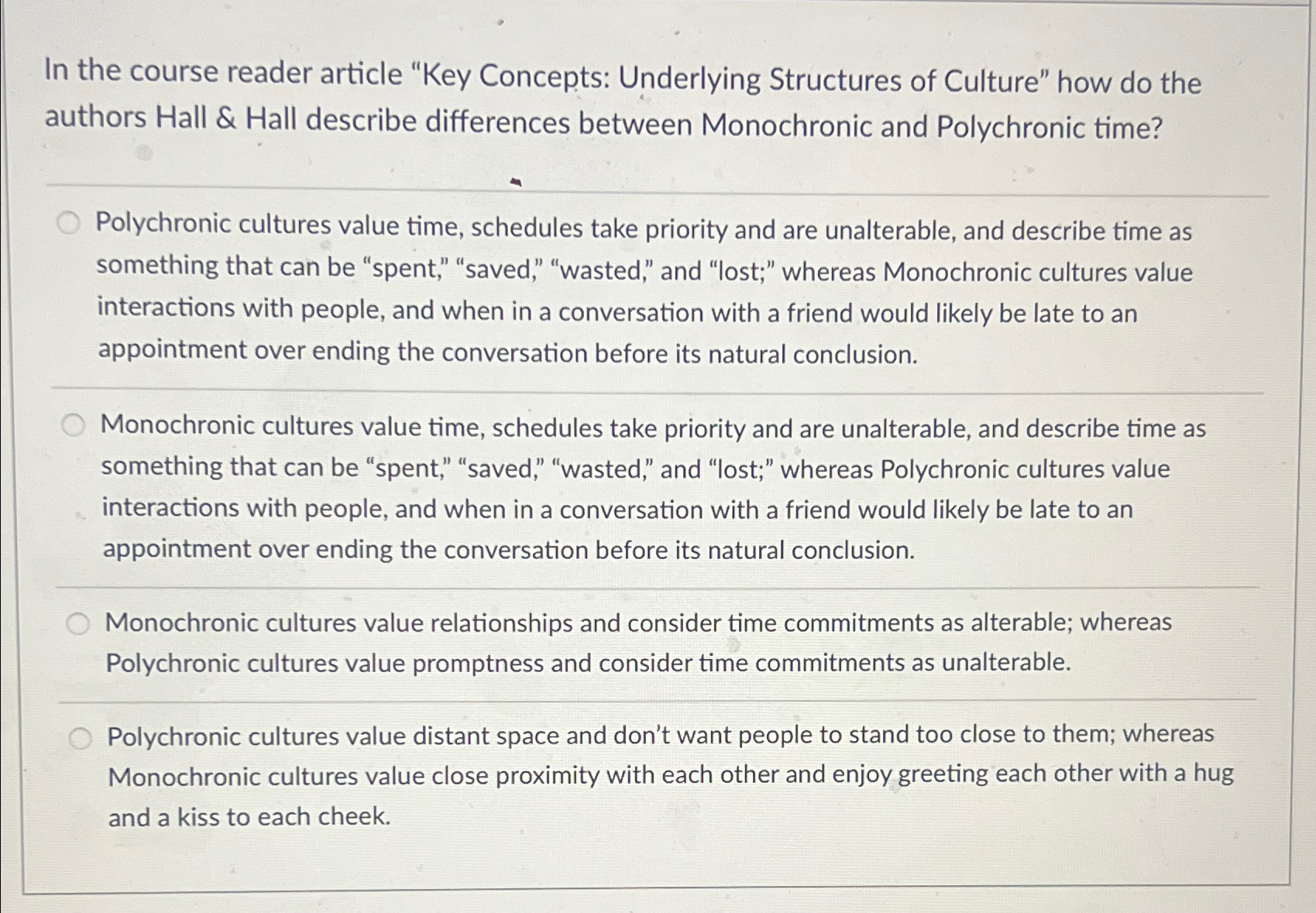
In the course reader article "Key Concepts: Underlying Structures of Culture" how do the authors Hall & Hall describe differences between Monochronic and Polychronic time?
Polychronic cultures value time, schedules take priority and are unalterable, and describe time as something that can be "spent," "saved," "wasted," and "lost;" whereas Monochronic cultures value interactions with people, and when in a conversation with a friend would likely be late to an appointment over ending the conversation before its natural conclusion.
Monochronic cultures value time, schedules take priority and are unalterable, and describe time as something that can be "spent," "saved," "wasted," and "lost;" whereas Polychronic cultures value interactions with people, and when in a conversation with a friend would likely be late to an appointment over ending the conversation before its natural conclusion.
Monochronic cultures value relationships and consider time commitments as alterable; whereas
Polychronic cultures value promptness and consider time commitments as unalterable.
Polychronic cultures value distant space and don't want people to stand too close to them; whereas Monochronic cultures value close proximity with each other and enjoy greeting each other with a hug and a kiss to each cheek.
Step by Step Solution
There are 3 Steps involved in it
1 Expert Approved Answer
Step: 1 Unlock

Question Has Been Solved by an Expert!
Get step-by-step solutions from verified subject matter experts
Step: 2 Unlock
Step: 3 Unlock