







Question: In the list below, one statement is true and three are false. - When the firm is in financial distress, stockholders have an incentive to
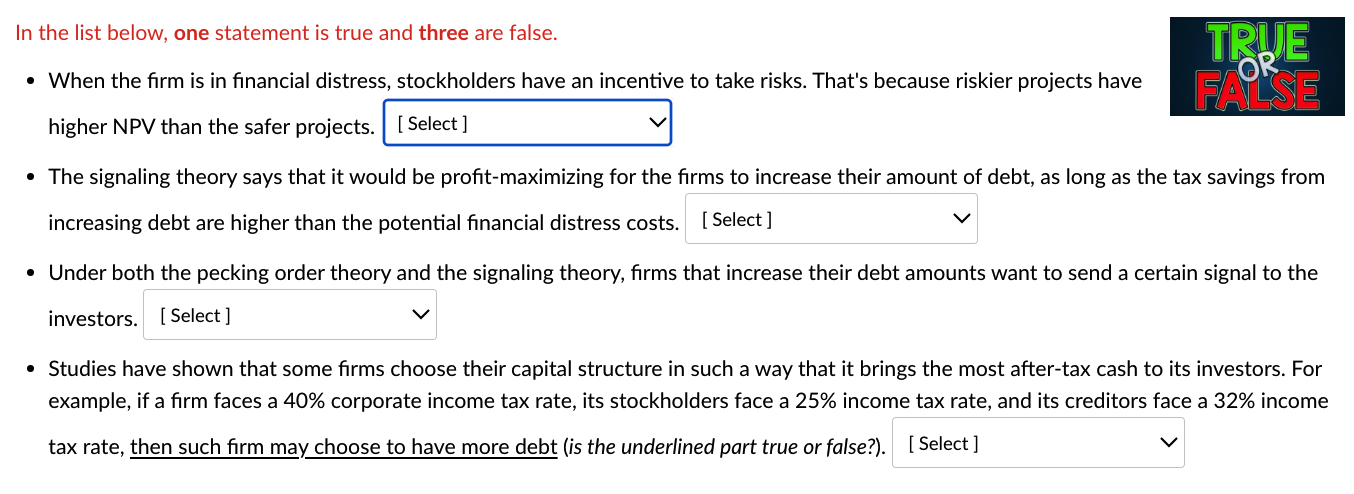
In the list below, one statement is true and three are false. - When the firm is in financial distress, stockholders have an incentive to take risks. That's because riskier projects have higher NPV than the safer projects. - The signaling theory says that it would be profit-maximizing for the firms to increase their amount of debt, as long as the tax savings from increasing debt are higher than the potential financial distress costs. - Under both the pecking order theory and the signaling theory, firms that increase their debt amounts want to send a certain signal to the investors. - Studies have shown that some firms choose their capital structure in such a way that it brings the most after-tax cash to its investors. For example, if a firm faces a 40% corporate income tax rate, its stockholders face a 25% income tax rate, and its creditors face a 32% income tax rate, then such firm may choose to have more debt (is the underlined part true or false?)
Step by Step Solution
There are 3 Steps involved in it

Get step-by-step solutions from verified subject matter experts
 Study Help