







Question: In this assignment, you will apply the architectural concepts learned in this unit to design a resilient cloud solution for a business application. This is
In this assignment, you will apply the architectural concepts learned in this unit to design a resilient cloud solution for a business application. This is a practical exercise that simulates real-world requirements you might encounter as a cloud professional. Don't worry if you don't have experience with every componentfocus on applying the resilience patterns we've covered and think about how they work together to create a robust solution.
Purpose
This assignment gives you hands-on practice designing a highly resilient cloud architecture that meets strict availability, RTO, and RPO targets for a realworld, threetier financialservices application. You will demonstrate mastery of Unit Learning Objective2.3 by evaluating and applying architectural patterns such as multiregion deployment, bulkhead isolation, and circuit breakers to achieve businesscritical uptime and dataprotection goals.
Associated Skills
- Design resilient cloud architectures with high availability and fault tolerance.
- Apply architectural patterns for disaster recovery and business continuity.
- Evaluate RTO and RPO compliance in cloud-based systems.
- Implement multi-region and multi-AZ redundancy strategies.
- Assess and mitigate risks in cloud infrastructure design.
Instructions
Review Requirements
- 99.99% availability (52min downtime/year)
- RTO 15minutes|RPO 5minutes
- Must survive any singlecomponent failure and an entireregion outage.
Understand the 3Tier Stack
- Presentation: Web front end
- Application: Businesslogic layer
- Data: Customer and transaction store
Design Your Architecture
Draw a complete diagram (tool of your choice) showing:
- MultiAZ / multiregion placement, load balancers, DNS/global traffic manager
- Compute, database, and storage components with redundancy and failover paths
- Messaging, caching, and security layers as needed
- Normaloperation flow and failuremode fallback routes
Apply at Least 3 Resilience Patterns
For each pattern:
- Why you chose it
- How you implemented it
- Which failures it mitigates
Demonstrate RTO/RPO Compliance
- Describe failure scenarios and timed recovery steps.
- Show how replication / backup strategies meet the 5minute RPO.
- Explain how automation, health checks, and orchestration hit the 15minute RTO.
Address Business Continuity
- Backup cadence
- DR testing schedule
- Monitoring/alerting stack
- Recovery runbooks
Discuss Implementation Realities
- Cost vs resilience tradeoffs
- Operational complexity
- Phased rollout plan
Background
A mid-sized financial services company needs to migrate their customer portal application to the cloud. This portal allows customers to view account information, make transactions, and access financial planning tools. The company cannot afford extended downtime or data loss, as this would damage customer trust and potentially violate regulatory requirements.
Your Task
Design a resilient cloud architecture for this 3-tier business web application with the following requirements:
- 99.99% availability requirement (maximum downtime of approximately 52 minutes per year)
- Maximum 15-minute recovery time objective (RTO); the system must be functional again within 15 minutes after a disruption
- Maximum 5-minute recovery point objective (RPO); no more than 5 minutes of data can be lost during a recovery
- Ability to withstand the failure of any single component
- Protection against regional outages
Submission Guidelines/Criteria for Success
- Understand the Application Components: The application consists of three tiers:
- Presentation tier: Web interface used by customers
- Application tier: Business logic and application processing
- Data tier: Customer information and transaction data
- Create Your Architecture Diagram:
- Draw a comprehensive diagram showing all components of your solution
- Use any diagramming tool you prefer (draw.io, Lucidchart, PowerPoint, etc.)
- Clearly label all components and their relationships
- Include both normal operation and failure-mode configurations
- Select and Configure Key Components: For each tier of the application, determine:
- Storage solution with appropriate redundancy
- Database configuration with failover capabilities
- Compute resources with auto-recovery options
- How components will be distributed across availability zones and regions
- Load balancing and traffic routing mechanisms
- Apply Resilience Patterns: Include at least three of the resilience patterns discussed in this unit:
- Multi-region deployment
- Bulkhead pattern
- Circuit breaker pattern
- Queue-based load leveling
- Static stability pattern
- For each pattern, explain:
- Why you selected it for this application
- How you've implemented it in your architecture
- What specific failures it protects against
- Analyze RTO and RPO Compliance: Explain in detail how your design meets the specified requirements:
- Which components might fail and how recovery occurs
- Step-by-step recovery procedures with estimated timing
- How data replication and backup strategies ensure minimal data loss
- How you achieve the 15-minute RTO and 5-minute RPO
- Address Business Continuity: Describe your approach to:
- Regular backup procedures
- Disaster recovery testing methodology
- Monitoring and alerting for potential issues
- Operational procedures during a recovery event
- Consider Implementation Realities: Discuss practical aspects of your design:
- Relative cost considerations of your approach
- Operational complexity and management requirements
- Any trade-offs you made between perfect resilience and practical constraints
- How your solution could be implemented in phases
Submission Format
Submit a 4-5 page design document (plus architecture diagram) that includes:
- Executive summary (1 paragraph overview of your approach)
- Architecture diagram with all components clearly labeled
- Component descriptions and justifications
- Resilience pattern implementations
- Recovery procedures and timing analysis
- Business continuity provisions
- Implementation considerations
- Conclusion summarizing how your design meets the requirements
ASSIGNMENT NEED TO HAVE:
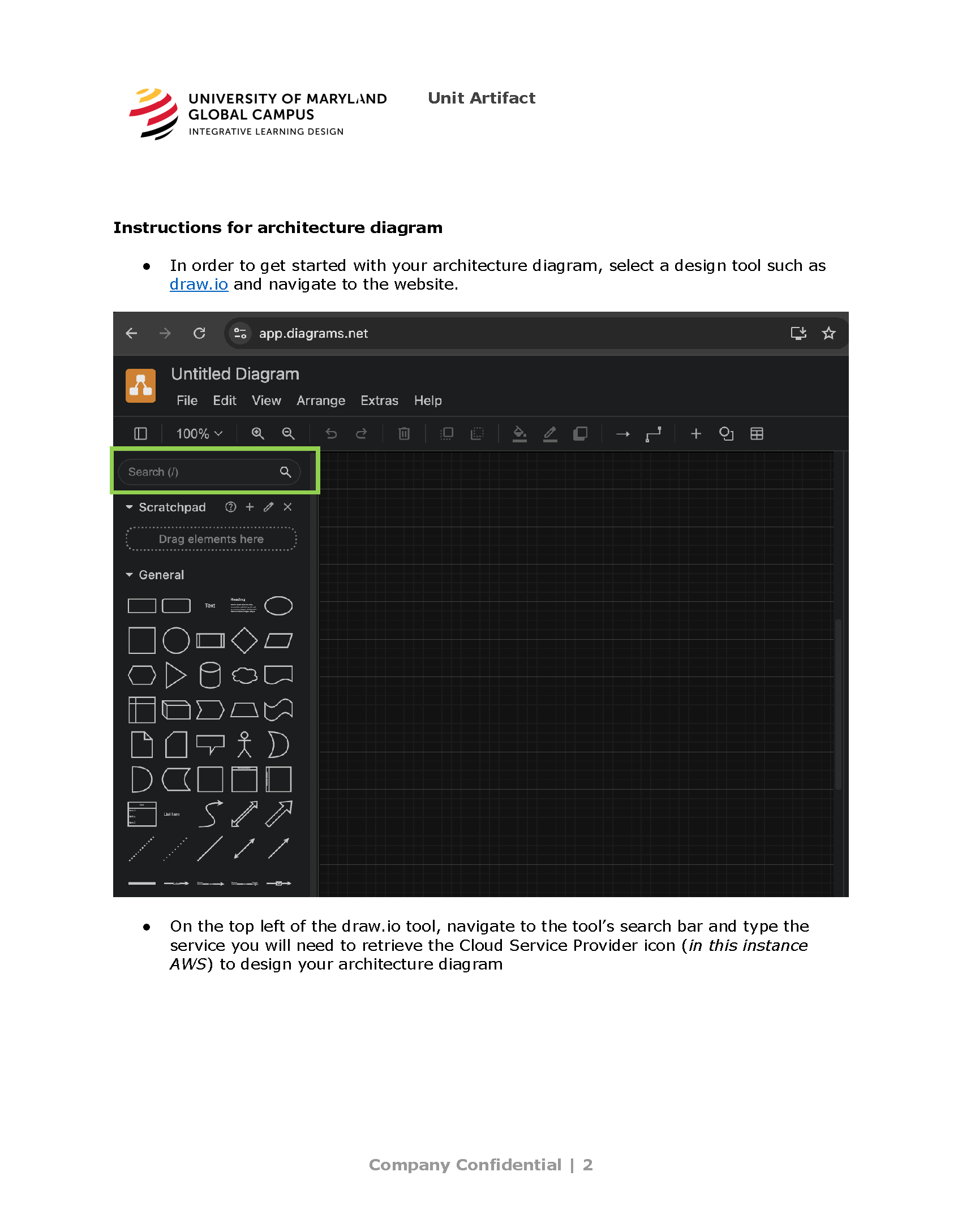
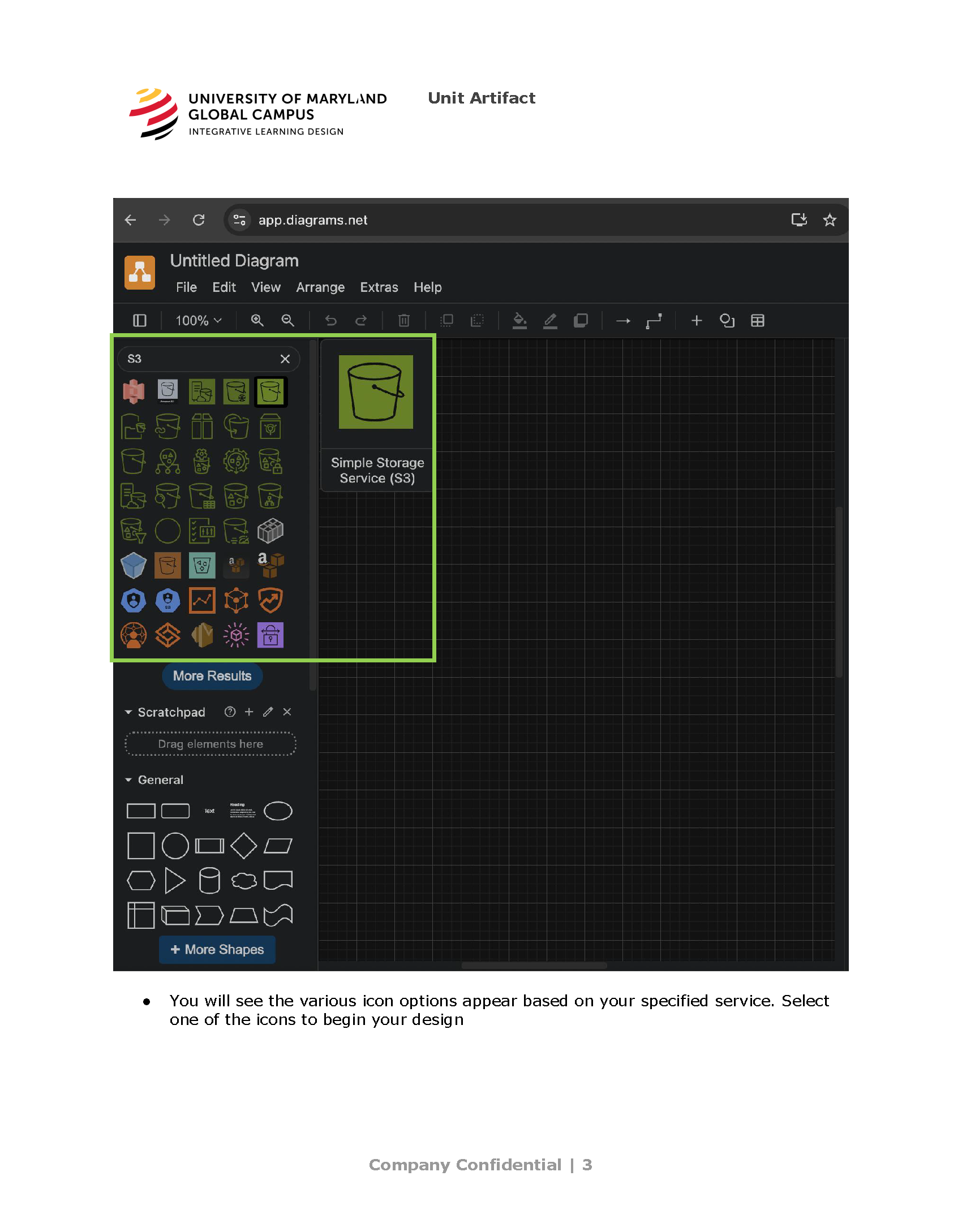
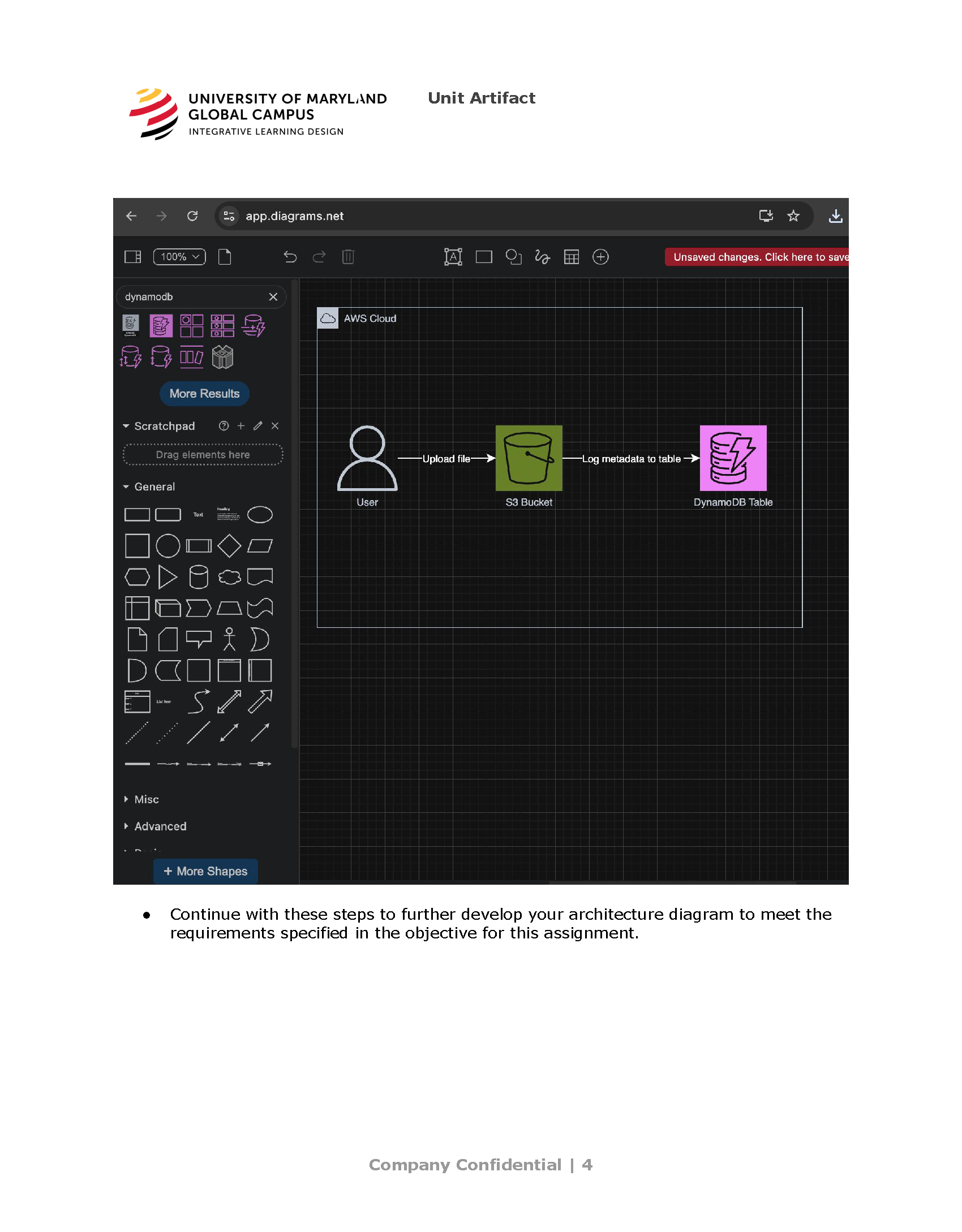
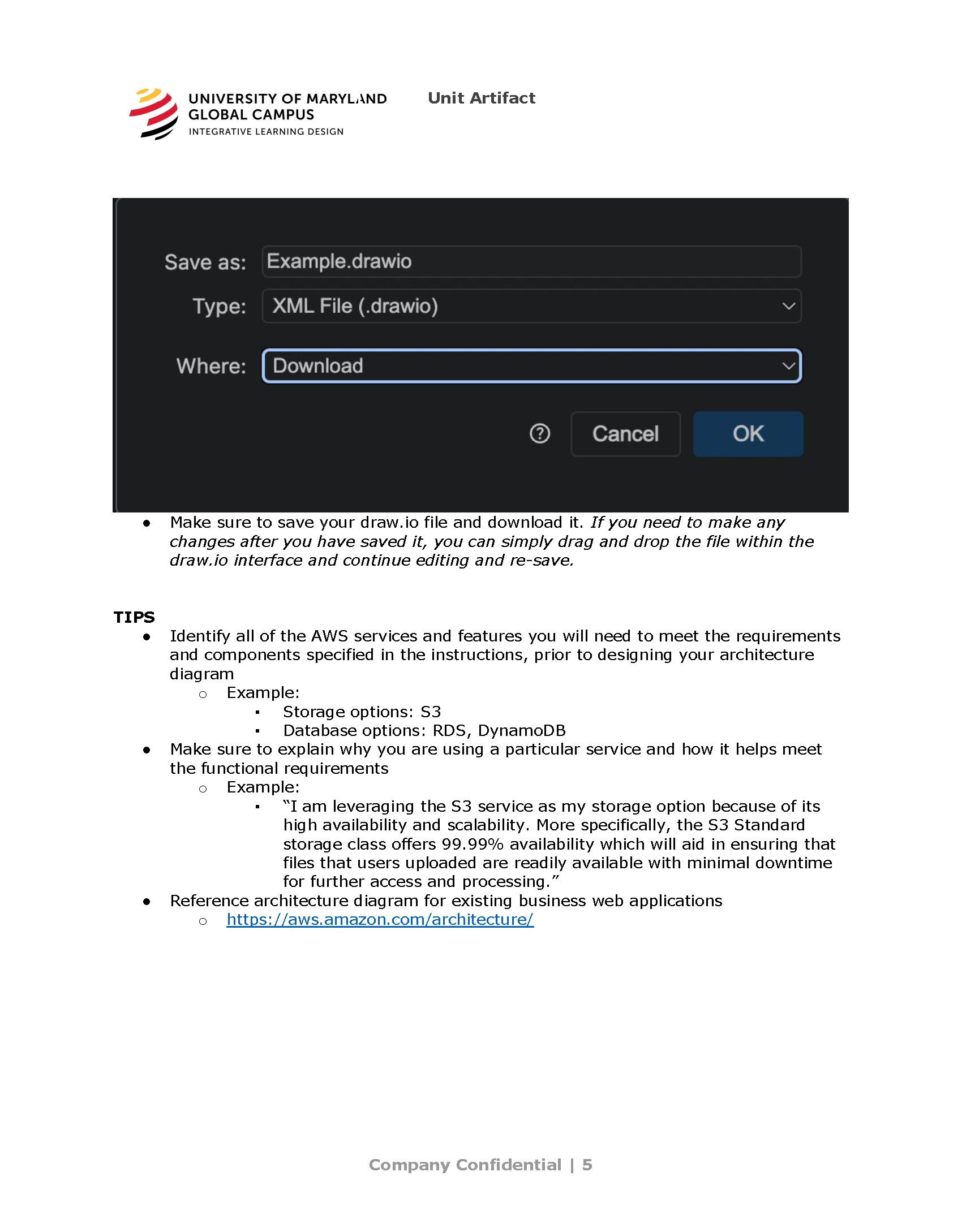 Z UNIVERSITY OF MARYLAND Unit Artifact GLOBAL CAMPUS INTEGRATIVE LEARNING DESIGN Assignment: Cloud Resilience Architecture Design Objective: The objective of this assignment is to design a resilient cloud architecture for a critical 3-tier business web application in the AWS cloud using architecture design tool. Requirements that must be met by your web application are: 99.99% availability requirement Maximum 15-minute recovery time objective (RTO) . . Maximum 5-minute recovery point objective (RPO) Ability to withstand the failure of any single component . Protection against regional outages Your final assignment submission should include: Comprehensive architecture diagram with all components Components to consider: Storage options Database options Server options Multi-AZ/Multi-Region Explanation of the resilience patterns implemented O Analysis of how the design meets the RTO and RPO requirements o Business continuity and disaster recovery provisions O Implementation considerations and potential challenges Submit a 4-5 page design document with appropriate diagrams and justifications. Company Confidential | 1Z UNIVERSITY OF MARYLAND Unit Artifact GLOBAL CAMPUS INTEGRATIVE LEARNING DESIGN Instructions for architecture diagram In order to get started with your architecture diagram, select a design tool such as draw. io and navigate to the website. C go app.diagrams.net Untitled Diagram File Edit View Arrange Extras Help 100% Q -+ + Search () Scratchpad X Drag elements here General O DCOOO .. On the top left of the draw. io tool, navigate to the tool's search bar and type the service you will need to retrieve the Cloud Service Provider icon (in this instance AWS) to design your architecture diagram Company Confidential | 2Z UNIVERSITY OF MARYLAND Unit Artifact GLOBAL CAMPUS INTEGRATIVE LEARNING DESIGN G app.diagrams.net Untitled Diagram File Edit View Arrange Extras Help 100% + S3 X Simple Storage Service ($3) N More Results Scratchpad O - O X Drag elements here General O + More Shapes You will see the various icon options appear based on your specified service. Select one of the icons to begin your design Company Confidential | 3Z UNIVERSITY OF MARYLAND Unit Artifact GLOBAL CAMPUS INTEGRATIVE LEARNING DESIGN G Po app.diagrams.net 100% ) Unsaved changes. Click here to save dynamodb X AWS Cloud 000 More Results Scratchpad X Drag elements here 8 -Upload file Log metadata to table - General User $3 Bucket DynamoDB Table DOID Misc Advanced + More Shapes Continue with these steps to further develop your architecture diagram to meet the requirements specified in the objective for this assignment. Company Confidential | 4Z UNIVERSITY OF MARYLAND Unit Artifact GLOBAL CAMPUS INTEGRATIVE LEARNING DESIGN Save as: Example.drawio Type: XML File (.drawio) Where: |Download Cancel OK Make sure to save your draw. io file and download it. If you need to make any changes after you have saved it, you can simply drag and drop the file within the draw.io interface and continue editing and re-save. TIPS Identify all of the AWS services and features you will need to meet the requirements and components specified in the instructions, prior to designing your architecture diagram o Example: Storage options: S3 Database options: RDS, DynamoDB Make sure to explain why you are using a particular service and how it helps meet the functional requirements o Example: "I am leveraging the S3 service as my storage option because of its h availability and scalability. More specifically, the S3 Standard storage class offers 99.99% availability which will aid in ensuring that files that users uploaded are readily available with minimal downtime for further access and processing." . Reference architecture diagram for existing business web applications o https://aws.amazon.com/architecture/ Company Confidential | 5
Step by Step Solution
There are 3 Steps involved in it

Get step-by-step solutions from verified subject matter experts
 Study Help