Question: In this lesson, you completed an assignment where you revised one of your stories. Details of the assignment an be found here: Check It Twice
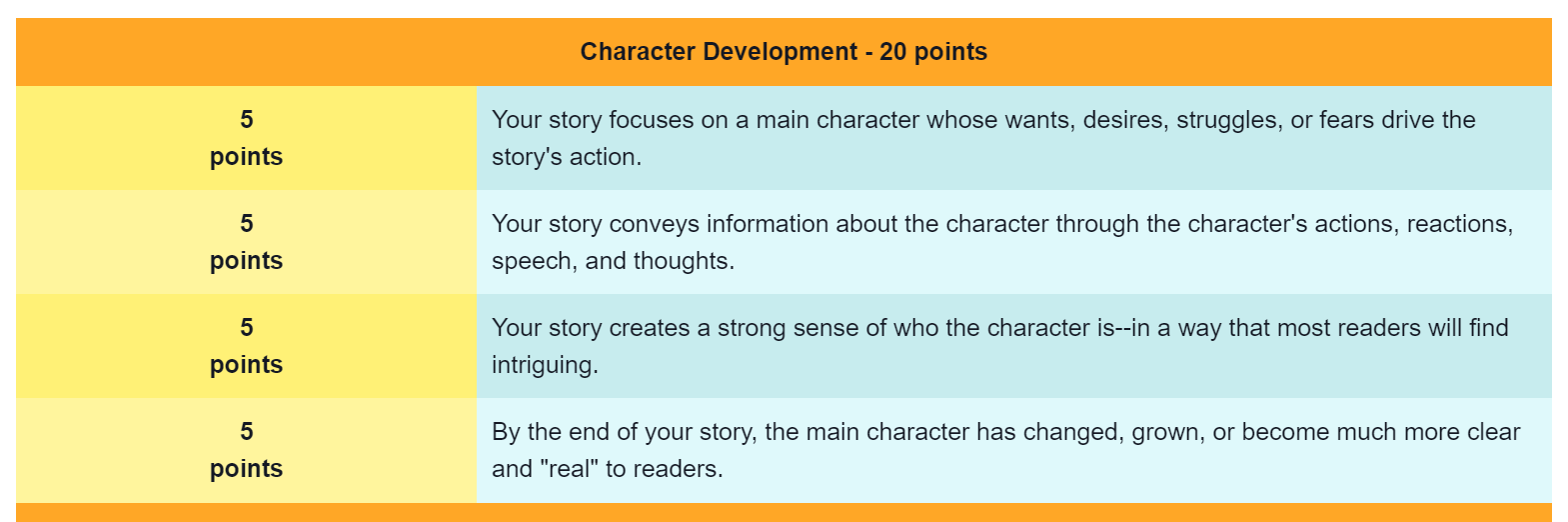
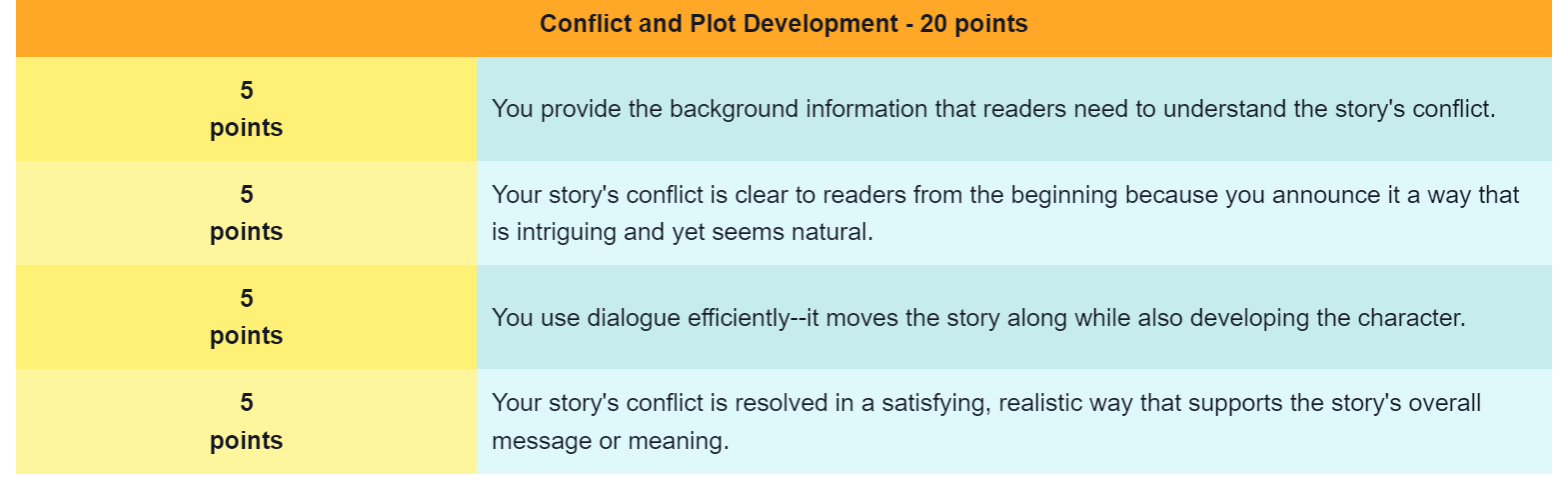
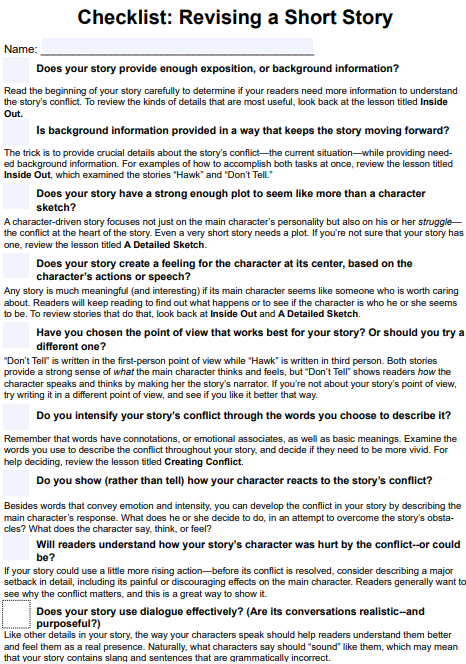
In this lesson, you completed an assignment where you revised one of your stories. Details of the assignment an be found here: Check It Twice Assignment For this assignment, submit the revised story here when finished. Be sure you have included your name at the top of your document or presentation and as part of the file name. Q Check It Twice = YL Make sure you apply everything you've learned about writing character-driven stories. Look back at the stories you wrote for the lessons in this module: Inside Out, A Detailed Sketch, Creating Conflict, A Stitch in Time, and Talking It Through. Choose one of these stories to revise and submit for a grade. As you revise, use the checklist below to make sure you consider all of the essential features of a good character-driven short story. When you have worked through the checklist and made substantial changes to improve your short story, study the rubric below, which your teacher will use to grade your work on this assignment. Make sure that your final draft meets all of the criteria in the rubric, in ways that your teacher can easily see. S points points points points Your story focuses on a main character whose wants, desires, struggles, or fears drive the story's action. Your story conveys information about the character through the character's actions, reactions, speech, and thoughts. Your story creates a strong sense of who the character is-in a way that most readers will find intriguing. By the end of your story, the main character has changed, grown, or become much more clear and "real" to readers. 5 points points points points You provide the background information that readers need to understand the story's conflict. Your story's conflict is clear to readers from the beginning because you announce it a way that is intriguing and yet seems natural. You use dialogue efficiently--it moves the story along while also developing the character. Your story's conflict is resolved in a satisfying, realistic way that supports the story's overall message or meaning. Checklist: Revising a Short Story Name: Does your story provide enough exposition, or background infermation? Read the beginning of your story carefully to determine if your readers need more information to understand the story's conflict. To review the kinds of details that are most useful, look back at the lesson titled Inside Out. Is background information provided in a way that keeps the story moving forward? The frick is to provide crucial details about the story's conflictthe cumrent situationwhile providing need- ed background information. For examples of how to accomplish both tasks at once, review the lesson titled Inside Out, which examined the stories *Hawk\" and "Don't Tell.\" Does your story have a strong enough plot to seem like more than a character sketch? A character-driven story focuses not just on the main character's parsonality but also on his or her sfruggle the conflict at the heart of the story. Even a very short story needs a plot. If you're not sure that your story has one, review the lesson titied A Detailed Skatch. Does your story create a feeling for the character at its center, based on the character's actions or speech? Any story is much meaningful (and interesting) if its main character seems like someone who is worth caring about. Readers will keep reading to find out what happens or to sea if the character is who he or she seems 1o be. To review stories that do that, look back at Inside Qut and A Detailed Sketch. Have you chosen the point of view that works best for your story? Or should you try a different one? \"Don't Tell\" is written in the first-person point of view while *Hawk\" is written in third person. Both stories provide a strong sense of what the main character thinks and feels, but "Don't Tell\" shows readers how the character speaks and thinks by making her the story's narrator. If you're not about your story's point of view, try writing it in a different point of view, and see if you like it better that way. Do you intensify your story's conflict through the words you choose to deseribe it? Remember that words have connotations. or emotional associates, as well as basic meanings. Examine the words you use to describe the conflict throughout your story, and decide if they need to be mare vivid. For help deciding, review the lesson titled Creating Conflict. Do you show (rather than tell) how your character reacts to the story's conflict? Besides words that convey emotion and intensity, you can develop the conflict in your story by describing the main character's response. What does he or she decide to do, in an attempt to owercome the story's obsta- cles? What does the character say, think, or feel? 'Will readers understand how your story's character was hurt by the conflict-or could ba? If your story could use a litle more rising actionbefore its conflict is resolved, consider describing a major sathack in detadl, including its painful or discouraging effects on the main character. Readers generally want to sea why the conflict matters, and this is a great way to show it Does your story use dialogue effectively? (Are its conversations realistic-and i _: purposeful?) Like other details in your story, the way your characters speak should help readers understand them better and feel them as a real presence. Naturally, what characters say should "sound\" like them, which may mean that your story contains slang and sentences that are grammatically incorrect
Step by Step Solution
There are 3 Steps involved in it
1 Expert Approved Answer
Step: 1 Unlock
Question Has Been Solved by an Expert!
Get step-by-step solutions from verified subject matter experts
Step: 2 Unlock
Step: 3 Unlock
Students Have Also Explored These Related Business Writing Questions!










 Study Help